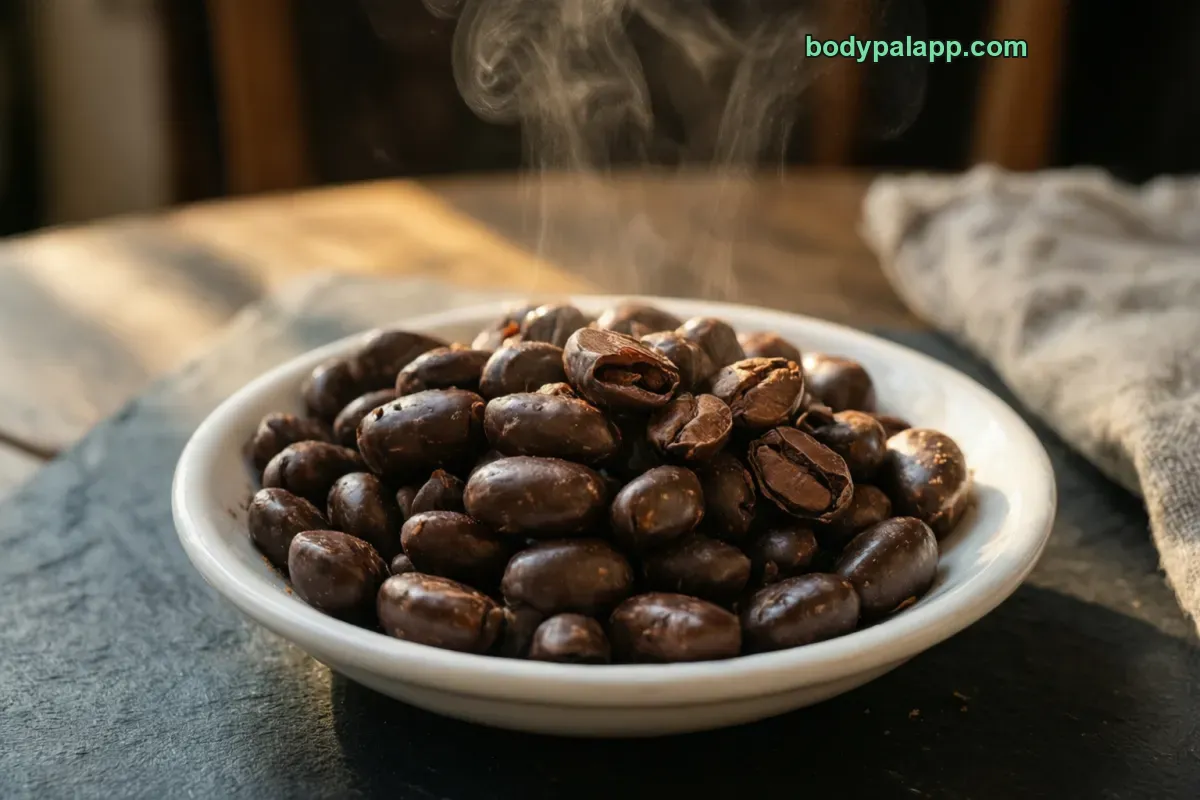
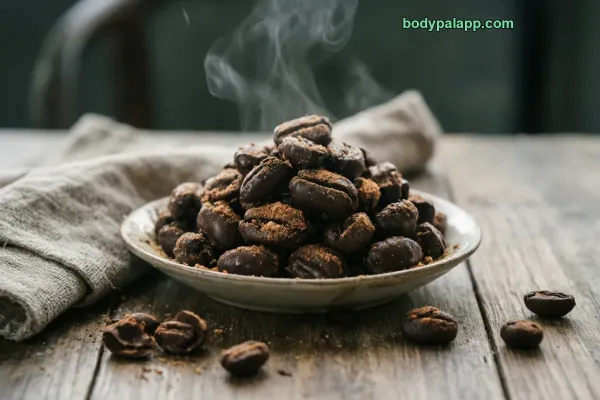
Chocolate covered espresso beans calories come to 190 for a 29-bean serving (40 g) and 475 per 100 g. Fat supplies 52% of those calories and a serving carries 17 g of sugar. Treat them as chocolate candy with a coffee center. They are not a light coffee snack, and the handful size decides the total.
190kcal
1 29-bean serving · 40 g, packaged, per label
4%protein
2 gProtein
23 gCarbs
12 gFat
How to burn off 190 kcal
—Walking, brisk
—Jogging
—Cycling, moderate
—Swimming
Skip the math. BodyPal counts these calories from your steps and workouts automatically.
Nutrition facts
Packaged, per label · per 40 g
Calories
190 kcal
Protein
2 g
Carbohydrate
23 g
Fat
12 g
Saturated fat
7 g
Cholesterol
0 mg
Sodium
25 mg
Source: USDA FoodData Central
🛡️
Verified nutrition data
Numbers on this page come from USDA FoodData Central, the U.S. Department of Agriculture’s food composition database, and from manufacturer labels where a branded product is named. Last verified September 2026. How we verify our data →
Chocolate covered espresso beans: calories, protein and sodium by serving
Percent of daily value uses the FDA reference of 2,000 kcal a day.
Serving
kcal
Protein
Carbs
Fat
Sodium
% DV kcal
29 beans (40 g)
190
2 g
23 g
12 g
25 mg
10%
1 oz (28 g)
133
1.4 g
16.1 g
8.4 g
17 mg
7%
100 g
475
5 g
57.5 g
30 g
62 mg
24%
3 × 29 beans (40 g)
570
6 g
74 mg
5 × 29 beans (40 g)
950
10 g
124 mg
Each 29-bean handful is a 190-calorie decision
The label serving is 29 beans, or 40 g, and it lands at 190 calories. That is 10% of the daily value for calories in a snack you can finish in a minute. A smaller 1 oz (28 g) pour comes to 133 calories, or 7% of the daily value, which is the more realistic size if you want a few beans with an afternoon coffee.
The trouble is how fast the count climbs. Two label servings (80 g) reach 380 calories, three (120 g) reach 570, and five servings, a 200 g pile, hit 950. Because the beans are small and crunchy, nothing about the third or fourth handful feels like a meal, yet by then you have eaten the calories of one.
Protein does not keep pace. Even at 200 g you get only 10 g of protein, so the beans add energy without adding much staying power. If you like them, count them out into a small dish instead of eating from the bag. Counting 29 beans takes ten seconds and keeps the total at the number on the label.
Fat is more than half of every bean
The calorie split is 52% fat, 44% carbs and only 4% protein. Per 100 g that is 30 g of fat, 57.5 g of carbs and 5 g of protein. The chocolate shell does almost all of that work. The roasted coffee bean inside is crunchy and bitter, but it is the cocoa butter and sugar around it that set the calorie count.
Saturated fat is the part of the fat to notice. There are 17.5 g per 100 g, close to the 20 g daily value on its own. A single 40 g serving holds 12 g of total fat, so a couple of servings can take up a large share of your saturated fat budget for the day.
Carbs are mostly sugar: 42.5 g of the 57.5 g per 100 g. That leaves fiber as the one bright spot in the carb column, which the next section covers. The short version: this is a dense, fat-forward sweet, and it behaves like a chocolate bar more than like a coffee drink.
Sugar is the row to watch, fiber is the surprise
A 29-bean serving delivers 17 g of sugar, and the 1 oz (28 g) portion delivers 11.9 g. Per 100 g the figure is 42.5 g. If you track added sugar closely, a handful of these can take a big bite out of your day before you notice, because the bitter coffee center masks how sweet the coating is.
Fiber is higher than most candy. The label lists 4 g per 40 g serving and 10 g per 100 g, measured against a 28 g daily value. Some of that comes from the coffee bean itself and some from the cocoa. It does not cancel out the sugar or fat, but it is a real number and better than a plain milk chocolate bar would offer.
Sodium and cholesterol are not concerns here. A serving has 25 mg of sodium, just 1% of the daily value, and cholesterol is 0. If you watch salt, these are one of the easier sweets to fit in. Your attention belongs on sugar, saturated fat and how many handfuls you take.
Small portions work best next to real food
These beans work best as a garnish to a snack rather than the snack itself. A dozen or so next to plain yogurt, fruit or a handful of unsalted nuts gives you the chocolate and coffee flavor while the other food brings the protein and volume the beans lack. On their own, 5 g of protein per 100 g will not keep you full for long.
Brand and chocolate type change the experience more than the label suggests. Dark versions such as Taza Chocolate, Archer Farms or Goodfields Dark Chocolate Covered Espresso Beans taste less sweet, while Barista Delights Milk Chocolate Covered Espresso Beans lean creamier. Check the label of the bag you actually buy, since serving sizes and bean counts differ.
If you are tracking intake, log the weight or count rather than guessing a handful. BodyPal can log them from a photo, but a quick count of beans is just as reliable for something this small. Keep them in a spot you have to walk to, and the 190-calorie serving stays a treat instead of a habit.
How does chocolate covered espresso beans compare?
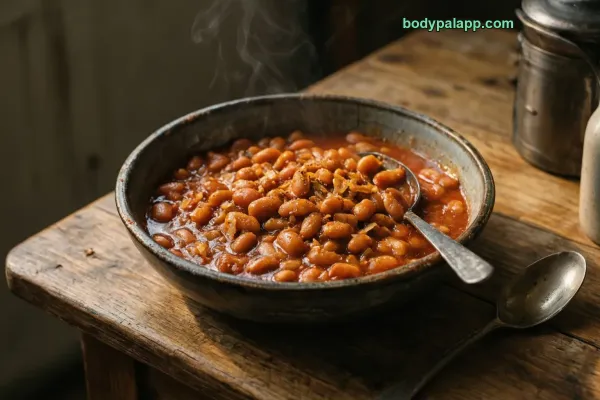
Here is how chocolate covered espresso beans stack up against chocolate coffee beans, chocolate espresso beans and ranch style beans, per 100 g and per usual serving.
Verdict: On calories, these beans tie with chocolate espresso beans at 190 per 40 g serving and 475 per 100 g, while chocolate coffee beans run higher at 216 per serving and 540 per 100 g, so pick either espresso version over the coffee bean one. Ranch style beans are a different food at 97 kcal per 100 g, the lighter choice for staying full, though they carry 725 mg of sodium per 100 g against 62 mg here.
Most popular chocolate covered espresso beans brands in the United States
Ranked by popularity in the BodyPal database
# Productkcal / 100 g
1Archer Farms Dark Chocolate-Covered Espresso Beans1/4 cup · 36 g528 kcal
2Taza Chocolate Dark Chocolate Covered Espresso Beans1/2 cup · 28 g536 kcal
3Chocolate Orchard Dark Chocolate Covered Espresso Beans1.5 oz · 42 g452 kcal
How many calories are in chocolate covered espresso beans?
A 40 g serving (29 beans) has 190 calories, and 100 g has 475 calories.
Are chocolate covered espresso beans good for weight loss?
They are calorie dense at 475 calories per 100 g, with 30 g fat and 42.5 g sugar per 100 g. A 1 oz (28 g) handful is 133 calories.
Are dark chocolate covered espresso beans lower in calories?
Not always: labels range from 452 calories per 100 g (Chocolate Orchard) to 536 (Taza), compared with 475 for the beans above.
How much sugar is in chocolate covered espresso beans?
A 40 g serving has 17 g sugar, 12 g fat and 2 g protein.
How many calories are in 1 oz of chocolate covered espresso beans?
One ounce (28 g) of chocolate covered espresso beans has 133 calories, about 7% of the daily value. It also brings 8.4 g of fat, 11.9 g of sugar and 2.8 g of fiber.
How many chocolate covered espresso beans are in a serving?
A label serving is 29 beans, which weighs 40 g and comes to 190 calories. That serving holds 12 g of fat, 23 g of carbs, 17 g of sugar and 2 g of protein.
How much fat is in chocolate covered espresso beans?
A 40 g serving has 12 g of fat, and 100 g has 30 g, including 17.5 g of saturated fat. Fat supplies 52% of the calories, more than carbs at 44%.
Do chocolate covered espresso beans have fiber?
Yes. A 29-bean serving has 4 g of fiber and 100 g has 10 g, measured against a 28 g daily value. That is more than most chocolate candy, though sugar is still 17 g per serving.
Are chocolate covered espresso beans high in sodium?
No. A 40 g serving has 25 mg of sodium, just 1% of the daily value, and 100 g has 62 mg. Sugar and saturated fat matter far more than salt in this snack.