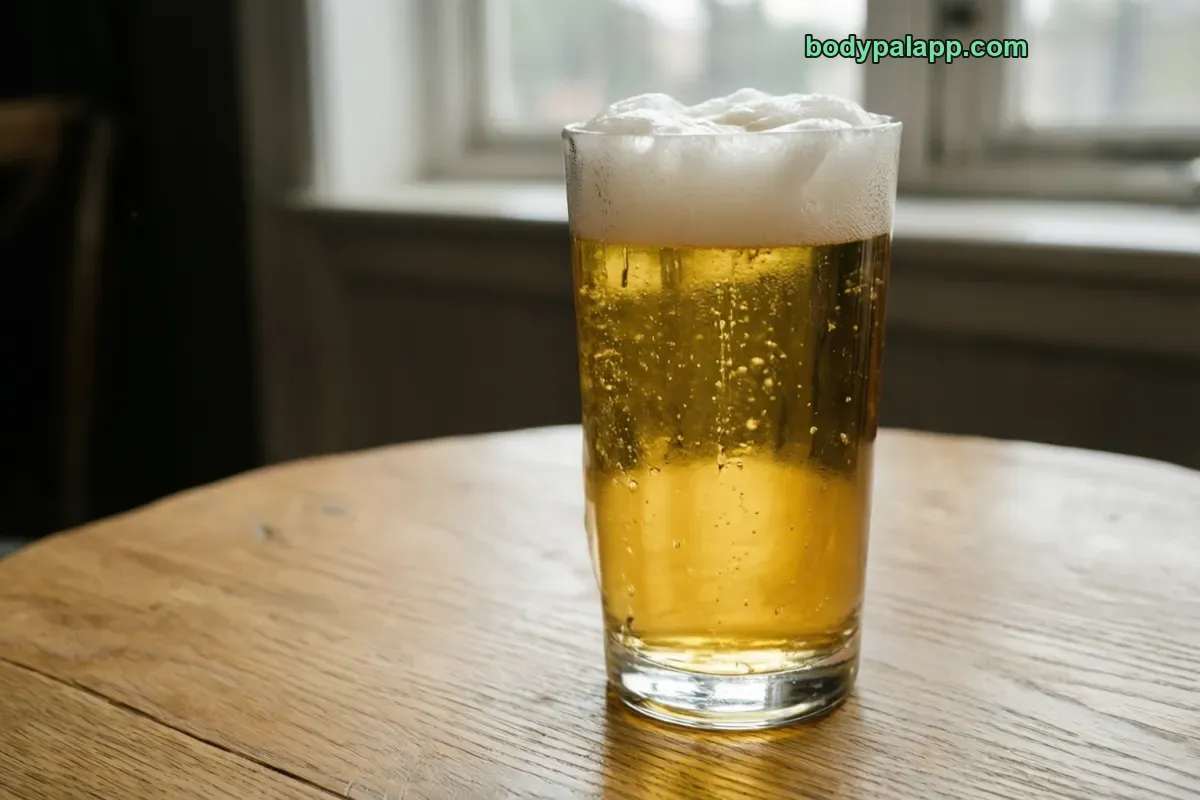
Non-alcoholic beer calories come to 131 for a 12 oz can (355 g) and 37 per 100 g. The thing to notice is where they come from: 94% of the calories are carbs, and in the USDA data every gram of those carbs is listed as sugar, 28.6 g per can.
131kcal
1 12 oz can · 355 g, ready to drink
2%protein
0.7 gProtein
29 gCarbs
0.4 gFat
How to burn off 131 kcal
—Walking, brisk
—Jogging
—Cycling, moderate
—Swimming
Skip the math. BodyPal counts these calories from your steps and workouts automatically.
Nutrition facts
Ready to drink · per 355 g
Calories
131 kcal
Protein
0.7 g
Carbohydrate
29 g
Fat
0.4 g
Saturated fat
0.1 g
Cholesterol
0 mg
Sodium
46 mg
Potassium
28 mg
Iron
0.2 mg
Source: USDA FoodData Central
🛡️
Verified nutrition data
Numbers on this page come from USDA FoodData Central, the U.S. Department of Agriculture’s food composition database, and from manufacturer labels where a branded product is named. Last verified September 2026. How we verify our data →
Non-alcoholic beer: calories, protein and sodium by serving
Percent of daily value uses the FDA reference of 2,000 kcal a day.
Serving
kcal
Protein
Carbs
Fat
Sodium
% DV kcal
12 oz can (355 g)
131
0.7 g
28.6 g
0.4 g
46 mg
7%
1 cup (237 g)
88
0.5 g
19.1 g
0.3 g
31 mg
4%
100 g
37
0.2 g
8.1 g
0.1 g
13 mg
2%
3 × 12 oz can (355 g)
394
2.2 g
138 mg
5 × 12 oz can (355 g)
657
3.7 g
231 mg
One can is 131 calories, a six-pack evening is not
A single 12 oz can (355 g) lands at 131 calories, about 7% of a 2000-calorie daily value. A 1 cup pour (237 g) drops that to 88 calories, which is what you get if you split a can or use a small glass. On its own, either number is easy to fit into a day.
The total climbs fast once you keep going. Two cans come to 263 calories, three cans reach 394, and five cans add up to 657. Because it has no alcohol, it is easy to drink at the pace of soda, and that is where the calories quietly stack up.
Pour size matters more than brand choice for most people. Picking a cup instead of a full can is the simplest way to trim the count, and logging every can, not just the first, keeps the total honest. BodyPal can log a can from a photo if typing feels like a chore.
Nearly every calorie is carbohydrate
The calorie split is lopsided: 94% from carbs, 3% from fat and 2% from protein. Per 100 g that works out to 8.1 g of carbs, 0.1 g of fat and 0.2 g of protein. Fiber is 0.
Protein barely registers. A full can gives 0.7 g, which is 1% of the daily value, and even five cans only reach 3.7 g. Do not count on non-alcoholic beer to help with fullness the way a food with real protein or fiber might.
Fat is a non-issue too, at 0.4 g per can and 0 g of saturated fat. Cholesterol is 0 as well. What you are drinking is mostly water plus a dose of malt carbohydrate, and the carbohydrate is what sets the calorie count.
Sugar is the row to watch, not sodium
The USDA row used here, "Malt beverage, includes non-alcoholic beer", lists sugars equal to total carbs: 8.1 g per 100 g and 28.6 g in a 12 oz can. A cup holds 19.1 g. That puts a can of this style of non-alcoholic malt drink in the same sugar territory as a soft drink.
Labels vary a lot between products. Some non-alcoholic beers are brewed drier and carry far less sugar, while sweeter malt drinks and flavored versions, such as a ginger-style brew like Gray Brewing Belfast Ginger Non-Alcoholic Beer, can sit near or above this profile. If sugar is your concern, the nutrition label on your specific can beats any average.
Sodium, by contrast, is low. A can has 46 mg, or 2% of the daily value, and a cup has 31 mg. Potassium is minimal at 8 mg per 100 g. If you watch sodium, this drink is not where your numbers come from.
Treat it like a soda, not a free drink
The easiest way to place non-alcoholic beer in a day of eating is next to other sweet drinks. At 131 calories a can with almost no protein, it adds energy without adding much else, so it fits best as a deliberate choice rather than a default refill.
If you are swapping from regular beer, you drop the alcohol, and that is a real change. If you are swapping from water or sparkling water, you are adding carbs and sugar. Which way the swap goes decides whether it helps your totals.
Pairing matters too. Salty snacks and fried bar food usually carry far more calories than the drink itself, so one can alongside a meal with lean protein and vegetables is a very different evening from three cans and a basket of fries. Keep a glass of water between cans if you want to slow the pace.
How does non-alcoholic beer compare?
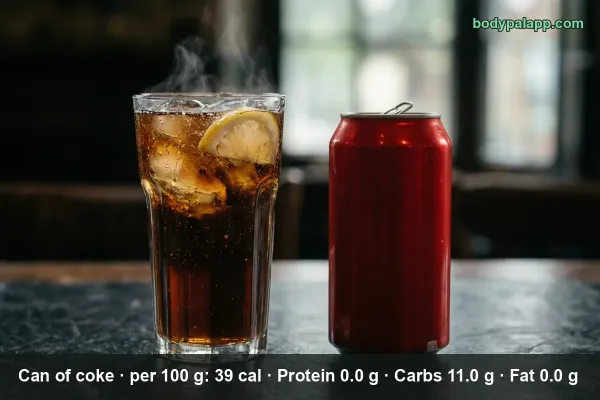
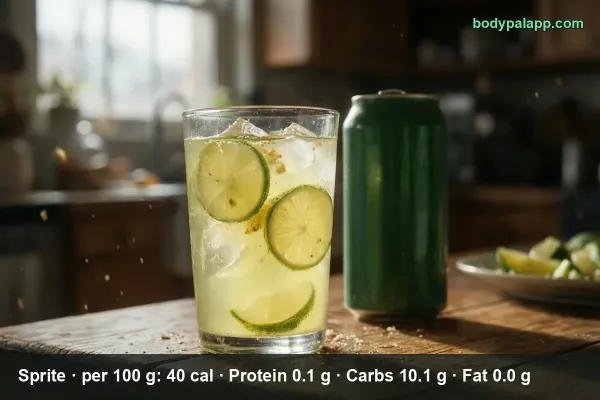
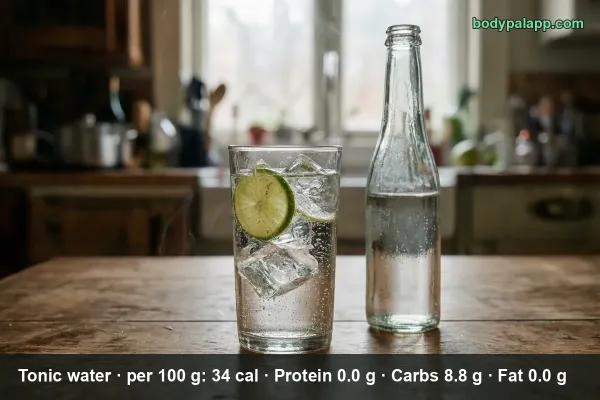
Here is how non-alcoholic beer stacks up against can of coke, sprite and tonic, per 100 g and per usual serving.
Verdict: All four sit in a tight band, with tonic lowest at 34 calories per 100 g, non-alcoholic beer at 37, can of coke at 39 and sprite at 40, so none is a real light option. If you want the fewest calories pick tonic, but if you want the beer taste without alcohol, non-alcoholic beer costs about the same as a soda and carries 8.1 g of carbs per 100 g against 11 g for coke.
Most popular non-alcoholic beer brands in the United States
A 12 oz can (355 g) is about 131 calories. That works out to 37 calories per 100 g, or 88 calories in a cup.
Is non-alcoholic beer good for weight loss?
One 12 oz can adds 131 calories and 28.6 g of carbs to the day, and a cup keeps it to 88 calories.
Does non-alcoholic beer have fewer calories than Coke?
Per 100 g non-alcoholic beer has 37 calories and Coke has 39, so the two are within a couple of calories of each other.
How many carbs are in non-alcoholic beer?
8.05 g per 100 g, so a 12 oz can has 28.6 g of carbs along with 0.7 g of protein and 0.4 g of fat.
How much sugar is in a can of non-alcoholic beer?
A 12 oz can (355 g) has 28.6 g of sugars in the USDA malt beverage data, the same as its total carbs. Per 100 g that is 8.1 g. Drier brands can be much lower, so check your label.
How many calories are in a cup of non-alcoholic beer?
A 1 cup pour (237 g) has 88 calories, with 19.1 g of carbs and 0.5 g of protein. That is about 4% of the daily value for calories, compared with 7% for a full can.
How many calories are in three non-alcoholic beers?
Three 12 oz cans come to 394 calories and 138 mg of sodium. Two cans are 263 calories, and five cans reach 657, so the total grows quickly over an evening.
Does non-alcoholic beer have protein?
Very little. A 12 oz can has 0.7 g of protein, or 1% of the daily value, and only 2% of its calories come from protein. Nearly all the rest, 94%, comes from carbs.
Is non-alcoholic beer high in sodium?
No. A 12 oz can has 46 mg of sodium, which is 2% of the daily value. Per 100 g it has 13 mg, the same as can of coke.