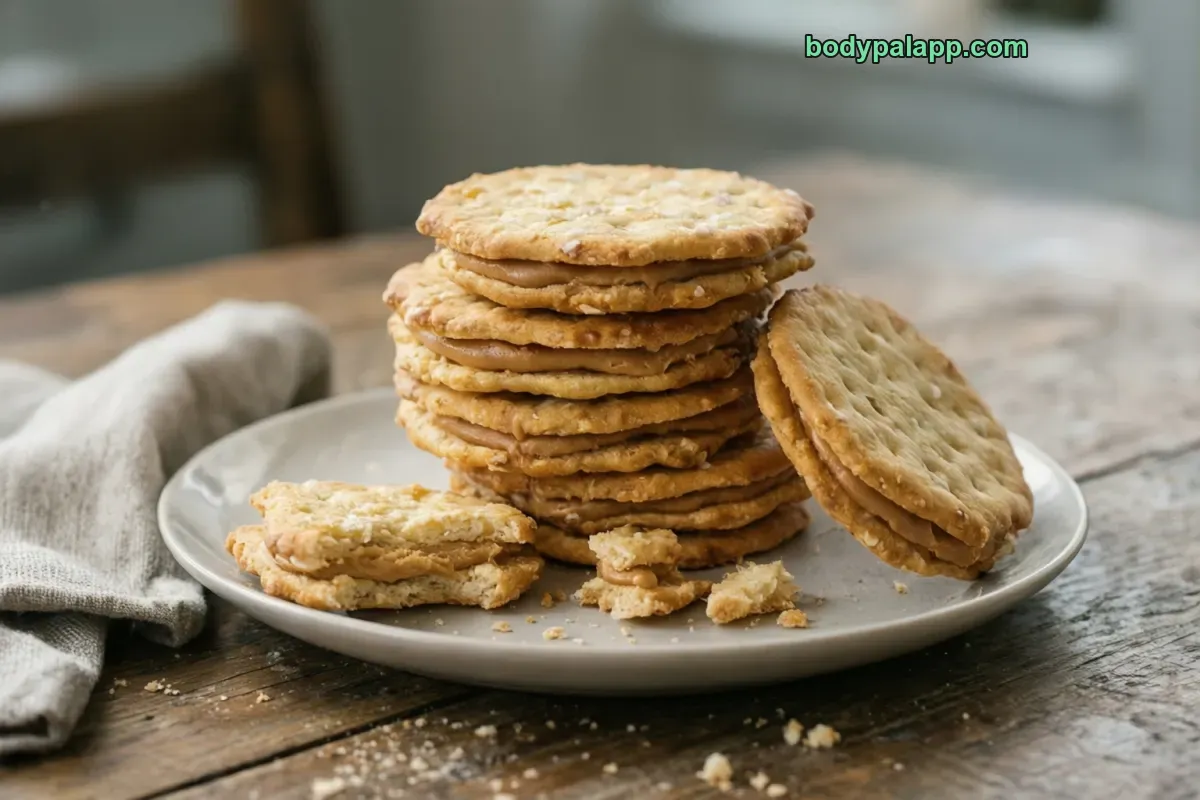
Peanut butter crackers 6 pack calories come to 222 for one 6 pack (45 g) and 494 per 100 g. Each cracker sandwich adds about 35 calories, so the total climbs fast once a second pack is open. Sodium deserves a look too: one pack carries 360 mg, or 16% of the daily value.
222kcal
1 6 pack · 45 g, packaged sandwich crackers
9%protein
5.2 gProtein
26 gCarbs
11 gFat
How to burn off 222 kcal
—Walking, brisk
—Jogging
—Cycling, moderate
—Swimming
Skip the math. BodyPal counts these calories from your steps and workouts automatically.
Nutrition facts
Packaged sandwich crackers · per 45 g
Calories
222 kcal
Protein
5.2 g
Carbohydrate
26 g
Fat
11 g
Saturated fat
2.2 g
Cholesterol
0 mg
Sodium
360 mg
Potassium
97 mg
Iron
1.2 mg
Source: USDA FoodData Central
🛡️
Verified nutrition data
Numbers on this page come from USDA FoodData Central, the U.S. Department of Agriculture’s food composition database, and from manufacturer labels where a branded product is named. Last verified September 2026. How we verify our data →
Peanut butter crackers: calories, protein and sodium by serving
Percent of daily value uses the FDA reference of 2,000 kcal a day.
Serving
kcal
Protein
Carbs
Fat
Sodium
% DV kcal
6 pack (45 g)
222
5.2 g
26.3 g
11 g
360 mg
11%
1 cracker sandwich (7 g)
35
0.8 g
4.1 g
1.7 g
56 mg
2%
Cheese crackers, 6 pack (39 g)
193
4.8 g
22.1 g
9.8 g
323 mg
10%
100 g
494
11.5 g
58.4 g
24.5 g
801 mg
25%
3 × 6 pack (45 g)
667
15.5 g
1,081 mg
5 × 6 pack (45 g)
1,112
25.8 g
1,802 mg
One pack is 222 calories, two packs are 445
A standard 6 pack weighs 45 g and lands at 222 calories, about 11% of the daily value for energy. Each cracker sandwich inside is 7 g and 35 calories, with 0.8 g of protein and 56 mg of sodium. That makes the math easy: count sandwiches, not handfuls.
The packs are small, and that is the trap. Two packs (90 g) reach 445 calories and 721 mg of sodium. Three packs come to 667 calories, and five packs, the kind of total that builds up over a long afternoon at a desk, hit 1,112 calories with 1,802 mg of sodium.
If you want a smaller snack, stop at half the pack and save the rest. If you want the same format with a little less, the cheese crackers 6 pack (39 g) is 193 calories with 323 mg of sodium. The gap is real but modest, so portion size matters more than which filling you pick.
Carbs and fat split the calories almost evenly
Per 100 g, peanut butter crackers carry 58.4 g of carbs, 24.5 g of fat and 11.5 g of protein. In calorie terms that works out to 47% from carbs, 44% from fat and just 9% from protein. The peanut butter filling shifts the fat up; it does not turn this into a protein snack.
One pack gives you 26.3 g of carbs, 11 g of fat and 5.2 g of protein, which covers 10% of the daily value for protein. Fiber is low at 1 g per pack, and sugars sit at 4.7 g. That combination digests quickly, so a single pack may not hold you for long.
Saturated fat is 4.8 g per 100 g, a moderate figure for a packaged cracker. Cholesterol is 0, since the filling is plant-based. The calorie density, 494 per 100 g, is what really defines this food: it packs a lot of energy into very little weight.
Sodium is the row to watch
At 801 mg per 100 g, peanut butter crackers deliver 35% of the daily value for sodium in that weight. A single pack is 360 mg, or 16% of the daily value, which is more than its 11% share of calories. Salt is running ahead of energy here.
That gap widens as packs stack up. Two packs bring 721 mg, three bring 1,081 mg, and five reach 1,802 mg. If you watch sodium, treat one pack as the ceiling for a single snack and keep the rest of the meal lower in salt.
Potassium is 215 mg per 100 g, so the crackers do little to balance the salt on their own. Sugars, at 10.5 g per 100 g, are worth a glance but are not the main issue. Sodium is the number that tells you how often this snack fits into a day.
A pack works best next to something fresh
Peanut butter crackers are built for convenience: shelf-stable, portioned and easy to throw in a bag. Lance, Keebler and Munchies all sell versions of the same idea. The weakness is that a pack brings little fiber and modest protein for its 222 calories.
Pairing helps. A piece of fruit or some raw vegetables adds volume and fiber without much salt, and a glass of milk or a yogurt adds protein that the crackers lack. Either way the snack feels more like a small meal and less like a quick sugar and salt hit.
If you log snacks, log the pack as a unit rather than estimating crackers one by one. BodyPal can log the food from a photo, which makes the second pack harder to forget.
How does peanut butter crackers compare?
Here is how peanut butter crackers stack up against similar snacks, per 100 g and per usual serving.
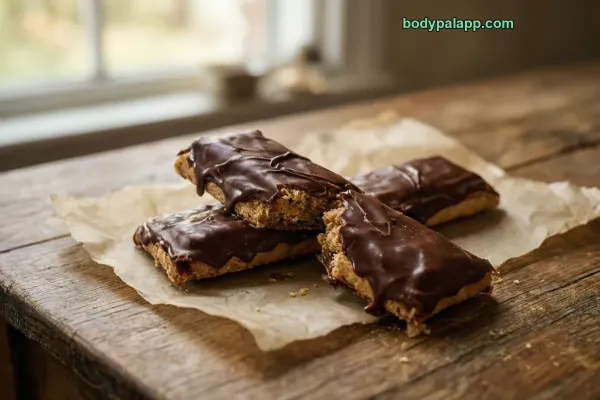
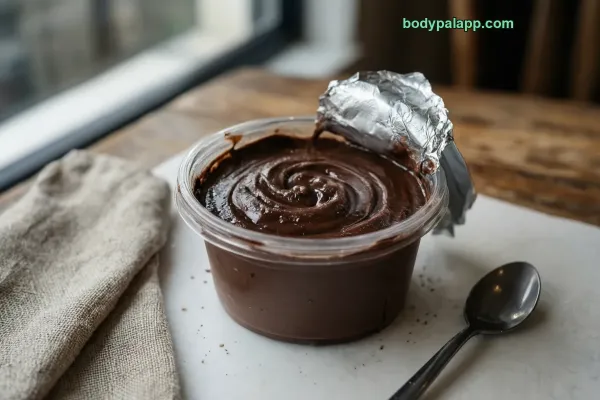
Verdict: For the fewest calories, the chocolate pudding snack pack wins at 100 per cup and 109 per 100 g; for more protein per bite, stay with peanut butter crackers at 11.5 g per 100 g versus 4 g in a chocolate covered graham cracker. The graham cracker matches the crackers in density at 500 per 100 g, so swapping one for the other saves almost nothing.
Most popular peanut butter crackers brands in the United States