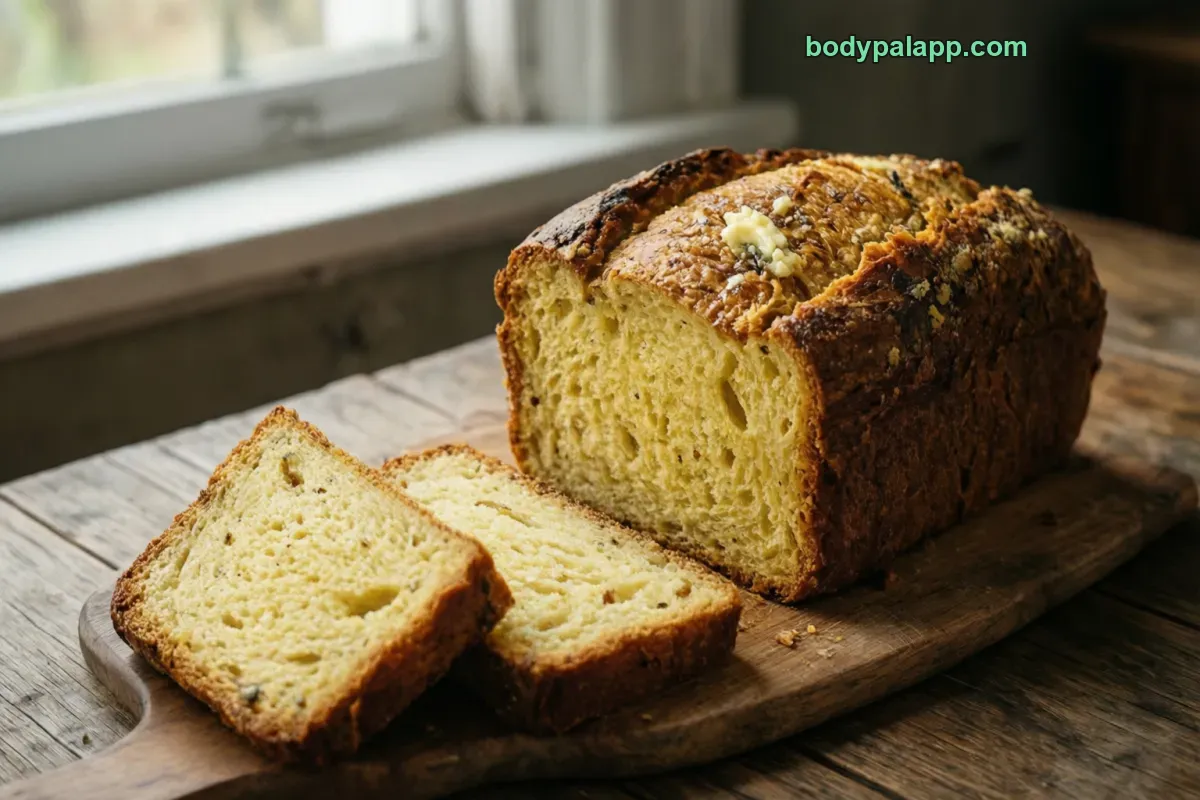
Beer bread calories come to 90 for one mix serving (26 g) and 346 per 100 g of the dry mix, per the package label. The number to notice is the split: 91% of calories come from carbs, fat sits at 0, and sodium reaches 692 mg per 100 g, so portion size drives everything.
90kcal
1 mix serving · 26 g, packaged, per label
9%protein
2 gProtein
20 gCarbs
0 gFat
How to burn off 90 kcal
—Walking, brisk
—Jogging
—Cycling, moderate
—Swimming
Skip the math. BodyPal counts these calories from your steps and workouts automatically.
Nutrition facts
Packaged, per label · per 26 g
Calories
90 kcal
Protein
2 g
Carbohydrate
20 g
Fat
0 g
Saturated fat
0 g
Cholesterol
0 mg
Sodium
180 mg
Source: USDA FoodData Central
🛡️
Verified nutrition data
Numbers on this page come from USDA FoodData Central, the U.S. Department of Agriculture’s food composition database, and from manufacturer labels where a branded product is named. Last verified September 2026. How we verify our data →
Beer bread: calories, protein and sodium by serving
Percent of daily value uses the FDA reference of 2,000 kcal a day.
Serving
kcal
Protein
Carbs
Fat
Sodium
% DV kcal
Mix Serving (26 g)
90
2 g
20 g
0 g
180 mg
4%
100 g
346
7.7 g
76.9 g
0 g
692 mg
17%
3 × Mix Serving (26 g)
270
6 g
540 mg
5 × Mix Serving (26 g)
450
10 g
900 mg
Three mix servings add up to 270 calories
The label's mix serving is 26 g of dry mix, which works out to 90 calories, 20 g of carbs, 2 g of protein and 0 g of fat. That covers 4% of the daily value for calories. It is a modest number, but it describes a thin slice, and few people stop at one.
The total climbs quickly. Two mix servings (52 g) reach 180 calories, three (78 g) land at 270, and five (130 g) hit 450 calories with 10 g of protein. A thick, warm slice cut from a homemade loaf can easily equal two or three label servings, so judge by weight rather than by the slice.
If you track intake, weigh the dry mix before baking and cut the loaf into equal pieces. Then each slice has a known share of the 346 calories per 100 g, and the math stays honest. BodyPal can also log a slice from a photo if you would rather skip the scale.
Carbs supply 91% of the calories
The calorie split is lopsided: 91% of the energy comes from carbohydrate, 9% from protein and 0% from fat. Per 100 g the mix holds 76.9 g of carbs, 7.7 g of protein and 0 g of fat. This is a flour-based quick bread, and the numbers read that way.
Sugar is part of the carb total. There are 11.5 g of sugars per 100 g, or 3 g per mix serving, which helps explain the slightly sweet crust. Fiber is 3.8 g per 100 g and 1 g per serving, enough to register but not enough to make this a filling bread on its own.
Protein is the weak spot. One serving gives 2 g, or 4% of the daily value, and even 100 g of mix only reaches 15%. If you want a slice to hold you over until the next meal, the protein has to come from what you serve alongside it.
Sodium is the row to watch
With 692 mg of sodium per 100 g, the mix lands at 30% of the daily value before you add anything. A single mix serving carries 180 mg, or 8% of the daily value, which seems mild until the slices stack up.
Three servings bring 540 mg and five reach 900 mg, measured against a daily value of 2300 mg. A generous bread course next to soup or chili can take a real share of the day's sodium before the main dish is even counted.
If you watch sodium, keep the portion near one or two servings and pair the bread with lower-salt sides. Fresh vegetables, a plain salad or fruit balance the plate better than cured meats or salty cheese. Cholesterol and saturated fat both read 0 on the label, so salt, not fat, is the trade-off with this mix.
Butter and beer change the final slice
The label numbers describe the dry mix only. Beer bread is made by stirring beer into the mix, and many recipes pour melted butter over the top before baking. Neither addition is counted in the 90 calories per serving, so the baked slice carries more than the box suggests.
Butter is the bigger swing because the mix itself has 0 g of fat. Any fat in the finished loaf comes from what you add, so a buttered top or a pat on a warm slice changes the macro split more than anything in the box. The beer brings its own calories as well; log it separately if you track closely.
Mixes such as Firenza Traditional Beer Bread, Amber Harvest Mills Original Beer Bread and Larry the Cable Guy Beer Bread work the same way, and flavored versions like Firenza Italian Garlic Beer Bread follow the pattern. For a balanced plate, treat a slice as the carb side and build the meal around protein and vegetables: bean chili, grilled chicken or eggs.
How does beer bread compare?
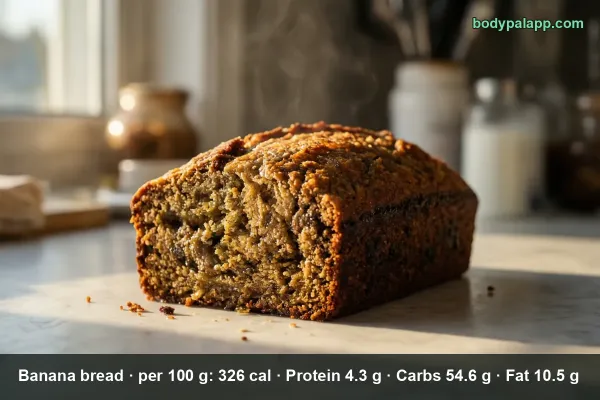
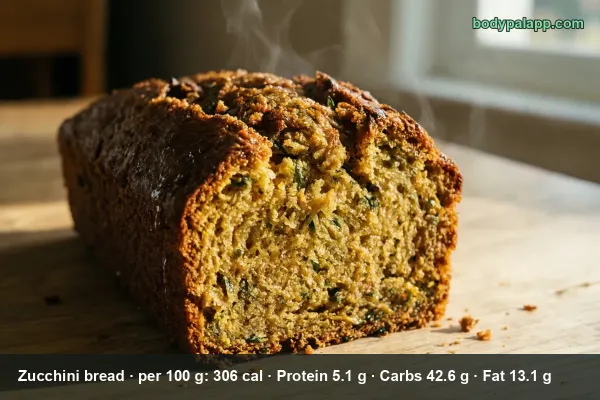
Here is how beer bread mix stacks up against banana bread and zucchini bread, per 100 g and per usual serving.
Verdict: Per 100 g, zucchini bread at 306 calories and banana bread at 326 come in a little under beer bread mix at 346, but they carry 13.1 g and 10.5 g of fat where the beer bread mix has 0. For the lowest sodium pick zucchini bread at 290 mg; for a fat-free base you can control yourself, beer bread is the pick.
Most popular beer bread brands in the United States
Ranked by popularity in the BodyPal database
# Productkcal / 100 g
1Larry the Cable Guy Beer Bread26 g346 kcal
2Firenza Traditional Beer Bread1/4 cup · 38 g342 kcal
3Amber Harvest Mills Original Beer Bread1 oz · 28 g357 kcal
4Firenza Italian Garlic Beer Bread1 slice · 34 g353 kcal
A 26 g mix serving of beer bread is about 90 calories, and 100 g of the dry mix is 346 calories.
Is beer bread good for weight loss?
The beer bread mix has 346 calories per 100 g with 76.9 g of carbs and 11.5 g of sugars, so a 26 g serving adds about 90 calories and 20.0 g of carbs.
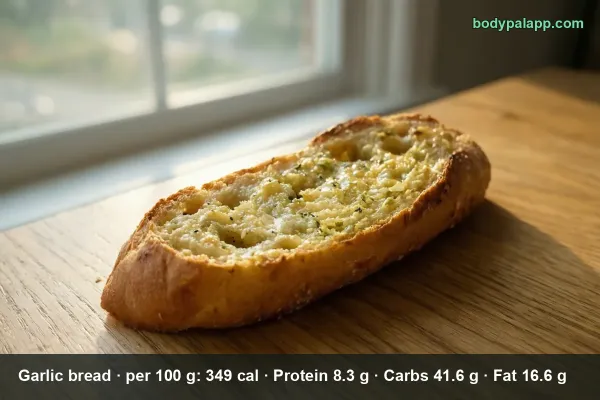
Beer bread vs garlic bread: which has fewer calories?
The beer bread mix is about 346 calories per 100 g and garlic bread is 349, so the two are close, with beer bread slightly lower.
How much protein is in beer bread?
A 26 g serving of the beer bread mix has about 2.0 g of protein, from 7.7 g per 100 g.
How many calories are in 100 g of beer bread mix?
100 g of beer bread mix has 346 calories, with 76.9 g of carbs, 7.7 g of protein and 0 g of fat. That is 17% of the daily value for calories, before any beer or butter is added.
How much sodium is in beer bread?
One mix serving (26 g) has 180 mg of sodium, 8% of the daily value. Per 100 g the mix holds 692 mg, which is 30% of the daily value, so several slices add up fast.
How much sugar is in beer bread?
Beer bread mix has 3 g of sugars per 26 g serving and 11.5 g per 100 g. That sugar sits inside the 20 g of carbs per serving, and carbs supply 91% of the calories.
Does beer bread have any fat?
The dry mix lists 0 g of fat and 0 g of saturated fat per 100 g, with 0 mg of cholesterol. Any fat in the baked loaf comes from butter or other ingredients you add at home.
How much fiber is in beer bread?
Each 26 g mix serving has 1 g of fiber, and 100 g has 3.8 g. That is a small amount, so pair beer bread with vegetables or beans if you want a more filling meal.