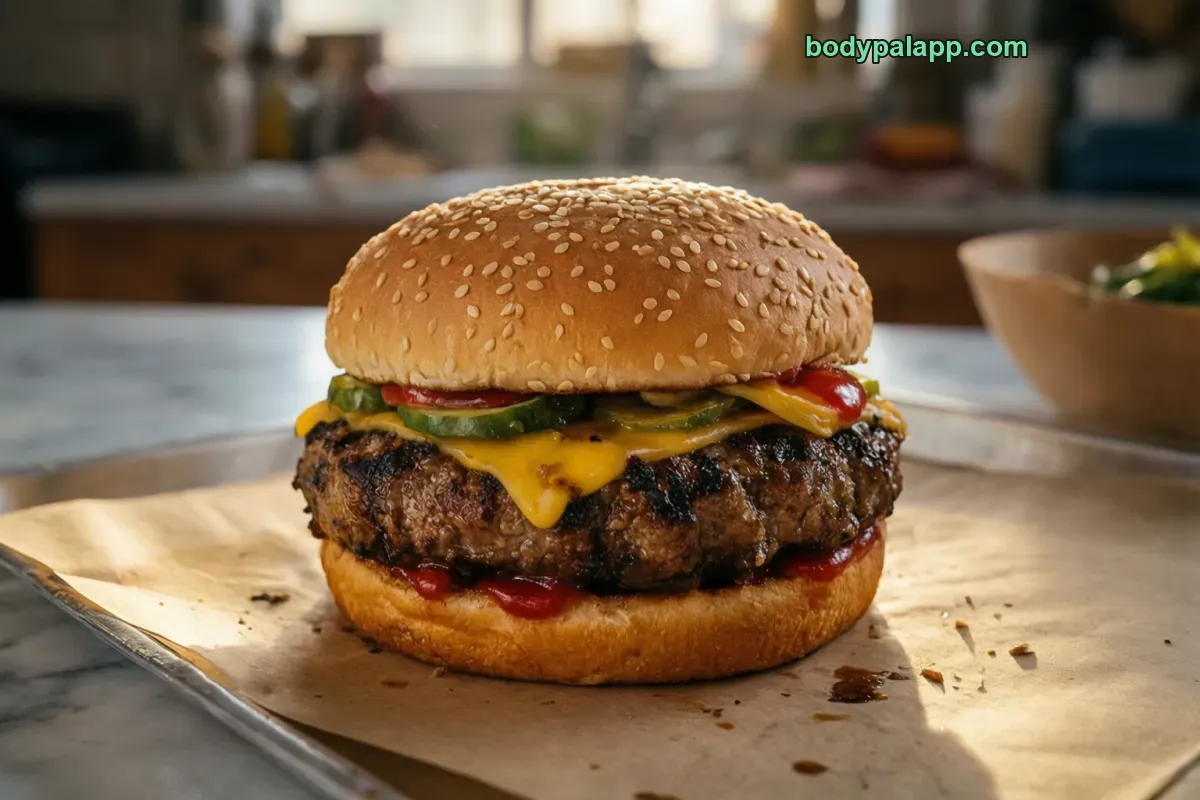
Burger King cheeseburger calories come to 380 for one sandwich (133 g), or 286 per 100 g. That is a moderate number for fast food. The figure to watch is sodium: 801 mg in a single burger, 35% of the daily value, before fries or a drink ever reach the tray.
380kcal
1 cheeseburger · 133 g, fast food
20%protein
19.4 gProtein
32 gCarbs
19.7 gFat
How to burn off 380 kcal
—Walking, brisk
—Jogging
—Cycling, moderate
—Swimming
Skip the math. BodyPal counts these calories from your steps and workouts automatically.
Nutrition facts
Fast food · per 133 g
Calories
380 kcal
Protein
19.4 g
Carbohydrate
32 g
Fat
19.7 g
Saturated fat
9.1 g
Cholesterol
60 mg
Sodium
801 mg
Potassium
237 mg
Iron
3.3 mg
Source: USDA FoodData Central
🛡️
Verified nutrition data
Numbers on this page come from USDA FoodData Central, the U.S. Department of Agriculture’s food composition database, and from manufacturer labels where a branded product is named. Last verified September 2026. How we verify our data →
Burger King cheeseburger: calories, protein and sodium by serving
Percent of daily value uses the FDA reference of 2,000 kcal a day.
Serving
kcal
Protein
Carbs
Fat
Sodium
% DV kcal
1 cheeseburger (133 g)
380
19.4 g
31.5 g
19.7 g
801 mg
19%
Double cheeseburger (162 g)
457
27.3 g
28.2 g
26.1 g
910 mg
23%
100 g
286
14.6 g
23.7 g
14.8 g
602 mg
14%
3 × 1 cheeseburger (133 g)
1,141
58.1 g
2,402 mg
5 × 1 cheeseburger (133 g)
1,902
96.9 g
4,003 mg
Each extra cheeseburger adds another 380 calories
A single Burger King cheeseburger weighs 133 g and carries 380 calories, about 19% of the daily value. It brings 19.4 g of protein, 31.5 g of carbs and 19.7 g of fat. On its own it sits closer to a big snack than a full meal. These are USDA fast-food values for the chain's cheeseburger, so the chain's published numbers may differ slightly.
The double cheeseburger (162 g) climbs to 457 calories. The second patty shows up mostly as fat and protein: 26.1 g of fat instead of 19.7 g, and 27.3 g of protein instead of 19.4 g. Carbs barely move, 28.2 g against 31.5 g, because you still get one bun.
Stacking singles is where the total runs away. Two cheeseburgers (266 g) reach 761 calories, three (399 g) hit 1,141, and five (665 g) total 1,902. If one is not enough, the double is the smarter upgrade: 27.3 g of protein for 457 calories beats 38.8 g for 761 when you order two singles.
Fat supplies almost half the calories
Per 100 g the burger has 14.6 g of protein, 23.7 g of carbs and 14.8 g of fat. Fat and carbs look close on paper by weight. Because fat packs more energy per gram, it ends up supplying 47% of the calories, against 33% from carbs and 20% from protein.
Saturated fat is the part of that fat worth a glance. At 6.8 g per 100 g it is about a third of the 20 g daily value, and a full burger weighs more than 100 g. Cholesterol is milder at 45 mg per 100 g against a daily value of 300 mg.
The carb side is mostly refined bun. Fiber is just 1.3 g per burger, a small dent in the 28 g daily value, and sugars come to 6 g. That mix explains why a single cheeseburger can feel light an hour later. There is little fiber and only moderate protein to slow things down.
Sodium is the row to watch
One cheeseburger carries 801 mg of sodium, 35% of the daily value. Calories, by comparison, sit at 19%. Salt is the number that grows faster than everything else on the label. The double pushes it to 910 mg, or 40%.
Multiply and the gap gets wide. Two cheeseburgers bring 1,601 mg, three bring 2,402 mg, which is past the full daily value of 2300 mg, and five reach 4,003 mg. Fries and dipping sauces stack on top of that, so a combo meal can use up most of a day's sodium in one sitting.
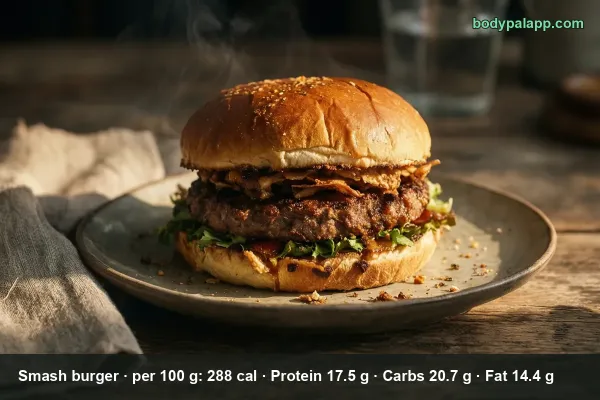
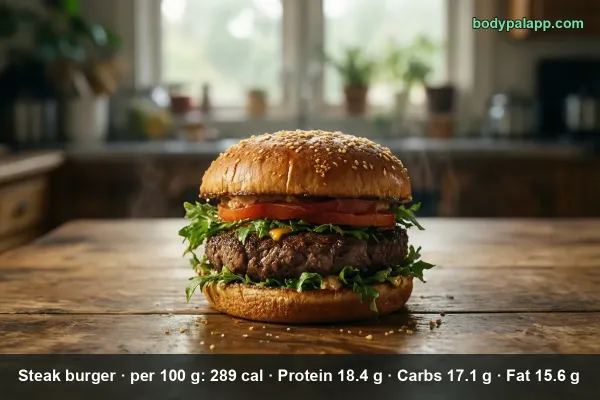
Per 100 g the burger has 602 mg of sodium. A smash burger has 355 mg and a steak burger 351 mg for the same weight. If you watch sodium, one single cheeseburger with an unsalted side is the version that keeps the total in check.
Build the tray around one burger
A single cheeseburger delivers 39% of the daily value for protein at 19% of the calories. That is a decent trade for fast food. Order a second one and the calories climb while the protein share stays the same, so the better move is adding volume that costs little.
Pair it with water or an unsweetened drink rather than a soda, and skip the large fries if the burger is the point of the meal. A side of fruit or raw vegetables brought from home adds the fiber the bun lacks. It helps the meal hold you longer than the burger alone would.
If the rest of your day runs salty, make this the meal where you stop at one. If you log what you eat, BodyPal can record the cheeseburger from a photo of your tray, so the 380 calories and 801 mg of sodium land in your day without extra typing.
How does Burger King cheeseburger compare?
Here is how the Burger King cheeseburger stacks up against three other burgers on calories, macros and sodium, per 100 g and per usual serving.
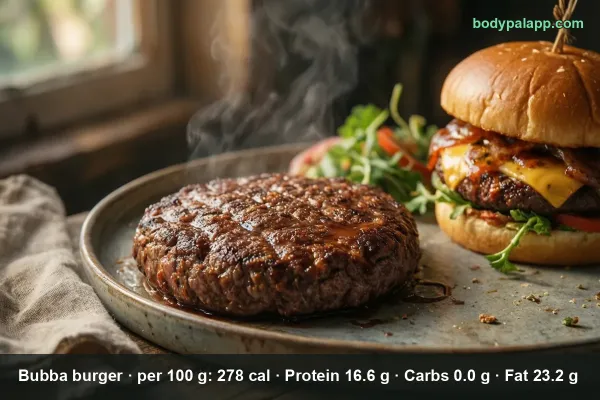
Verdict: On calories it is close to a tie: 286 per 100 g here against 288 for a smash burger, 289 for a steak burger and 278 for a bubba burger patty with 0 g carbs. If sodium or protein matters to you, skip the Burger King cheeseburger: its 602 mg of sodium per 100 g is the highest of the four, and the steak burger gives 18.4 g of protein per 100 g against 14.6 g here.
Burger King cheeseburger FAQs
How many calories are in a Burger King cheeseburger?
One Burger King cheeseburger (133 g) has about 380 calories, which is 286 calories per 100 g.
Is a Burger King cheeseburger good for weight loss?
One cheeseburger has 380 calories with 19.7 g of fat and 19.4 g of protein. The Double Cheeseburger comes to 457 calories.
Burger King cheeseburger vs smash burger: which has fewer calories?
They are almost the same per 100 g: 286 calories for the Burger King cheeseburger and 288 for a smash burger.
How much protein is in a Burger King cheeseburger?
About 19.4 g of protein per cheeseburger, along with 31.5 g of carbs and 6.0 g of sugar.
How many calories are in a Burger King double cheeseburger?
A Burger King double cheeseburger (162 g) has 457 calories. It also brings 27.3 g of protein, 26.1 g of fat and 910 mg of sodium, which is 40% of the daily value.
How many calories are in two Burger King cheeseburgers?
Two Burger King cheeseburgers (266 g) come to 761 calories. Together they bring 38.8 g of protein and 1,601 mg of sodium, so a double cheeseburger at 457 calories is the lighter way to get a second patty.
How much sodium is in a Burger King cheeseburger?
One Burger King cheeseburger has 801 mg of sodium, 35% of the daily value. That works out to 602 mg per 100 g, well above a smash burger at 355 mg.
How many calories are in 100 g of a Burger King cheeseburger?
100 g of a Burger King cheeseburger has 286 calories, with 14.6 g of protein, 23.7 g of carbs and 14.8 g of fat. A full sandwich weighs 133 g and comes to 380 calories.
How much fat is in a Burger King cheeseburger?
A Burger King cheeseburger has 19.7 g of fat, and fat supplies 47% of its calories. Saturated fat is 6.8 g per 100 g, about a third of the 20 g daily value.