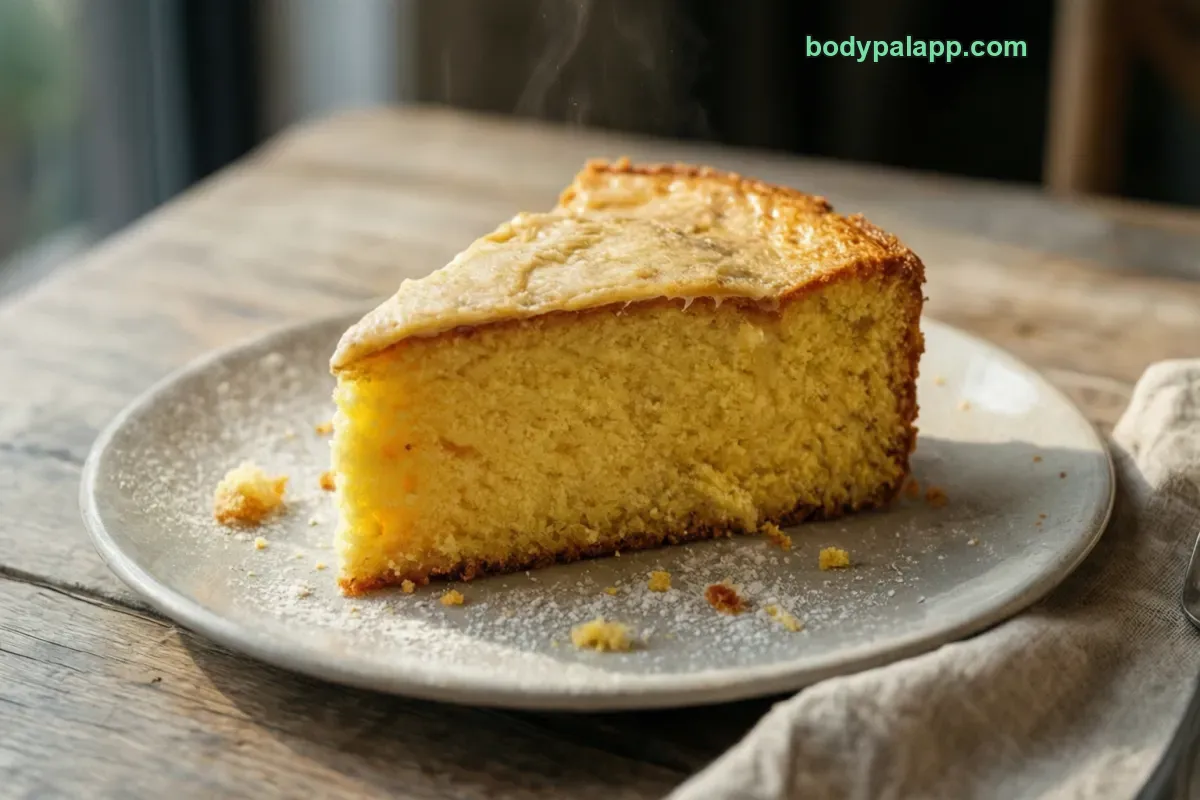
Butter cake calories come to 215 for one 61 g slice and 353 per 100 g, based on the USDA row for commercially prepared butter pound cake. The thing to notice is sugar: a single slice carries 20.3 g, and carbs supply 60% of the energy while protein adds only 3.1 g.
215kcal
1 slice · 61 g, commercially prepared, butter
6%protein
3 gProtein
33 gCarbs
8.5 gFat
How to burn off 215 kcal
—Walking, brisk
—Jogging
—Cycling, moderate
—Swimming
Skip the math. BodyPal counts these calories from your steps and workouts automatically.
Nutrition facts
Commercially prepared, butter · per 61 g
Calories
215 kcal
Protein
3 g
Carbohydrate
33 g
Fat
8.5 g
Saturated fat
2.9 g
Cholesterol
40 mg
Sodium
230 mg
Potassium
91 mg
Iron
0.9 mg
Source: USDA FoodData Central
🛡️
Verified nutrition data
Numbers on this page come from USDA FoodData Central, the U.S. Department of Agriculture’s food composition database, and from manufacturer labels where a branded product is named. Last verified September 2026. How we verify our data →
Butter cake: calories, protein and sodium by serving
Percent of daily value uses the FDA reference of 2,000 kcal a day.
Serving
kcal
Protein
Carbs
Fat
Sodium
% DV kcal
1 slice (61 g)
215
3.1 g
32.7 g
8.5 g
230 mg
11%
Snack cake (49 g)
173
2.5 g
26.3 g
6.8 g
185 mg
9%
100 g
353
5 g
53.6 g
14 g
377 mg
18%
3 × 1 slice (61 g)
646
9.2 g
690 mg
5 × 1 slice (61 g)
1,077
15.3 g
1,150 mg
One slice is 215 calories, three are 646
A standard 61 g slice lands at 215 calories, about 11% of a 2000-calorie daily value. A smaller 49 g snack cake comes in at 173. That gap looks small on paper, but it is the difference between a moderate dessert and a noticeably bigger one once a second piece enters the picture.
Butter cake is dense and easy to cut thick, so the total moves fast. Two slices (122 g) reach 431 calories, and three slices (183 g) hit 646. Five slices, the kind of total that adds up across a weekend of picking at a loaf, come to 305 g and 1,077 calories.
If you want the cake without the drift, decide on the portion before the knife comes out. The snack-cake size is a useful reference: at 49 g it keeps the treat around 173 calories and still feels like a proper piece. Weighing once at home shows you what your usual slice actually is.
Carbs supply 60% of the calories, fat 35%
The calorie split is lopsided toward carbohydrates. Carbs provide 60% of the energy, fat 35%, and protein just 6%. Per 100 g that works out to 53.6 g carbs, 14 g fat and 5 g protein, which is the profile of flour, sugar and butter with little else in the mix.
Per slice you get 32.7 g carbs, 8.5 g fat and 3.1 g protein. That protein covers about 6% of the daily value, so a slice will not do much to keep you full on its own. Fiber is close to absent at 0.4 g per slice.
Fat is where the butter shows up. Of the 14 g per 100 g, 4.8 g is saturated, and cholesterol reaches 66 mg. None of these numbers is extreme for a cake, but they explain why a modest slice delivers 215 calories in a fairly small weight.
Sugar is the row to watch, sodium comes second
Sugar makes up most of the carbohydrate. There are 33.4 g of sugars per 100 g, which means 20.3 g in a single slice and 16.3 g in the snack-cake size. If you track added sugar, butter cake uses up a lot of room for one serving, and two slices double that load.
Sodium is higher than most people expect from a sweet bake. A slice holds 230 mg, about 10% of the 2300 mg daily value, and 100 g carries 377 mg. Leavening and salted butter both contribute. Three slices push sodium to 690 mg, and five reach 1,150 mg.
If you watch sodium for any reason, count butter cake like a savory snack rather than a free extra. The snack cake at 185 mg is the lighter option on both sugar and salt.
Make one slice the dessert, not the snack
Butter cake works best as a planned dessert. One slice at 215 calories fits comfortably after a meal that already brought protein and fiber, because the cake itself brings little of either. Eaten alone mid-afternoon, it tends to leave you hungry again fairly soon.
Pairing helps. Fresh berries or sliced fruit add volume and fiber next to the 0.4 g in the cake, and a glass of milk or a spoon of plain yogurt adds protein. Skip a heavy frosting or a scoop of ice cream if you want the total to stay near the number on the label.
Gooey styles sold under names like Prairie City Bakery Ooey Gooey Butter Cake or Cafe Valley Bakery Danish Butter Cake may differ from the USDA pound-cake values, so check the package. BodyPal can log a slice from a photo if you would rather not weigh it.
How does butter cake compare?
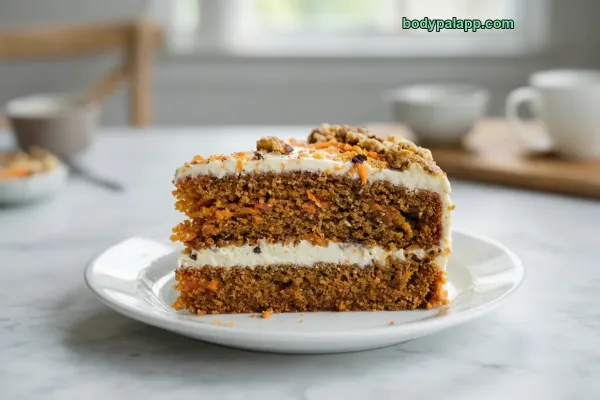
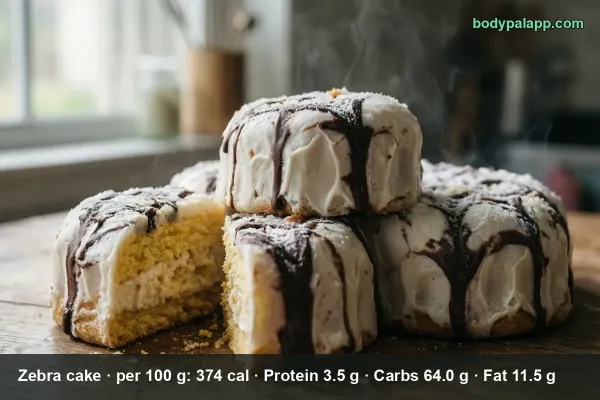
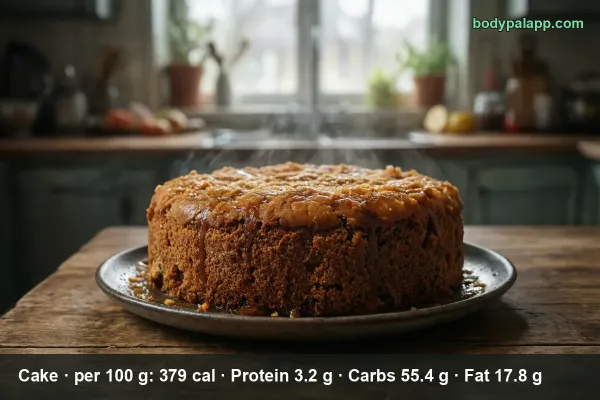
Here is how butter cake stacks up against carrot cake, zebra cake and plain cake, per 100 g and per usual serving.
Verdict: Butter cake is the lightest of the group at 353 calories per 100 g, against 374 for carrot cake and zebra cake and 379 for cake, so it is the better pick if calories decide. Watch the serving size, though: a 200 g slice of carrot cake reaches 748 calories, while a 61 g slice of butter cake stays at 215.
Most popular butter cake brands in the United States
These are branded gooey butter cake products, a moister, richer style than the plain butter pound cake priced above, so their calorie counts vary more widely. Source: manufacturer labels / USDA FoodData Central.
Butter cake FAQs
How many calories are in a slice of butter cake?
A 61 g slice of butter pound cake has about 215 calories. A smaller 49 g individually wrapped piece is about 173 calories.
Is butter cake good for weight loss?
Butter cake is energy-dense at 353 calories per 100 g, with 13.96 g fat and 33.36 g sugar per 100 g, so a 61 g slice still adds about 215 calories.
Butter cake vs carrot cake: which has fewer calories?
Butter cake is 353 calories per 100 g and carrot cake is 374, so butter cake is about 21 calories lower per 100 g.
How much sugar is in butter cake?
A 61 g slice of butter cake has about 20.3 g of sugar, from 33.36 g per 100 g. It also has 13.96 g of fat per 100 g.
What are the nutrition facts for butter cake per 100 g?
Per 100 g, butter cake has 353 calories, 53.6 g carbs, 14 g fat, 5 g protein, 33.4 g sugars and 377 mg sodium. Saturated fat is 4.8 g and fiber is 0.6 g.
How many calories are in a butter snack cake?
A 49 g butter snack cake has 173 calories. It also carries 16.3 g sugars, 6.8 g fat, 2.5 g protein and 185 mg sodium, making it a lighter choice than a full 61 g slice.
How many calories are in plain butter cake?
Plain butter cake, based on commercially prepared butter pound cake, has 353 calories per 100 g and 215 in a 61 g slice. Frosting, glaze or fillings would add to that total.
How much fat is in a slice of butter cake?
A 61 g slice of butter cake has 8.5 g fat. Per 100 g there are 14 g fat, of which 4.8 g is saturated, and fat supplies about 35% of the calories.
How much sodium is in butter cake?
A slice of butter cake has 230 mg sodium, about 10% of the daily value. Per 100 g it is 377 mg, and two slices reach 460 mg.