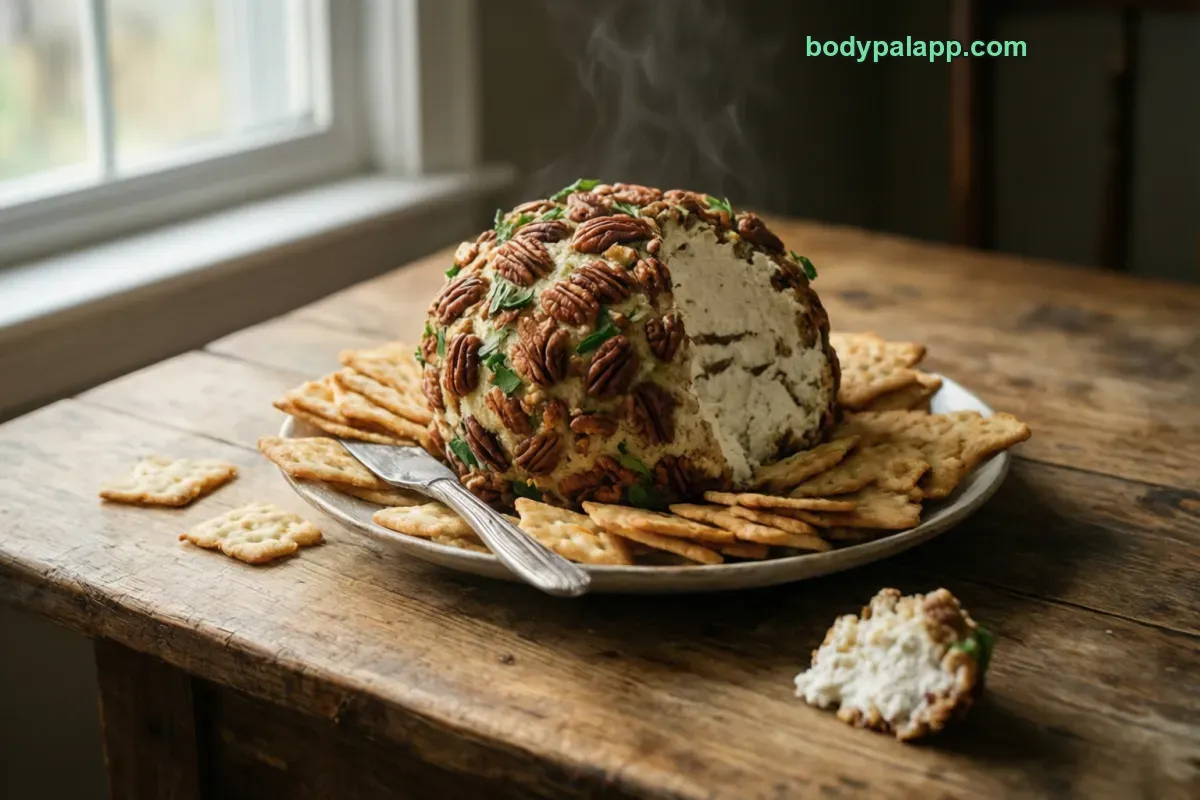
Cheese ball calories come to 132 for 2 tablespoons (30 g) and 441 per 100 g. Fat supplies 79% of those calories, so this is a rich spread, not a light dip. The serving is small, and a party plate rarely stops at one. That is where the total climbs.
132kcal
1 2-tablespoon serving · 30 g, ready to eat
16%protein
5.4 gProtein
1 gCarbs
11.7 gFat
How to burn off 132 kcal
—Walking, brisk
—Jogging
—Cycling, moderate
—Swimming
Skip the math. BodyPal counts these calories from your steps and workouts automatically.
Nutrition facts
Ready to eat · per 30 g
Calories
132 kcal
Protein
5.4 g
Carbohydrate
1.5 g
Fat
11.7 g
Saturated fat
4.4 g
Cholesterol
21 mg
Sodium
166 mg
Potassium
58 mg
Iron
0.2 mg
Source: USDA FoodData Central
🛡️
Verified nutrition data
Numbers on this page come from USDA FoodData Central, the U.S. Department of Agriculture’s food composition database, and from manufacturer labels where a branded product is named. Last verified September 2026. How we verify our data →
Cheese ball: calories, protein and sodium by serving
Percent of daily value uses the FDA reference of 2,000 kcal a day.
Serving
kcal
Protein
Carbs
Fat
Sodium
% DV kcal
2 tablespoons (30 g)
132
5.4 g
1.5 g
11.7 g
166 mg
7%
1 tablespoon (15 g)
66
2.7 g
0.7 g
5.8 g
83 mg
3%
1 oz portion (28 g)
123
5 g
1.4 g
10.9 g
155 mg
6%
100 g
441
17.9 g
4.8 g
38.9 g
554 mg
22%
3 × 2 tablespoons (30 g)
397
16.1 g
499 mg
5 × 2 tablespoons (30 g)
662
26.8 g
831 mg
Two tablespoons is 132 calories, and the knife keeps going
The labeled serving is 2 tablespoons (30 g), which gives you 132 calories, 5.4 g of protein and 11.7 g of fat. That covers 7% of the daily value for calories. A single tablespoon (15 g) halves it to 66 calories, and a 1 oz portion (28 g) lands at 123. These amounts look tiny on a cracker, which is why they are easy to underestimate.
At a party the spread rarely stays at one serving. Two servings (60 g) come to 265 calories, three (90 g) reach 397, and five servings (150 g) add up to 662 calories with 831 mg of sodium. That last amount is a full meal's worth of energy eaten in small bites while standing near the snack table.
If you track intake, measure once with a tablespoon and look at how much it covers. Most people find their usual smear is bigger than they thought. Logging the first few crackers honestly tells you more than any label. BodyPal can also log a plate like this from a photo.
Fat makes up 79% of the calories
Per 100 g, a cheese ball holds 38.9 g of fat, 17.9 g of protein and only 4.8 g of carbs. In calorie terms that is 79% fat, 16% protein and 4% carbs. It behaves like cream cheese and shredded cheese blended together, because that is mostly what it is.
The protein is real but secondary. A 2 tablespoon serving gives 5.4 g, which is 11% of the daily value, while 100 g gives 17.9 g, or 36%. You would need five servings to reach 26.8 g of protein, and by then you have eaten 662 calories. As a protein source, it is an expensive one.
Sugar and fiber barely register. There is 1.7 g of sugars and 1.2 g of fiber per 100 g, and only 0.5 g and 0.4 g in a 2 tablespoon serving. Carb counters will find it fits easily. Calorie counters will find it is the fat that decides everything.
Saturated fat and sodium are the rows to watch
Saturated fat reaches 14.6 g per 100 g, against a daily value of 20 g used on this page. That means a generous party portion can take up most of the day's allowance before the main course arrives. Cholesterol sits at 71 mg per 100 g.
Sodium is moderate per serving and adds up quietly. Two tablespoons carry 166 mg, or 7% of the daily value, and 100 g carries 554 mg, or 24%. Three servings bring 499 mg, and the crackers or pretzels underneath add their own salt on top.
If you watch sodium or saturated fat, the fix is the same as for calories: decide on a portion before you start. One or two tablespoons fits comfortably into most days. Half a cheese ball over an evening does not.
Pair it with crunch that adds little
The numbers on this page describe the classic party cheese ball, the spreadable kind rolled in nuts or herbs, such as Kaukauna Port Wine Cheese Ball. Puffed snack balls from brands like Utz are a different food, closer to the cheese puff row in the table below, with far more carbs.
What you spread it on changes the plate more than the cheese ball itself. Celery, cucumber rounds, bell pepper strips and radishes add crunch and almost nothing else. Crackers and toasted bread add carbs and more sodium, so the same 2 tablespoons becomes a bigger snack.
A good approach is to put your portion on a small plate with vegetables, then step away from the board. You still get the full flavor of the cheese, and the total stays near the 132 calories of one serving instead of drifting toward several hundred.
How does cheese ball compare?
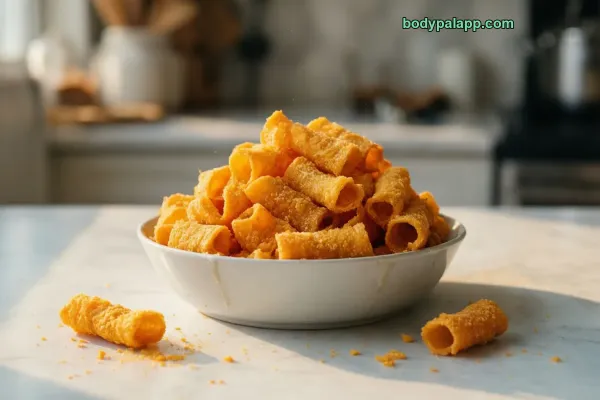
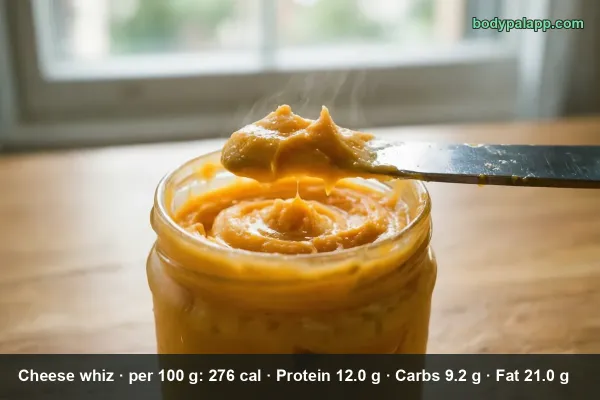
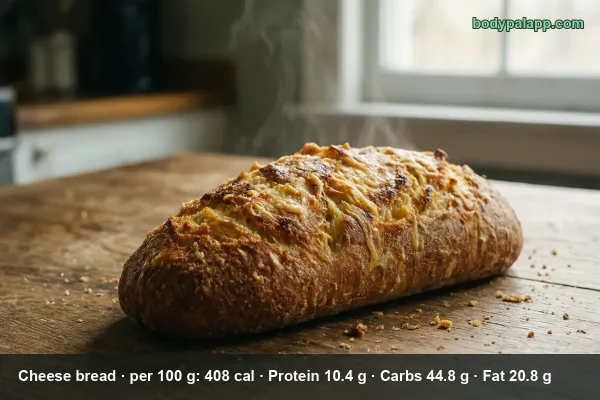
Here is how the cheese ball compares with cheese puffs, Cheez Whiz-style cheese sauce and cheese bread, per 100 g and per usual serving.
Verdict: Cheese whiz is the lightest of the group at 276 calories per 100 g, while cheese puffs are the densest at 567 and carry 54.5 g of carbs. For the most protein per bite pick the cheese ball with 17.9 g per 100 g, and keep the portion to one serving.
Most popular cheese ball brands in the United States
Ranked by popularity in the BodyPal database
# Productkcal / 100 g
1Utz Cheese Balls1 oz · 28 g536 kcal
2Utz Baked Cheddar Cheese Balls1 oz · 28 g536 kcal
3Utz Cheddar Cheese Balls1 oz · 28 g464 kcal
4Utz Mini Cheese Balls0.25 oz · 7 g563 kcal
5Utz Mini Cheddar Cheese Balls0.25 oz · 7 g493 kcal
6Kaukauna Port Wine Cheese Ball2 Tbsp · 28 g321 kcal
Most packaged cheese balls are puffed corn snacks rather than the soft cheese spread above, so their labels read higher per gram; the Kaukauna spread is the closest match to the main number. Source: manufacturer labels / USDA FoodData Central.
Cheese ball FAQs
How many calories are in a cheese ball?
A 2-tablespoon serving (30 g) is 132 calories, and one tablespoon is 66 calories. Per 100 g a cheese ball is 441 calories.
Is cheese ball good for weight loss?
It is energy dense at 441 calories and 38.9 g of fat per 100 g, so a 2-tablespoon serving takes 132 calories out of a daily budget.
Cheese ball vs cheese puffs: which has more calories?
Baked corn cheese puffs are 432 calories per 100 g, close to the 441 of a cheese ball, but the puffs carry 72.4 g of carbs per 100 g against 4.8 g.
How much protein is in a cheese ball?
There is 17.9 g of protein per 100 g, so a 2-tablespoon serving gives 5.4 g of protein along with 11.7 g of fat.
How many calories are in cheese ball per 100 g?
A cheese ball has 441 calories per 100 g, with 38.9 g of fat, 17.9 g of protein and 4.8 g of carbs. That 100 g covers 22% of the daily value for calories.
What are the nutrition facts for a cheese ball?
Two tablespoons (30 g) give 132 calories, 11.7 g of fat, 5.4 g of protein, 1.5 g of carbs and 166 mg of sodium. Per 100 g there is 14.6 g of saturated fat and 71 mg of cholesterol.
Do cheese balls make you fat?
No single food does, but a cheese ball is dense at 441 calories per 100 g, and 79% of that is fat. Five servings reach 662 calories, so portion size decides the outcome.
Are cheese balls healthy?
A cheese ball offers 17.9 g of protein per 100 g, but also 14.6 g of saturated fat and 554 mg of sodium. It works best as an occasional spread kept to 1 or 2 tablespoons.