Chicken bouillon cube calories come to 10 for one 4.8 g cube and 198 per 100 g of the dry product. The calories barely matter. Sodium does: a single cube carries 1,152 mg, which is 50% of the daily value, before you add anything else to the pot.
10kcal
1 cube · 4 g, dry
30%protein
0.7 gProtein
1 gCarbs
0.2 gFat
How to burn off 10 kcal
—Walking, brisk
—Jogging
—Cycling, moderate
—Swimming
Skip the math. BodyPal counts these calories from your steps and workouts automatically.
Nutrition facts
Dry · per 4 g
Calories
10 kcal
Protein
0.7 g
Carbohydrate
1.1 g
Fat
0.2 g
Saturated fat
0.1 g
Cholesterol
1 mg
Sodium
1152 mg
Potassium
18 mg
Iron
0.1 mg
Source: USDA FoodData Central
🛡️
Verified nutrition data
Numbers on this page come from USDA FoodData Central, the U.S. Department of Agriculture’s food composition database, and from manufacturer labels where a branded product is named. Last verified September 2026. How we verify our data →
Chicken bouillon cube: calories, protein and sodium by serving
Percent of daily value uses the FDA reference of 2,000 kcal a day.
Serving
kcal
Protein
Carbs
Fat
Sodium
% DV kcal
1 cube (4.8 g)
10
0.7 g
1.1 g
0.2 g
1,152 mg
0%
Dissolved in 6 fl oz water (182 g)
9
0.7 g
1.1 g
0.2 g
593 mg
0%
100 g
198
14.6 g
23.5 g
4.7 g
24,000 mg
10%
3 × 1 cube (4.8 g)
29
2.1 g
3,456 mg
5 × 1 cube (4.8 g)
48
3.5 g
5,760 mg
One cube is 10 calories, five cubes are 48
A standard cube weighs 4.8 g and lands at 10 calories. Dissolve it in 6 fl oz of water and the USDA lists the finished cup of broth (182 g) at 9 calories. Either way, it registers as 0% of the daily calorie value. You could drop a cube into almost any dish and the calorie column would hardly move.
Recipes rarely stop at one. Two cubes add 19 calories, three add 29, and five add 48. Even at five cubes, that is less than many single tablespoons of cooking oil. If you build a big pot of soup around bouillon, the cubes are a rounding error next to the noodles, rice, chicken and vegetables you add.
So the portion question for bouillon is not really about energy. It is about how far the salt spreads. A cube split across several bowls of soup is a very different thing from a cube stirred into a single mug.
Carbs supply nearly half of a tiny total
Per 100 g of dry cube, the USDA row shows 23.5 g of carbs, 14.6 g of protein and 4.7 g of fat. That splits the calories into 48% carbs, 30% protein and 22% fat. Sugars and fiber both read 0, so the carbs come from the starches and fillers that bind the powder into a cube.
Scale that down to one cube and the numbers shrink to almost nothing: 0.7 g of protein, 1.1 g of carbs and 0.2 g of fat. Protein covers just 1% of the daily value. A mug of bouillon tastes savory and meaty, but it is not a protein food, and it will not stand in for chicken in a meal.
Saturated fat sits at 1.2 g and cholesterol at 13 mg per 100 g, and per cube those figures become trivial. The macro picture is simple: bouillon is a seasoning, and its nutrition label behaves like one.
Sodium is the only row that matters
Dry bouillon is listed at 24,000 mg of sodium per 100 g, which works out to 1,043% of the daily value. Nothing else on the label comes close. One cube holds 1,152 mg, half of a full day's sodium value, while contributing only 10 calories.
The multiples climb fast. Two cubes bring 2,304 mg, already past the daily value on their own. Three cubes carry 3,456 mg and five carry 5,760 mg. A cup of broth made from one cube in 6 fl oz of water still delivers 593 mg, or 26% of the daily value, in a single mug.
If you watch sodium, treat each cube as a salt measure rather than a flavor booster. Use fewer cubes than the package suggests, stretch one cube across more water, and hold back on extra salt in the recipe. Potassium is listed at 374 mg per 100 g, so the cube does little to balance the sodium it adds.
Use it to flavor food, not as the meal
Bouillon earns its place as a cheap shortcut to savory flavor. Stirred into rice, lentils, braised vegetables or a pot of soup, one cube seasons a lot of food for very few calories. The trade is the sodium, so it works best in dishes you split into several servings.
A plain mug of broth is filling for its calorie count, but it brings little protein and no fiber. Pair it with something that does the work: shredded chicken, beans, eggs or a pile of vegetables turn a 9-calorie cup into an actual meal.
Store brands such as Member's Mark, Wellsley Farms and Harris Teeter all sell chicken bouillon cubes, and labels differ in cube size and salt. Check the package you own. BodyPal can log the bouillon in your bowl from a photo, so the cubes show up in your day along with the rest of the soup.
How does chicken bouillon cube compare?
Here is how a chicken bouillon cube stacks up against chicken stock, chicken pot pie and butter chicken sauce, per 100 g and per usual serving.
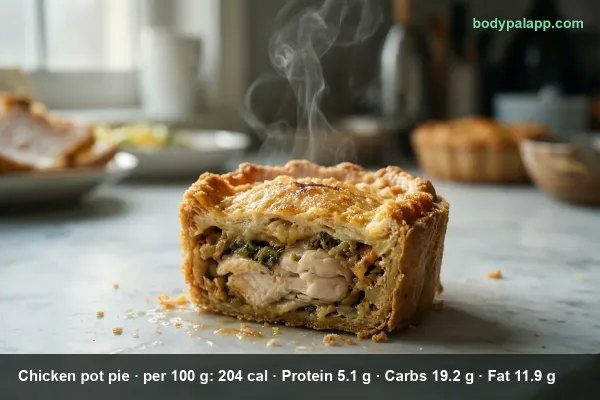
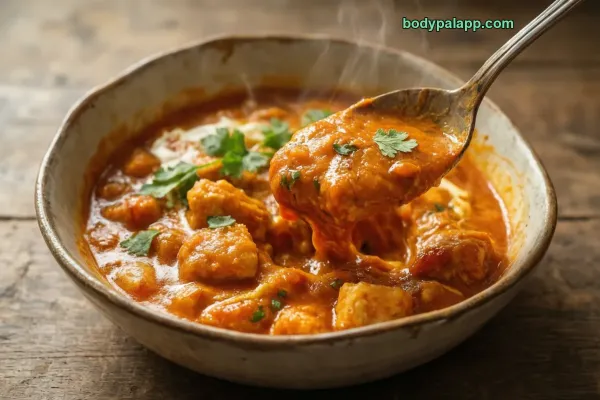
Verdict: For the lightest broth by the serving, a cube wins at 10 calories against 86 for a cup of chicken stock, though stock carries far less sodium at 143 mg per 100 g. If you want a chicken dish that actually fills you up, chicken pot pie at 204 calories per 100 g or butter chicken sauce at 140 per 1/2 cup is where the energy really sits.
Most popular chicken bouillon cube brands in the United States
How many calories are in one chicken bouillon cube?
About 10 calories in a 4.8 g cube. Dissolved in 6 fl oz of water, it makes about 9 calories of broth.
Is chicken bouillon good for weight loss?
One cube has about 10 calories and 0.7 g of protein, and a cup (243 g) of prepared broth has about 12 calories.
Chicken bouillon cube vs chicken stock: which has fewer calories?
Broth made from a cube has 5 calories per 100 g, while chicken stock has 36 calories per 100 g.
How much sodium is in a chicken bouillon cube?
One 4.8 g cube has about 1,152 mg of sodium. Prepared with water, the broth has 326 mg per 100 g.
How much does 1 chicken bouillon cube weigh?
A standard chicken bouillon cube weighs 4.8 g and has 10 calories. Per 100 g of dry cube the total is 198 calories, but you would need many cubes to reach that weight.
How many calories are in chicken broth made from a bouillon cube?
One cube dissolved in 6 fl oz of water (182 g) has 9 calories, per the USDA. That same cup carries 593 mg of sodium, which is 26% of the daily value.
What are the nutrition facts for chicken bouillon cubes?
One 4.8 g cube has 10 calories, 0.7 g protein, 1.1 g carbs, 0.2 g fat, 0 g sugars and 1,152 mg sodium. The calories split 48% carbs, 30% protein and 22% fat.
Does a chicken bouillon cube have protein?
Only 0.7 g per cube, or 1% of the daily value. Per 100 g the dry cube has 14.6 g of protein, but a normal portion is too small for that to add up.
How many calories are in several chicken bouillon cubes?
Two cubes have 19 calories, three have 29 and five have 48. The sodium rises much faster: five cubes carry 5,760 mg.