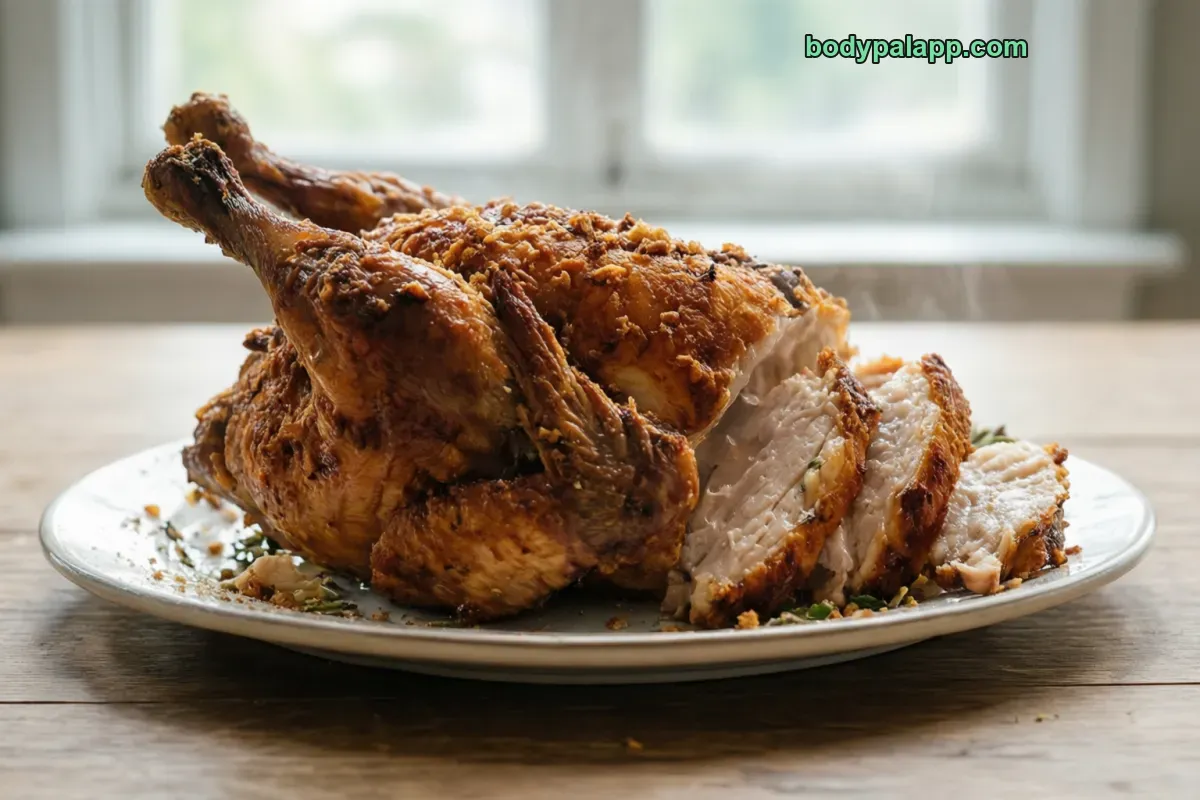
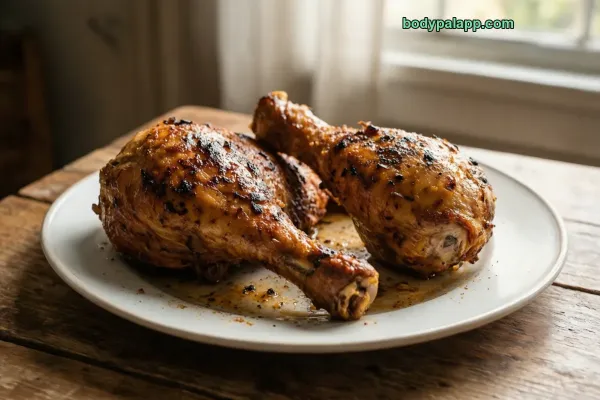
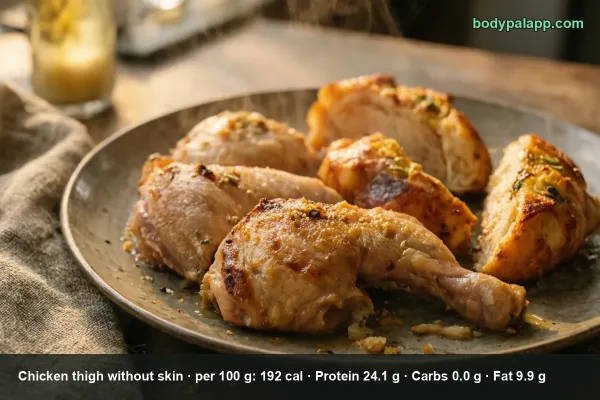
Chicken breast with skin calories come to 250 for a medium breast (130 g) and 192 per 100 g, roasted with the skin eaten. The thing to notice is the split: 57% of those calories come from protein and 43% from fat. The skin, not the meat, decides how lean the plate ends up.
250kcal
1 medium breast with skin · 130 g, roasted, skin eaten
57%protein
34 gProtein
0 gCarbs
11.4 gFat
How to burn off 250 kcal
—Walking, brisk
—Jogging
—Cycling, moderate
—Swimming
Skip the math. BodyPal counts these calories from your steps and workouts automatically.
Nutrition facts
Roasted, skin eaten · per 130 g
Calories
250 kcal
Protein
34 g
Carbohydrate
0 g
Fat
11.4 g
Saturated fat
3 g
Cholesterol
126 mg
Sodium
437 mg
Potassium
387 mg
Iron
0.7 mg
Source: USDA FoodData Central
🛡️
Verified nutrition data
Numbers on this page come from USDA FoodData Central, the U.S. Department of Agriculture’s food composition database, and from manufacturer labels where a branded product is named. Last verified October 2026. How we verify our data →
Chicken breast with skin: calories, protein and sodium by serving
Percent of daily value uses the FDA reference of 2,000 kcal a day.
Serving
kcal
Protein
Carbs
Fat
Sodium
% DV kcal
Medium breast (130 g)
250
34.1 g
0 g
11.4 g
437 mg
12%
Large breast (145 g)
278
38.1 g
0 g
12.8 g
487 mg
14%
Skin removed (120 g)
211
35.5 g
0 g
6.5 g
424 mg
11%
100 g
192
26.3 g
0 g
8.8 g
336 mg
10%
3 × Medium breast (130 g)
749
102.4 g
1,310 mg
5 × Medium breast (130 g)
1,248
170.6 g
2,184 mg
One medium breast is 250 calories, two are 499
A medium breast of 130 g, roasted and eaten with the skin, comes to 250 calories, 34.1 g of protein and 11.4 g of fat. That is 12% of the daily calorie value and 68% of the daily protein value in a single piece of meat. A large breast of 145 g moves the total to 278 calories with 38.1 g of protein. The size of the breast you buy matters more than most seasoning choices.
Totals climb fast when you cook for a household or for meal prep. Two medium breasts (260 g) add up to 499 calories and 68.3 g of protein. Three come to 749 calories, and a five-breast tray of 650 g lands at 1,248 calories with 170.6 g of protein. If you portion a batch for the week, weigh the cooked meat once and divide it.
The 100 g line is the easiest one for sliced or shredded leftovers: 192 calories, 26.3 g of protein and 8.8 g of fat. Use it whenever the meat is off the bone and no longer looks like a whole breast. Guessing by eye is where most logging errors start.
Protein leads, but fat claims 43% of the calories
Protein supplies 57% of the calories and fat supplies the other 43%. There is nothing else in the mix: 0 g of carbohydrate, 0 g of sugar and 0 g of fiber per 100 g. Every calorie here comes from the meat itself and the fat in and under the skin.
Per 100 g you get 26.3 g of protein against 8.8 g of fat, of which 2.3 g is saturated. Fat is the smaller number by weight, yet it still accounts for a large share of the energy. That is the real cost of leaving the skin on.
For a zero-carb food, the label is about as simple as it gets. If you track carbs, it fits almost any plan without adjustment. If you track fat, the skin is the one variable worth thinking about before you sit down to eat.
Pulling off the skin drops a breast to 211 calories
The skin-removed row weighs 120 g because the skin is gone, and it lists 211 calories, 35.5 g of protein and 6.5 g of fat. Set that against the whole medium breast at 250 calories and 11.4 g of fat, and most of what you shed is fat. The protein barely moves, so peeling the skin is the cheapest calorie cut on the plate.
Sodium is moderate rather than alarming. A medium breast carries 437 mg, or 19% of the daily value, and 100 g carries 336 mg, or 15%. The numbers stack with portions, though: two breasts reach 874 mg and three reach 1,310 mg. If you watch sodium, salty rubs, brines and sauces sit on top of these figures, so plain herbs keep you closest to the card.
Cholesterol is the other row people ask about. It comes to 97 mg per 100 g, against a daily value of 300 mg. If you track it, the portion size again does most of the work.
Zero fiber means the sides do the filling
With 0 g of fiber and 0 g of carbs, a skin-on breast covers protein and little else. The daily fiber value is 28 g, and every gram of it has to come from the rest of the plate. Vegetables, beans or a whole grain round out the meal and add volume without changing the chicken math.
Potassium is a quiet bonus at 298 mg per 100 g. A large breast also delivers 76% of the daily protein value on its own, so you rarely need a second protein source at the same meal. If you want a lighter plate, keep the breast and go easy on buttery or creamy sides, since the skin already brings fat.
Logging is simplest when you weigh the cooked meat, or you can snap a photo and let BodyPal log the breast for you. Either way, pick the row that matches what you actually ate: whole breast with skin, skin removed, or a 100 g slice.
How does chicken breast with skin compare?
Here is how skin-on chicken breast stacks up against skinless breast, a skin-on drumstick and skinless thigh, per 100 g and per usual serving.
Verdict: For the leanest plate pick skinless breast: 176 calories and 29.6 g of protein per 100 g, against 192 calories and 26.3 g here. Skin-on breast still beats a skin-on drumstick on protein, 26.3 g versus 23.4 g at nearly the same calories, so keep the skin when flavor matters and cut it when fat is your limit.
Chicken breast with skin FAQs
How many calories are in one chicken breast with skin?
A medium roasted chicken breast with skin (130 g) has about 250 calories, and a large one (145 g) has about 278.
Is chicken breast with skin good for weight loss?
A medium breast with skin has 250 calories with 34.1 g of protein and 11.4 g of fat. Without the skin, a medium grilled breast (120 g) has 211 calories and 6.5 g of fat.
Chicken breast with skin vs without skin: which has fewer calories?
Per 100 g, chicken breast with skin has 192 calories and without skin 176. The skinless version also has 5.5 g of fat per 100 g versus 8.8 g with skin.
How much protein is in a chicken breast with skin?
A medium roasted chicken breast with skin (130 g) has about 34.1 g of protein, or 26.3 g per 100 g, with 0 g of carbs.
How many calories are in a large chicken breast with skin?
A large chicken breast with skin (145 g) has 278 calories. It also gives 38.1 g of protein and 12.8 g of fat, which is 14% of the daily calorie value.
How many calories are in 100 g of chicken breast with skin?
100 g of roasted chicken breast with skin has 192 calories, about 10% of the daily value. That weight brings 26.3 g of protein, 8.8 g of fat and 0 g of carbs.
How much fat is in chicken breast with skin?
A medium chicken breast with skin has 11.4 g of fat. Per 100 g it is 8.8 g, including 2.3 g of saturated fat, and fat supplies 43% of the calories.
How much sodium is in a chicken breast with skin?
A medium chicken breast with skin has 437 mg of sodium, 19% of the daily value. Per 100 g it is 336 mg, and two medium breasts reach 874 mg.
Does chicken breast with skin have any carbs?
No. Chicken breast with skin has 0 g of carbs, 0 g of sugar and 0 g of fiber per 100 g. Its calories come 57% from protein and 43% from fat.