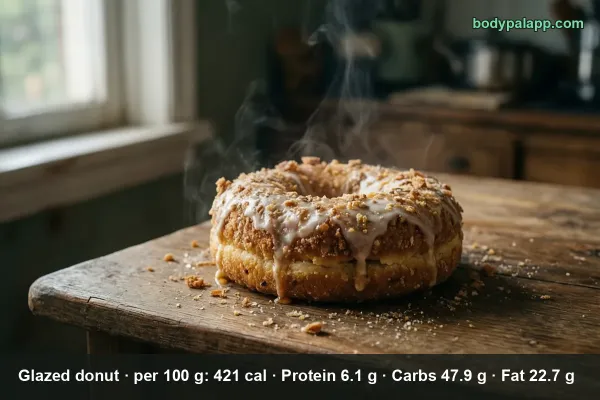
Donut hole calories come to 61 for one plain cake-type hole (14 g) and 434 per 100 g. A glazed hole of 15 g is 65. The number to notice is the split: fat supplies 52% of the calories and protein only 5%, so these bites add energy fast without filling you up.
61kcal
1 donut hole · 14 g, plain, cake-type
5%protein
0.7 gProtein
7 gCarbs
3.5 gFat
How to burn off 61 kcal
—Walking, brisk
—Jogging
—Cycling, moderate
—Swimming
Skip the math. BodyPal counts these calories from your steps and workouts automatically.
Nutrition facts
Plain, cake-type · per 14 g
Calories
61 kcal
Protein
0.7 g
Carbohydrate
6.6 g
Fat
3.5 g
Saturated fat
1.6 g
Cholesterol
1 mg
Sodium
67 mg
Potassium
19 mg
Iron
0.4 mg
Source: USDA FoodData Central
🛡️
Verified nutrition data
Numbers on this page come from USDA FoodData Central, the U.S. Department of Agriculture’s food composition database, and from manufacturer labels where a branded product is named. Last verified September 2026. How we verify our data →
Donut hole: calories, protein and sodium by serving
Percent of daily value uses the FDA reference of 2,000 kcal a day.
Serving
kcal
Protein
Carbs
Fat
Sodium
% DV kcal
1 hole (14 g)
61
0.7 g
6.6 g
3.5 g
67 mg
3%
Glazed (15 g)
65
0.6 g
7.7 g
3.5 g
63 mg
3%
1 oz (28 g)
122
1.5 g
13.2 g
7 g
134 mg
6%
100 g
434
5.3 g
47.1 g
24.9 g
477 mg
22%
3 × 1 hole (14 g)
182
2.2 g
200 mg
5 × 1 hole (14 g)
304
3.7 g
334 mg
Five holes add up to a 304-calorie snack
One plain cake-type donut hole weighs 14 g and carries 61 calories. A glazed hole of 15 g lands at 65. The gap is small because the glaze mostly adds sugar, not weight: 4.1 g of sugars against 2.5 g in the plain hole. On its own, a single hole is a modest bite.
The catch is that almost nobody stops at one. Two holes weigh 28 g and come to 122 calories, the same as a 1 oz serving. Three reach 182 calories and 200 mg of sodium. Five hit 304 calories with 334 mg of sodium and just 3.7 g of protein, which is the energy of a small meal with very little to hold you over.
If you track what you eat, count holes, not handfuls. A box or bag makes it easy to lose the thread, and every extra hole adds roughly 61 calories. Pick a number before you open the package, put that many on a plate, and close the lid. That one habit does more for the total than choosing plain over glazed.
Fat supplies more than half the calories
Per 100 g, plain cake donut holes carry 24.9 g of fat, 47.1 g of carbs and just 5.3 g of protein. Turned into calories, fat supplies 52% of the total, carbs 43% and protein only 5%. It tastes like a sugar snack, but on paper it is a fat-led food.
Much of that fat is saturated: 11.1 g per 100 g, set against a daily value of 20 g. That is more than half the day's saturated fat in 100 g of holes. A single hole carries 3.5 g of total fat, plain or glazed, so the glaze changes the sugar line far more than the fat line.
Fiber is low at 1.7 g per 100 g, and one hole has only 0.2 g. Protein is 0.7 g per hole, 1% of the daily value. The result is energy without structure: no meaningful protein to slow you down and almost no fiber to fill you up. That is why a few holes rarely feel like enough.
Sodium is the row that surprises
Donut holes taste sweet, yet the sodium line deserves a look. Per 100 g there are 477 mg, or 21% of the daily value, which is higher than many people expect from a pastry. Cake-type doughs rely on leavening and salt, and the numbers show it.
Per hole the figure stays small: 67 mg for plain, 63 mg for glazed, each about 3% of the daily value. The problem is repetition. Five holes deliver 334 mg, and that sodium arrives alongside 304 calories and very little nutrition. If you watch sodium, the portion matters more than the variety.
Sugar is lower than the sweet taste suggests, at 18.2 g per 100 g for plain cake holes. A plain hole has 2.5 g of sugars, a glazed one 4.1 g, and a 1 oz serving 5.1 g. Most of the carbs come from refined flour rather than added sugar. Cholesterol is minor at 10 mg per 100 g, and potassium sits at 134 mg.
Plan them as a treat, then pair with protein
Donut holes fit a day of eating best as a planned treat rather than a grazing snack. Decide on two or three, log them before you eat, and enjoy them without the open box nearby. Two holes at 122 calories leave far more room in the day than a bag that slowly empties.
Because protein is only 5% of the calories, pairing helps. Eat a couple of holes after a meal with eggs, Greek yogurt or lean meat, or alongside a latte made with milk, and they become dessert instead of the whole meal. Fruit on the side adds the fiber the holes lack.
Store-bought boxes vary. Entenmann's Glazed Donut Holes, Mel-O-Cream Original Glazed Donut Holes and Kroger Glazed Sour Cream Cake Donut Holes all differ in size and coating, so check the label for the hole weight. If you are unsure, BodyPal can log donut holes from a photo, which helps when a handful is hard to count.
How does donut hole compare?
Here is how a plain cake donut hole stacks up against a sugar donut, a glazed donut and a doughnut hole, per 100 g and per usual serving.
Verdict: Per 100 g they sit in a tight band, from 421 for a glazed donut to 434 for these holes, so the real choice is portion: one hole at 61 calories beats a 192-calorie sugar donut only if you stop at one. If sodium matters, the glazed donut is the better pick at 316 mg per 100 g against 477 mg for plain cake holes.
Most popular donut hole brands in the United States
Ranked by popularity in the BodyPal database
# Productkcal / 100 g
1Mel-O-Cream Original Glazed Donut Holes4 holes · 50 g420 kcal
Most packaged donut holes are glazed, powdered or chocolate, so their label numbers differ from the plain donut hole above. Source: manufacturer labels / USDA FoodData Central.
Donut hole FAQs
How many calories are in one donut hole?
About 61 calories for a plain cake donut hole (14 g), or 65 for a glazed one (15 g).
Are donut holes good for weight loss?
One plain donut hole is 61 calories with 3.5 g of fat, but per 100 g it reaches 434 calories, so the count adds up quickly.
Donut hole vs donut: which has fewer calories?
A plain donut hole (14 g) has 61 calories, while a medium plain cake donut (54 g) has 234.
How many carbs are in a donut hole?
One plain donut hole has 6.6 g of carbs, including 2.5 g of sugar, and 0.7 g of protein.
How many calories are in a glazed donut hole?
A glazed donut hole of 15 g has 65 calories, against 61 for a plain cake-type hole of 14 g. The glaze mainly adds sugar, 4.1 g versus 2.5 g, while fat stays at 3.5 g.
How many calories are in 5 donut holes?
Five plain cake-type donut holes (70 g) come to 304 calories, with 334 mg of sodium and 3.7 g of protein. Three holes are 182 calories, and two are 122.
How much sugar is in a donut hole?
A plain cake-type donut hole has 2.5 g of sugars, and a glazed one has 4.1 g. Per 100 g, plain cake donut holes carry 18.2 g of sugars, so most carbs come from flour.
How much fat is in a donut hole?
One donut hole has 3.5 g of fat, plain or glazed. Fat supplies 52% of the calories, and per 100 g there are 24.9 g of fat, 11.1 g of it saturated.
How much sodium is in donut holes?
One plain donut hole has 67 mg of sodium, 3% of the daily value. Per 100 g the figure is 477 mg, or 21% of the daily value, so a big handful adds up faster than the sweet taste suggests.
Do donut holes have any protein?
Barely. One donut hole has 0.7 g of protein, 1% of the daily value, and protein supplies just 5% of the calories. Even five holes give only 3.7 g.