
How many calories are in pineapple juice?
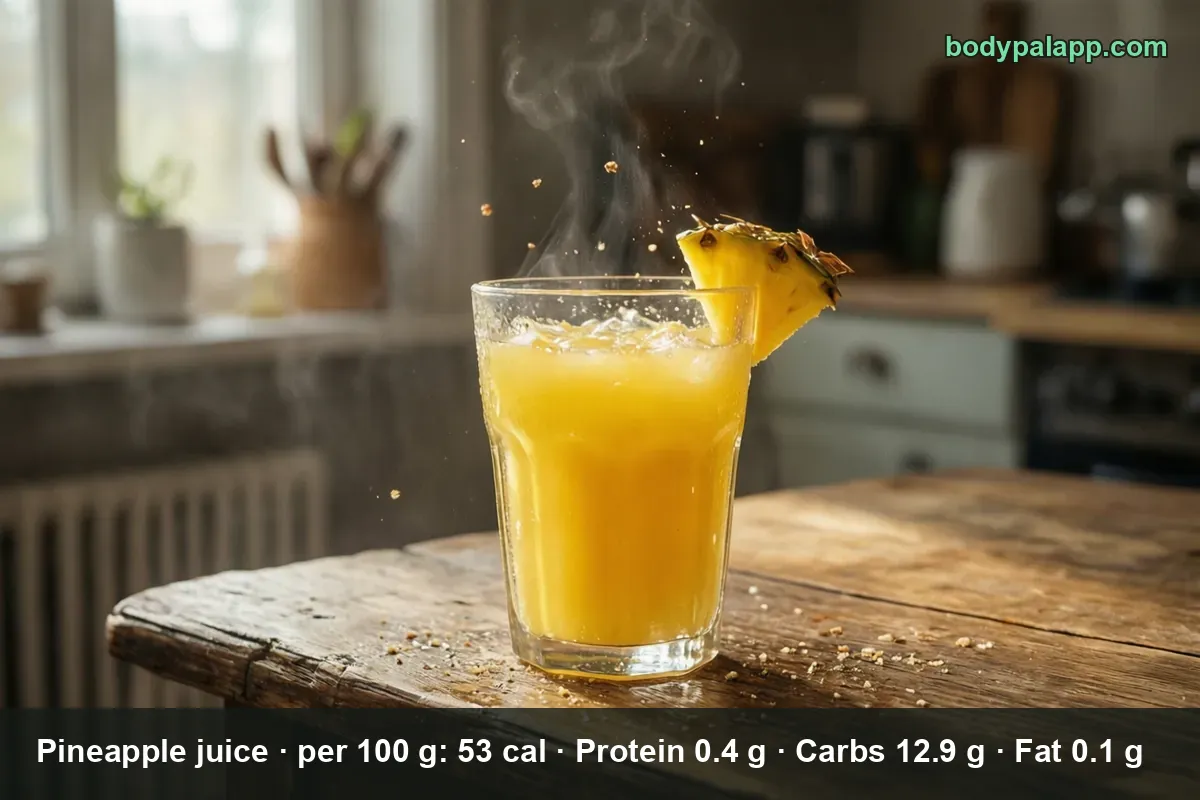
One cup of unsweetened canned or bottled pineapple juice — 8 fluid ounces, 250 g — is 133 calories. Per 100 g the juice runs 53 calories, a hair under bottled pomegranate juice at 54. The number that surprises people is not the calories at all. It is the sugar: 25.0 g in that single cup.
On this page
- Pineapple juice quick facts
- US servings from one ounce to a full cup
- Frozen concentrate and the other juice forms
- The ice in the glass changes the count
- Sugar without the fiber
- How does pineapple juice compare?
- Most popular pineapple juice brands
- Pineapple juice FAQs
Pineapple juice quick facts
The record that matches what most people are holding is SR Legacy 168187, "Pineapple juice, canned or bottled, unsweetened, with added ascorbic acid". That is the shelf-stable carton, the glass bottle and the little can — by far the most common form sold in the US. The added ascorbic acid is vitamin C fortification, and it moves none of the macros.
| Nutrient | Per 100 g | Per 1 cup (250 g) | % Daily Value |
|---|---|---|---|
| Calories | 53 | 133 | — |
| Total fat | 0.12 g | 0.3 g | 0% |
| Saturated fat | 0.01 g | 0.0 g | 0% |
| Carbohydrate | 12.87 g | 32.2 g | 12% |
| Dietary fiber | 0.2 g | 0.5 g | 2% |
| Total sugars | 9.98 g | 25.0 g | — |
| Protein | 0.36 g | 0.9 g | 2% |
| Sodium | 2 mg | 5 mg | 0% |
% Daily Value is based on a 2,000-calorie diet.
Verified nutrition data
Numbers on this page come from USDA FoodData Central, the U.S. Department of Agriculture’s food composition database, and from manufacturer labels where a branded product is named. Last verified September 2026. How we verify our data →
There is no added sugars row here because SR Legacy does not publish added sugars for this record — and for 100% juice the figure would be zero anyway, since every gram of that 25.0 g comes from the fruit. Cholesterol is 0 mg. Potassium is the one mineral worth naming: 130 mg per 100 g, so 325 mg in a cup, or 7% of the 4,700 mg Daily Value used on the Nutrition Facts label.
Sodium is close to nothing — 5 mg in a full cup, well under a tenth of a teaspoon of table salt's worth. If you are tracking salt, this drink never registers.
US servings from one ounce to a full cup
| Serving | Weight | Calories |
|---|---|---|
| 1 fl oz | 31 g | 17 kcal |
| 1 oz by weight | 28 g | 15 kcal |
| 1/2 cup | 125 g | 66 kcal |
| 1 small can, 6 fl oz | 188 g | 100 kcal |
| 1 cup, 8 fl oz | 250 g | 133 kcal |
| Per 100 g | 100 g | 53 kcal |
The cup and the fluid ounce are USDA household measures. The half cup, the 6-fl-oz can and the ounce by weight are our own arithmetic from the USDA 100 g figure, not USDA servings.
That fourth row is the useful one. A 6-fl-oz can — the size that comes in a lunch box or on an airplane tray — lands almost exactly on 100 calories, which makes it the easiest pour in the category to log. And note the trap in the first two rows: a fluid ounce and an ounce are not the same thing here. Juice is denser than water, so 8 fluid ounces weigh 250 g while 8 ounces by weight is only 227 g and about 120 calories.
Frozen concentrate and the other juice forms
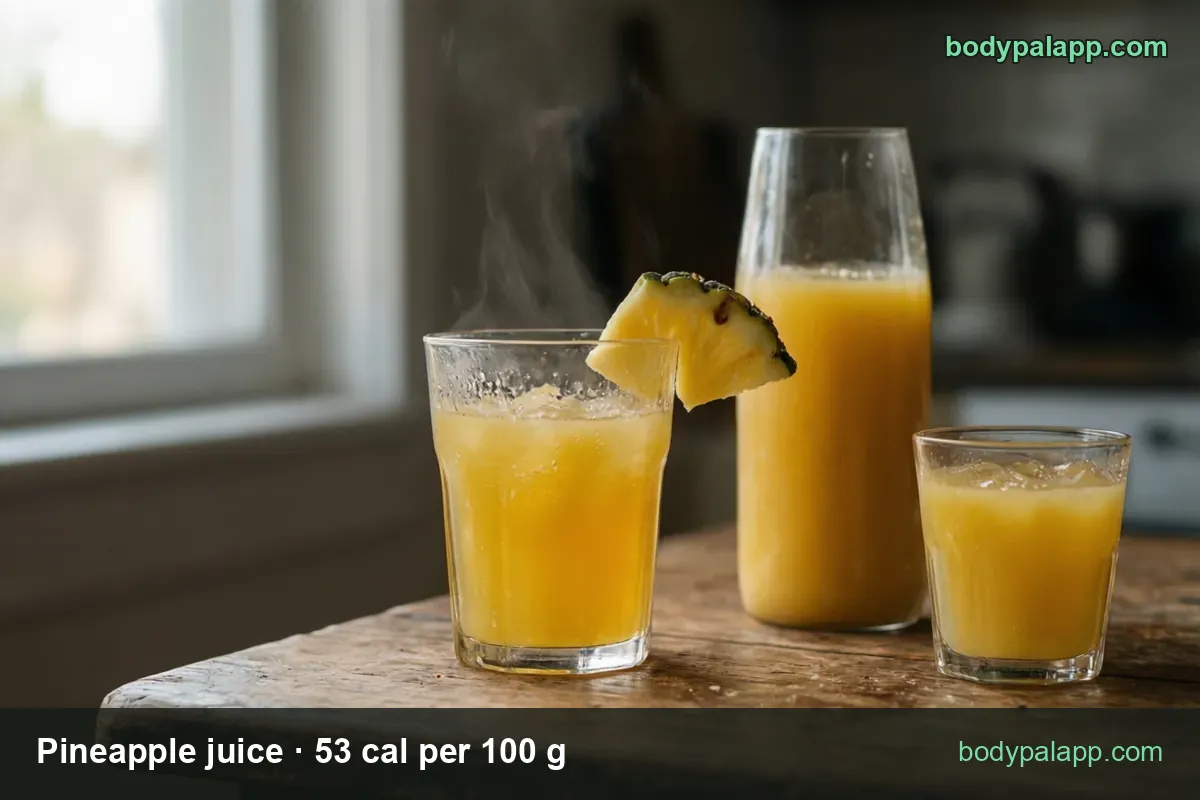
Five USDA records cover the forms you can actually buy. Four of them land within eight calories of each other per cup. The fifth is in a different world.
| Version | Per 100 g | Typical serving | Calories |
|---|---|---|---|
| Canned or bottled, unsweetened, no added vitamin C | 53 kcal | 1 cup (250 g) | 133 kcal |
| Canned, not from concentrate, with added vitamins | 50 kcal | 1 cup (250 g) | 125 kcal |
| Frozen concentrate, diluted with 3 parts water | 51 kcal | 1 cup (250 g) | 128 kcal |
| Frozen concentrate, undiluted | 179 kcal | 1 can, 6 fl oz (216 g) | 387 kcal |
| Orange pineapple juice blend | 51 kcal | 1 cup (250 g) | 128 kcal |
The unsweetened bottled juice without added vitamin C carries the same 53 kcal, 12.87 g of carbohydrate and 9.98 g of sugars as the main record — the only difference between those two USDA rows is the vitamin, not the drink.
Frozen concentrate is where people get caught. Undiluted, it is 179 calories per 100 g, and a 6-fl-oz can of it works out to 387 calories before any water goes in — our arithmetic from that 100 g figure. Reconstituted with three parts water, the same juice drops to 51 calories per 100 g and 128 in a cup. If you are logging a homemade pitcher, log the diluted number; if you spoon concentrate straight into a smoothie, log the other one.
The orange-pineapple blend behaves like the plain juice on calories, 128 per cup, but it carries slightly more sugar per 100 g (10.57 g) and slightly more sodium (4 mg). It is a different product on the label, barely a different one in your log.
Branded cartons sit a shade higher. USDA's branded records put a Dole 100% Pineapple Juice 6-fl-oz can at 99 calories and the 8-fl-oz size at 139 — 56 and 58 calories per 100 g against the generic 53, which is label rounding rather than a different juice.
The ice in the glass changes the count
The FNDDS version of this food, record 2709329, does something the SR Legacy rows do not: it gives separate weights for juice poured over ice and juice poured straight. A fluid ounce measured with ice weighs 23 g and comes to 12 calories. The same fluid ounce of straight juice weighs about 31 g and lands near 17.
That is roughly a quarter of the calories, gone, replaced by frozen water. Nobody should build a diet on it, but it explains why a tall glass over ice at a restaurant and a tall glass poured at home can log differently by 30 or 40 calories. When you enter a glass by volume, you are entering the ice too.
Sugar without the fiber
Here is the honest tension in this drink. A cup gives you 25.0 g of total sugars and 0.5 g of fiber — 2% of the 28 g Daily Value. Whole pineapple brings its cellulose along; the press leaves nearly all of it in the strainer.
Total sugars have no Daily Value on the label, and none of this is added sugar, so the 50 g added-sugars limit does not apply to a glass of 100% juice. The Dietary Guidelines for Americans still count 100% juice toward the fruit group, and MyPlate suggests keeping juice to a part of your fruit rather than all of it — precisely because the fiber does not come with it.
The practical read: 133 calories buys you 32.2 g of carbohydrate, 325 mg of potassium and almost no protein (0.9 g). As a drink alongside a meal, that is fine. As a stand-in for breakfast, it will not hold you.
How does pineapple juice compare?
| Drink or fruit | Per 100 g | US serving | Calories |
|---|---|---|---|
| Pineapple juice, unsweetened | 53 kcal | 1 cup (250 g) | 133 kcal |
| Pomegranate juice, bottled | 54 kcal | 1 cup (250 g) | 135 kcal |
| Naked Juice Green Machine smoothie | 53 kcal | 1 cup (250 g) | 133 kcal |
| Raspberries, raw | 52 kcal | 1 cup (123 g) | 64 kcal |
Our take: per 100 g these four are indistinguishable — 52 to 54 calories, a spread of two. What separates them is what a cup weighs. A cup of juice is 250 g of liquid; a cup of raspberries is 123 g of air and fruit, and just under half the calories. If you want the drink, pineapple juice is as good a pick as any bottled juice on the shelf and cheaper than most. If you want the cup to do something for your appetite, the berries win without a contest.
Most popular pineapple juice brands in the United States
Ranked by how widely each product appears among foods sold in the United States, from the BodyPal food database of over 3.3 million products. Calories are the figures printed on each Nutrition Facts label, checked against USDA FoodData Central.
| Product | Calories (per 100 g) |
|---|---|
| Dole 100% Pineapple Juice (6 fl oz can) | 56 cal |
| Dole 100% Pineapple Juice (8 fl oz) | 58 cal |
Brand popularity: BodyPal food database. Nutrition: manufacturer labels / USDA FoodData Central.
Pineapple juice FAQs
How many calories are in a glass of pineapple juice?
A standard 8-fl-oz glass holds 250 g and 133 calories. Half a glass is 66, scaled from the USDA 100 g figure rather than a listed serving. Unsweetened canned or bottled juice runs 53 calories per 100 g, which makes glass size, not brand, the number that actually matters.
How many calories in 8 oz of pineapple juice?
133 calories, if you mean 8 fluid ounces, which is one cup and 250 g of juice. Eight ounces by weight is a different pour: 227 g and about 120 calories, our own arithmetic from the USDA 100 g number. Cartons and bottles print the fluid-ounce version.
Is pineapple juice high in sugar?
One cup carries 25.0 g of total sugars, all of it natural fruit sugar. That is a lot of sugar for a 133-calorie drink, and it arrives with only 0.5 g of fiber to slow it down. Total sugars have no Daily Value, so no label percentage flags it for you.
Does pineapple juice have fiber?
Barely: 0.5 g in a full cup, which is 2% of the 28 g Daily Value, from 0.2 g per 100 g. Juicing strains out nearly all the pulp, so the fiber that comes with a slice of fruit does not survive the press. For fiber, the fruit beats the glass.
How much potassium is in pineapple juice?
325 mg per cup, or 7% of the 4,700 mg Daily Value, from 130 mg per 100 g. That is a useful but modest share of the day. It comes with just 5 mg of sodium, which keeps the glass easy to fit if you are watching salt.
Does pineapple juice have added sugar?
Not in 100% juice. The USDA record for canned or bottled unsweetened juice lists 9.98 g of sugars per 100 g, every gram from the fruit. SR Legacy does not publish an added sugars figure for this record, which is why that row is missing above. Sweetened pineapple drinks differ.
How many calories in Dole pineapple juice?
The 6-fl-oz Dole can lists 99 calories and the 8-fl-oz size 139, from USDA's branded label data. Per 100 g those are 56 and 58 against the generic 53, a gap that comes from label rounding rather than a different juice. Either way, log the can size.
Is pineapple juice good for weight loss?
At 133 calories a cup it is not a heavy drink, but it is not a filling one either: 0.9 g of protein and 0.5 g of fiber. If you are holding calories down, a cup of raspberries at 64 calories gives you more to chew on. As a small pour, it fits fine.
Similar foods
- Chai Latte — 191 cal for 12 fl oz
- Cranberry Juice — 137 cal per cup (8 fl oz)
- Orange Julius Blended Orange Drink — 134 cal per cup
- Pom Juice — 134 cal per cup
- Sunny D — 134 cal per cup
- Boba Drink — 239 cal per item, any size
Count it without the math
Point the camera at the glass and BodyPal counts the juice for you, ice and all.


How long does it take to burn off 133 kcal of pineapple juice?
A 1-cup (250 g) serving is 133 kcal. Enter your weight and the amount you ate to see how long it takes you to burn that off:
lb
| Activity | Time to burn 133 kcal |
|---|---|
| Walking, brisk | 27 min |
| Cycling, moderate | 17 min |
| Swimming, moderate | 19 min |
| Jogging | 16 min |
| Weight training, moderate | 30 min |
Times are for a 155 lb adult at a steady pace; change the weight to see yours. The amount is set to the portion in the text (250 g); change it to what you actually ate. BodyPal works this out from your steps automatically.
One food is easy to picture; a whole day is harder. See how many calories you need a day and what a deficit actually looks like.