Vitamin water calories come to 125 for one 567 g bottle and 22 per 100 g of the sweetened fruit flavors. Every one of those calories is sugar: the bottle carries 31.1 g of carbs, all of them sugars, with 0 protein, 0 fat and 0 sodium. The vitamins add nothing to the count; the sweetener sets it.
125kcal
1 20 oz bottle · 567 g, sweetened, fruit flavors
0%protein
0 gProtein
31 gCarbs
0 gFat
How to burn off 125 kcal
—Walking, brisk
—Jogging
—Cycling, moderate
—Swimming
Skip the math. BodyPal counts these calories from your steps and workouts automatically.
Nutrition facts
Sweetened, fruit flavors · per 567 g
Calories
125 kcal
Protein
0 g
Carbohydrate
31 g
Fat
0 g
Saturated fat
0 g
Cholesterol
0 mg
Sodium
0 mg
Potassium
0 mg
Iron
0 mg
Source: USDA FoodData Central
🛡️
Verified nutrition data
Numbers on this page come from USDA FoodData Central, the U.S. Department of Agriculture’s food composition database, and from manufacturer labels where a branded product is named. Last verified September 2026. How we verify our data →
Vitamin water: calories, protein and sodium by serving
Percent of daily value uses the FDA reference of 2,000 kcal a day.
Serving
kcal
Protein
Carbs
Fat
Sodium
% DV kcal
1 bottle (567 g)
125
0 g
31.1 g
0 g
0 mg
6%
8 fl oz (237 g)
52
0 g
13 g
0 g
0 mg
3%
100 g
22
0 g
5.5 g
0 g
0 mg
1%
3 × 1 bottle (567 g)
374
0 g
0 mg
5 × 1 bottle (567 g)
624
0 g
0 mg
One bottle is 125 calories, two are 249
The standard 567 g bottle lands at 125 calories, or 6% of the daily value for calories. Most people finish the whole bottle in one sitting, so 125 is the number to plan around. That looks small on a label, but this is a drink, and drinks go down fast. An 8 fl oz pour of 237 g comes to 52 calories and 3% of the daily value, so a glass over ice is the lighter way to have it.
The total climbs the way it does with any sweet drink: one bottle at a time. Two bottles bring you to 249 calories, three reach 374, and five, an easy count for a weekday desk habit, add up to 624. None of that arrives with protein or fat, and none of it is food you chew.
If you log drinks, log the size you actually finished. A bottle is a fixed amount and easy to count. A refilled tumbler or a shared bottle is where the estimate slips, so note the pour rather than guessing at the end of the day.
Every calorie in this drink comes from sugar
The calorie split is as lopsided as it gets: 100% carbs, 0% protein, 0% fat. Per 100 g the drink holds 5.5 g of carbohydrate, and all 5.5 g are sugars. Fiber reads 0 too, so nothing else in the bottle sits alongside that sugar. There is no fat to round it out and no protein to make it a snack.
Nutritionally, that makes vitamin water a lightly sweetened soft drink with vitamins and minerals added. The USDA row behind these numbers is the sweetened, assorted fruit flavors version sold in bottles. Strip away the label and the numbers look like any fruit-flavored sweetened drink. The vitamins are the selling point on the front; the calorie count is set entirely by the sweetener.
For anyone tracking macros, it fills the carb column and leaves the rest blank. It also settles a common search about protein: there is 0 g in every serving on this page, from a single glass to a full bottle. Treat it as carbs you drink, and count it the same way you would count juice or soda.
Sugar is the row to watch: 31.1 g per bottle
One 567 g bottle carries 31.1 g of sugars, the same figure as its total carbs. An 8 fl oz glass has 13 g, and 100 g has 5.5 g. Every other row, from fat to sodium, reads 0. Sugar is the only nutrient here that moves at all, so it is the one number worth reading on the label.
Against the 275 g carb daily value used on this page, one bottle is a modest share. The bigger point is the form: liquid sugar with no fiber, protein or fat beside it. Drink two bottles and you are at 249 calories that came entirely from sweetener, and you have not eaten anything.
The brand list on this page runs from Glaceau Vitamin Water Power-C Dragonfruit to Revive Fruit Punch, Essential Orange and iDrink Multi-Vitamin Water. Flavors and formulas differ, and this page uses the USDA row for sweetened, assorted fruit flavors. If sugar is your reason for checking, read the label on the exact bottle in your hand.
Treat it as a sweet drink, not as water
Sodium sits at 0 mg in every serving, and potassium reads 0 in the USDA row, so the numbers here make no electrolyte case for it. What a bottle gives is fluid plus 125 calories of sugar. That is a fair trade if you enjoy the taste, and a poor one if you were only thirsty.
With 0 g of protein and 0 g of fiber, it does little to keep you full. It sits best next to a meal that brings those things, such as a sandwich with lean protein or a bowl with beans and vegetables, rather than standing in for a snack. An 8 fl oz glass at 52 calories with lunch is easier to fit than a full bottle sipped all afternoon.
If you are switching from regular soda, the compare table below shows how it stacks up. Logging it takes seconds: BodyPal can log the bottle from a photo, and it counts toward your carbs, not your protein.
How does vitamin water compare?
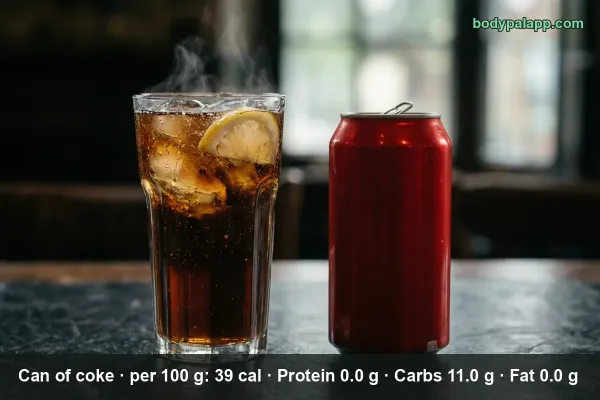
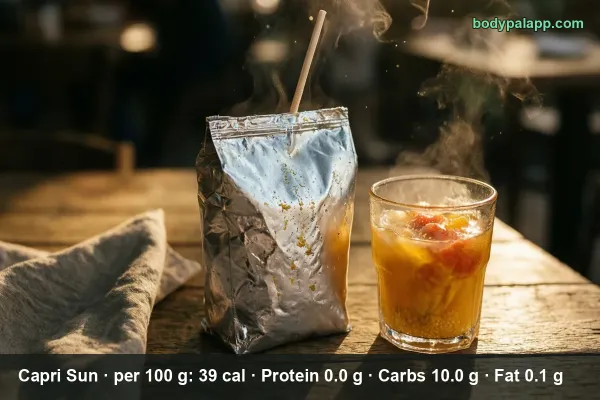
Here is vitamin water next to a can of coke and capri sun, compared per 100 g and per usual serving.
Verdict: Vitamin water is the lighter pick, since a can of coke and capri sun both carry 39 calories per 100 g, about 1.8 times as much. If calories decide it, choose vitamin water; if you are trying to cut sugar, none of the three is a fix, because nearly all of their calories come from carbs.
Most popular vitamin water brands in the United States
Ranked by popularity in the BodyPal database
# Productkcal / 100 g
1Glaceau Vitamin Water Power-C Dragonfruit20 fl oz · 591 g20 kcal
2Glaceau Vitamin Water Energy Tropical Citrus20 fl oz · 591 g20 kcal
3Glaceau Vitamin Water Revive Fruit Punch20 fl oz · 591 g20 kcal
4Glaceau Vitamin Water Acai-Blueberry-Pomegranate600 g20 kcal
5iDrink Multi-Vitamin Water12 fl oz · 360 g0 kcal
6Glaceau Vitamin Water Essential Orange20 fl oz · 591 g20 kcal
7Glaceau Vitamin Water Sparkling Energy Strawberry Lime11.5 fl oz · 340 g15 kcal
Most labels round to 20 calories per 100 g, a little under the 22 in the USDA average for sweetened vitamin waters. Source: manufacturer labels / USDA FoodData Central.
Vitamin water FAQs
How many calories are in a bottle of vitamin water?
A 20 oz bottle is about 125 calories, based on 22 calories per 100 g. An 8 fl oz glass is 52 calories.
Is vitamin water good for weight loss?
A 20 oz bottle adds 125 calories and about 31 g of sugar, while bottled plain water adds 0 calories.
Vitamin water vs Coke: which has more calories?
Vitamin water has 22 calories per 100 g and Coke has 39, so the same size pour of Coke carries more.
How much sugar is in vitamin water?
There are 5.5 g of sugar per 100 g, which is about 13 g in an 8 fl oz glass and 31 g in a 20 oz bottle. All 22 calories per 100 g come from that sugar.
Does vitamin water have calories?
Yes. The sweetened fruit flavors have 22 calories per 100 g, so an 8 fl oz glass comes to 52 calories. It is not a zero-calorie drink like plain water, and every calorie comes from sugar.
What are the macros in vitamin water?
Vitamin water is 100% carbs, 0% protein and 0% fat by calories. Per 100 g that means 5.5 g of carbs, all of it sugars, with no protein, fat or fiber alongside.
Does vitamin water have any protein?
No. It has 0 g of protein per 100 g and 0 g in a full 567 g bottle. If you want protein with your drink, it has to come from the food you eat with it.
How many carbs are in vitamin water?
A 567 g bottle has 31.1 g of carbs, an 8 fl oz glass has 13 g, and 100 g has 5.5 g. In every serving, the carbs and the sugars are the same number.
What are the full nutrition facts for vitamin water?
Per 100 g, vitamin water has 22 calories, 5.5 g carbs, 5.5 g sugars and 0 for protein, fat, saturated fat, fiber, sodium, cholesterol and potassium. A bottle is 125 calories, or 6% of the daily value for calories.