
Calories in a Tomato: 12 kcal per Medium Fruit, 14 per 100 g
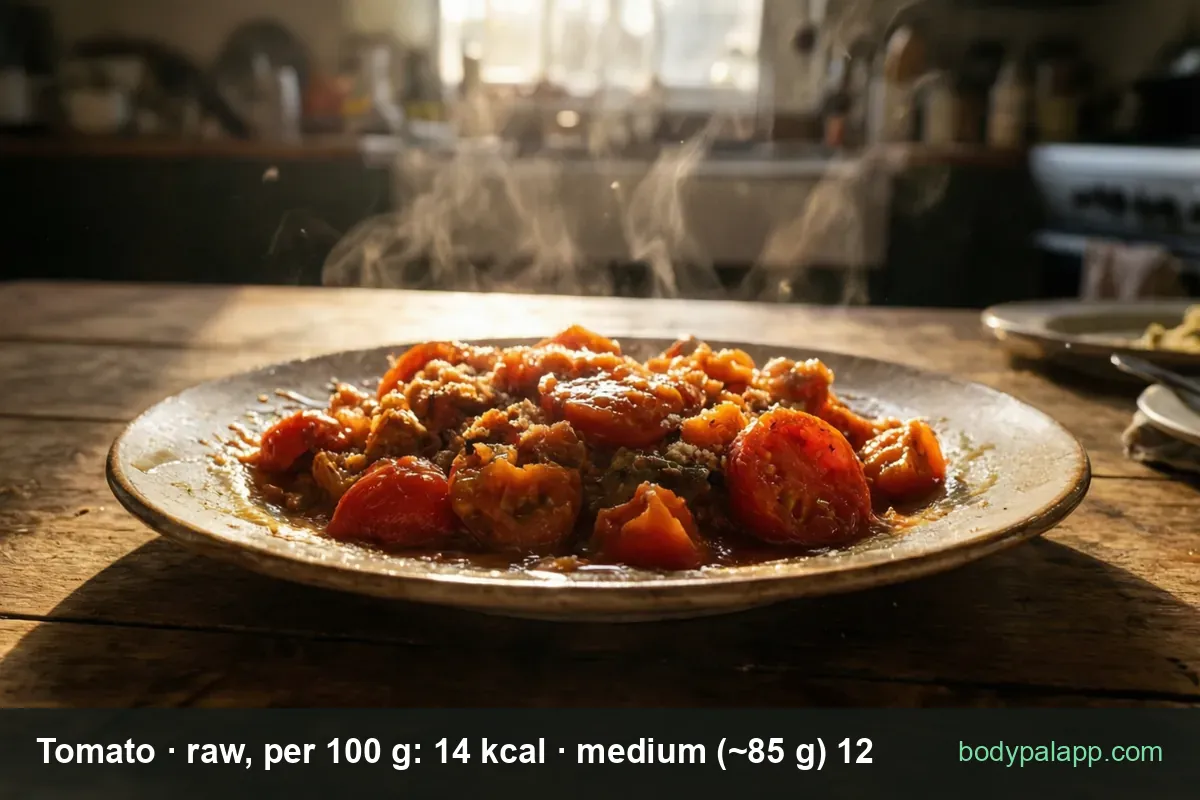
The calories in a tomato barely register: a medium tomato is 12 kcal, and tomatoes hold just 14 kcal per 100 g. A cherry tomato is 3 kcal; an 80 g portion towards your 5 A Day is 11. You could salad your way through a whole vine and hardly dent the day's budget.
On this page
- Quick facts
- UK portion sizes
- Cherry, standard and grilled
- How does it compare?
- Most popular tomato brands
- FAQ
Quick facts
These figures are for a standard raw tomato. The right-hand column shows what one medium tomato (about 85 g) contributes to an adult's daily reference intake, and the short answer is: almost nothing.
Verified nutrition data
Numbers on this page come from CoFID, the UK government’s Composition of Foods Integrated Dataset, and from manufacturer labels where a branded product is named. Last verified August 2026. How we verify our data →
| Nutrient | Per 100 g | Per medium tomato (~85 g) | RI% (medium tomato) |
|---|---|---|---|
| Energy | 14 kcal (59 kJ) | 12 kcal (50 kJ) | 1% |
| Protein | 0.5 g | 0.4 g | 1% |
| Carbohydrates | 3.0 g | 2.6 g | 1% |
| Fat | 0.1 g | 0.1 g | <1% |
| Fibre | 1.0 g | 0.9 g | — |
| Sugar | 3.0 g | 2.6 g | 3% |
| Salt | 0.005 g | 0.004 g | <1% |
All 3.0 g of the carbohydrate is sugar, which is what gives a ripe tomato its sweetness, but at these quantities the distinction is academic. A medium tomato covers 1% of your daily energy and 3% of the sugars reference intake. That is the whole story.
UK portion sizes
Tomatoes are sold in so many shapes that "one tomato" means little on its own. These are the three portions that cover most plates:
| Portion | Weight | Calories |
|---|---|---|
| Medium salad tomato | ~85 g | 12 kcal |
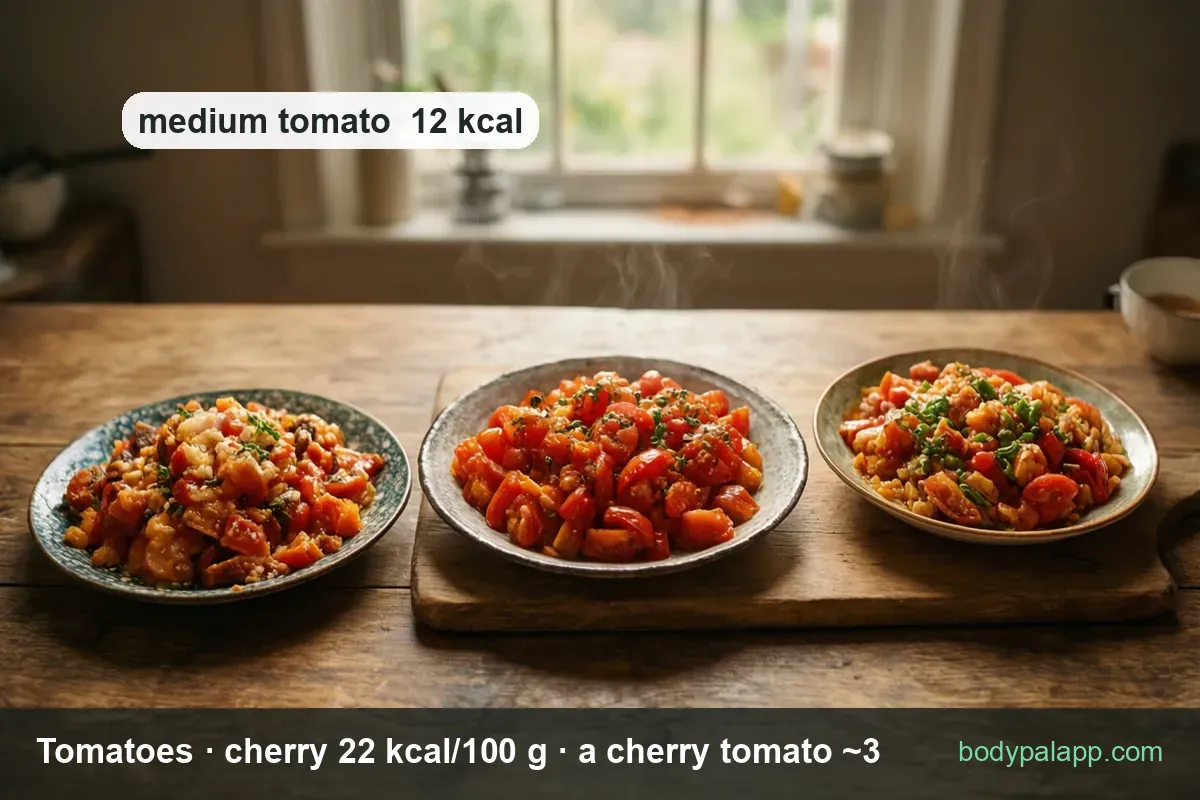
| Cherry tomato | ~15 g | 3 kcal |
| NHS 5 A Day portion | 80 g | 11 kcal |
An 80 g serving, roughly one medium tomato or a small handful of cherries, counts as one of your 5 A Day. On the Eatwell Guide tomatoes sit with the vegetables, whatever the botanists say, and they are among the lowest-calorie items in that whole segment.
The practical takeaway is blunt. Tomatoes are a food you can stop weighing. Halve them, pile them, roast a tray: the calories will stay in single or low double digits per serving, and your attention is better spent on the oil and dressings that travel with them.
That last point deserves its own sentence. A tomato salad's calories live almost entirely in the dressing, because the vegetables underneath contribute 11 kcal per 80 g. If a "salad" ever surprises you in your food diary, the tomatoes were innocent; look at what was drizzled, crumbled or croutoned over them. Logging the dressing by the spoonful is the single most useful habit this page can teach.
Cherry, standard and grilled tomatoes
CoFID separates tomatoes into more than one entry, and the differences are worth knowing even at this scale.
| Variant | kcal per 100 g | Sugar per 100 g | Fibre per 100 g |
|---|---|---|---|
| Standard, raw | 14 kcal | 3.0 g | 1.0 g |
| Cherry, raw | 22 kcal | 3.6 g | 1.3 g |
| Standard, grilled (flesh and seeds) | 17 kcal | 3.4 g | 0.0 g |
Cherry tomatoes run 22 kcal per 100 g, over half as much again as standard ones, because they are denser and sweeter, with 1.1 g of protein into the bargain. Each individual cherry is still only 3 kcal, so the difference only matters if you eat them by the punnet.
Grilling nudges the count to 17 kcal per 100 g as water cooks off and the flesh concentrates. Note that the grilled entry covers flesh and seeds only, and its fibre reads 0.0 g precisely because the skin is not included. What actually moves the calories on a grilled tomato is the brush of oil, not the fruit.
For logging purposes, the differences between these three variants are small enough that picking the wrong row will never wreck a day. Use the standard 14 kcal entry as your default, switch to the cherry entry when you eat cherry tomatoes by the handful, and let the grilled figure cover a cooked breakfast.
How does it compare?
Tomato and cucumber tie exactly at 14 kcal per 100 g, with lettuce a hair lighter at 11. Our verdict: at this level the calorie differences are meaningless and flavour should pick your salad; the only genuinely different choice is carrot, which more than doubles the calories but brings 3.9 g of fibre per 100 g for the trouble.
Most popular tomato brands in the United Kingdom
Ranked by how widely each product appears among foods sold in the United Kingdom, from the BodyPal food database of over 3.3 million products. Calories are the figures printed on each label.
| Product | Calories (per 100 g) |
|---|---|
| Tesco Finest Piccolo Cherry Tomatoes | 20 kcal |
| Co-op Irresistible Piccolo Tomatoes | 26 kcal |
Brand popularity: BodyPal food database. Nutrition: manufacturer labels.
FAQ
How many calories are in a tomato?
A medium tomato of about 85 g contains 12 kcal. Tomatoes have 14 kcal per 100 g, a single cherry tomato is around 3 kcal, and an 80 g portion counting towards your 5 A Day is 11 kcal. Fat and salt are practically zero.
How many calories are in 100 g of tomato?
There are 14 kcal (59 kJ) in 100 g of standard raw tomato, with 0.5 g protein, 3.0 g carbohydrate, 0.1 g fat and 1.0 g fibre. Cherry tomatoes are higher at 22 kcal per 100 g, and grilled tomatoes come to 17 kcal per 100 g.
How many calories are in a slice of tomato?
Since a whole medium tomato is only 12 kcal, one slice amounts to a couple of calories at most. Slices are the definition of a free addition to a sandwich or burger. Log the whole tomato if you use several slices; ignore a single garnish slice entirely.
How many calories are in tomato soup?
Raw tomato supplies just 14 kcal per 100 g, so almost everything else in a bowl of tomato soup comes from cream, oil, sugar and thickeners, which vary by brand and recipe. There is no honest single figure. Check the carton label or log your homemade ingredients one by one.
How many calories are in tomato sauce?
With the base fruit at only 14 kcal per 100 g, a tomato sauce's calories are set by the added oil and sugar rather than the tomatoes. Jarred pasta sauces and ketchups differ so widely that the label is the only reliable source. Homemade sauce tracks close to its ingredients.
Is a tomato a fruit or a vegetable?
An 80 g serving counts as one of your 5 A Day either way, at 11 kcal. Botanically the tomato is a fruit, since it grows from a flower and carries seeds, but in the kitchen and on the NHS Eatwell Guide it is treated as a salad vegetable.
Is a tomato a berry?
Strictly yes: at 14 kcal per 100 g, the tomato meets the botanical definition of a berry, a fleshy fruit formed from a single ovary with seeds inside. It is a fun quiz answer with zero effect on how you should eat or log it.
Is tomato juice good for you?
The fruit behind it holds 14 kcal and 3.0 g of sugar per 100 g, but juicing strips out most of the fibre, and the NHS counts juice as no more than one of your 5 A Day regardless of quantity. Whole tomatoes are the better default; watch salt on shop-bought juices.
Similar foods
- Cucumber — 11 kcal per 5 cm piece
- Aubergine — 38 kcal per medium aubergine
- Salad — 13 kcal per 100 g green salad
- Lettuce — 3 kcal per side salad
- Mushrooms — 7 kcal per 100 g raw
- Cabbage — 14 kcal per boiled portion
Count it without the maths
BodyPal reads your salad from a single photo and logs the tomato's 12 kcal along with everything else on the plate.


Burning it off is one side of it. The other is knowing your number: work out how many calories you need a day, with macros and a goal date.