Bagel thin calories come to 150 for one thin (57 g), or 264 per 100 g. The recipe is ordinary plain bagel dough, so the saving comes from size, not from a lighter formula. Carbs supply 79% of the calories, fat almost none, and sodium is the row worth a glance.
150kcal
1 bagel thin · 57 g, plain bagel, thin size
16%protein
6 gProtein
30 gCarbs
0.8 gFat
How to burn off 150 kcal
—Walking, brisk
—Jogging
—Cycling, moderate
—Swimming
Skip the math. BodyPal counts these calories from your steps and workouts automatically.
Nutrition facts
Plain bagel, thin size · per 57 g
Calories
150 kcal
Protein
6 g
Carbohydrate
30 g
Fat
0.8 g
Saturated fat
0.2 g
Cholesterol
0 mg
Sodium
241 mg
Potassium
61 mg
Iron
2 mg
Source: USDA FoodData Central
🛡️
Verified nutrition data
Numbers on this page come from USDA FoodData Central, the U.S. Department of Agriculture’s food composition database, and from manufacturer labels where a branded product is named. Last verified September 2026. How we verify our data →
Bagel thin: calories, protein and sodium by serving
Percent of daily value uses the FDA reference of 2,000 kcal a day.
Serving
kcal
Protein
Carbs
Fat
Sodium
% DV kcal
1 thin (57 g)
150
6 g
29.9 g
0.8 g
241 mg
8%
Full bagel (105 g)
277
11.1 g
55 g
1.4 g
443 mg
14%
Small bagel (69 g)
182
7.3 g
36.1 g
0.9 g
291 mg
9%
100 g
264
10.6 g
52.4 g
1.3 g
422 mg
13%
3 × 1 thin (57 g)
451
18.1 g
722 mg
5 × 1 thin (57 g)
752
30.1 g
1,203 mg
One thin is 150 calories, a full bagel is 277
A bagel thin weighs 57 g and lands at 150 calories, about 8% of a 2,000-calorie daily value. A small bagel at 69 g is 182 calories, and a full 105 g bagel climbs to 277, or 14% of the daily value. Same dough, same density. You are simply eating less of it.
That is the whole case for the thin. Per 100 g it carries 264 calories, exactly what a regular plain bagel carries. If you swap a full bagel for a thin, you save the gap between 277 and 150 at one meal without changing the taste or the toppings you like.
Stack them and the advantage fades fast. Two thins (114 g) come to 301 calories, slightly more than one full bagel. Three thins (171 g) reach 451, and five thins (285 g) hit 752. The thin only works if one is the portion.
Carbs supply 79% of the calories
The calorie split is lopsided: 79% from carbohydrate, 16% from protein and 5% from fat. Per 100 g that is 52.4 g of carbs, 10.6 g of protein and just 1.3 g of fat, with 0.4 g saturated. This is a starch food with a modest protein bonus, not a balanced one.
One thin gives you 29.9 g of carbs, 6 g of protein and 0.8 g of fat. The protein covers 12% of the daily value, which is decent for bread but not enough to carry a meal on its own. Fiber is low at 0.9 g per thin, or 1.6 g per 100 g, so it digests quickly.
Sugar is moderate: 4.8 g per thin and 8.4 g per 100 g. That is more than you might expect from something that tastes plain, but it sits well below sweet bakery items. Cholesterol is 0.
Sodium is the quiet number to watch
Per 100 g a plain bagel carries 422 mg of sodium, or 18% of the daily value. One thin brings 241 mg, about 10% of the day, before any cheese, deli meat or smoked salmon goes on it.
The thin keeps this in check better than the alternatives. A full bagel has 443 mg, 19% of the daily value, and a small bagel 291 mg. Eat two thins and you are at 481 mg; three thins push it to 722 mg. If you watch sodium, the fillings matter more than the bread, but the bread is never zero.
Toppings are where a bagel breakfast can turn salty. Cured meats, aged cheese and smoked fish all add sodium on top of the 241 mg already in the thin, so a fresh topping like egg, tomato or avocado keeps the total lower.
Build the meal around protein, not more bread
Because the thin is mostly carbohydrate with little fiber, it works best as a base rather than the whole meal. Pair it with something that brings protein and some fat, such as eggs, cottage cheese, turkey or nut butter, and it holds you longer than the bread alone would.
Vegetables help too. Sliced tomato, cucumber, spinach or peppers add volume and fiber for very few calories, which makes a 150-calorie base feel like a real sandwich. A side of fruit rounds out breakfast without another starch.
Spreads are the easy place to lose track. Butter, cream cheese and nut butters are dense, and a heavy hand can match the calories of the thin itself. If you log meals, BodyPal can record a bagel thin and its toppings from a photo, so the spread gets counted too.
How does bagel thin compare?
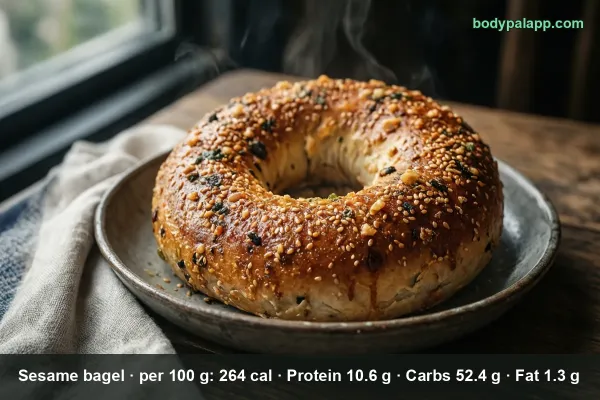
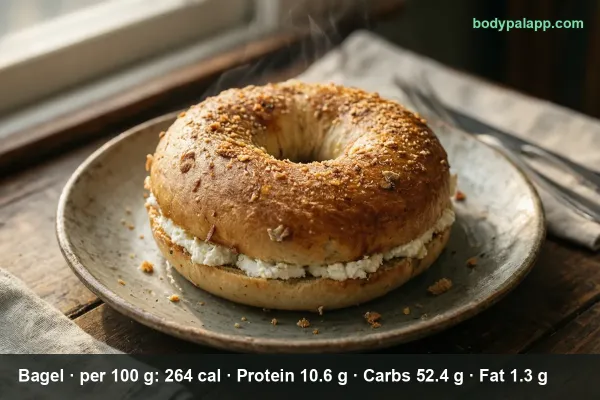
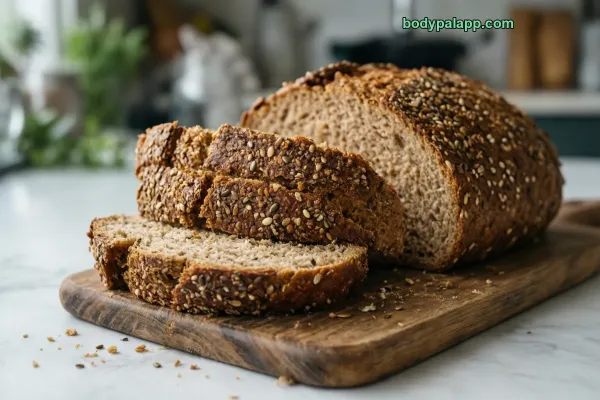
Here is how the bagel thin's dough stacks up against sesame bagels, a bagel with cream cheese and whole grain bread, per 100 g and per usual serving.
Verdict: Per 100 g these are nearly identical, 264 calories for the bagel pages versus 265 for whole grain bread, so portion size decides the winner, and the 150-calorie thin is the lightest bagel-shaped option. If you want more protein and fiber per gram, whole grain bread edges ahead with 13.4 g of protein per 100 g against 10.6 g.
Most popular bagel thin brands in the United States
Ranked by popularity in the BodyPal database
# Productkcal / 100 g
1O'Doughs Original Bagel Thins1 bagel · 50 g200 kcal
Thin-style packaged bagels are lighter dough, around 200 calories per 100 g, while regular plain bagels on this list sit near 270. Source: manufacturer labels / USDA FoodData Central.
Bagel thin FAQs
How many calories are in one bagel thin?
About 150 calories for a 57 g bagel thin, from plain bagel at 264 calories per 100 g. Packaged thins such as O'Doughs list 200 calories per 100 g, so 100 per 50 g piece.
Is a bagel thin good for weight loss?
A 57 g bagel thin is 150 calories, a little over half a full-size bagel at 277 calories. It carries 6.0 g protein and 0.9 g fiber.
Bagel thin vs a sesame bagel: which has fewer calories?
Both are 264 calories per 100 g, so the size decides it: 150 calories for a 57 g thin against 277 for a 105 g sesame bagel.
How many carbs are in a bagel thin?
A 57 g bagel thin has 29.9 g carbs, including 4.8 g sugars, plus 6.0 g protein and 0.8 g fat.
What are the macros in a bagel thin?
One bagel thin has 29.9 g of carbs, 6 g of protein and 0.8 g of fat for 150 calories. By calories that is 79% carbs, 16% protein and 5% fat, so it is mainly a starch.
How many calories are in two bagel thins?
Two bagel thins (114 g) come to 301 calories, slightly more than one full 105 g bagel at 277. They also bring 481 mg of sodium and 12 g of protein.
How much sodium and sugar is in a bagel thin?
A bagel thin has 241 mg of sodium, about 10% of the daily value, and 4.8 g of sugar. Per 100 g that rises to 422 mg of sodium and 8.4 g of sugar.
Is a skinny or slim bagel lower in calories than a regular bagel?
Per gram, no: plain bagel dough carries 264 calories per 100 g regardless of shape. A 57 g thin is 150 calories versus 277 for a 105 g full bagel, so the saving comes from size.
How much fiber is in a bagel thin?
A bagel thin has 0.9 g of fiber, or 1.6 g per 100 g. That is low, so adding vegetables or a high-fiber topping helps make it more filling.