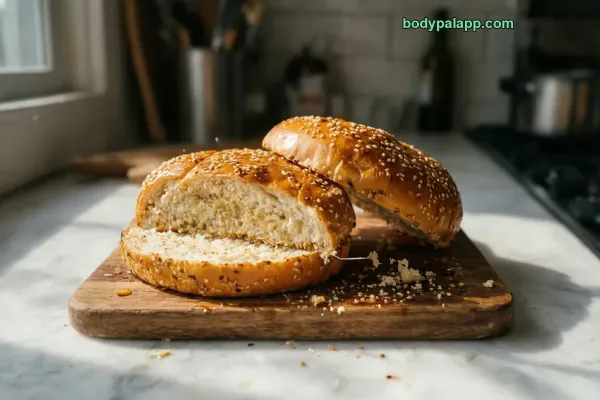
Bread bun calories come to 148 for one 57 g bun and 259 per 100 g. The figure to notice is sodium: a single plain white bun carries 352 mg, 15% of the daily value, while three quarters of its calories come from carbs and fat barely registers.
148kcal
1 bun · 57 g, plain white, baked
15%protein
5.4 gProtein
27 gCarbs
1.6 gFat
How to burn off 148 kcal
—Walking, brisk
—Jogging
—Cycling, moderate
—Swimming
Skip the math. BodyPal counts these calories from your steps and workouts automatically.
Nutrition facts
Plain white, baked · per 57 g
Calories
148 kcal
Protein
5.4 g
Carbohydrate
27 g
Fat
1.6 g
Saturated fat
0.3 g
Cholesterol
0 mg
Sodium
352 mg
Potassium
71 mg
Iron
2 mg
Source: USDA FoodData Central
🛡️
Verified nutrition data
Numbers on this page come from USDA FoodData Central, the U.S. Department of Agriculture’s food composition database, and from manufacturer labels where a branded product is named. Last verified September 2026. How we verify our data →
Bread bun: calories, protein and sodium by serving
Percent of daily value uses the FDA reference of 2,000 kcal a day.
Serving
kcal
Protein
Carbs
Fat
Sodium
% DV kcal
1 bun (57 g)
148
5.4 g
27.4 g
1.6 g
352 mg
7%
Large bun (85 g)
220
8.1 g
40.9 g
2.3 g
525 mg
11%
100 g
259
9.5 g
48.1 g
2.7 g
618 mg
13%
3 × 1 bun (57 g)
443
16.2 g
1,057 mg
5 × 1 bun (57 g)
738
27 g
1,761 mg
Two buns already make a 295-calorie base
A standard bread bun weighs 57 g and carries 148 calories, or 7% of a 2000-calorie daily reference. A large 85 g bun climbs to 220 calories, 11% of that reference. That is only a few more bites of bread, yet it adds roughly half again to the total.
Multiples add up fast. Two standard buns come to 295 calories, three reach 443, and five land at 738. That last figure is more than a third of a 2000-calorie reference from bread alone, before any filling, butter or sauce goes in. Decide the portion before the basket hits the table, not after.
If you track intake, weigh your usual bun once. Bakery buns swing in size far more than bagged ones, and packaged brands such as Bimbo or Sara Lee print the weight per piece on the label. BodyPal can log a bun from a photo, but a kitchen scale is what settles standard versus large. Once you know the weight, the rest is simple arithmetic.
Three quarters of the calories are carbs
Carbohydrates supply 75% of the calories in a bread bun. Per 100 g there are 48.1 g of carbs, 9.5 g of protein and only 2.7 g of fat. Protein covers 15% of the energy and fat just 10%. This is a starch food, plain and simple.
One 57 g bun gives you 27.4 g of carbs, 5.4 g of protein and 1.6 g of fat. The protein is not nothing: it is 11% of the daily value per bun, rising to 16% for the large size. Still, a bun is a supporting player for protein, not something to build a meal around. Two buns reach 10.8 g, which is useful but still modest for the calories spent.
Fiber is modest at 1.2 g per bun, and sugars sit at 2.7 g, so this is not a sweet bread. Saturated fat is 0.5 g per 100 g and cholesterol is 0, which means the fat side of the label is close to empty. What you get is mostly starch from white flour, so whatever goes inside the bun shapes the rest of the meal's macros.
Sodium is the row to watch
Sodium is the number that stands out on this label. One standard bun holds 352 mg, 15% of the daily value, and the large bun carries 525 mg, or 23%. Per 100 g the figure is 618 mg, which works out to 27% of the daily value. For a food that tastes plain, that is a lot of salt.
Stack buns and it climbs quickly. Two standard buns contain 705 mg, three reach 1,057 mg, and five hit 1,761 mg. Fillings such as deli meat, cheese, pickles and bottled sauces usually bring salt of their own, so the bun is only the starting line for the sandwich total.
If you watch sodium, the bun is an easy place to save. Choosing the standard size over the large one trims the bread's share from 525 mg to 352 mg without changing the meal. Packaged buns vary from brand to brand, so the Nutrition Facts panel on the bag is worth a quick look before you buy. Brioche and coney styles may differ from the plain white bun shown here.
The filling decides what kind of meal it is
At 148 calories, a standard bun leaves most of a meal's budget to what goes inside. It brings 5.4 g of protein and 1.2 g of fiber, so a lean protein filling plus a handful of vegetables covers what the bread does not. Lettuce, tomato, onion and peppers add volume and crunch for very little.
Spreads change the math faster than the bread does. Butter, mayonnaise and cheese add fat the bun itself barely has, at 1.6 g per bun. If you want a lighter sandwich, swap a large bun for a standard one before trimming the filling: that alone moves the bread from 220 to 148 calories.
Eating it open-faced, using just one half, is the simplest way to cut the bread portion while keeping the sandwich feel. A bun alongside soup or salad works too, as long as you count it rather than treat it as a free side. Bread on the table is the easiest calorie to forget.
How does bread bun compare?
Here is how a bread bun stacks up against a burger bun, a bread roll and a pretzel bun, per 100 g and per usual serving.
Verdict: For the fewest calories per piece, pick the burger bun at 139, while the pretzel bun at 389 per bun is the heaviest choice by far. If sodium worries you, the pretzel bun is lowest at 203 mg per 100 g, though it still costs more calories per 100 g at 338.
Most popular bread bun brands in the United States
2Sara Lee Brioche Bakery Bread Buns1 bun · 71 g268 kcal
3Bimbo The Original Bakery Bread Buns1 bun · 67 g284 kcal
Packaged bakery buns are enriched with a little more fat and sugar than plain baked bread, so their per 100 g numbers run slightly above the figures above. Source: manufacturer labels / USDA FoodData Central.
Bread bun FAQs
How many calories are in one bread bun?
A 57 g bread bun is about 148 calories. A larger 85 g bun comes to 220 calories.
Is a bread bun good for weight loss?
One bun is 148 calories, with 27.4 g of carbs, 5.4 g of protein and 1.2 g of fiber. Fat is low at 1.6 g per bun, so most of the calories come from the starch.
Bread bun vs burger bun: which has more calories?
Per 100 g a plain bread bun is 259 calories and a burger bun is 267, so they are nearly the same. Size decides the total: bakery buns weigh 53 g to 71 g each.
How many carbs are in a bread bun?
A 57 g bun has about 27.4 g of carbs, of which 2.7 g are sugars. Per 100 g that is 48.1 g of carbs.
How many calories are in a large bakery bun?
A large 85 g bread bun has 220 calories, 11% of the daily value. It also carries 40.9 g of carbs, 8.1 g of protein and 525 mg of sodium, so size matters more than most people expect.
How many calories are in a white bread bun per 100 g?
A plain white bread bun has 259 calories per 100 g. That weight holds 48.1 g of carbs, 9.5 g of protein, 2.7 g of fat and 618 mg of sodium, which is 27% of the daily value.
How many calories are in two bread buns?
Two standard 57 g bread buns come to 295 calories. Together they supply 10.8 g of protein and 705 mg of sodium, before any filling, spread or sauce is added.
Does a bread bun have more calories than a bread roll?
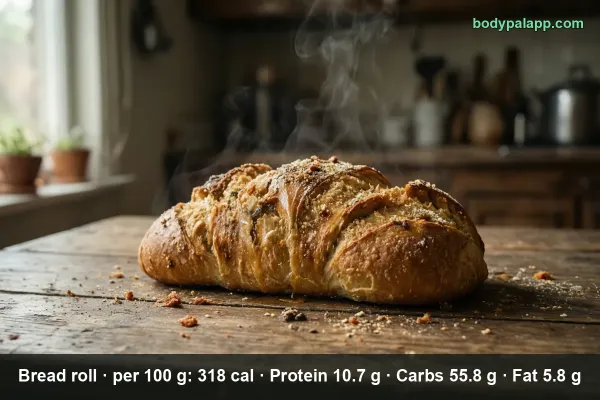
No. A bread bun has 259 calories per 100 g, while a bread roll has 318. The roll also has more fat, at 5.8 g per 100 g against the bun's 2.7 g.
What is the full nutrition of one plain bun?
One plain 57 g bun has 148 calories, 27.4 g of carbs, 5.4 g of protein and 1.6 g of fat. It also contains 1.2 g of fiber, 2.7 g of sugars and 352 mg of sodium.