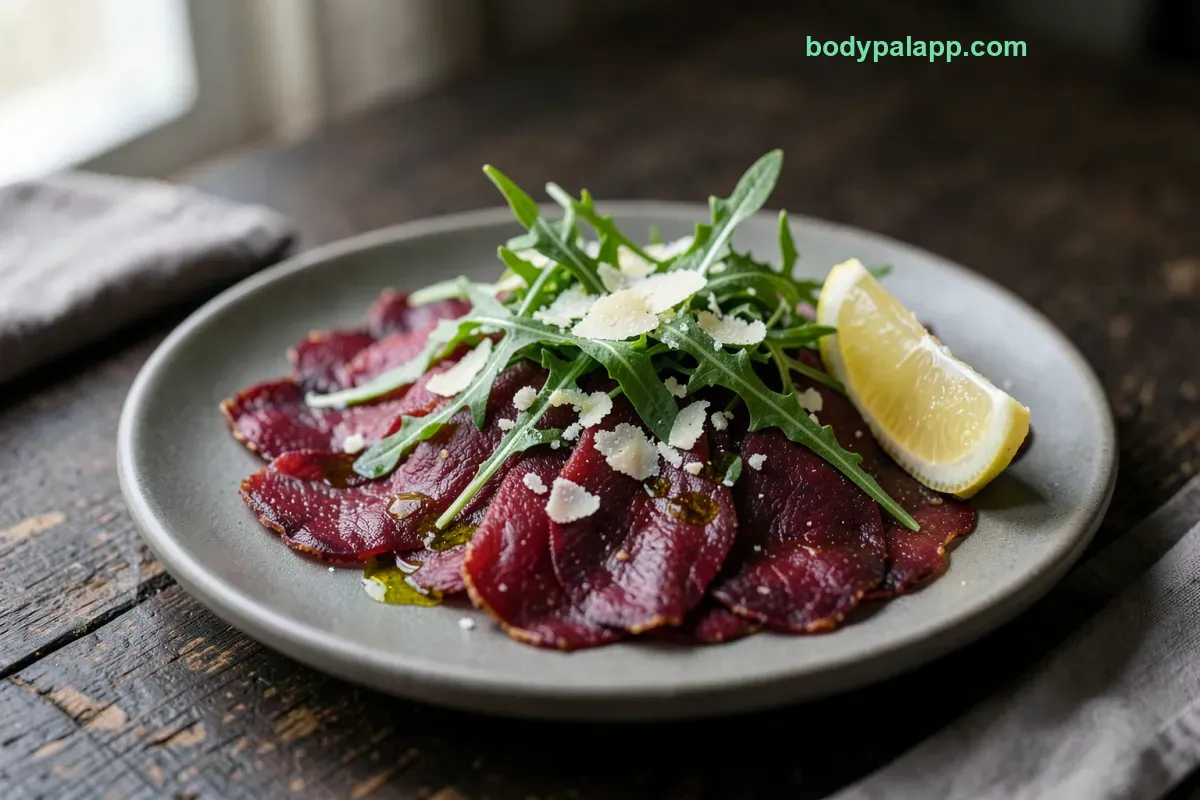
Bresaola calories come to 70 for a 1 oz (28 g) serving and 250 per 100 g. The number to notice is the split: 80% of those calories come from protein, so this is lean meat. The catch is salt, with 390 mg of sodium per ounce, already 17% of the daily value.
70kcal
1 ounce · 28 g, packaged, per label
80%protein
9 gProtein
0 gCarbs
1 gFat
How to burn off 70 kcal
—Walking, brisk
—Jogging
—Cycling, moderate
—Swimming
Skip the math. BodyPal counts these calories from your steps and workouts automatically.
Nutrition facts
Packaged, per label · per 28 g
Calories
70 kcal
Protein
9 g
Carbohydrate
0 g
Fat
1 g
Saturated fat
0 g
Cholesterol
25 mg
Sodium
390 mg
Source: USDA FoodData Central
🛡️
Verified nutrition data
Numbers on this page come from USDA FoodData Central, the U.S. Department of Agriculture’s food composition database, and from manufacturer labels where a branded product is named. Last verified September 2026. How we verify our data →
Bresaola: calories, protein and sodium by serving
Percent of daily value uses the FDA reference of 2,000 kcal a day.
Serving
kcal
Protein
Carbs
Fat
Sodium
% DV kcal
1 oz (28 g)
70
9 g
0 g
1 g
390 mg
4%
100 g
250
32.1 g
0 g
3.6 g
1,393 mg
13%
3 × 1 oz (28 g)
210
27 g
1,170 mg
5 × 1 oz (28 g)
350
45 g
1,950 mg
Three ounces of bresaola is a 210-calorie plate
Bresaola is sliced paper thin, so portions are easy to underestimate. A 1 oz (28 g) serving is 70 calories with 9 g of protein and 0 g of carbs. That is a small amount on an antipasto board, and most people eat more than one ounce without noticing.
Doubling to 2 × 1 oz (56 g) gives 140 calories and 18 g of protein. A 3 oz portion, 84 g, reaches 210 calories and 27 g of protein, which is a full protein serving for very little energy. At 5 oz (140 g) you are at 350 calories and 45 g of protein, still modest for that much meat.
Calories climb slowly here. Sodium climbs fast, which is why the portion matters more for salt than for energy. If you log by weight rather than by slice count, a kitchen scale beats guessing, because thin slices vary a lot from package to package.
Nearly every calorie in bresaola is protein
Per 100 g, bresaola has 32.1 g of protein, 3.6 g of fat and 0 g of carbs. That works out to a calorie split of 80% protein and 20% fat, with nothing from carbohydrate. The label lists 0 g of saturated fat, and fiber is 0 as well.
Most cured meats lean on fat for flavor and texture. Bresaola is dry-cured lean beef, and the numbers show it: 100 g covers 64% of the protein daily value while using only 13% of a 2000-calorie day. Few deli meats give you that much protein for that little energy.
Cholesterol sits at 89 mg per 100 g, against a daily value of 300 mg. That is a moderate figure for red meat and not the number that should steer your portion. Sodium is.
Sodium is the row to watch
Curing takes salt, and bresaola carries 1,393 mg of sodium per 100 g. That is 61% of the daily value in a portion that brings only 13% of daily calories. The gap between those two percentages is the whole story of this food.
A single ounce is 390 mg, 17% of the daily value. Two ounces bring 780 mg, three bring 1,170 mg, and a 5 oz plate hits 1,950 mg, most of a day's sodium from one food. Calories stay friendly at every step; salt does not.
If you watch sodium, treat bresaola as the salty accent and build the rest of the plate from unsalted foods: greens, fresh vegetables, fruit, plain grains. A squeeze of lemon adds brightness without adding more salt, and skipping salty cheese on the same plate keeps the total in check.
Bresaola works best as a protein add-on
With no carbs and little fat, bresaola fits almost any eating pattern. An ounce or two on a salad adds 9 to 18 g of protein for 70 to 140 calories. Rolled around arugula or laid over melon, it turns a light side into something that holds you.
The calories around it usually matter more than the meat. Cheese, bread, crackers and oil-based dressings can outweigh the bresaola on the same plate. Arugula, tomatoes, pears or melon keep the plate light and add volume the meat cannot.
Brands such as Citterio, Creminelli and Gusto Artisanal Meats sell it pre-sliced, so check the package weight before you count servings. If you track, BodyPal can log bresaola from a photo of your plate.
How does bresaola compare?
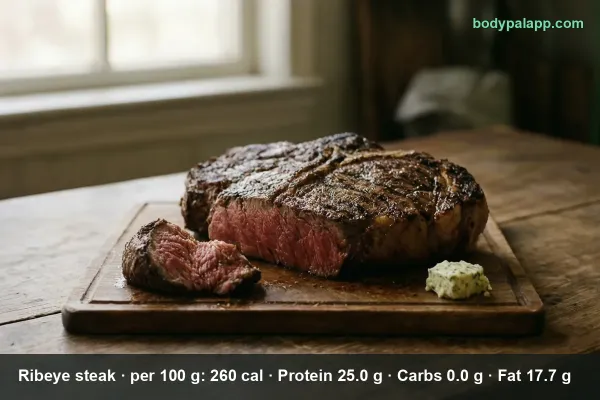
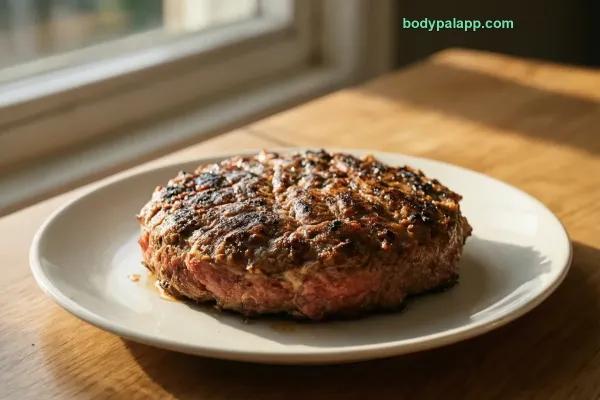
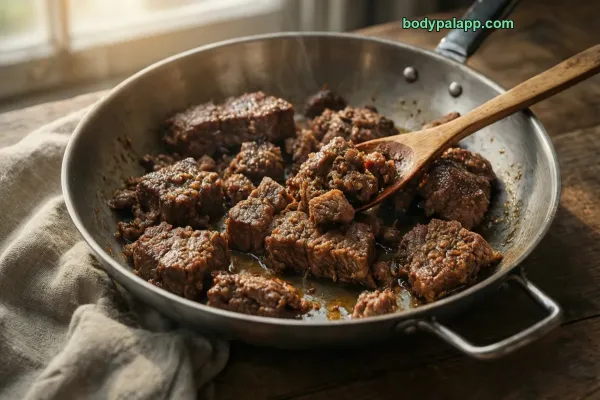
Here is how bresaola stacks up against ribeye, a hamburger patty and cooked ground beef, per 100 g and per usual serving.
Verdict: Calories are close across all four, from 240 to 260 per 100 g, so the real difference is fat: bresaola has 3.6 g against 14.5 to 17.7 g for the fresh beef. For the most protein per calorie pick bresaola, but if you watch sodium a hamburger patty at 72 mg per 100 g beats its 1,393 mg.
One ounce (28 g) of bresaola has about 70 calories, which is 250 calories per 100 g. On most labels an ounce is 3 to 4 thin slices.
Is bresaola good for weight loss?
One ounce is 70 calories with 9 g of protein, 1 g of fat and 0 g of carbs. It is salty, with about 390 mg of sodium per ounce.
Bresaola vs hamburger patty: which has more calories?
Per 100 g they are equal at 250 calories. Bresaola is usually eaten in 28 g portions, which comes to 70 calories.
How much protein is in bresaola?
About 9 g of protein per ounce (28 g), or 32.1 g per 100 g, with only 3.6 g of fat per 100 g.
How many calories are in 3 oz of bresaola?
Three ounces (84 g) of bresaola have 210 calories, with 27 g of protein and 1,170 mg of sodium. That is a filling protein portion for few calories, but it uses a large share of the daily sodium value.
Does bresaola have carbs?
No. Bresaola has 0 g of carbohydrate per 100 g and per 1 oz serving, so 80% of its calories come from protein and 20% from fat. It fits low-carb plans easily.
How much sodium is in bresaola?
A 1 oz (28 g) serving has 390 mg of sodium, 17% of the daily value. Per 100 g it is 1,393 mg, or 61%, so portion size matters more for salt than for calories.
Is bresaola high in fat?
No. Bresaola has 3.6 g of fat per 100 g and about 1 g per ounce, with 0 g of saturated fat on the label. Fat supplies only 20% of its calories.
How much cholesterol does bresaola have?
Bresaola has 89 mg of cholesterol per 100 g. The daily value used on labels is 300 mg, so a typical 1 oz serving uses only a modest part of it.