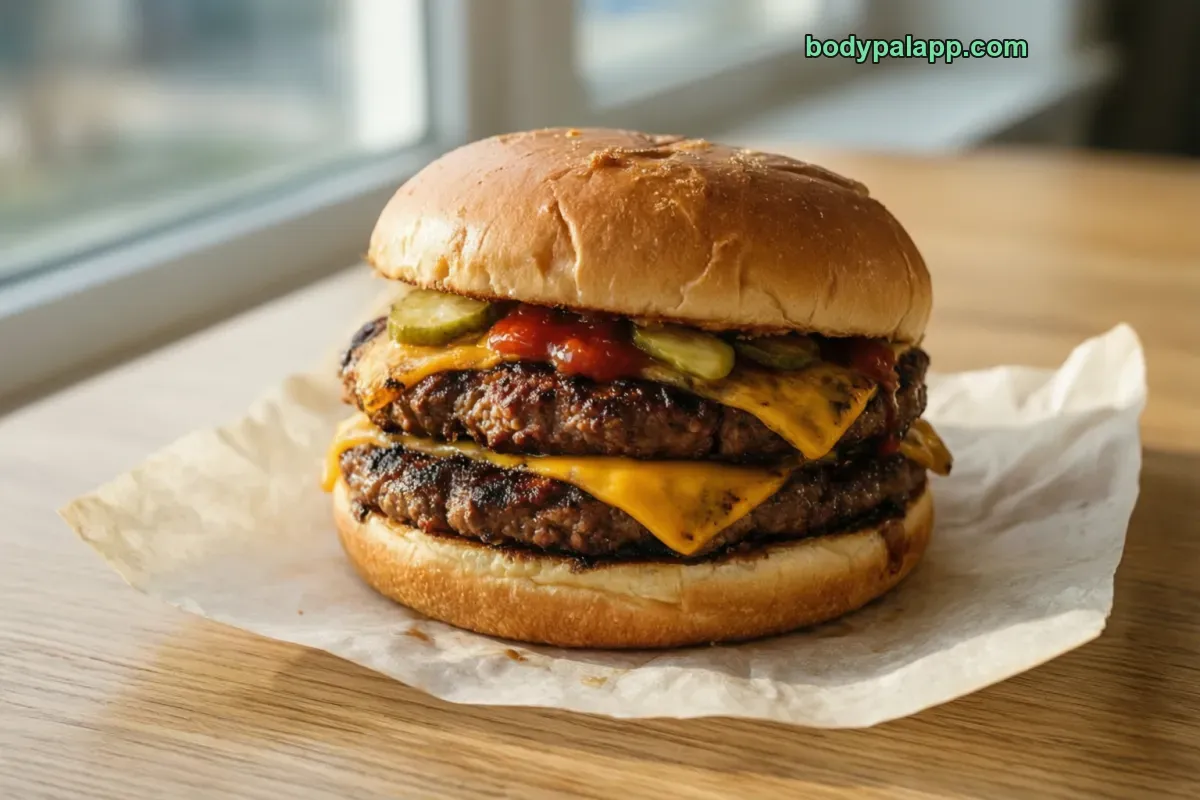
Burger King double cheeseburger calories come to 457 for one 162 g sandwich, or 282 per 100 g, based on USDA fast-food values for the chain's burger. Fat supplies 51% of those calories. The bigger surprise is sodium: 910 mg, or 40% of the daily value, before you add fries or a drink.
457kcal
1 double cheeseburger · 162 g, fast food
24%protein
27 gProtein
28 gCarbs
26 gFat
How to burn off 457 kcal
—Walking, brisk
—Jogging
—Cycling, moderate
—Swimming
Skip the math. BodyPal counts these calories from your steps and workouts automatically.
Nutrition facts
Fast food · per 162 g
Calories
457 kcal
Protein
27 g
Carbohydrate
28 g
Fat
26 g
Saturated fat
11.2 g
Sodium
910 mg
Potassium
374 mg
Iron
3.8 mg
Source: USDA FoodData Central
🛡️
Verified nutrition data
Numbers on this page come from USDA FoodData Central, the U.S. Department of Agriculture’s food composition database, and from manufacturer labels where a branded product is named. Last verified September 2026. How we verify our data →
Burger king double cheeseburger: calories, protein and sodium by serving
Percent of daily value uses the FDA reference of 2,000 kcal a day.
Serving
kcal
Protein
Carbs
Fat
Sodium
% DV kcal
1 sandwich (162 g)
457
27.3 g
28.2 g
26.1 g
910 mg
23%
Single cheeseburger (133 g)
380
19.4 g
31.5 g
19.7 g
801 mg
19%
100 g
282
16.8 g
17.4 g
16.1 g
562 mg
14%
3 × 1 sandwich (162 g)
1,371
81.8 g
2,731 mg
5 × 1 sandwich (162 g)
2,284
136.3 g
4,552 mg
One double is 457 calories, two is 914
The default serving is one 162 g sandwich at 457 calories, which is 23% of the daily value for energy. The single cheeseburger weighs 133 g and lands at 380 calories, or 19%. The second patty adds meat more than bread, so the gap in weight is small while the gap in protein is large: 27.3 g in the double against 19.4 g in the single.
Stacking sandwiches moves the total fast. Two doubles weigh 324 g and reach 914 calories. Three come to 1,371 calories at 486 g. Five, a group-sized bag, hit 2,284 calories, which is more than a full day's reference intake on its own.
If you log fast food, count it in sandwiches, not in meals. One double is a reasonable lunch anchor. A second one doubles everything, including the salt. BodyPal can log the burger from a photo, which helps when the wrapper is already in the trash.
Half of every calorie comes from fat
Per 100 g the burger carries 16.8 g of protein, 17.4 g of carbs and 16.1 g of fat. Grams look evenly spread, but fat is denser in energy, so it ends up with 51% of the calories while protein takes 24% and carbs 25%. Saturated fat runs 6.9 g per 100 g, and a full sandwich holds 26.1 g of total fat.
Protein is the strong point. One double delivers 27.3 g, which is 55% of the daily value, well above the single's 39%. For a fast-food sandwich that is a solid share, and it is the best argument for ordering the double over the single when you are genuinely hungry.
Carbs stay moderate at 28.2 g per sandwich, with 6.8 g of sugars. Oddly, the single has more carbs at 31.5 g. The double trades bun share for meat and cheese, which is why it is heavier on fat and protein rather than starch.
Sodium is the row to watch
One double holds 910 mg of sodium, 40% of the daily value. The single cheeseburger is not far behind at 801 mg, or 35%. Per 100 g the double sits at 562 mg, so the salt comes with the patties and cheese, not just the condiments.
The multiples are where it gets serious. Two sandwiches carry 1,821 mg. Three reach 2,731 mg, past the full daily value from burgers alone, and five pile up 4,552 mg. Sides and sauces only push those numbers higher.
If you watch sodium, treat one double as the single salty item of the meal. Skip the salted side or share it, and keep the other meals of the day simpler and less processed so the daily total has room to absorb this one.
One double fits a meal, not a snack
At 457 calories and 27.3 g of protein, one double works as the center of a meal rather than something to eat between meals. Treated as lunch, it leaves plenty of the day's energy for breakfast and dinner. Treated as a snack, it quietly adds a meal's worth of calories.
The card shows what the burger lacks as much as what it has. Potassium is 231 mg per 100 g, a modest figure, and the single's fiber is only 1.3 g. Fruit, vegetables or a side salad elsewhere in the day fill those gaps better than another sandwich.
Drinks matter too. A sugary soda stacks extra calories on a sandwich that already covers almost a quarter of the daily reference. Water, unsweetened tea or diet soda keeps the meal close to the burger's own number, which is easier to plan around.
How does burger king double cheeseburger compare?
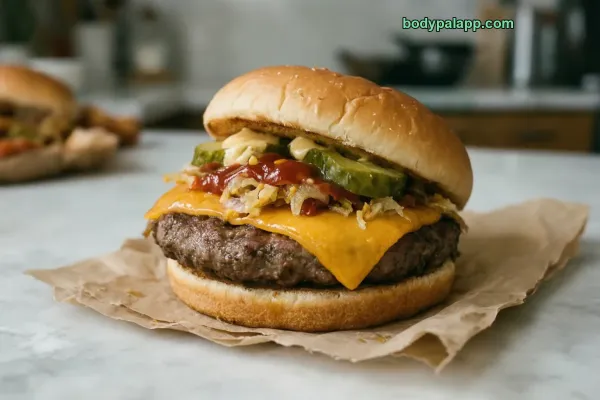
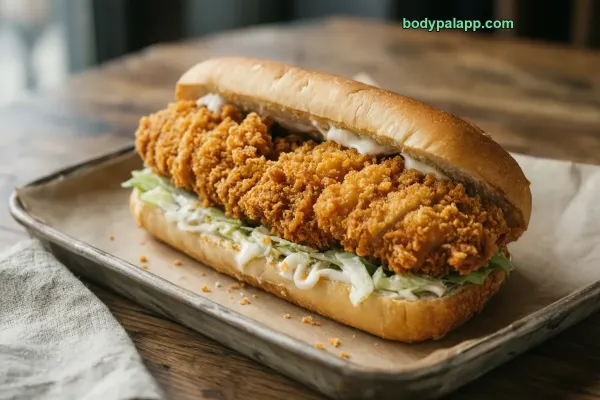
Here is how the Burger King double cheeseburger stacks up against a McDonald's cheeseburger, a bacon cheeseburger and the Burger King chicken sandwich, per 100 g and per usual serving.
Verdict: If calories are the priority, the McDonald's cheeseburger is the lighter pick at 313 per serving and 263 per 100 g, though it carries less protein at 13 g per 100 g. For staying full, the BK double gives 16.8 g of protein per 100 g, close to the bacon cheeseburger's 17.3 g, while costing fewer calories per serving than that burger's 564 or the chicken sandwich's 569.
Burger king double cheeseburger FAQs
How many calories are in a Burger King double cheeseburger?
One double cheeseburger (162 g) has 457 calories, with 27.3 g protein, 26.1 g fat and 28.2 g carbs.
Is a Burger King double cheeseburger good for weight loss?
One sandwich is 457 calories and 910 mg sodium. A single cheeseburger (133 g) is 380 calories.
Burger King vs McDonald's double cheeseburger: which has more calories?
Per 100 g both are 282 calories. The Burger King version has 16.8 g protein per 100 g, the McDonald's one 15.5 g.
How much protein is in a Burger King double cheeseburger?
About 27.3 g protein per sandwich, or 16.8 g per 100 g.
How many calories are in 100 g of a BK double cheeseburger?
There are 282 calories in 100 g, with 16.8 g of protein, 17.4 g of carbs and 16.1 g of fat. That is 14% of the daily value for energy, and 562 mg of sodium.
How many more calories does a BK double have than a single cheeseburger?
The double has 457 calories against 380 for the single cheeseburger. The extra patty also lifts protein from 19.4 g to 27.3 g, so the added calories come with a real protein gain.
How much sodium is in a Burger King double cheeseburger?
One double cheeseburger contains 910 mg of sodium, which is 40% of the daily value. Two sandwiches reach 1,821 mg, so a second burger takes you most of the way to the daily limit.
How much fat is in a Burger King double cheeseburger?
One sandwich has 26.1 g of fat, and fat supplies 51% of its calories. Per 100 g there is 16.1 g of fat, of which 6.9 g is saturated.
How many calories are in two BK double cheeseburgers?
Two doubles come to 914 calories across 324 g of food. They also deliver 54.5 g of protein and 1,821 mg of sodium, so the salt climbs as fast as the calories.