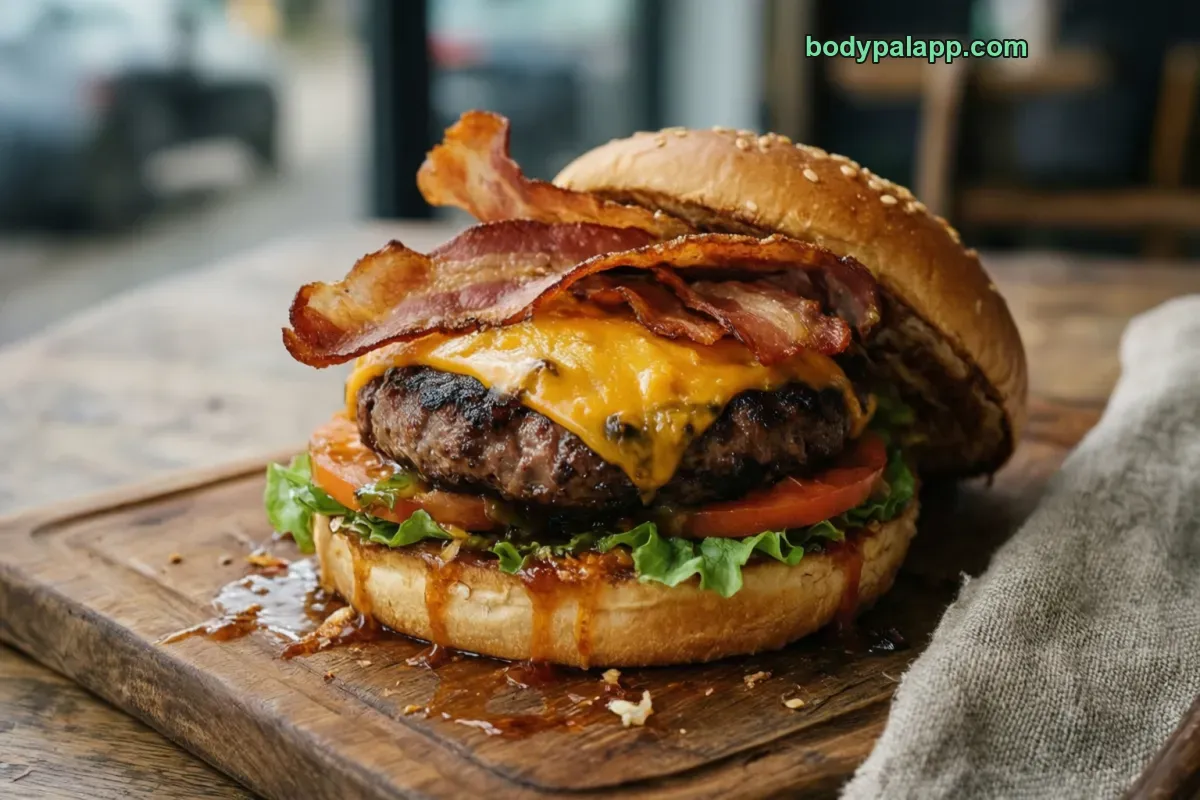
Bacon cheeseburger calories come to 564 for one 182 g sandwich, or 310 per 100 g, based on USDA fast-food values for a single large-patty burger. The number to notice is sodium: one sandwich carries 875 mg, 38% of the daily value, before fries or a soda even reach the tray.
564kcal
1 burger · 182 g, fast food, single patty
22%protein
31 gProtein
44 gCarbs
29 gFat
How to burn off 564 kcal
—Walking, brisk
—Jogging
—Cycling, moderate
—Swimming
Skip the math. BodyPal counts these calories from your steps and workouts automatically.
Nutrition facts
Fast food, single patty · per 182 g
Calories
564 kcal
Protein
31 g
Carbohydrate
44 g
Fat
29 g
Saturated fat
12.5 g
Cholesterol
93 mg
Sodium
875 mg
Potassium
382 mg
Iron
4.7 mg
Source: USDA FoodData Central
🛡️
Verified nutrition data
Numbers on this page come from USDA FoodData Central, the U.S. Department of Agriculture’s food composition database, and from manufacturer labels where a branded product is named. Last verified September 2026. How we verify our data →
Bacon cheeseburger: calories, protein and sodium by serving
Percent of daily value uses the FDA reference of 2,000 kcal a day.
Serving
kcal
Protein
Carbs
Fat
Sodium
% DV kcal
1 sandwich (182 g)
564
31.5 g
43.8 g
29.1 g
875 mg
28%
Regular patty (91 g)
280
15 g
25.5 g
13.4 g
469 mg
14%
100 g
310
17.3 g
24.1 g
16 g
481 mg
16%
3 × 1 sandwich (182 g)
1,693
94.4 g
2,626 mg
5 × 1 sandwich (182 g)
2,821
157.3 g
4,377 mg
The regular size cuts the bill to 280 calories
The default serving on this page is one 182 g sandwich at 564 calories, which is 28% of a 2000-calorie daily value. A regular patty version weighs about 91 g and lands at 280 calories, or 14% of the daily value. That is roughly half the energy for half the weight, and it still brings 15 g of protein.
Doubling up moves the total fast. Two sandwiches (364 g) reach 1,128 calories and 1,751 mg of sodium. Three come to 1,693 calories and 2,626 mg of sodium, which is more than a full day's sodium value from burgers alone. Five, the cookout-for-the-crew scenario, add up to 2,821 calories and 4,377 mg of sodium.
If you want the flavor without the full count, size is the lever that matters most. Picking the regular patty over the large one saves close to 300 calories in a single decision. Nothing else on the order, short of skipping the fries, moves the number that much.
Fat supplies nearly half the calories
The calorie split is 46% fat, 31% carbs and 22% protein. Per 100 g that means 16 g of fat, 24.1 g of carbs and 17.3 g of protein. Beef, cheese and bacon all push the fat side, while the bun carries most of the carbs.
Scaled to the full sandwich, you get 29.1 g of fat, 43.8 g of carbs and 31.5 g of protein. That protein figure is 63% of the daily value, a real strength for a fast-food item. A bacon cheeseburger is not an empty meal. It is a dense one.
Saturated fat sits at 6.9 g per 100 g, which is a sizable share of the 20 g daily value in every bite. Fiber is low at 3.1 g per sandwich, and sugars are 8.5 g, mostly from the bun and any sauce. The takeaway: plenty of protein, a lot of fat, not much to keep digestion busy.
Sodium is the row to watch
One full sandwich carries 875 mg of sodium, 38% of the daily value. Per 100 g the figure is 481 mg, or 21%. Cured bacon, processed cheese and a salted patty stack on top of each other, so the total climbs faster than in a plain hamburger.
The regular patty size holds 469 mg, 20% of the daily value, which is the easiest way to keep sodium in check without giving up the burger. If you watch sodium, the bigger risk is the rest of the order. Fries, pickles and extra sauce all add to a number that is already high.
Cholesterol comes in at 51 mg per 100 g against a 300 mg daily value, and potassium is modest at 210 mg per 100 g. Neither is the headline here. Sodium and saturated fat are the two rows that make this a once-in-a-while order rather than a daily habit.
Build the rest of the tray around the burger
At 564 calories, the sandwich is already a full meal on its own. The smartest move is to treat it as the main event and keep the sides light. A side salad, fruit or raw vegetables add volume and some fiber without piling on more fat or sodium.
Drinks matter more than people think. Water, unsweetened iced tea or black coffee keep the meal close to the burger's own count, while a regular soda adds sugar and calories with no protein to show for it. If you are hungry, a second regular burger is a better bet than a large fries plus shake.
Plan the other meals of the day with the sodium in mind: lighter, home-cooked food with fewer processed ingredients balances things out. Logging helps here, and BodyPal can log a bacon cheeseburger from a photo so the total is on record before the next meal.
How does bacon cheeseburger compare?
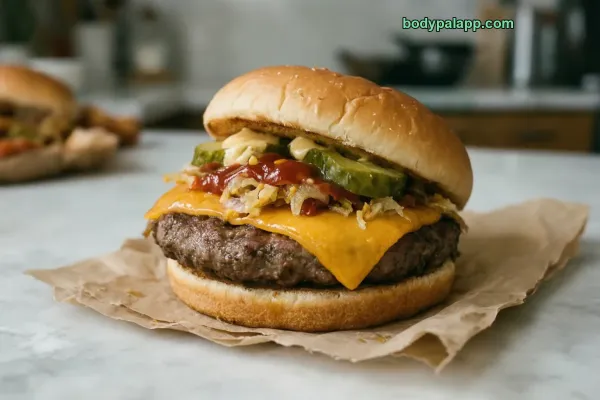
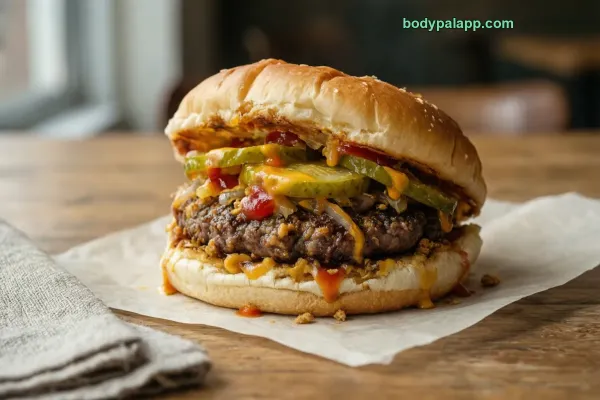
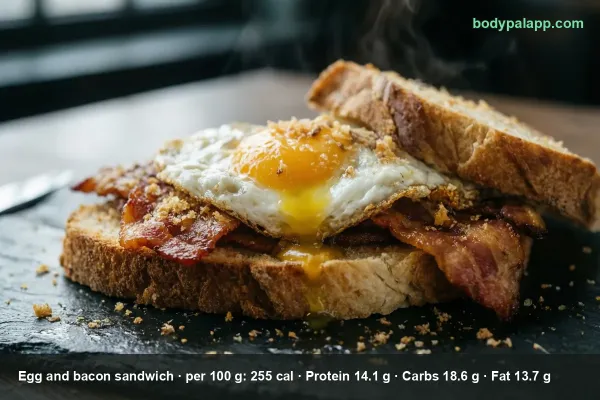
Here is how a bacon cheeseburger stacks up against two McDonald's classics and an egg and bacon sandwich, per 100 g and per usual serving.
Verdict: For the fewest calories pick the McDonald's hamburger at 251 per sandwich; for the most protein per bite the bacon cheeseburger leads with 17.3 g per 100 g. The McDonald's cheeseburger at 313 calories is the middle ground, though it carries more sodium per 100 g, 626 mg against 481 mg.
Most popular bacon cheeseburger brands in the United States
These are packaged heat-and-eat sandwiches, so their per 100 g numbers land close to the fast-food burger above. Source: manufacturer labels / USDA FoodData Central.
Bacon cheeseburger FAQs
How many calories are in a bacon cheeseburger?
A single-patty fast-food bacon cheeseburger of about 182 g is 564 calories. Per 100 g that is 310 calories.
Is a bacon cheeseburger good for weight loss?
One 182 g burger is 564 calories with 29.1 g fat. The smaller 91 g version is 280 calories with 13.4 g fat.
Bacon cheeseburger vs McDonald's cheeseburger: which has more calories?
A McDonald's cheeseburger weighs 119 g and is 313 calories. The larger single-patty bacon cheeseburger is 182 g and 564 calories.
How much protein is in a bacon cheeseburger?
About 31.5 g of protein in one 182 g burger, which works out to 17.3 g per 100 g.
How many calories are in a small bacon cheeseburger?
A regular patty bacon cheeseburger of about 91 g has 280 calories. It also delivers 15 g of protein and 469 mg of sodium, roughly half of what the large single-patty sandwich carries.
How many calories are in two bacon cheeseburgers?
Two bacon cheeseburgers (364 g) come to 1,128 calories. They also bring 62.9 g of protein and 1,751 mg of sodium, which is a large share of a full day's sodium value in one sitting.
How many calories are in a plain cheeseburger without bacon?
A McDonald's cheeseburger has 313 calories for one 119 g sandwich, or 263 per 100 g. The bacon cheeseburger here comes to 310 per 100 g, so bacon and a bigger patty push the total up.
How much sodium is in a bacon cheeseburger?
One bacon cheeseburger has 875 mg of sodium, 38% of the daily value. The regular patty size has 469 mg, or 20%, making it the simpler choice if you watch sodium.
How many calories are in 100 g of bacon cheeseburger?
100 g of bacon cheeseburger has 310 calories, with 17.3 g of protein, 24.1 g of carbs and 16 g of fat. That covers 16% of a 2000-calorie daily value.
Where do most of the calories in a bacon cheeseburger come from?
Fat supplies 46% of the calories in a bacon cheeseburger, carbs 31% and protein 22%. A full sandwich carries 29.1 g of fat, mostly from the beef, cheese and bacon.