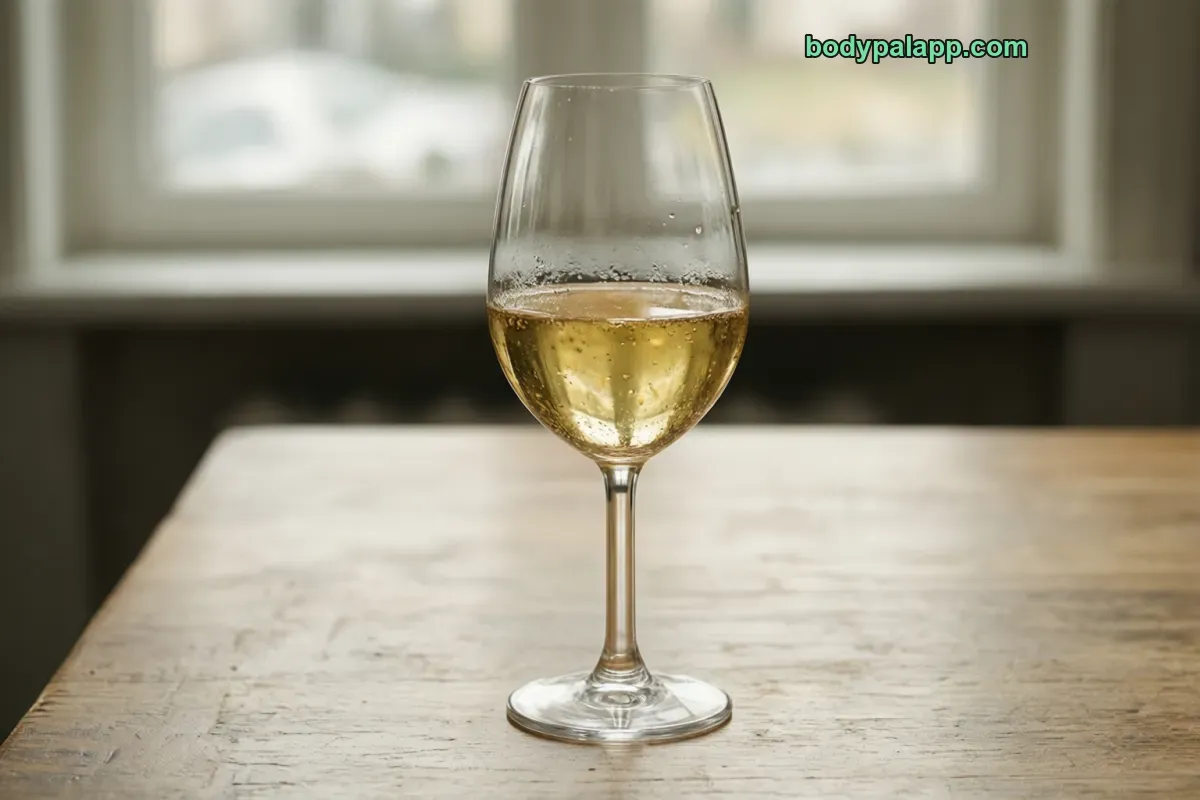
Butter Chardonnay calories come to 123 for a 147 g glass and 84 per 100 g. The name describes a flavor style, not an ingredient: fat sits at 0 g. What moves your total is the pour. A glass is a modest 6% of daily calories, while a half bottle reaches 308.
123kcal
1 5 fl oz glass · 147 g, chardonnay, table wine
3%protein
0.1 gProtein
3 gCarbs
0 gFat
How to burn off 123 kcal
—Walking, brisk
—Jogging
—Cycling, moderate
—Swimming
Skip the math. BodyPal counts these calories from your steps and workouts automatically.
Nutrition facts
Chardonnay, table wine · per 147 g
Calories
123 kcal
Protein
0.1 g
Carbohydrate
3.2 g
Fat
0 g
Sodium
7 mg
Potassium
104 mg
Iron
0.4 mg
Source: USDA FoodData Central
🛡️
Verified nutrition data
Numbers on this page come from USDA FoodData Central, the U.S. Department of Agriculture’s food composition database, and from manufacturer labels where a branded product is named. Last verified September 2026. How we verify our data →
Butter Chardonnay: calories, protein and sodium by serving
Percent of daily value uses the FDA reference of 2,000 kcal a day.
Serving
kcal
Protein
Carbs
Fat
Sodium
% DV kcal
Glass (147 g)
123
0.1 g
3.2 g
0 g
7 mg
6%
100 g
84
0.1 g
2.2 g
0 g
5 mg
4%
Half bottle (375 g)
308
0.3 g
9.8 g
0 g
19 mg
15%
3 × Glass (147 g)
370
0.3 g
22 mg
5 × Glass (147 g)
617
0.5 g
37 mg
A glass is 123 calories, a half bottle is 308
The standard glass in the nutrition data weighs 147 g and carries 123 calories. That is about 6% of a daily value of calories, which is easy to absorb on most days. The trouble with wine is rarely the first glass. It is that pours are generous and refills are quiet.
Look at how fast the total climbs. Two glasses (294 g) bring 247 calories, three glasses (441 g) reach 370, and five glasses (735 g) land at 617. A half bottle of 375 g sits at 308 calories, or 15% of the daily value, which puts it in the range of a small meal with none of the protein or fiber a meal would bring.
If you pour at home, the glass size matters more than the label. A big bowl-shaped glass filled halfway can hold far more than 147 g without looking like it. Weighing one pour once, or using a measured glass, tells you which of the rows above you are actually drinking.
The macro table explains only a sliver of the calories
Per 100 g, Butter Chardonnay lists 0.1 g of protein, 2.2 g of carbs and 0 g of fat. The calorie split reads 97% carbs and 3% protein, which looks like a carb drink at first glance. It is not, at least not in the way bread or juice is.
Those 2.2 g of carbs cannot account for 84 calories on their own. The rest of the energy comes from the alcohol itself, which the standard macro rows do not list. So the split tells you the small share of non-alcohol calories is almost entirely carbohydrate, while the bulk of the number on the page is the alcohol.
This matters for how you read the label. A glass gives you 3.2 g of carbs and 0.1 g of protein, so it does almost nothing for fullness. The 123 calories arrive without the protein or fiber that usually slow you down at the table, and that is why wine calories are easy to stack on top of a full dinner.
Sugar and sodium barely register
A dry white like Chardonnay keeps sugar low. The card shows 1 g of sugars per 100 g, 1.4 g in a 147 g glass and 3.6 g in a half bottle. Even a buttery, rich-tasting bottle is not a sweet one, so the flavor you notice comes from style rather than residual sugar.
Sodium is close to nothing. A glass holds 7 mg, which rounds to 0% of the 2300 mg daily value, and a half bottle has 19 mg, about 1%. Five glasses still total only 37 mg. If you watch sodium, the wine is not the row to worry about; the cheese board next to it is.
Potassium shows up at 71 mg per 100 g, a small amount against the 4700 mg daily value. In short, none of the micronutrient rows are notable here. The one number worth tracking is the calorie line, and it scales directly with how much you pour.
Plan the glass, then build the plate around it
Since a glass adds 123 calories and almost no protein, it fits best next to a meal that does the filling work. Lean fish, chicken, beans or a big vegetable side give the plate substance, so the wine stays a glass rather than turning into a second and third out of hunger.
Rich pairings are where the evening adds up. Buttery Chardonnay is often served with cream sauces, cheese or fried starters, and those carry far more fat than the wine does. If you are keeping an eye on the total, let the wine be the indulgence and keep the food side simpler.
Logging helps more with drinks than with food because pours are easy to forget by the end of the night. BodyPal can log a glass from a photo, and if you note each refill as it happens, the difference between 247 and 370 calories stays visible instead of becoming a guess the next morning.
How does Butter Chardonnay compare?
Here is how Butter Chardonnay compares with plain Chardonnay and generic white wine, per 100 g and per usual glass.
Verdict: On the numbers, Butter Chardonnay matches regular Chardonnay exactly at 84 calories per 100 g and 123 per glass, while generic white wine is a hair lower at 121 per glass. Pick the bottle you enjoy, because the choice of white barely moves calories and the size of the pour moves them a lot.
Butter Chardonnay FAQs
How many calories are in a glass of Butter Chardonnay?
A 5 fl oz glass weighs about 147 g and comes to 123 calories, since Chardonnay has 84 calories per 100 g.
How many calories are in a half bottle of Butter Chardonnay?
A half bottle is 375 g, which works out to 308 calories, or the same as two and a half glasses.
Butter Chardonnay vs white wine: which has more calories?
Chardonnay is 84 calories per 100 g and plain table white wine 82, so a glass is 123 calories against 121.
How much sugar is in Butter Chardonnay?
Chardonnay has 0.96 g of sugar per 100 g, so a 147 g glass has about 1.4 g of sugar and 3.2 g of carbs.
How many calories are in two glasses of Butter Chardonnay?
Two 147 g glasses (294 g total) come to 247 calories. That is close to a full snack's worth of energy with only 0.2 g of protein, so it adds calories without adding fullness.
Does Butter Chardonnay contain any butter or fat?
No. Butter Chardonnay lists 0 g of fat per 100 g and per glass. The name describes a rich, buttery flavor style, and the calories come from alcohol plus a small amount of carbs.
How many carbs are in a glass of Butter Chardonnay?
A 147 g glass holds 3.2 g of carbs, and 1.4 g of that is sugars. Per 100 g the figure is 2.2 g of carbs, which is low for a drink.
How many calories are in a bottle's worth of Butter Chardonnay glasses?
Five 147 g glasses (735 g) total 617 calories. Three glasses come to 370, so calories rise steadily with each pour, at 123 per glass.
Is Butter Chardonnay high in sodium?
No. A glass has 7 mg of sodium, which rounds to 0% of the 2300 mg daily value. Even a half bottle holds only 19 mg.