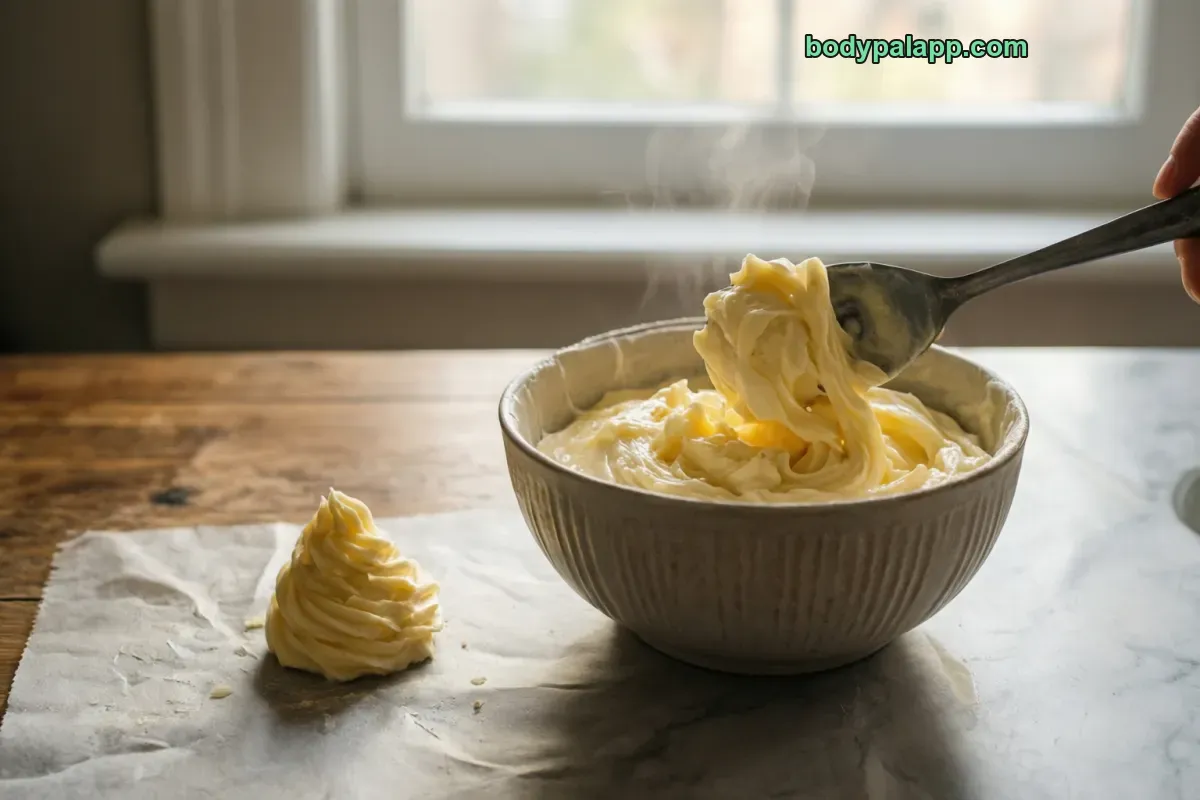
Buttercream icing calories come to 75 for 1 tablespoon (18 g) and 418 per 100 g. Almost all of that is sugar and fat: there is 0 g of protein, and a tablespoon carries 11.4 g of sugar. The spoon count matters more than anything else, because icing goes on thick and fast.
75kcal
1 tablespoon · 18 g, buttercream, ready to spread
0%protein
0 gProtein
12 gCarbs
2.9 gFat
How to burn off 75 kcal
—Walking, brisk
—Jogging
—Cycling, moderate
—Swimming
Skip the math. BodyPal counts these calories from your steps and workouts automatically.
Nutrition facts
Buttercream, ready to spread · per 18 g
Calories
75 kcal
Protein
0 g
Carbohydrate
12.2 g
Fat
2.9 g
Saturated fat
0.5 g
Cholesterol
0 mg
Sodium
33 mg
Potassium
6 mg
Iron
0 mg
Source: USDA FoodData Central
🛡️
Verified nutrition data
Numbers on this page come from USDA FoodData Central, the U.S. Department of Agriculture’s food composition database, and from manufacturer labels where a branded product is named. Last verified September 2026. How we verify our data →
Buttercream icing: calories, protein and sodium by serving
Percent of daily value uses the FDA reference of 2,000 kcal a day.
Serving
kcal
Protein
Carbs
Fat
Sodium
% DV kcal
1 tablespoon (18 g)
75
0 g
12.2 g
2.9 g
33 mg
4%
2 tablespoons (36 g)
150
0 g
24.4 g
5.8 g
66 mg
8%
1 cup (290 g)
1,212
0 g
196.9 g
47.1 g
534 mg
61%
100 g
418
0 g
67.9 g
16.2 g
184 mg
21%
3 × 1 tablespoon (18 g)
226
0 g
99 mg
5 × 1 tablespoon (18 g)
376
0 g
166 mg
Five tablespoons of buttercream is a 376-calorie layer
One level tablespoon (18 g) of buttercream is 75 calories, which reads as small. Nobody frosts a cake with one level spoon, though. Two tablespoons (36 g) bring you to 150 calories, three tablespoons (54 g) to 226, and five tablespoons (90 g) to 376.
That five-spoon figure is roughly what a generous swirl on a cupcake or a thick filling layer can hold. At that point the icing alone can outweigh the cake under it in calories. A full cup (290 g), the amount a home baker might whip up for a small layer cake, totals 1,212 calories and 61% of a 2,000-calorie daily value.
The practical move is to judge icing by thickness, not by slice. A thin crumb coat and a piped rosette on the same slice can differ by several tablespoons, and each one is another 75 calories.
Sugar supplies about two thirds of every calorie
Per 100 g, buttercream icing has 67.9 g of carbohydrate, 16.2 g of fat and 0 g of protein. Translated into calories, carbs supply 65% of the energy and fat the other 35%. Protein contributes nothing, so a spoonful of icing does nothing to keep you full.
Nearly all of those carbs are sugar: 63.1 g per 100 g, with 0 g of fiber. In serving terms that is 11.4 g of sugar per tablespoon and 22.7 g in two. A cup holds 183 g of sugar, which is more than the weight of a cup of most fruits.
Fat is the smaller share but still meaningful at 2.9 g per tablespoon and 47.1 g per cup. Saturated fat in this USDA row is 3 g per 100 g, and cholesterol is 0, which reflects the commercial white icing recipe behind the data. A homemade version built on real butter will not match those two rows.
Sodium is a minor row, sugar is the one to watch
Buttercream has 184 mg of sodium per 100 g, which surprises people who think of it as purely sweet. Per tablespoon that is 33 mg, or 1% of the daily value, and two tablespoons hold 66 mg. Even a full cup stays at 534 mg, 23% of the daily value.
So sodium is not the reason to limit icing. Sugar is. With 63.1 g per 100 g and no protein or fiber to slow you down, it is easy to eat several spoonfuls without noticing. If you track added sugar, count icing on its own line rather than folding it into a vague cake entry.
Potassium is low at 34 mg per 100 g, and the card shows no vitamins or minerals worth leaning on. Treat buttercream as what it is: a topping you eat for flavor.
Scrape, share or go thin
The easiest calorie cut on any frosted dessert is the icing itself. Scraping off half of a thick layer can remove a couple of tablespoons, which is 150 calories you never miss. Choosing a slice with a thin coat over a corner piece with extra rosettes does the same job.
If you frost at home, a thinner spread and a filling of fruit between layers keep the dessert sweet while lowering the spoon count. Pairing a slice with something that has protein, like a glass of milk or yogurt, gives you a bit more staying power than icing can.
Logging is where people lose track, since icing rarely gets measured. BodyPal can log buttercream from a photo of your slice or cupcake, so the frosting gets counted instead of ignored.
How does buttercream icing compare?
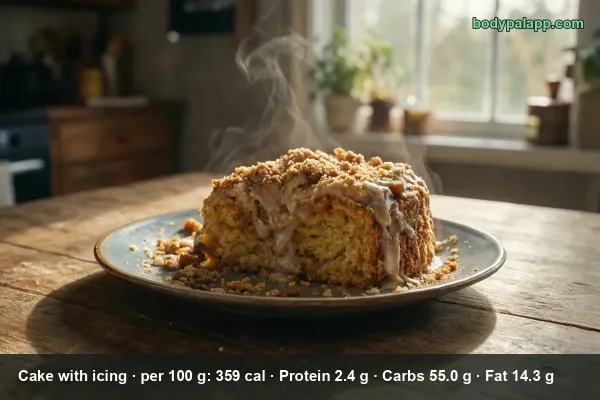
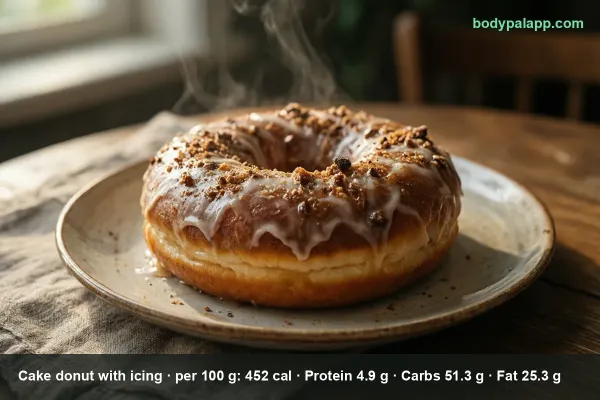
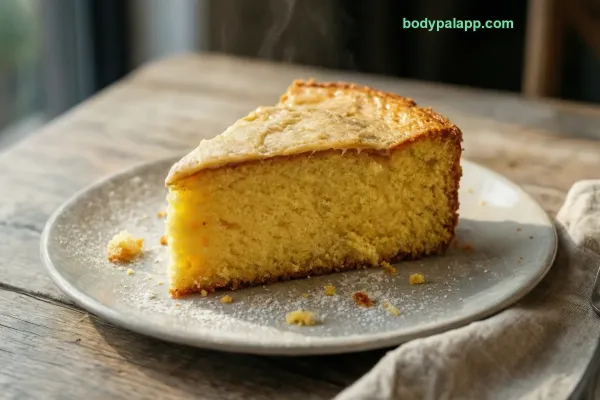
Here is how buttercream icing stacks up against cake with icing, a cake donut with icing and butter cake, per 100 g and per usual serving.
Verdict: Gram for gram, buttercream at 418 calories is denser than cake with icing at 359 or butter cake at 353, and only the cake donut with icing is higher at 452. If you want the smallest hit, skip the extra frosting and pick a plain slice of butter cake at 215 calories, since icing adds sugar with 0 g of protein.
Most popular buttercream icing brands in the United States
6Over The Top Wispy White Decorating Buttercream Icing2 Tbsp · 35 g457 kcal
Tub and bakery icings run from 343 to 539 calories per 100 g depending on how much sugar and fat each recipe uses, so labels sit either side of the number above. Source: manufacturer labels / USDA FoodData Central.
Buttercream icing FAQs
How many calories are in buttercream icing?
One tablespoon (18 g) is about 75 calories and two tablespoons come to 150. A full cup (290 g) is 1,212 calories.
Is buttercream icing good for weight loss?
It is one of the denser sweet toppings at 418 calories per 100 g, of which 63.1 g is sugar and 16.2 g is fat. A thin 18 g spread keeps it to 75 calories.
Buttercream icing vs cake with icing: which has more calories?
The icing on its own is higher at 418 calories per 100 g, against 359 per 100 g for iced cake, because icing is mostly sugar and fat with no flour.
How much sugar is in buttercream icing?
About 63.1 g per 100 g, so one tablespoon (18 g) carries roughly 11.4 g of sugar and two tablespoons about 22.7 g.
How many calories are in a cup of buttercream frosting?
A cup of buttercream frosting (290 g) has 1,212 calories, 61% of the daily value. It also carries 183 g of sugar and 47.1 g of fat, which is why a whole batch adds so much to a homemade cake.
How many calories does just the frosting on a cupcake add?
It depends on the spoonfuls: 2 tablespoons of buttercream add 150 calories, 3 add 226 and 5 add 376. A tall piped swirl sits toward the top of that range, so the frosting can rival the cupcake itself.
What is the nutrition breakdown of buttercream frosting?
Per 100 g, buttercream frosting has 418 calories, 67.9 g carbs, 63.1 g sugar, 16.2 g fat and 0 g protein. Carbs provide 65% of the calories and fat 35%, with 184 mg of sodium.
How many calories are in 2 tablespoons of icing?
Two tablespoons of icing (36 g) contain 150 calories, 8% of the daily value. That amount also has 22.7 g of sugar, 5.8 g of fat and 66 mg of sodium.
Does buttercream icing have protein or fiber?
No. Buttercream icing has 0 g of protein and 0 g of fiber per 100 g. Its 418 calories come entirely from sugar-heavy carbs and fat, so it adds energy without making a dessert more filling.