
How many calories are in caldo de res?
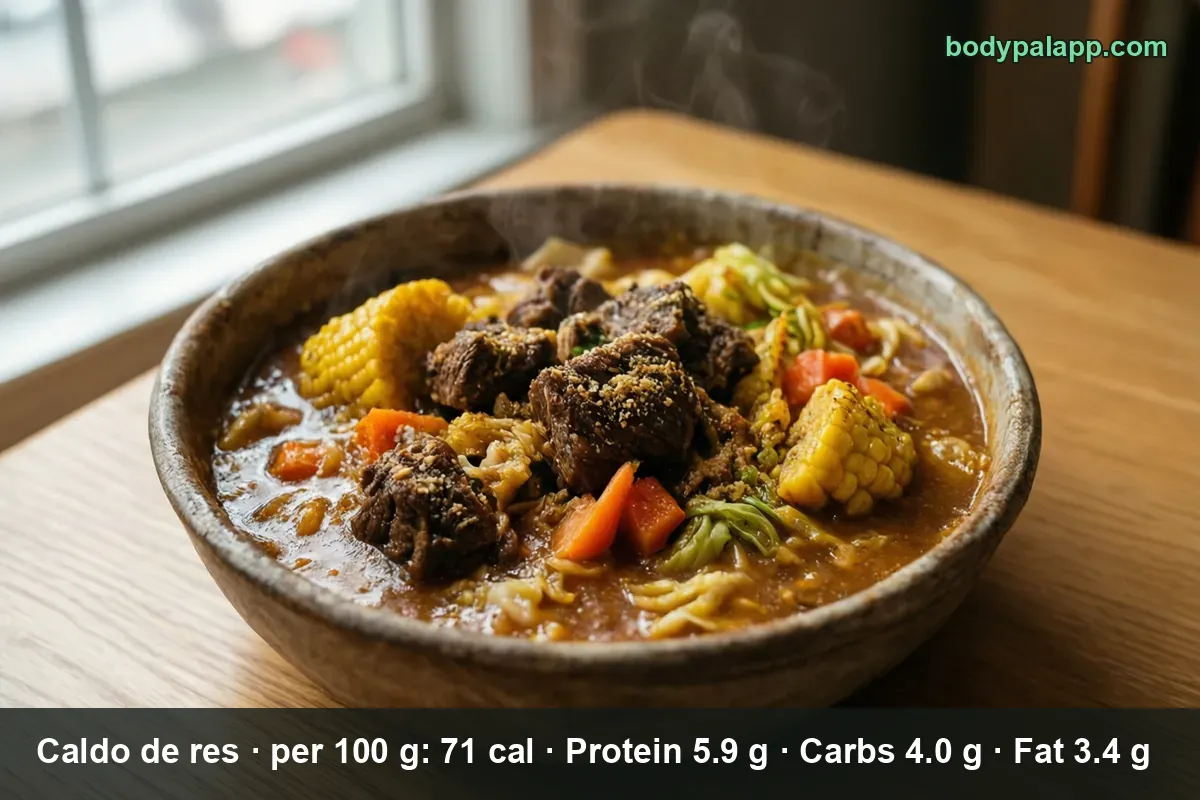
A 1-cup (245 g) serving of caldo de res carries 174 calories, and the soup runs 71 calories per 100 g — light for a meal built around beef. The broth is most of the weight, so the number stays low while the bowl stays big. Protein is where it pays off: 14.5 g a cup.
On this page
- Caldo de res quick facts
- US servings, from a half cup to a restaurant bowl
- Bowl, half cup and the soup kit that is not soup yet
- Sodium is the row to watch, not fat
- How does caldo de res compare?
- Most popular caldo de res brands
- FAQ
Caldo de res quick facts
The number below comes from FNDDS 2707128, "Soup, sopa or caldo de res", the one USDA record for the finished dish: beef simmered with corn, carrots, cabbage and potato in its own broth. That is the food a person is actually holding — a hot bowl, not an ingredient. The other USDA entries matching "caldo" are bouillon cubes and raw vegetable kits, which are seasoning and groceries respectively, and neither of them tells you what dinner cost.
One cup is the standard household measure USDA lists for soup, and 245 g is what a cup of this broth weighs.
| Nutrient | Per 100 g | Per 1 cup (245 g) | % Daily Value |
|---|---|---|---|
| Calories | 71 | 174 | — |
| Total fat | 3.4 g | 8.3 g | 11% |
| Saturated fat | 1.29 g | 3.2 g | 16% |
| Carbohydrate | 4.04 g | 9.9 g | 4% |
| Dietary fiber | 0.8 g | 2.0 g | 7% |
| Total sugars | 1.1 g | 2.7 g | — |
| Protein | 5.91 g | 14.5 g | 29% |
| Sodium | 294 mg | 720 mg | 31% |
| Cholesterol | 18 mg | 44 mg | 15% |
| Potassium | 183 mg | 448 mg | 10% |
% Daily Value is based on a 2,000-calorie diet.
Verified nutrition data
Numbers on this page come from USDA FoodData Central, the U.S. Department of Agriculture’s food composition database, and from manufacturer labels where a branded product is named. Last verified September 2026. How we verify our data →
Two rows you will not find here: added sugars and trans fat. USDA does not publish those values for mixed dishes in this Survey release, so listing them would mean guessing. Total sugars are shown instead, and at 2.7 g a cup they come from the corn and carrots rather than from anything added.
US servings, from a half cup to a restaurant bowl
| Serving | Weight | Calories |
|---|---|---|
| 1 oz | 28 g | 20 kcal |
| Half cup, a taste | 123 g | 87 kcal |
| 1 cup | 245 g | 174 kcal |
| 1 1/2 cups | 368 g | 261 kcal |
| Restaurant bowl, 2 cups | 490 g | 348 kcal |
| Per 100 g | 100 g | 71 kcal |
Only the 1-cup line is a USDA household measure. The half cup, the cup and a half, the 2-cup bowl and the ounce are our own arithmetic from the USDA 100 g figure, not USDA servings.
The gap that trips people up is the word "bowl." A measuring cup of caldo de res is 174 calories; the wide ceramic bowl a taqueria sets down holds about two of them, so the same soup lands at 348. That is a 174-calorie difference created by dishware alone. Ladle into a measuring cup once, look at how full your usual bowl gets, and you will never have to guess again.
Also worth knowing: what you scoop matters as much as how much. Broth-heavy ladles come in under the average, while a ladle that lands two chunks of beef and a wheel of corn comes in over it. The 71 calories per 100 g is the whole pot averaged, meat and liquid together.
Bowl, half cup and the soup kit that is not soup yet
| Version | Per 100 g | Typical portion | Calories |
|---|---|---|---|
| Caldo de res, one cup | 71 kcal | 1 cup (245 g) | 174 kcal |
| Caldo de res, restaurant bowl | 71 kcal | 2 cups (490 g) | 348 kcal |
| Caldo de res, half cup taste | 71 kcal | 1/2 cup (123 g) | 87 kcal |
| Marketside Caldo Soup Kit, raw vegetables only | 31 kcal | 1 cup (113 g) | 35 kcal |
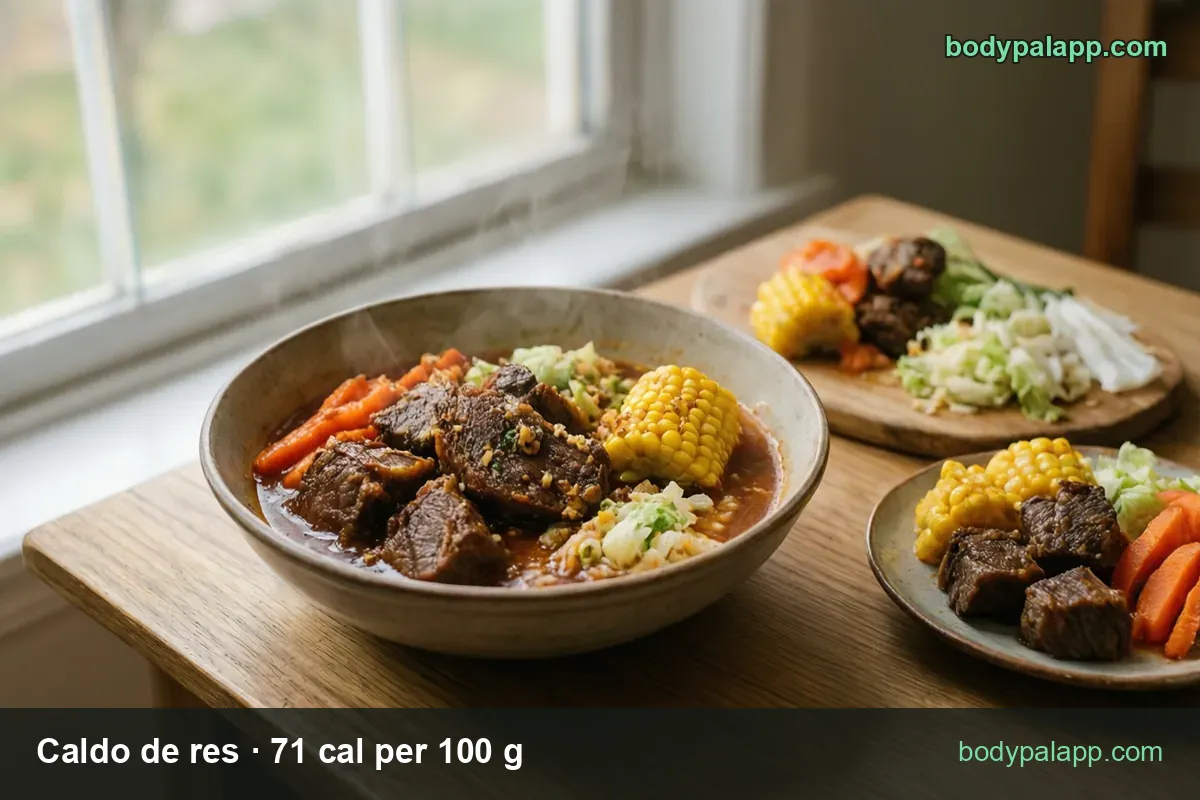
The soup kit row is the useful one. A packaged caldo kit is corn, cabbage, carrot and chayote with nothing cooked into it, and a cup of that raw mix is 35 calories. The finished soup is more than twice as dense per 100 g, and the difference is beef, marrow and the fat that renders into the broth. Vegetables are not what makes caldo de res a meal; the shank is.
That also explains why homemade bowls vary. A leaner cut skimmed after chilling lands under 71 calories per 100 g, and a fatty short rib version lands above it. USDA publishes one figure for the dish as Americans typically eat it, and that figure already averages both kitchens.
Sodium is the row to watch, not fat
Fat gets the blame in beef soup, and here it barely earns it: 8.3 g a cup is 11% of the Daily Value, and saturated fat is 3.2 g, or 16%. Sodium is nearly triple that share. One cup carries 720 mg, 31% of the FDA Daily Value of 2,300 mg — about a third of a teaspoon of table salt sitting in the broth.
Scale it to the bowl a restaurant serves and the arithmetic gets loud. Two cups is 348 calories and 1,441 mg of sodium, 63% of the day's limit from a single dish, before the tortillas, the rice on the side or the salsa. The Dietary Guidelines for Americans report that most adults are already over that limit, so a bowl this size is a reason to keep the rest of the day plain rather than a reason to skip lunch.
The protein column is the good news. A cup delivers 14.5 g, 29% of the Daily Value, for 174 calories, and MyPlate counts the beef toward the protein group and the corn, carrot and cabbage toward vegetables in the same spoonful. If you are watching sodium, ask for the broth light or make it at home and salt at the table; the calories will not change, the milligrams will.
How does caldo de res compare?
| Soup | Per 100 g | US serving | Calories |
|---|---|---|---|
| Caldo de res | 71 kcal | 1 cup, 245 g | 174 kcal |
| Lentil soup with meat | 78 kcal | 1 cup, 245 g | 191 kcal |
| Split pea soup with meat | 80 kcal | 1 cup, 245 g | 196 kcal |
| Bean soup | 67 kcal | 1 cup, 245 g | 164 kcal |
Our take: caldo de res is the pick for weight loss among meaty soups. Of the four here, only bean soup is lighter per cup, and it gives up nearly 40% of the protein to get there (3.76 g per 100 g against 5.91 g). Lentil soup edges caldo de res on protein by a hair, 5.94 g per 100 g, but brings more than twice the carbohydrate, 8.76 g against 4.04 g. Caldo de res has the lowest carbohydrate count of the four and the second-highest protein, which is exactly the shape you want in a soup that still counts as dinner. Eat it in a measured cup with a side of rice if you want fuel; eat the two-cup bowl on its own if you want 348 calories and about 29 g of protein to carry the meal.
Most popular caldo de res brands in the United States
Ranked by how widely each product appears among foods sold in the United States, from the BodyPal food database of over 3.3 million products. Calories are the figures printed on each Nutrition Facts label, checked against USDA FoodData Central.
| Product | Calories (per 100 g) |
|---|---|
| Marketside Caldo Soup Kit (raw vegetables) | 31 cal |
Brand popularity: BodyPal food database. Nutrition: manufacturer labels / USDA FoodData Central.
Caldo de res FAQs
How many calories are in caldo de res?
174 calories in a 1-cup (245 g) serving, which works out to 71 calories per 100 g. That figure comes from the USDA record for the finished soup, beef and vegetables and broth together. A half cup is 87 calories and a single ounce is about 20.
How many calories in a bowl of caldo de res?
About 348 calories, because a restaurant bowl holds roughly 2 cups, or 490 g. That is our own arithmetic from the USDA 100 g figure rather than a USDA serving. Measure your bowl once with a measuring cup; most home bowls fall between 1 1/2 and 2 cups, so 261 to 348 calories.
How much protein is in caldo de res?
14.5 g of protein in a 1-cup serving, which is 29% of the Daily Value for only 174 calories. A 2-cup restaurant bowl doubles it to about 29 g. The protein comes from the beef shank; the corn, carrot and cabbage contribute almost none of it.
Is caldo de res good for weight loss?
At 174 calories a cup with 14.5 g of protein, it fits a calorie deficit better than most beef dishes. The broth adds volume without calories, which helps with fullness. The catch is sodium at 720 mg a cup, so if you are watching salt, keep the portion to one or two cups.
How much sodium is in caldo de res?
720 mg per 1-cup serving, or 31% of the 2,300 mg Daily Value, which is about a third of a teaspoon of table salt. A 2-cup restaurant bowl reaches roughly 1,441 mg, 63% of the day's limit. Homemade versions salted at the table can land well under that.
How many carbs are in caldo de res?
9.9 g of carbohydrate in a 1-cup serving, just 4% of the Daily Value, with 2.0 g of that as fiber and 2.7 g as naturally occurring sugars. That is the lowest carbohydrate count among common meaty soups; lentil soup with meat carries more than twice as much per 100 g.
Is caldo de res healthy?
By the numbers it holds up well: 174 calories a cup, 14.5 g of protein, 2.0 g of fiber and only 3.2 g of saturated fat, which is 16% of the Daily Value. Sodium is the weak spot at 31% of the Daily Value per cup, so portion size decides how it lands.
Does the corn and potato add many calories to caldo de res?
Less than people expect: the USDA figure of 71 calories per 100 g already includes them, and a raw packaged caldo vegetable mix is only 31 calories per 100 g. The beef and the fat rendered into the broth account for most of the difference, not the vegetables floating in it.
Similar foods
- Tripe Soup — 148 cal per cup
- Shrimp Bisque — 191 cal per cup
- Bean Soup — 171 cal per cup
- Pork Ramen — 290 cal per bowl
- Beef Pho — 377 cal per bowl
- Pea Soup With Ham — 185 cal per cup
Count it without the math
Point the camera at the bowl and BodyPal counts the beef, the corn and the broth for you.


How long does it take to burn off caldo de res?
A 1-cup (245 g) serving is 174 kcal. Enter your weight and the amount you ate to see how long it takes you to burn that off:
lb
| Activity | Time to burn 174 kcal |
|---|---|
| Walking, brisk | 35 min |
| Cycling, moderate | 22 min |
| Swimming, moderate | 25 min |
| Jogging | 20 min |
| Weight training, moderate | 39 min |
Times are for a 155 lb adult at a steady pace; change the weight to see yours. The amount is set to the portion in the text (245 g); change it to what you actually ate. BodyPal works this out from your steps automatically.
This table assumes you know your daily total. If you do not, the daily calorie calculator works it out from five numbers.