Chicken breast tender calories come to 38 for one 15 g piece and 252 per 100 g of the breaded, cooked product. The number to notice is the fat: it supplies 46% of the calories, more than protein at 26%, because the breading and cooking oil reshape what starts as lean breast meat.
38kcal
1 tender · 15 g, breaded, cooked
26%protein
2.5 gProtein
3 gCarbs
1.9 gFat
How to burn off 38 kcal
—Walking, brisk
—Jogging
—Cycling, moderate
—Swimming
Skip the math. BodyPal counts these calories from your steps and workouts automatically.
Nutrition facts
Breaded, cooked · per 15 g
Calories
38 kcal
Protein
2.5 g
Carbohydrate
2.6 g
Fat
1.9 g
Saturated fat
0.5 g
Cholesterol
7 mg
Sodium
67 mg
Potassium
34 mg
Iron
0.1 mg
Source: USDA FoodData Central
🛡️
Verified nutrition data
Numbers on this page come from USDA FoodData Central, the U.S. Department of Agriculture’s food composition database, and from manufacturer labels where a branded product is named. Last verified September 2026. How we verify our data →
Chicken breast tender: calories, protein and sodium by serving
Percent of daily value uses the FDA reference of 2,000 kcal a day.
Serving
kcal
Protein
Carbs
Fat
Sodium
% DV kcal
1 piece (15 g)
38
2.5 g
2.6 g
1.9 g
67 mg
2%
4 pieces (62 g)
156
10.1 g
10.9 g
8 g
277 mg
8%
3 oz portion (85 g)
214
13.9 g
14.9 g
11 g
379 mg
11%
100 g
252
16.4 g
17.6 g
12.9 g
446 mg
13%
3 × 1 piece (15 g)
113
7.4 g
201 mg
5 × 1 piece (15 g)
189
12.3 g
335 mg
Four tenders make a 156-calorie snack
A single 15 g piece is small, so the per-piece figure of 38 calories undersells what usually lands on the plate. Two pieces come to 76 calories and three to 113. Four pieces (62 g) reach 156, and five pieces weigh 75 g and add up to 189 calories.
The 3 oz portion (85 g) is the reference size on many labels, and it lands at 214 calories, about 11% of the daily value. That same portion carries 13.9 g of protein and 379 mg of sodium. Scale to 100 g and you are at 252 calories, 13% of the daily value.
Counting pieces only works if your tenders match the 15 g reference. Homemade and restaurant strips can be much larger, so weigh one once and use that number from then on. A kitchen scale settles the question faster than guessing, and BodyPal can log tenders from a photo if you would rather skip the math.
Fat supplies nearly half the calories
The calorie split is 46% fat, 28% carbs and 26% protein. For a food sold as chicken breast, that order is a surprise. The meat underneath is lean; the breading and the oil it cooks in change the profile.
Per 100 g, tenders carry 12.9 g of fat, 17.6 g of carbs and 16.4 g of protein. Saturated fat is 3.2 g, a modest slice of the total. Sugars and fiber both read 0, so the carbs come from the coating rather than anything sweet.
Protein is still worth counting. A 3 oz portion covers 28% of the daily value for protein, and four pieces cover 20%. You simply pay more calories per gram of protein than with unbreaded chicken: a chicken wing has the same 252 calories per 100 g but 23.6 g of protein.
Sodium climbs fast with every piece
Each 15 g piece has 67 mg of sodium, only 3% of the daily value. The catch is that nobody stops at one. Four pieces reach 277 mg, or 12%, five reach 335 mg, and a 3 oz portion hits 379 mg, which is 16% of the daily value.
Per 100 g the figure is 446 mg, 19% of the daily value against a 2300 mg reference. Dipping sauces are not included in any of these numbers, so whatever you dunk the tenders in adds to the total.
If you watch sodium, keep the portion near four pieces and pair it with unsalted sides. Cholesterol is less of a story here: 45 mg per 100 g against a 300 mg daily value. Potassium sits at 225 mg per 100 g.
Build the plate around vegetables, not fries
Tenders bring protein and fat but no fiber, so the rest of the plate has to supply it. A green salad, raw vegetables or fruit add volume and fiber, which helps four pieces at 156 calories feel like a real meal instead of a snack.
Fries and creamy dips double down on what tenders already carry: fat, breading-style carbs and salt. If you want a dip, measure a spoonful rather than pouring freely, so the total you log matches what you ate.
Brands differ in breading, size and seasoning. Perdue, Foster Farms, Market Pantry and Weaver all sell breast tenders, and their labels can differ from the USDA reference used on this page. Check the package when you have it, and use the per-piece weight printed there.
How does chicken breast tender compare?
Here is how breaded chicken breast tenders stack up against chicken tenders, chicken wings and drumettes, per 100 g and per usual serving.
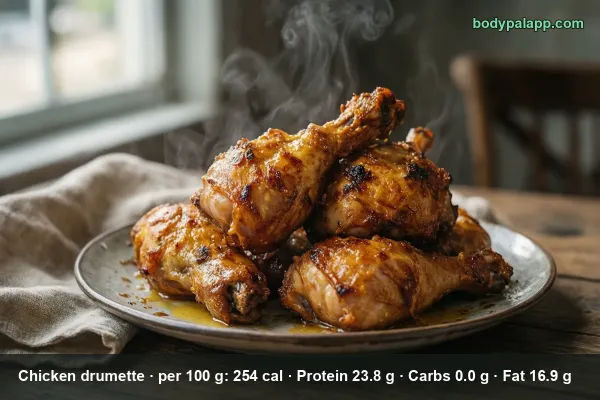
Verdict: For calorie and sodium control pick breast tenders: 252 calories per 100 g against 271 for chicken tenders, with 446 mg of sodium instead of 769 mg. For protein pick a drumette, which gives 23.8 g per 100 g for about the same 254 calories and only 98 mg of sodium.
Most popular chicken breast tender brands in the United States
Ranked by popularity in the BodyPal database
# Productkcal / 100 g
1Weaver Chicken Breast Tenders5 pieces · 85 g224 kcal
2Kirkwood Parmesan Herb Encrusted Chicken Breast Tenders4 oz · 112 g205 kcal
3Market Pantry Chicken Breast Tenders5 pieces · 85 g282 kcal
4TGI Fridays Chicken Breast Tender Fritters100 g180 kcal
5Foster Farms Chicken Breast Tenders4 oz · 112 g89 kcal
6Sugar Hill Farms Chicken Breast Tenders3 tenders · 94 g181 kcal
7Forester Farmer's Market Chicken Breast Tenders4 oz · 114 g114 kcal
8Perdue Chicken Breast Tenders3 pieces · 95 g116 kcal
Unbreaded tenders are labeled raw and without coating, so they read far lower than the breaded number above. Source: manufacturer labels / USDA FoodData Central.
Chicken breast tender FAQs
How many calories are in one chicken breast tender?
About 38 calories for one breaded tender (15 g), or 156 for four pieces (62 g).
Are chicken breast tenders good for weight loss?
Breaded tenders have 252 calories and 12.9 g fat per 100 g. Unbreaded raw tenders on labels range from 89 to 116 calories per 100 g.
Chicken breast tenders vs chicken tenders: which has fewer calories?
Breaded breast tenders have 252 calories per 100 g, chicken tenders or strips 271.
How much protein is in chicken breast tenders?
A 3 oz serving has 13.9 g protein and 14.9 g carbs, about 2.5 g protein per tender.
How many calories are in 3 oz of chicken breast tenders?
A 3 oz portion (85 g) of breaded, cooked chicken breast tenders has 214 calories. It also gives 13.9 g of protein, 14.9 g of carbs, 11 g of fat and 379 mg of sodium.
How many calories are in a serving of four chicken breast tenders?
Four pieces (62 g) total 156 calories, about 8% of the daily value. That serving holds 10.1 g of protein, 10.9 g of carbs, 8 g of fat and 277 mg of sodium.
What is the full nutrition of chicken breast tenders per 100 g?
Per 100 g, breaded chicken breast tenders have 252 calories, 16.4 g of protein, 17.6 g of carbs and 12.9 g of fat, with 3.2 g saturated. Sodium is 446 mg, cholesterol 45 mg and potassium 225 mg.
Do chicken breast tenders contain sugar or fiber?
No. The USDA figures list 0 g of sugars and 0 g of fiber per 100 g. The 17.6 g of carbs come from the breading, so add vegetables or fruit if you want fiber in the meal.
How much fat is in one chicken breast tender?
One 15 g piece has 1.9 g of fat out of 38 calories. Fat makes up 46% of the calories in breaded tenders, the largest share, ahead of carbs at 28% and protein at 26%.