
How many calories are in chicken hearts?
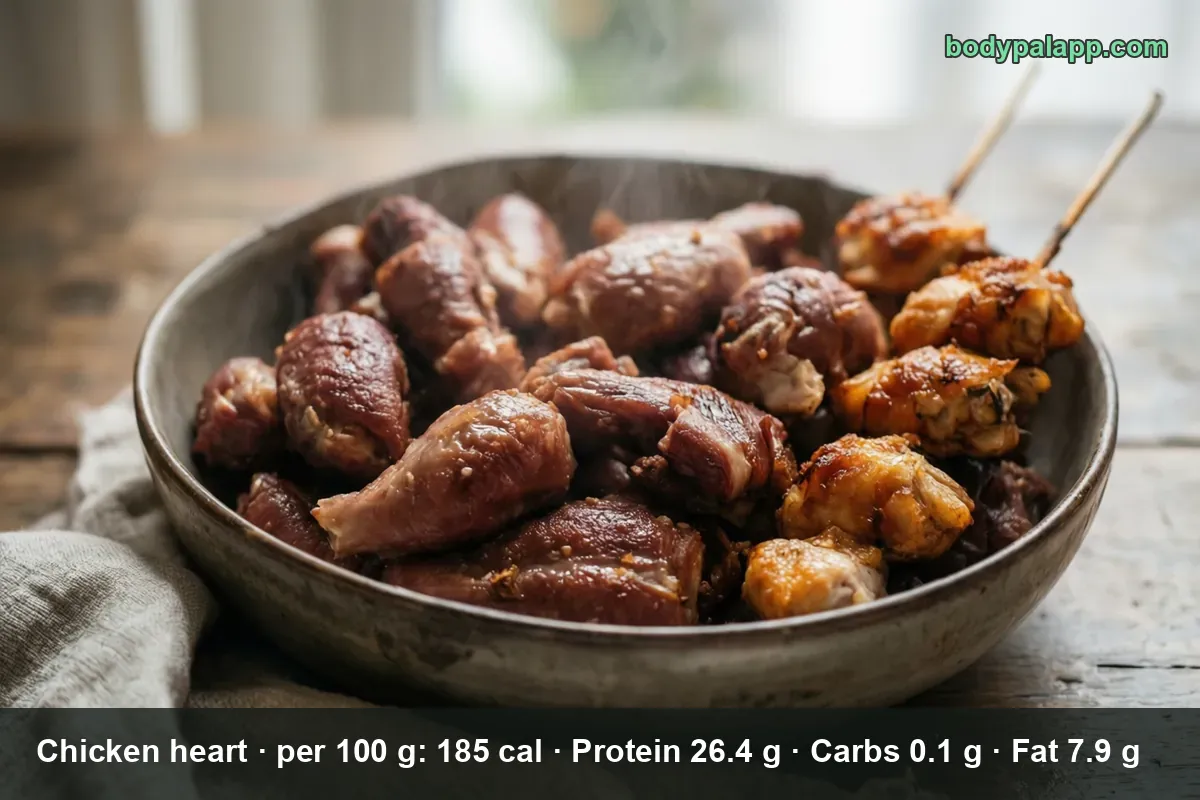
One cup of cooked chicken hearts, chopped, weighs 145 g and carries 268 calories. Per 100 g simmered hearts run 185 calories, with 26.41 g of protein and 7.92 g of fat. That single cup delivers 38.3 g of protein, which is why giblets keep showing up on high-protein grocery lists.
On this page
- Chicken heart quick facts
- US servings, from one ounce to a full cup
- Raw hearts, gizzards and the rest of the giblet tray
- Cholesterol is the row to watch
- How do chicken hearts compare?
- Most popular chicken heart brands
- Chicken heart FAQs
Chicken heart quick facts
The numbers below come from USDA SR Legacy 171059, "Chicken, heart, all classes, cooked, simmered". That is the record for hearts that have already been cooked through in liquid, which is what almost everyone is holding when they go looking for a calorie count: a skillet of hearts finished in their own juices, a skewer off the grill, a bowl of them stewed with onions.
USDA publishes exactly two records for chicken heart, simmered and raw. There is no separate line for grilled, pan-fried or air-fried hearts, so the simmered record is the one to log for any dry-heat method too, with the oil you added counted separately.
| Nutrient | Per 100 g | Per 1 cup, chopped (145 g) | % Daily Value |
|---|---|---|---|
| Calories | 185 | 268 | — |
| Total fat | 7.92 g | 11.5 g | 15% |
| Saturated fat | 2.26 g | 3.3 g | 16% |
| Carbohydrate | 0.1 g | 0.1 g | 0% |
| Dietary fiber | 0 g | 0 g | 0% |
| Protein | 26.41 g | 38.3 g | 77% |
| Sodium | 48 mg | 70 mg | 3% |
| Cholesterol | 242 mg | 351 mg | 117% |
| Potassium | 132 mg | 191 mg | 4% |
% Daily Value is based on a 2,000-calorie diet.
Verified nutrition data
Numbers on this page come from USDA FoodData Central, the U.S. Department of Agriculture’s food composition database, and from manufacturer labels where a branded product is named. Last verified September 2026. How we verify our data →
Two rows you would expect on a package label are missing here on purpose. USDA does not publish total sugars, added sugars or trans fat for this record, because the SR Legacy analysis of organ meat did not measure them. Plain hearts with no breading and no glaze have essentially nothing in the sugar column anyway, so nothing useful is lost.
Sodium is the pleasant surprise. A whole cup of hearts carries 70 mg, about 3% of the day, which is roughly what the salt shaker adds in the first two seconds. If your sodium budget is tight, the seasoning you cook them in will always matter more than the meat.
US servings, from one ounce to a full cup
Hearts are sold loose by weight, so most people either eyeball a handful or dump the whole tray into a pan. The cup measure is the one USDA actually publishes; everything else in this table is scaled from the 100 g figure.
| Serving | Weight | Calories |
|---|---|---|
| 1 oz cooked | 28.4 g | 52 kcal |
| 3 oz cooked | 85 g | 157 kcal |
| 4 oz cooked | 113 g | 209 kcal |
| Half a cup, chopped | 72.5 g | 134 kcal |
| 1 cup, chopped | 145 g | 268 kcal |
| Per 100 g | 100 g | 185 kcal |
Only the 1-cup, chopped or diced line is a USDA household measure. The ounce rows and the half cup are our own arithmetic from the USDA 100 g figure, not USDA servings, which is why they land on numbers like 28.4 g rather than a tidy 28.
The gap between 3 oz and a cup is the trap. A cup of chopped hearts is 145 g, more than a 4 oz portion, so "one cup" and "one serving of meat" are not the same thing. If you plated a cup and logged 3 oz, you undercounted by 111 calories and 16 g of protein.
Raw hearts, gizzards and the rest of the giblet tray
Raw and cooked hearts read very differently, and the direction surprises people. Cooked hearts are the higher number: 185 calories per 100 g against 153 raw. Nothing was added in the pan. Simmering drives out water, so the same gram of meat comes back denser, and the protein column proves it, jumping from 15.55 g raw to 26.41 g cooked per 100 g.
| Version | Per 100 g | Typical piece | Calories |
|---|---|---|---|
| Chicken hearts, simmered | 185 kcal | 1 cup, chopped (145 g) | 268 kcal |
| Chicken hearts, raw | 153 kcal | 4 oz raw (113 g) | 173 kcal |
| Chicken hearts, raw, single heart | 153 kcal | 1 heart (6.1 g) | 9 kcal |
| Chicken gizzards, simmered | 154 kcal | 3 oz (85 g) | 131 kcal |
| Chicken light meat, roasted | 153 kcal | 3 oz (85 g) | 130 kcal |
| Turkey gizzards, simmered | 155 kcal | 3 oz (85 g) | 132 kcal |
| Chicken neck, raw | 154 kcal | 3 oz (85 g) | 131 kcal |
The practical rule: weigh the tray before you cook and log the raw record, or weigh the finished pan and log the cooked one. Do not weigh raw and log cooked. On a 4 oz raw portion that mistake alone adds 36 calories, and on a full pound it starts to matter.
One heart is small. At 6.1 g raw, a 4 oz raw portion is roughly 18 hearts, which is our own count from the USDA per-heart weight rather than a USDA serving. That is a useful sanity check at the counter, since hearts are usually sold in trays of a pound or more and the whole tray is closer to four portions than one.
Gizzards sit right next to hearts in the same package and behave differently. At 154 calories per 100 g they are leaner, with 30.39 g of protein and only 2.68 g of fat, because a gizzard is pure grinding muscle while a heart carries a fatty cap and vessels. Turkey gizzards land almost identically at 155.
Cholesterol is the row to watch
Chicken hearts are one of the few everyday foods where cholesterol, not calories, is the headline. A cup delivers 351 mg, which is 117% of the 300 mg Daily Value that the FDA uses on the Nutrition Facts label. You clear the full day's reference amount from a bowl that costs you 268 calories. Even a 3 oz portion is 206 mg, about two thirds of it.
That is worth knowing rather than fearing. Current federal dietary guidance no longer sets a hard numeric cap on dietary cholesterol, and the label DV is a reference figure, not a limit prescription. If your doctor has you tracking cholesterol intake, hearts are a food to plan around rather than graze on. If not, the more interesting column is protein.
On protein, hearts are excellent value. A cup covers 77% of the 50 g Daily Value in 268 calories, which is strong value for the calories. MyPlate's protein foods guidance treats organ meats as ordinary members of the protein group, and the saturated fat here stays modest at 3.3 g per cup, 16% of the day.
How do chicken hearts compare?
| Food | Per 100 g | US serving | Calories | Protein |
|---|---|---|---|---|
| Chicken hearts, simmered | 185 kcal | 3 oz (85 g) | 157 kcal | 26.41 g |
| Chicken gizzards, simmered | 154 kcal | 3 oz (85 g) | 131 kcal | 30.39 g |
| Chicken light meat, roasted | 153 kcal | 3 oz (85 g) | 130 kcal | 27.13 g |
| Turkey gizzards, simmered | 155 kcal | 3 oz (85 g) | 132 kcal | 26.45 g |
Our take: hearts are the richest of these four and the only one above 155 calories per 100 g, but the spread is small enough that the choice rarely comes down to calories. Against roasted white meat the protein is a near tie, 26.41 g versus 27.13 g, while the fat is nearly double at 7.92 g versus 4.07 g. For pure lean protein, gizzards win outright with the most protein on the table, 30.39 g per 100 g at 131 calories per 3 oz. For flavor and iron-rich texture at a cost of 26 extra calories per 3 oz over gizzards, hearts are worth it.
Most popular chicken heart brands in the United States
Ranked by how widely each product appears among foods sold in the United States, from the BodyPal food database of over 3.3 million products. Calories are the figures printed on each Nutrition Facts label, checked against USDA FoodData Central.
| Product | Calories (per 100 g) |
|---|---|
| Tyson All Natural Fresh Chicken Gizzards & Hearts (raw) | 69 cal |
Brand popularity: BodyPal food database. Nutrition: manufacturer labels / USDA FoodData Central.
Chicken heart FAQs
How many calories are in chicken hearts?
Cooked chicken hearts have 185 calories per 100 g, so a 3 oz portion is 157 calories and a full cup, chopped, is 268. Raw hearts read lower at 153 per 100 g, because simmering drives out water and concentrates the meat.
How many calories in 1 cup of chicken hearts?
268 calories for one cup of cooked hearts, chopped or diced, which USDA weighs at 145 g. That cup also carries 38.3 g of protein, 11.5 g of fat, 3.3 g of saturated fat and just 70 mg of sodium. Carbohydrate is essentially zero.
How much protein is in chicken hearts?
26.41 g of protein per 100 g cooked, which works out to 22.4 g in a 3 oz portion and 38.3 g in a chopped cup. That cup covers 77% of the 50 g Daily Value, and roasted white meat edges it on protein per calorie.
Are chicken hearts high in cholesterol?
Yes: 242 mg per 100 g, so a cup delivers 351 mg, or 117% of the 300 mg Daily Value on the FDA label. A 3 oz portion is 206 mg. If you are tracking cholesterol on medical advice, treat hearts as an occasional portion rather than a staple.
Raw vs cooked chicken hearts, which numbers do I log?
Log whichever state you weighed. Raw hearts are 153 calories per 100 g, cooked and simmered are 185. The cooked figure is higher because water leaves the pan, not because anything was added. Weighing raw and logging cooked adds 36 calories on a 4 oz portion.
How many calories in 4 oz of chicken hearts?
209 calories for 4 oz of cooked hearts, our own arithmetic from the USDA 100 g figure of 185. Four ounces of raw hearts is 173 calories instead. The cooked 4 oz portion brings about 29.8 g of protein and 273 mg of cholesterol.
Chicken hearts vs chicken gizzards calories?
Gizzards are leaner: 154 calories per 100 g against 185 for hearts, and 131 versus 157 in a 3 oz portion. Gizzards also carry more protein, 30.39 g per 100 g against 26.41 g, because they are pure muscle without the fatty cap that surrounds a heart.
Are chicken hearts good for weight loss?
They fit well: 157 calories for 3 oz with 22.4 g of protein and no carbohydrate. If you want the leanest option on the same tray, gizzards beat them at 131 calories for the same 3 oz with more protein. Watch the cooking fat, which is often the bigger number.
Similar foods
- Chicken Leg — 475 cal per leg
- Pork Butt — 210 cal for 4 oz raw
- Beef Cubes — 252 cal per cup
- Beef Cube Steak — 299 cal per steak
- Cube Steak — 449 cal per thick steak
- Pork Chop — 220 cal per regular chop
Count it without the math
Point the camera at the pan and BodyPal counts the hearts for you, cup or handful.


How long does it take to burn off chicken heart?
A 1-cup (145 g) serving is 268 kcal. Enter your weight and the amount you ate to see how long it takes you to burn that off:
lb
| Activity | Time to burn 268 kcal |
|---|---|
| Walking, brisk | 54 min |
| Cycling, moderate | 34 min |
| Swimming, moderate | 38 min |
| Jogging | 32 min |
| Weight training, moderate | 1 hr |
Times are for a 155 lb adult at a steady pace; change the weight to see yours. The amount is set to the portion in the text (145 g); change it to what you actually ate. BodyPal works this out from your steps automatically.
Want the bigger picture? Calculate your daily calorie needs — your maintenance figure, a target for losing or gaining, and the date you get there.