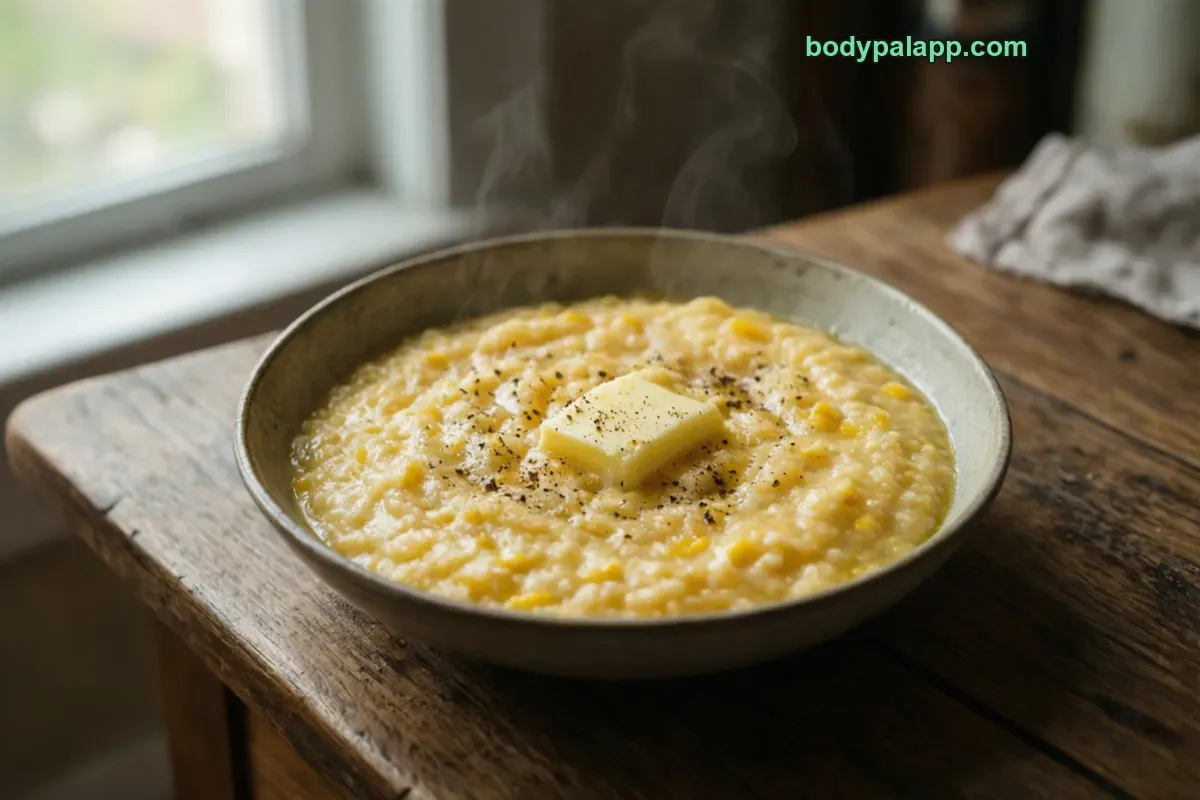
Corn grits calories come to 182 for 1 cup (257 g) of white grits cooked with water, or 71 per 100 g. The number worth noticing is not the calories but the salt: that cup carries 573 mg of sodium, 25% of the daily value, because the USDA figure assumes salted cooking water.
182kcal
1 cup · 257 g, white, cooked with water
10%protein
4.4 gProtein
38 gCarbs
1.2 gFat
How to burn off 182 kcal
—Walking, brisk
—Jogging
—Cycling, moderate
—Swimming
Skip the math. BodyPal counts these calories from your steps and workouts automatically.
Nutrition facts
White, cooked with water · per 257 g
Calories
182 kcal
Protein
4.4 g
Carbohydrate
38 g
Fat
1.2 g
Saturated fat
0.2 g
Cholesterol
0 mg
Sodium
573 mg
Potassium
69 mg
Iron
1.5 mg
Source: USDA FoodData Central
🛡️
Verified nutrition data
Numbers on this page come from USDA FoodData Central, the U.S. Department of Agriculture’s food composition database, and from manufacturer labels where a branded product is named. Last verified September 2026. How we verify our data →
Corn grits: calories, protein and sodium by serving
Percent of daily value uses the FDA reference of 2,000 kcal a day.
Serving
kcal
Protein
Carbs
Fat
Sodium
% DV kcal
1 cup (257 g)
182
4.4 g
37.9 g
1.2 g
573 mg
9%
Yellow variety (233 g)
151
2.9 g
32.3 g
0.9 g
520 mg
8%
Instant packet, dry (29 g)
99
2.1 g
22.7 g
0.6 g
325 mg
5%
100 g
71
1.7 g
14.8 g
0.5 g
223 mg
4%
3 × 1 cup (257 g)
547
13.2 g
1,719 mg
5 × 1 cup (257 g)
912
22 g
2,866 mg
One cup is a modest side; refills add up fast
A single cup of cooked white grits weighs 257 g and lands at 182 calories, about 9% of a 2000-calorie daily value. That is a light base for breakfast. Most of that weight is water, which is why the per 100 g figure sits at just 71 calories.
The trouble starts with seconds. Two cups (514 g) reach 365 calories, three cups (771 g) reach 547, and a big pot split five ways at 1 cup each still means 912 calories for anyone who eats the whole 1,285 g. Grits are soft and quick to eat, so a bowl that looks normal at a diner can easily hold two cups.
Instant packets read differently because the label is for dry product. One packet (29 g) is 99 calories before you add water, so the cooked bowl carries the same 99 calories plus whatever butter or cheese goes in. If you log grits, weigh them cooked or count packets; guessing by bowl size is where the totals drift.
Carbs supply 84% of every calorie
Grits are ground corn, and the calorie split shows it: 84% of the energy comes from carbohydrate, 10% from protein and only 6% from fat. Per 100 g that means 14.8 g of carbs, 1.7 g of protein and 0.5 g of fat. A cup gives 37.9 g of carbs, 4.4 g of protein and 1.2 g of fat.
Sugar is close to zero at 0.3 g per cup, so the carbs are almost all starch. Fiber is low too: 2.1 g per cup, against a daily value of 28 g. Saturated fat is 0.1 g per 100 g and cholesterol is 0, so plain grits bring almost nothing on the fat side.
This is the honest read on grits. Plain, they are a lean, starchy base with little protein and little fiber. Everything that makes them rich, from butter to cheese to cream, sits outside the numbers on this page, and those toppings can easily outweigh the grits themselves.
Sodium is the row to watch
The USDA row behind this page is grits cooked with water, with salt. That salt shows up clearly: 223 mg of sodium per 100 g and 573 mg per cup, which is 25% of the daily value in a food most people think of as bland. The yellow variety serving (233 g) is similar at 520 mg, or 23%.
Portions multiply this quickly. Two cups carry 1,146 mg, three cups carry 1,719 mg, and five cups reach 2,866 mg, more than the full daily value. Even a dry instant packet (29 g) lists 325 mg, 14% of the daily value, before any seasoning goes in.
If you watch sodium, the fix is in your hands when you cook from scratch: the salt is added in the pot, not built into the corn. Season lightly, then taste after cheese or butter go in, since both add more salt on top of what is listed here.
Grits need a protein partner to hold you
With 4.4 g of protein per cup, about 9% of the daily value, grits on their own are a side, not a meal. Pairing them with eggs, shrimp, fish or beans turns a starchy bowl into something that keeps you full longer, without changing the 182 calories of the grits themselves.
White and yellow grits are close enough that choice can come down to taste. The yellow serving on this page (233 g) lists 151 calories and 2.9 g of protein, slightly less than the white cup because the portion is smaller. Brands such as Bob's Red Mill, Quaker and War Eagle Mill sell both stone-ground and quick versions; check the cooked yield on the bag when you log them.
Toppings are where a grits plate gets heavy. Keep the bowl to a single cup, add a lean protein and some vegetables, and go easy on butter and cheese. If you snap a photo of the plate, BodyPal can log the grits and the toppings together.
How does corn grits compare?
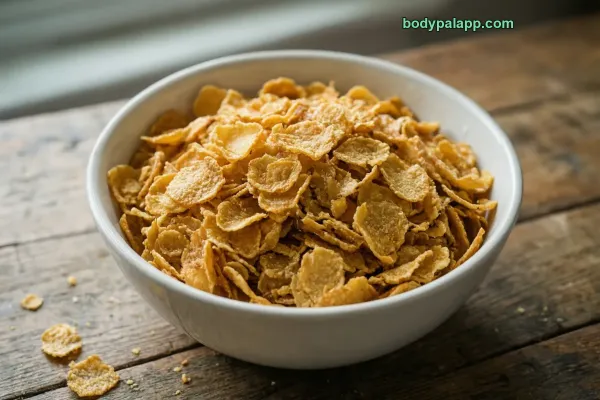
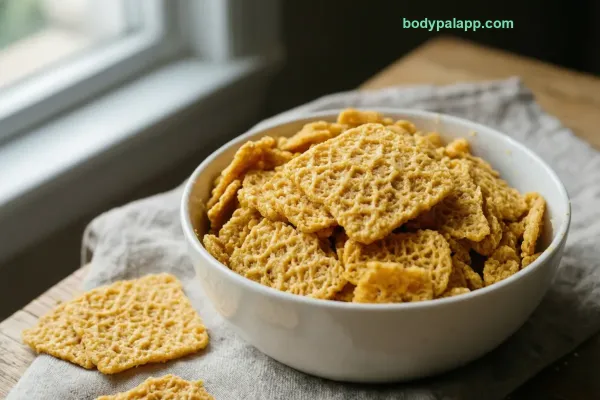
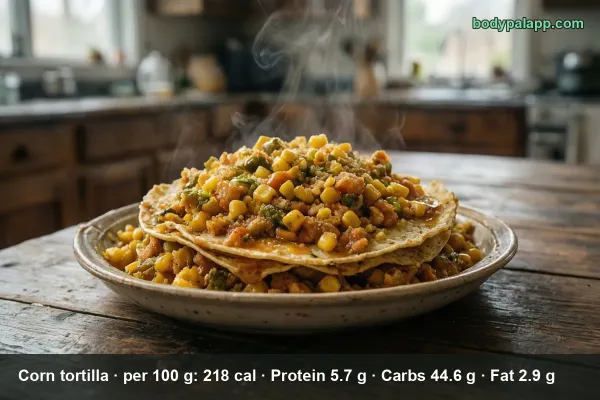
Here is how cooked corn grits stack up against corn flakes, Corn Chex and corn tortillas, per 100 g and per usual serving.
Verdict: For the most food per calorie, grits win easily at 71 per 100 g against 384 for corn flakes and 373 for Corn Chex, because they are cooked in water. If sodium is your concern, the corn tortilla is the pick at 45 mg per 100 g, while Corn Chex sits highest at 709 mg.
Most popular corn grits brands in the United States
Ranked by popularity in the BodyPal database
# Productkcal / 100 g
1Bob's Red Mill Organic Polenta Corn Grits35 g371 kcal
2McKaskle Family Farm Braggadocio Stone-Ground Organic White Corn Grits1/4 cup · 35 g343 kcal
3Quaker Old Fashioned Smooth & Creamy White Corn Grits1/4 cup · 41 g341 kcal
4Bob's Red Mill Corn Grits1/4 cup · 46 g370 kcal
5Bob's Red Mill Yellow Corn Grits1/4 cup · 40 g350 kcal
6Bob's Red Mill Gluten Free Corn Grits1/4 cup · 40 g375 kcal
7War Eagle Mill Organic White Corn Grits1/4 cup · 40 g350 kcal
Bags are labeled by dry weight, before water is added, so their per 100 g numbers read far higher than the cooked figures above. Source: manufacturer labels / USDA FoodData Central.
Corn grits FAQs
How many calories are in a cup of corn grits?
A cup of white corn grits cooked with water (257 g) is 182 calories. Yellow grits are a little lower at 151 calories per cup (233 g).
Are corn grits good for weight loss?
Plain cooked grits are 71 calories per 100 g, so a full cup is 182 calories with 1.2 g fat and 2.1 g fiber. Grits made with cheese and added fat jump to 108 calories per 100 g.
Corn grits vs corn flakes: which is lower in calories?
Cooked grits have 71 calories per 100 g against 384 for corn flakes, because grits take on water during cooking while flakes stay dry.
How much protein is in corn grits?
White corn grits have 1.71 g protein per 100 g, so a cooked cup gives 4.4 g protein along with 37.9 g carbs.
What are the nutrition facts for corn grits per 100 g?
Per 100 g, cooked white corn grits have 71 calories, 14.8 g of carbs, 1.7 g of protein, 0.5 g of fat, 0.8 g of fiber and 223 mg of sodium. Cholesterol is 0.
How many calories are in two cups of grits?
Two cups (514 g) of cooked corn grits come to 365 calories, with 8.8 g of protein and 1,146 mg of sodium. Three cups reach 547 calories.
How many calories are in an instant grits packet?
One instant grits packet (29 g dry) has 99 calories, 22.7 g of carbs and 2.1 g of protein. It also carries 325 mg of sodium, 14% of the daily value, before any toppings.
How much sodium is in a cup of corn grits?
A cup of corn grits cooked with salted water has 573 mg of sodium, 25% of the daily value. Grits cooked without salt would be far lower, since the sodium comes from the cooking water.
Are yellow corn grits lower in calories than white?
The yellow serving on this page (233 g) has 151 calories versus 182 for a cup (257 g) of white grits. Most of that gap comes from the smaller portion, not the corn color.