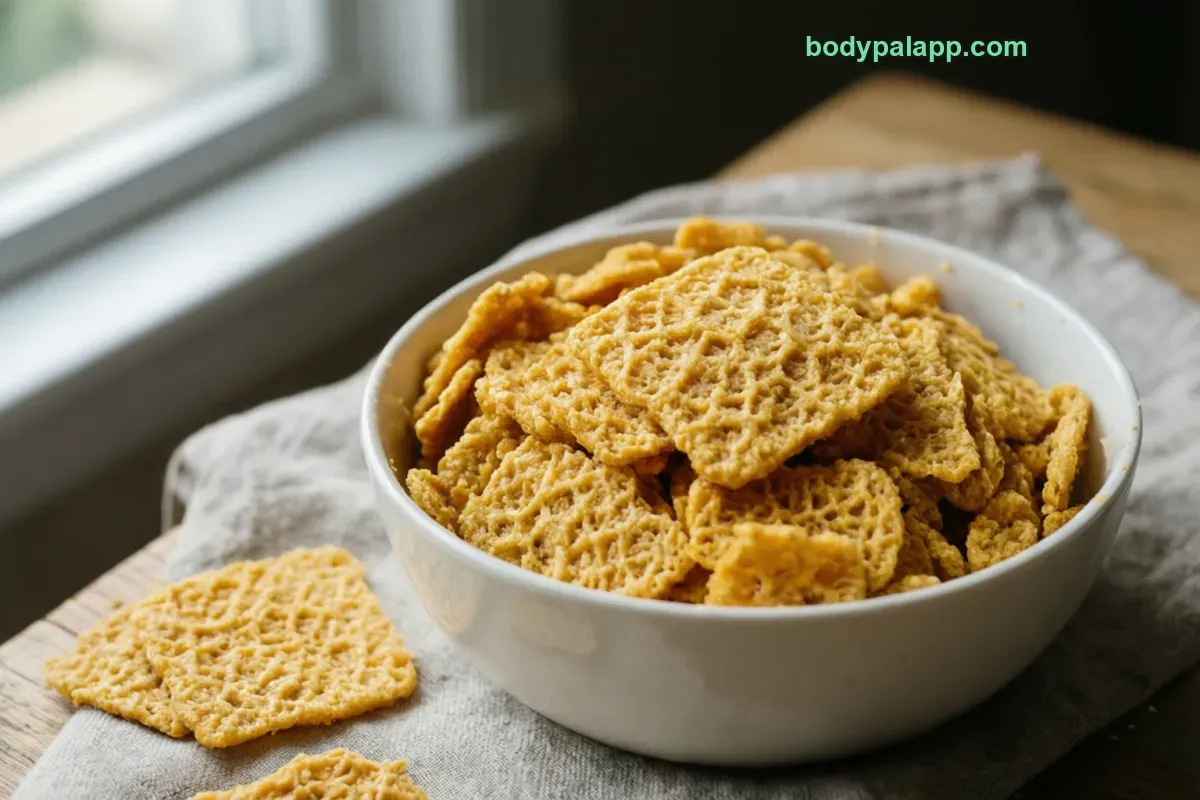
Corn Chex calories come to 145 for 1 cup (39 g) and 373 per 100 g. Nearly all of that energy is carbohydrate: 88% of the calories, with protein at just 7% and 2.5 g per cup. Sodium stands out more than sugar. A dry cup carries 277 mg, or 12% of the daily value.
145kcal
1 cup · 39 g, packaged, per label
7%protein
2.5 gProtein
33 gCarbs
0.9 gFat
How to burn off 145 kcal
—Walking, brisk
—Jogging
—Cycling, moderate
—Swimming
Skip the math. BodyPal counts these calories from your steps and workouts automatically.
Nutrition facts
Packaged, per label · per 39 g
Calories
145 kcal
Protein
2.5 g
Carbohydrate
33 g
Fat
0.9 g
Saturated fat
0.2 g
Cholesterol
0 mg
Sodium
277 mg
Potassium
76 mg
Source: USDA FoodData Central
🛡️
Verified nutrition data
Numbers on this page come from USDA FoodData Central, the U.S. Department of Agriculture’s food composition database, and from manufacturer labels where a branded product is named. Last verified September 2026. How we verify our data →
Corn Chex: calories, protein and sodium by serving
Percent of daily value uses the FDA reference of 2,000 kcal a day.
Serving
kcal
Protein
Carbs
Fat
Sodium
% DV kcal
1 cup (39 g)
145
2.5 g
33.1 g
0.9 g
277 mg
7%
1 oz portion (28 g)
104
1.8 g
23.8 g
0.7 g
199 mg
5%
100 g
373
6.4 g
84.9 g
2.4 g
709 mg
19%
3 × 1 cup (39 g)
436
7.5 g
830 mg
5 × 1 cup (39 g)
727
12.5 g
1,383 mg
One cup is 145 calories, but bowls rarely stop there
The label serving is 1 cup (39 g) at 145 calories. Light, airy squares make that cup look small in a cereal bowl, so it is easy to pour two or three without noticing. The smaller 1 oz portion (28 g) comes in at 104 calories, which is closer to what a snack-size handful looks like.
Here is how the total climbs. Two cups (78 g) reach 291 calories and 553 mg of sodium. Three cups (117 g) hit 436 calories and 830 mg of sodium. A large mixing-bowl serving of five cups (195 g) lands at 727 calories and 1,383 mg of sodium, with only 12.5 g of protein to show for it.
If you track intake, weigh the cereal once and see what your usual bowl really holds. That single check fixes most of the error, because the calories per gram never change. Milk, fruit and sweeteners all add on top of these dry numbers.
Carbs supply 88% of the calories
Corn Chex is a refined grain cereal, and the macro split shows it. Per 100 g there are 84.9 g of carbohydrate, 6.4 g of protein and 2.4 g of fat. In calorie terms that is 88% carbs, 7% protein and 6% fat. One cup delivers 33.1 g of carbs against 2.5 g of protein and 0.9 g of fat.
Fat is barely a factor. Saturated fat sits at 0.4 g per 100 g and cholesterol is 0, so the fat rows are not where this cereal matters. Sugar is moderate for a breakfast cereal: 4.2 g per cup, or 10.8 g per 100 g.
Fiber is the better surprise. A cup has 2 g, and 100 g has 5.2 g. That is not a high-fiber cereal, but it is more than a puffed or flaked corn cereal of this style often suggests. The real gap is protein. At 5% of the daily value per cup, the cereal alone will not carry a breakfast.
Sodium is the row to watch
Sweet cereals get the attention for sugar, yet Corn Chex is a salty one. It holds 709 mg of sodium per 100 g, which is 31% of the daily value. A single cup carries 277 mg (12% of the daily value), and the 1 oz portion has 199 mg (9%).
That matters most when portions grow. At three cups the sodium reaches 830 mg, and at five cups it is 1,383 mg, before any other food that day. Among the cereals in the comparison table below, Corn Chex has the highest sodium per 100 g.
If you watch sodium, the fix is portion size rather than avoiding the cereal. Keep it to a measured cup, and let the rest of the bowl be lower-sodium foods like fresh fruit. Corn Chex is also popular as a base for snack mixes, and seasoned mixes add salt on top of what the cereal already brings.
Low protein means it needs a partner
With 2.5 g of protein in a cup, Corn Chex is mostly fast energy. On its own it is light and quick to digest, which suits a small pre-workout bite or a crunchy topping. As a full breakfast it tends to leave people hungry sooner than a bowl with more protein would.
The simple move is to pair it. Milk, yogurt or eggs on the side lift the protein, and berries or a banana add volume and fiber for few calories. Potassium in the cereal itself is modest at 194 mg per 100 g, so fruit helps there too.
Several of the Chex Corn Chex products on the shelf are labeled gluten free, including the family size and the bulk bag, which makes it a common pick in gluten-free households. Label wording aside, the calories per gram are the same across the box sizes. BodyPal can log your bowl from a photo if weighing every morning is not realistic.
How does Corn Chex compare?
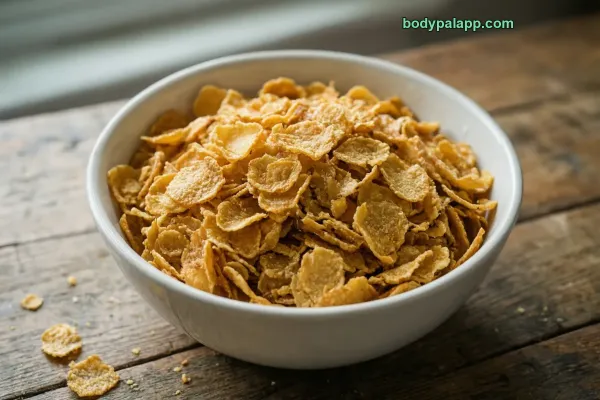
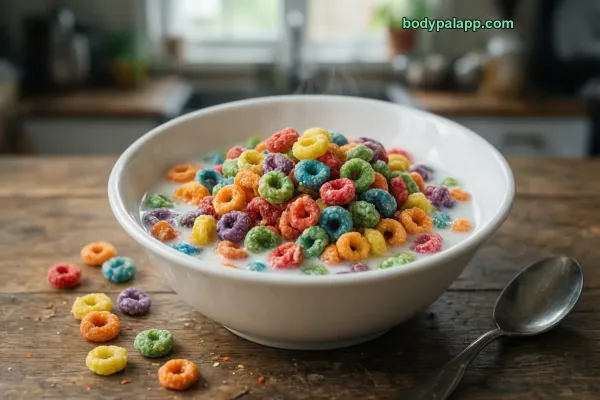
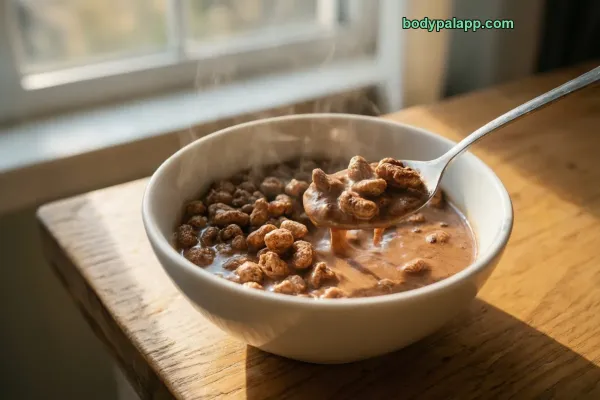
Here is how Corn Chex stacks up against corn flakes, Froot Loops and Cocoa Pebbles, per 100 g and per usual serving.
Verdict: Calorie density is a near tie, with Corn Chex at 373 per 100 g versus 384 for corn flakes and 389 for Cocoa Pebbles, so pick on other rows. Choose Corn Chex for slightly more protein at 6.4 g per 100 g; choose corn flakes or Froot Loops if you want less sodium, at 571 mg and 521 mg against 709 mg.
Most popular Corn Chex brands in the United States
One cup (39 g) of Corn Chex is 145 calories. A 100 g portion is 373 calories.
Is Corn Chex good for weight loss?
A 1 cup serving is 145 calories with 2.0 g fiber, 4.2 g sugar and 2.5 g protein. Milk poured on top adds calories that are not counted in that number.
Corn Chex vs corn flakes: which has fewer calories?
Corn Chex is 373 calories per 100 g and corn flakes are 384, so the two are close. A 39 g cup of Corn Chex is 145 calories.
How much sugar is in Corn Chex?
Corn Chex has 10.8 g of sugar per 100 g, which is 4.2 g in a 1 cup (39 g) serving. The same cup has 33.1 g of total carbs.
What does the Corn Chex nutrition label show per serving?
One cup (39 g) of Corn Chex has 145 calories, 33.1 g of carbs, 2.5 g of protein, 0.9 g of fat, 2 g of fiber, 4.2 g of sugars and 277 mg of sodium. Cholesterol is 0.
How much protein is in Corn Chex?
Corn Chex has 2.5 g of protein per cup, which is 5% of the daily value. Per 100 g it is 6.4 g, so protein supplies only 7% of its calories.
Does Corn Chex have more protein than other cereals?
Slightly. Corn Chex has 6.4 g of protein per 100 g, compared with 5.9 g in corn flakes, 5.6 g in Cocoa Pebbles and 5.4 g in Froot Loops. The gap is small, so none of them is filling on protein alone.
How much sodium is in Corn Chex?
A cup of Corn Chex has 277 mg of sodium, or 12% of the daily value. Per 100 g it reaches 709 mg, which is 31% of the daily value and higher than corn flakes at 571 mg.
How many calories are in an ounce of Corn Chex?
A 1 oz portion (28 g) of Corn Chex has 104 calories, with 23.8 g of carbs, 1.8 g of protein and 199 mg of sodium. That is a bit under three quarters of a cup.