Cheese croissant calories come to 236 for a medium 57 g pastry and 414 per 100 g. What stands out is the split: fat and carbs each supply 46% of the energy, and protein only 9%. That makes it a rich, filling-for-a-moment pastry rather than a protein-forward breakfast.
236kcal
1 medium croissant · 57 g, baked, cheese-filled
9%protein
5.2 gProtein
27 gCarbs
11.9 gFat
How to burn off 236 kcal
—Walking, brisk
—Jogging
—Cycling, moderate
—Swimming
Skip the math. BodyPal counts these calories from your steps and workouts automatically.
Nutrition facts
Baked, cheese-filled · per 57 g
Calories
236 kcal
Protein
5.2 g
Carbohydrate
27 g
Fat
11.9 g
Saturated fat
6.1 g
Cholesterol
32 mg
Sodium
206 mg
Potassium
75 mg
Iron
1.2 mg
Source: USDA FoodData Central
🛡️
Verified nutrition data
Numbers on this page come from USDA FoodData Central, the U.S. Department of Agriculture’s food composition database, and from manufacturer labels where a branded product is named. Last verified September 2026. How we verify our data →
Cheese croissant: calories, protein and sodium by serving
Percent of daily value uses the FDA reference of 2,000 kcal a day.
Serving
kcal
Protein
Carbs
Fat
Sodium
% DV kcal
Medium (57 g)
236
5.2 g
26.8 g
11.9 g
206 mg
12%
Small (42 g)
174
3.9 g
19.7 g
8.8 g
152 mg
9%
Large (67 g)
277
6.2 g
31.5 g
14 g
242 mg
14%
100 g
414
9.2 g
47 g
20.9 g
361 mg
21%
3 × Medium (57 g)
708
15.7 g
617 mg
5 × Medium (57 g)
1,180
26.2 g
1,029 mg
Size swings a cheese croissant by about 100 calories
Bakery croissants are not standardized, so the size you pick matters more than almost anything else. A small one at 42 g lands at 174 calories. The medium at 57 g is 236. A large at 67 g climbs to 277, which is about 14% of the daily calorie reference on its own.
The gap between small and large is roughly 100 calories, and the pastries can look surprisingly similar on a cafe counter. Weighing one at home once is the fastest way to learn which size your usual shop sells. If you buy from the same place every week, that single check pays off for months.
Doubling up adds up quickly. Two medium cheese croissants come to 472 calories, and three reach 708. A plate of three at a brunch spread is roughly a third of a day's energy before coffee, juice or anything on the side. If you want the taste with a smaller hit, the small size at 174 calories is the easy swap.
Fat and flour split the calories evenly
Per 100 g, a cheese croissant carries 20.9 g of fat, 47 g of carbs and 9.2 g of protein. Translate that into energy and fat and carbs each deliver 46% of the calories. Protein brings just 9%. The layered butter dough does most of the work, and the cheese filling adds richness more than it adds protein.
For a medium pastry that means 11.9 g of fat, 26.8 g of carbs and 5.2 g of protein. The protein figure is about 10% of the daily value, which is modest for 236 calories. Fiber is low too, at 1.5 g per medium croissant, so it digests quickly and does not hold you for long.
Sugar is moderate rather than high: 6.5 g in a medium and 11.4 g per 100 g. It tastes savory, but it is still a refined-flour pastry first and a cheese snack second.
Saturated fat is the row to watch
The number that deserves a second look is saturated fat. Per 100 g a cheese croissant has 10.6 g, set against a daily value of 20 g. That is more than half the daily reference in 100 g of pastry, which is less than two medium croissants. Butter in the dough and cheese in the filling both contribute.
Cholesterol sits at 57 mg per 100 g against a 300 mg daily value, so it is present but not the headline. Sodium is moderate for a baked good: 206 mg in a medium croissant, about 9% of the daily value, and 242 mg in a large. Three medium pastries push sodium to 617 mg.
If you track saturated fat, a cheese croissant is the kind of item that uses a big slice of the day's allowance in one sitting. Treat it as the rich part of a meal and keep the rest lean.
Pair it with protein and something fresh
Because protein is low and fiber is thin, a cheese croissant alone tends to leave you hungry by mid-morning. Pairing it with a protein source such as eggs, yogurt or a glass of milk, plus fruit, turns a quick pastry into a more complete breakfast. The croissant then becomes the treat rather than the whole meal.
Watch the add-ons. Extra butter, a ham filling or a sweet coffee drink can quietly double the total. A plain medium cheese croissant with black coffee stays at 236 calories; the same pastry with a large latte and a second croissant is a different meal entirely.
If you log your food, BodyPal can record a cheese croissant from a photo, which helps when bakery sizes vary from day to day. Check the size you were served and pick small, medium or large accordingly.
How does cheese croissant compare?
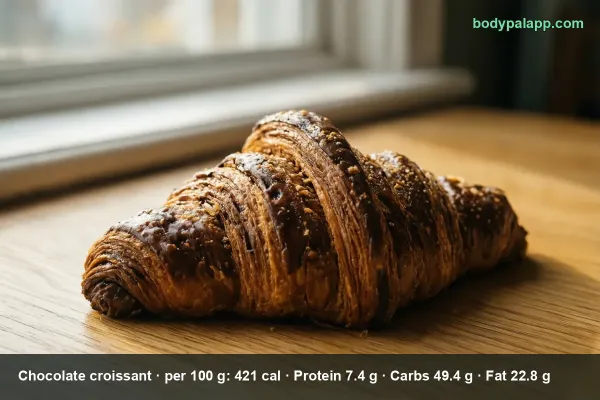
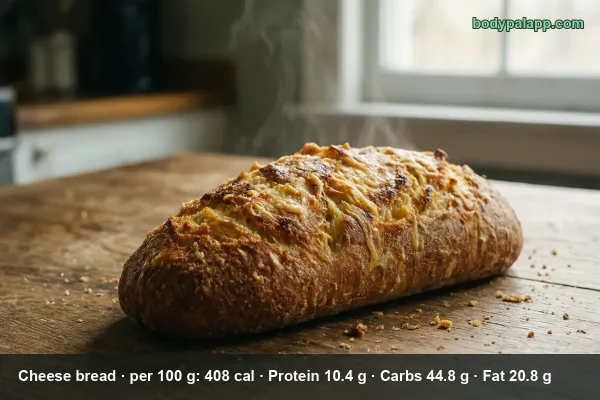
Here is how a cheese croissant stacks up against a chocolate croissant, cheese bread and a cheese biscuit, per 100 g and per usual serving.
Verdict: If calories are the priority, the cheese biscuit is lightest at 374 per 100 g, but its 946 mg of sodium is far above the cheese croissant's 361 mg. For a pastry that balances both, the cheese croissant at 414 beats cheese bread on sodium, and the chocolate croissant at 421 is the richest of the group.
Cheese croissant FAQs
How many calories are in a cheese croissant?
A medium cheese croissant (57 g) has about 236 calories. A larger 67 g croissant is about 277 calories, and per 100 g the figure is 414 calories.
Is a cheese croissant good for weight loss?
At 414 calories per 100 g, a cheese croissant is calorie-dense, and one medium 57 g croissant provides about 236 calories with 11.9 g of fat and 5.2 g of protein.
Cheese croissant vs chocolate croissant: which has more calories?
Chocolate croissant has slightly more, 421 calories per 100 g against 414 for cheese croissant, a 7-calorie difference.
How much fat is in a cheese croissant?
A medium 57 g cheese croissant has about 11.9 g of fat, of which 6.1 g is saturated. Per 100 g that is 20.9 g fat and 10.6 g saturated fat.
How much protein is in a cheese croissant?
A medium cheese croissant has 5.2 g of protein, about 10% of the daily value. A large one has 6.2 g, and 100 g provides 9.2 g. Protein supplies only 9% of its calories.
What are the full nutrition facts for a cheese croissant?
A medium 57 g cheese croissant has 236 calories, 11.9 g fat, 26.8 g carbs, 5.2 g protein, 1.5 g fiber, 6.5 g sugars and 206 mg sodium. Per 100 g it has 414 calories.
Which size cheese croissant has 236 calories?
The 236-calorie figure is for a medium cheese croissant weighing 57 g. A small 42 g pastry has 174 calories, and a large 67 g one has 277 calories.
How many calories are in a cheese croissant per 100 grams?
A cheese croissant has 414 calories per 100 g, with 20.9 g fat, 47 g carbs and 9.2 g protein. That is about 21% of the daily calorie reference.
How much sodium does a cheese croissant have?
A medium cheese croissant has 206 mg of sodium, about 9% of the daily value. A large one has 242 mg, and 100 g contains 361 mg.