
How many calories are in a fish cake?
One fish cake or patty weighs 85 g and carries 180 calories. Per 100 g the breaded, pan-fried version runs 212 calories, with 11.6 g of protein and 365 mg of sodium in that single patty. Two on a plate double both. The steamed Asian style sold under the same name is a different food entirely.
On this page
- Fish cake quick facts
- US servings, from one ounce to three cakes
- Salmon cake and the price of switching fish
- Steamed and frozen breaded fish cakes
- Sodium is the row to watch
- How does a fish cake compare?
- Most popular fish cake brands
- FAQ
Fish cake quick facts
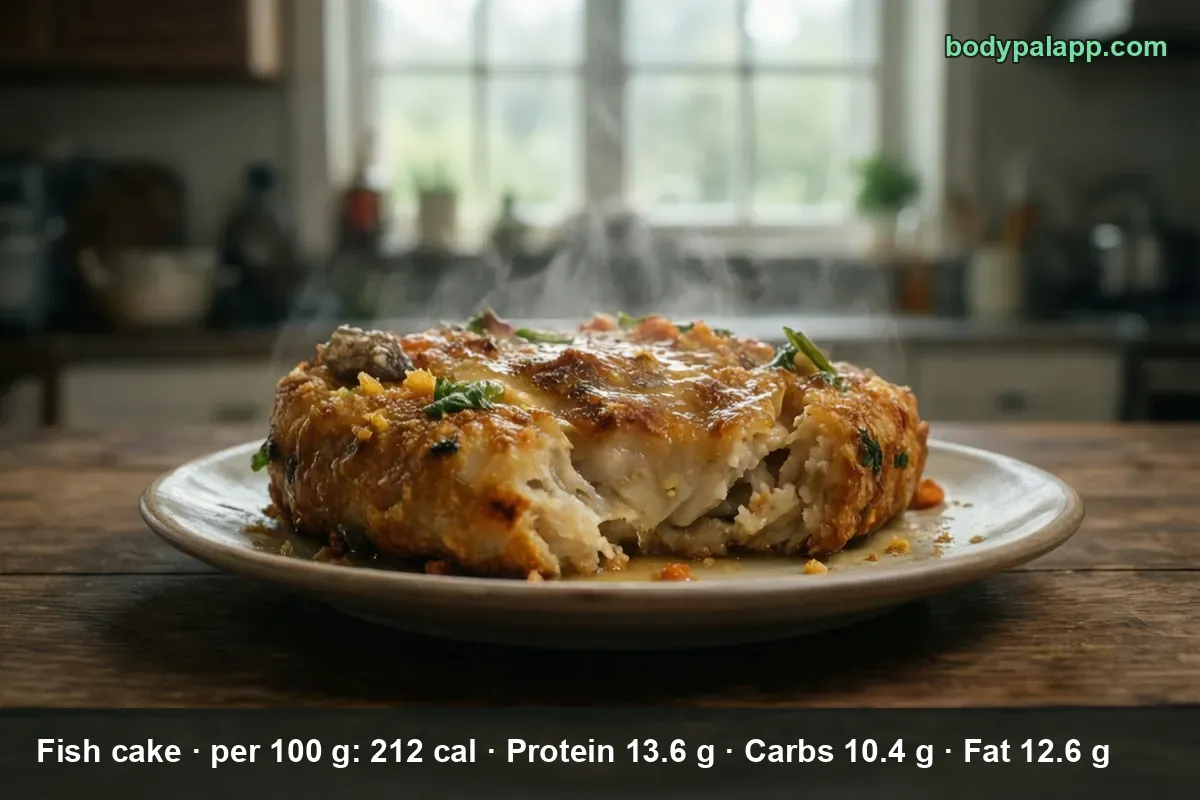
The number most people want is for the thing on the plate: a round patty of flaked white fish bound with starch and egg, breaded, and cooked in a skillet. That is FNDDS 2706550, "Fish, cake or patty", from the 2021-2023 survey release, and it is the row used everywhere on this page. A salmon cake is a separate USDA record with a fattier fish and less breading, so it gets its own section rather than being blended into the average.
The household portion USDA lists is one cake or patty at 85 g, which is close to what a diner or a home skillet turns out. Restaurant crab-cake-style patties are often larger, so weigh yours if it looks generous.
| Nutrient | Per 100 g | Per 1 cake or patty (85 g) | % Daily Value |
|---|---|---|---|
| Calories | 212 | 180 | — |
| Total fat | 12.64 g | 10.7 g | 14% |
| Saturated fat | 3.94 g | 3.3 g | 17% |
| Carbohydrate | 10.4 g | 8.8 g | 3% |
| Dietary fiber | 1.2 g | 1.0 g | 4% |
| Total sugars | 1.01 g | 0.9 g | — |
| Protein | 13.63 g | 11.6 g | 23% |
| Sodium | 429 mg | 365 mg | 16% |
| Cholesterol | 60 mg | 51 mg | 17% |
| Potassium | 430 mg | 366 mg | 8% |
% Daily Value is based on a 2,000-calorie diet.
Verified nutrition data
Numbers on this page come from USDA FoodData Central, the U.S. Department of Agriculture’s food composition database, and from manufacturer labels where a branded product is named. Last verified September 2026. How we verify our data →
Two rows you would see on a package are missing here: added sugars and trans fat. This FNDDS release does not publish either value for the record, so guessing at them would be worse than leaving them out. Total sugars are listed and they are tiny, 0.9 g in a patty, which is what you would expect from a savory food where the sugar comes along with the breadcrumbs.
US servings, from one ounce to three cakes
| Serving | Weight | Calories |
|---|---|---|
| 1 cubic inch | 14 g | 30 kcal |
| 1 oz | 28 g | 59 kcal |
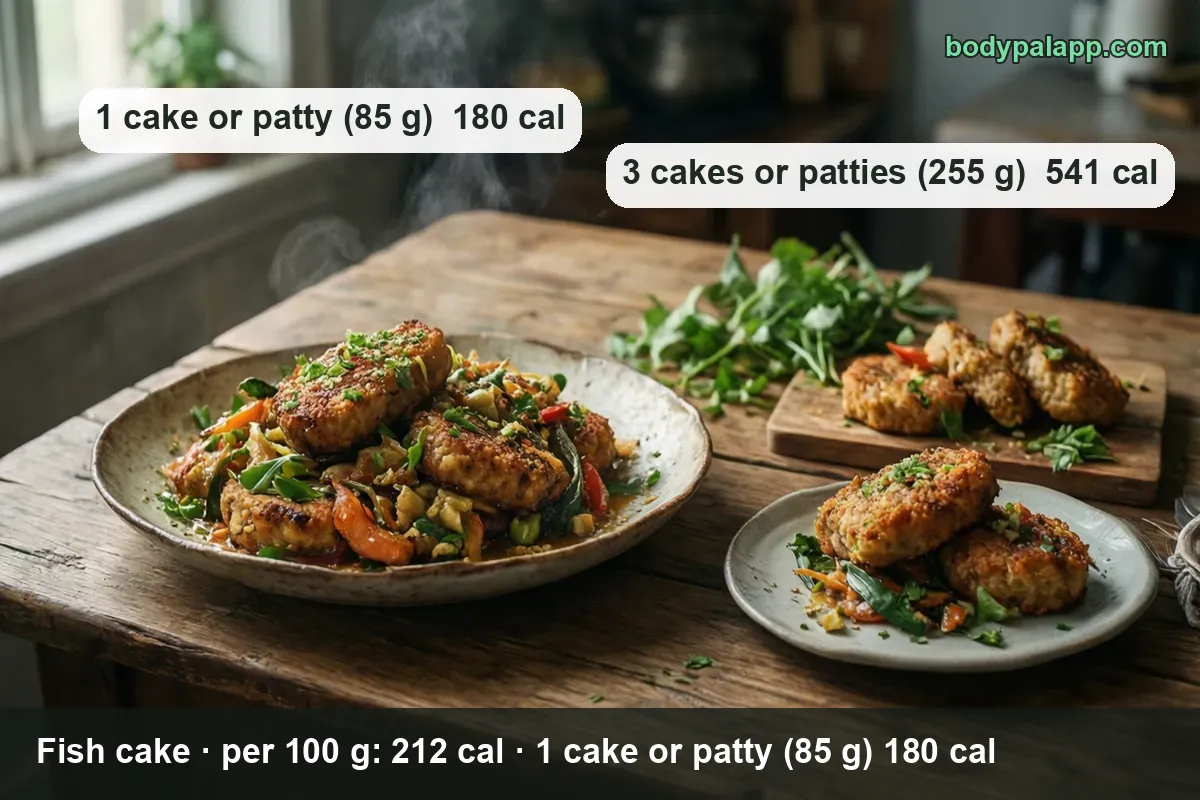
| One cake or patty | 85 g | 180 kcal |
| Two cakes or patties | 170 g | 360 kcal |
| Three cakes or patties, sandwich or platter | 255 g | 541 kcal |
| Per 100 g | 100 g | 212 kcal |
Only two of those are USDA household measures: the single cake or patty at 85 g and the oddly specific cubic inch at 14 g, which exists because survey interviewers need a way to size an irregular piece. The two-cake, three-cake and one-ounce lines are our own arithmetic from the USDA 100 g figure, not USDA servings.
The cubic inch is more useful than it looks. A cake that has been cut into a sandwich or crumbled over a salad is hard to eyeball, and 30 calories per cubic inch gives you a fast way to log a partial patty. Three cakes, the amount a shared platter or a stacked sandwich usually runs to, land at 541 calories before any sauce.
Salmon cake and the price of switching fish
Swap white fish for salmon and the same-sized patty gets 62 calories heavier. FNDDS 2706552, "Fish, salmon cake or patty", runs 285 calories per 100 g against 212, which makes an 85 g salmon cake 242 calories.
| Cake | Per 100 g | Fat per 100 g | One patty (85 g) |
|---|---|---|---|
| Fish cake, white fish | 212 kcal | 12.64 g | 180 kcal |
| Salmon cake | 285 kcal | 22.1 g | 242 kcal |
The gap is almost entirely fat: 22.1 g per 100 g in the salmon version against 12.64 g. Salmon holds together on its own oil, so the recipe leans on far less breading, and the carbohydrate drops from 10.4 g to 4.46 g per 100 g. You are trading starch for fat, and fat costs more calories per gram. What you get back is the omega-3 profile of an oily fish, which MyPlate singles out among seafood choices.
Steamed and frozen breaded fish cakes
"Fish cake" on a US shelf covers two very different foods. The pan-fried patty above is one. The other is the steamed, springy Asian style, kamaboko and its relatives, sold in a log or in slices, and it is barely half the food energy per gram.
| Version | Per 100 g | Typical piece | Calories |
|---|---|---|---|
| Breaded fish cake, USDA reference | 212 kcal | 1 cake or patty (85 g) | 180 kcal |
| Steamed Asian fish cake | 94 kcal | half a package (85 g) | 80 kcal |
| Frozen breaded fish cakes, retail | 265 kcal | 2 pieces (113 g) | 299 kcal |
| Baked frozen fish cakes, retail | 125 kcal | 2.5 pieces (80 g) | 100 kcal |
At 94 calories per 100 g, the steamed style is less than half the pan-fried patty. Nothing is fried and there is little starch beyond what sets the paste, so an 85 g piece is 80 calories where the breaded one is 180. If you have been logging sliced kamaboko in a noodle bowl at fried-patty numbers, you have been overcounting it by more than double.
The frozen aisle spreads just as wide. Across six US retail fish cakes in the USDA Branded database the range runs from 94 to 265 calories per 100 g, with baked versions near the bottom and thickly breaded ones at the top. The label serving matters as much as the density: one brand calls two pieces a serving at 299 calories, another calls 2.5 pieces a serving at 100. Read the grams, not the piece count.
Sodium is the row to watch
Calories are not the interesting number in a fish cake. Sodium is. One patty carries 365 mg, 16% of the Daily Value, and two cakes bring 730 mg, or 32%, against the 2,300 mg daily figure the FDA uses on the Nutrition Facts label. That is about a third of a teaspoon of table salt from the fish cakes alone.
Compare that with what the protein is doing. Two patties give 23.2 g of protein, 46% of the Daily Value, so the salt climbs almost as fast as the protein does. That is not a reason to skip fish cakes, but it does decide what goes next to them. If you're watching sodium, a plain grain and unsalted vegetables alongside one cake will land in a much better place than two cakes with fries and tartar sauce.
Saturated fat is the quieter one: 3.3 g per patty is 17% of the Daily Value, and two cakes reach 33%. The Dietary Guidelines for Americans keep saturated fat under 10% of calories, and a pan-fried patty spends a good part of that budget for a food most people think of as light.
How does a fish cake compare?
| Cake | Per 100 g | US serving | Calories |
|---|---|---|---|
| Fish cake, white fish | 212 kcal | 1 cake or patty (85 g) | 180 kcal |
| Tuna cake or patty | 206 kcal | 1 cake or patty (85 g) | 175 kcal |
| Crab cake | 214 kcal | 1 cake or patty (85 g) | 182 kcal |
| Shrimp cake or patty | 218 kcal | 1 cake or patty (85 g) | 185 kcal |
Our take: these four are close enough that the choice is about taste, not calories, with a 10-calorie spread across the whole patty lineup. Tuna cake is the only one lighter than the plain fish cake, 175 against 180. What separates them is composition rather than energy: the fish cake carries the least fat of the four, 12.64 g per 100 g against roughly 15 g in the others, and the most carbohydrate at 10.4 g, because breading and binder are doing the work that crab and shrimp meat do on their own. For weight loss, pick the steamed style at 80 calories a piece. For satiety per calorie, a tuna or crab cake edges ahead on protein.
Most popular fish cake brands in the United States
Ranked by how widely each product appears among foods sold in the United States, from the BodyPal food database of over 3.3 million products. Calories are the figures printed on each Nutrition Facts label, checked against USDA FoodData Central.
| Product | Calories (per 100 g) |
|---|---|
| Schooner Fish Cakes | 214 cal |
| Key Food Fish Cakes | 175 cal |
| Gorton's Garden Fish Cakes | 198 cal |
| Big Y Fish Cakes | 265 cal |
| JFC Baked Fish Cakes | 125 cal |
| Shirakiku Steamed Fish Cake | 94 cal |
Brand popularity: BodyPal food database. Nutrition: manufacturer labels / USDA FoodData Central.
Fish cake FAQs
How many calories are in one fish cake?
One cake or patty weighs 85 g and carries 180 calories, at 212 calories per 100 g. That single patty brings 11.6 g of protein, 10.7 g of fat and 365 mg of sodium. Restaurant and diner cakes are often larger than the USDA patty, so weigh yours before you log it.
How many calories are in 2 fish cakes?
Two cakes come to 360 calories, our own arithmetic from the USDA 100 g figure rather than a listed USDA serving. The pair also carries 730 mg of sodium, 32% of the Daily Value, and 23.2 g of protein, 46% of the Daily Value. The salt climbs about as fast as the protein.
How much protein is in a fish cake?
One 85 g patty gives 11.6 g of protein, 23% of the Daily Value, and 100 g gives 13.63 g. That is respectable but not remarkable for a seafood dish, because breading and binder take up room that fish would otherwise fill. Tuna and crab cakes both run slightly higher per gram.
How many carbs are in a fish cake?
One patty has 8.8 g of carbohydrate, 3% of the Daily Value, with 1.0 g of fiber and 0.9 g of total sugars. Per 100 g the figure is 10.4 g. Almost all of it is breading and binder, which is why a crab cake, at 4.48 g per 100 g, sits far lower.
Are fish cakes high in sodium?
One patty carries 365 mg of sodium, 16% of the Daily Value, and two cakes reach 730 mg, or 32%. The FDA Daily Value is 2,300 mg a day. Frozen retail cakes can sit higher still, so check the box and plan the rest of the plate around the number.
Salmon cake or fish cake: which has more calories?
A salmon cake runs 242 calories for the same 85 g patty, against 180 for a white-fish cake, a difference of 62. Per 100 g it is 285 against 212. Salmon carries far more fat, 22.1 g per 100 g versus 12.64 g, and needs less breading to hold its shape.
Are steamed fish cakes lower in calories than fried?
Yes, sharply: a steamed Asian-style fish cake runs about 94 calories per 100 g, so an 85 g piece is 80 calories against 180 for the breaded, pan-fried patty. Same two words on the package, less than half the calories, because nothing is fried and there is little starch in the paste.
Are fish cakes good for weight loss?
One 85 g cake is 180 calories with 11.6 g of protein, which sits comfortably inside a 400-calorie lunch built around vegetables and a grain. Two cakes at 360 calories plus a fried side is where it stops being light. The steamed style, 80 calories a piece, is the leanest way in.
Similar foods
- Spanakopita — 254 cal per large piece
- Pretzel Bread — 80 cal per slice
- Crab Cake — 182 cal per crab cake
- Dosa — 326 cal per large dosa
- Bagel Bite — 190 cal for 4 pieces
- Corn Tortilla — 105 cal for 2 tortillas
Count it without the math
Point the camera at the plate and BodyPal counts the fish cakes for you, breading and all.


How long does it take to burn off fish cake?
One cake or patty (85 g) is 180 kcal. Enter your weight and the amount you ate to see how long it takes you to burn that off:
lb
| Activity | Time to burn 180 kcal |
|---|---|
| Walking, brisk | 36 min |
| Cycling, moderate | 22 min |
| Swimming, moderate | 26 min |
| Jogging | 21 min |
| Weight training, moderate | 40 min |
Times are for a 155 lb adult at a steady pace; change the weight to see yours. The amount is set to the portion in the text (85 g); change it to what you actually ate. BodyPal works this out from your steps automatically.
Burning it off is one side of it. The other is knowing your number: work out how many calories you need a day, with macros and a goal date.