
How many calories in fudge?
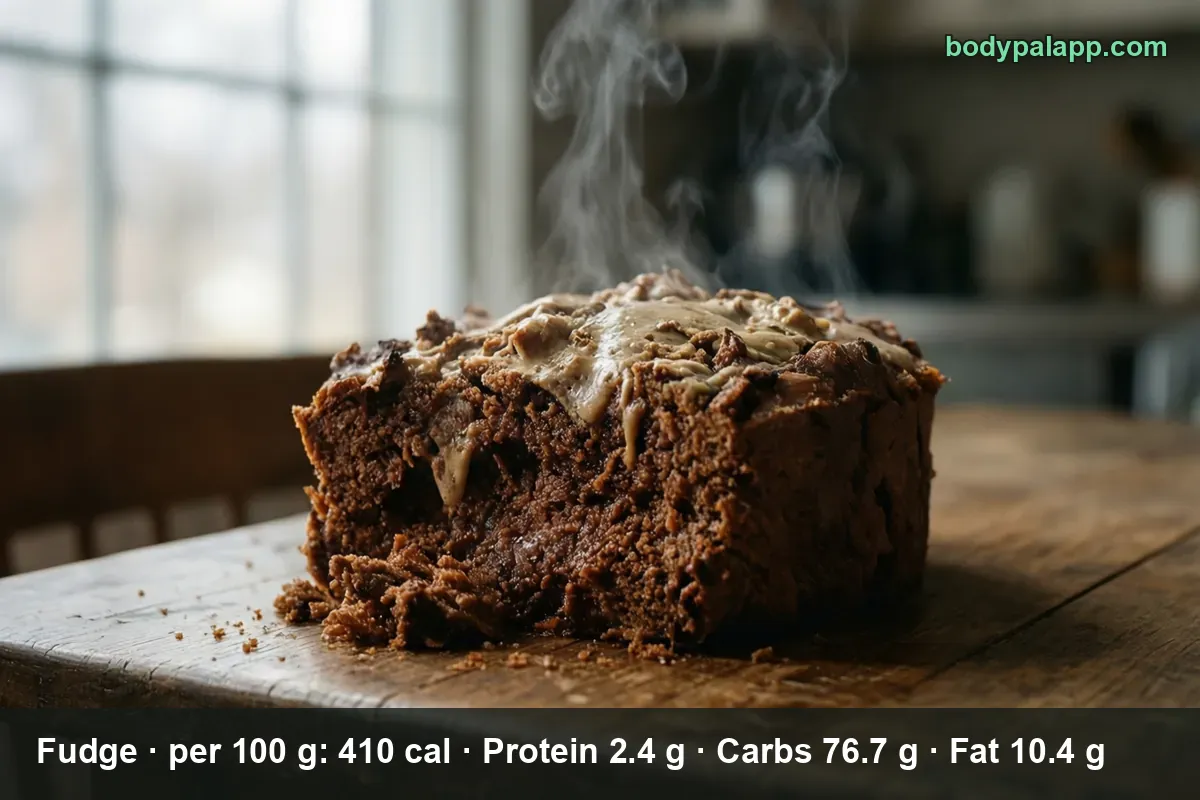
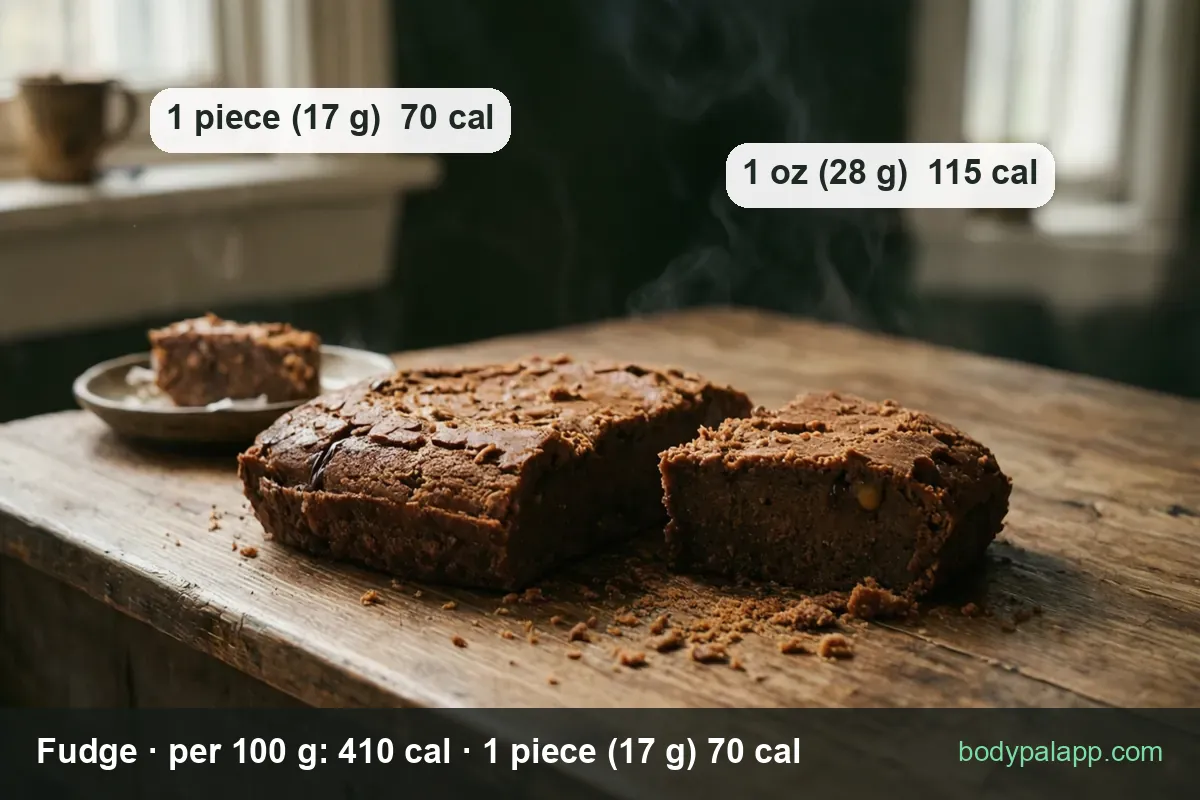
One piece of fudge is 70 calories. USDA's piece weighs 17 g, and per 100 g the same chocolate fudge runs 410. An ounce comes to 115 and two pieces to 139. Fudge is a small object cut from a very dense food, which is why counting pieces matters more here than with almost any other candy on the table.
On this page
- Fudge quick facts
- US servings, from one piece to a full cup
- Nuts take the sugar down and the calories up
- Vanilla, peanut butter and marshmallow, side by side
- Sugar is not an ingredient here, it is the recipe
- Saturated fat moves twice as fast as calories
- Hot fudge and fudge pops are different foods
- How does fudge compare?
- Most popular fudge brands
- FAQ
Fudge quick facts
The record behind every figure on this page is SR Legacy 167987, "Candies, fudge, chocolate, prepared-from-recipe" — classic cooked chocolate fudge, the kind made from sugar, butter, milk and chocolate rather than pulled off a factory line.
The serving column is USDA's own household measure for that record: one piece, 17 g.
| Nutrient | Per 100 g | Per 1 piece (17 g) | % Daily Value |
|---|---|---|---|
| Calories | 410 | 70 | — |
| Total fat | 10.4 g | 1.8 g | 2% |
| Saturated fat | 6.5 g | 1.1 g | 5% |
| Total carbohydrate | 76.7 g | 13.0 g | 5% |
| Dietary fiber | 1.7 g | 0.3 g | 1% |
| Total sugars | 73.1 g | 12.4 g | — |
| Protein | 2.4 g | 0.4 g | 1% |
| Sodium | 45 mg | 8 mg | 0% |
% Daily Value is based on a 2,000-calorie diet.
Verified nutrition data
Numbers on this page come from USDA FoodData Central, the U.S. Department of Agriculture’s food composition database, and from manufacturer labels where a branded product is named. Last verified September 2026. How we verify our data →
An added sugars row belongs on a package of fudge and is missing here for a plain reason: no USDA edition carries an added sugars figure for any fudge line. Rather than borrow one from a store label and staple it to a from-recipe record, the row stays off the table. What can be said without a number is that almost all of the 73.1 g is added, because sugar and syrup are not seasonings in fudge, they are the structure. Total sugars carry no Daily Value on a US label at all, which is why that cell is blank.
Three smaller numbers sit outside the core label and come from the same record. Cholesterol is 14 mg per 100 g, so 2.4 mg in a piece. Potassium is 134 mg per 100 g, about 23 mg in a piece. Trans fat is 0.17 g per 100 g, which rounds to nothing in a 17 g piece and comes from the butter.
US servings, from one piece to a full cup
| Serving | Weight | Calories |
|---|---|---|
| 1 piece | 17 g | 70 |
| 2 pieces | 34 g | 139 |
| 1 oz | 28 g | 115 |
| 100 g | 100 g | 410 |
A piece of fudge is genuinely small at 17 g, so the number attached to it stays modest no matter how rich the food is. That is the trap, and it runs opposite to most desserts. With a slice of pie you decide once and you are done. Fudge gets cut into a tray and left on a counter, and each decision costs only 70 calories, which is precisely why nobody stops at one. Three pieces is 209. Five is 348.
An ounce is worth knowing because that is how fudge shops price it. At 28 g, one ounce is 115 calories, roughly a piece and two thirds. A quarter-pound box, the smallest thing most candy counters will sell you, is four of those.
USDA does list a cup measure for fudge — 160 g on the store-bought record, which works out at 634 calories — but nobody scoops fudge into a measuring cup. Treat that figure as a warning about volume rather than a serving: a small plate of cut fudge passed around after dinner is easily that much.
Nuts take the sugar down and the calories up
Adding walnuts to fudge is the single most misread choice in this food, so it is worth taking slowly.
Chocolate fudge with nuts is 460 calories per 100 g against 410 for the plain version. Sugar drops from 73.1 g to 63.4 g. Fat nearly doubles, 10.4 g to 18.9 g. Fiber goes up from 1.7 g to 2.5 g and protein from 2.4 g to 4.4 g.
Every one of those movements reads as an improvement except the one people are counting. Less sugar, more fiber, more protein — and 50 more calories per 100 g, because nuts replace sugar at 4 calories a gram with fat at 9.
Per ounce that is 129 calories against 115. Not a disaster, and if what you are managing is sugar rather than energy, the nut version is the better piece of fudge by a clear margin. If what you are managing is calories, it is the worse one, and the phrase "less sugar" on the tin is telling you the truth about the wrong number.
The same swap happens on the vanilla side of the counter. Vanilla fudge is 383; vanilla fudge with nuts rises to 435. Same direction, same size of jump, same reason.
Vanilla, peanut butter and marshmallow, side by side
| Version | Per 100 g | Serving | Calories |
|---|---|---|---|
| Chocolate, from recipe (this page) | 410 | 1 piece (17 g) | 70 |
| Store-bought chocolate fudge | 396 | 1 piece (30 g) | 119 |
| Vanilla | 383 | 1 oz (28 g) | 107 |
| Vanilla with nuts | 435 | 1 oz (28 g) | 122 |
| Peanut butter | 387 | 1 piece (16 g) | 62 |
| Chocolate with nuts | 460 | 1 oz (28 g) | 129 |
| Chocolate marshmallow | 453 | 1 piece (20 g) | 91 |
Vanilla fudge being lighter than chocolate surprises most people, and the reason is not sweetness. Vanilla actually carries more sugar, 79.8 g per 100 g against 73.1 g. It carries far less fat: 5.45 g against 10.41 g. Chocolate brings cocoa butter with it and cocoa butter is where the extra 27 calories live.
Peanut butter fudge is the outlier in the table and the one worth arguing about. At 387 per 100 g it is lighter than chocolate, it holds the most protein of any nut-free fudge here at 3.8 g, and its saturated fat is 1.7 g per 100 g against chocolate's 6.5 — just over a quarter. The catch is on a row nobody checks in candy: sodium, 118 mg per 100 g, roughly two and a half times the 45 mg in chocolate fudge, because peanut butter arrives salted.
Chocolate marshmallow fudge sounds airy and is the second heaviest thing on the list at 453. Marshmallow means more syrup and more butter, not less of anything.
Store-bought fudge sits slightly below the homemade record, 396 against 410, and the gap is in the making rather than in the measuring — commercial fudge is usually a little softer and holds a little more water. The piece is bigger, though, at 30 g, so a store piece is 119 calories where a from-recipe piece is 70. As so often, the recipe moved 3% and the cut moved 76%.
Sugar is not an ingredient here, it is the recipe
Fudge is 73.1% sugar by weight. Say that out loud and it sounds like an exaggeration; it is a straight reading of the record.
One piece holds 12.4 g of total sugars. Three pieces hold 37.2 g. A single ounce holds 20.5 g. There is no Daily Value printed next to total sugars on a US label, so a Nutrition Facts panel for fudge shows a blank in the one column most people scan for reassurance, and the food looks tamer than it is.
The Dietary Guidelines for Americans keep added sugars under 10% of daily calories, and in fudge essentially all of the sugar is added. That makes the piece count the only meaningful control: at 12.4 g of sugar apiece, a small handful is most of the day's allowance in a food that takes ninety seconds to eat.
Fiber offers no counterweight — 0.3 g in a piece, 1% of the 28 g Daily Value, and the nut version only lifts that to 0.7 g per ounce. Protein is the same story at 0.4 g. Fudge is one of the few foods where the label is honest by omission: almost every row except carbohydrate and fat is close to zero.
Saturated fat moves twice as fast as calories
Here is the row that separates fudge from other candy, and it is not the calorie row.
A piece of fudge is 70 calories, about 3.5% of a 2,000-calorie day. The same piece carries 1.1 g of saturated fat, which is 5% of the 20 g FDA Daily Value — and only 2% of the fat Daily Value. Fat and saturated fat parting company by that much on one small piece is unusual.
The cause is what fudge is made of. Butter and chocolate are the only fat sources in the pan, and both are heavily saturated, so 6.45 g of the 10.41 g of total fat per 100 g is saturated — 62% of it. In a nut fudge the ratio falls, because walnuts bring unsaturated fat: 6.49 g saturated out of 18.93 g total, or 34%.
Ranked on saturated fat per 100 g, the order is close to the reverse of how rich each one tastes. Peanut butter fudge is gentlest at 1.72 g. Vanilla follows at 3.38 g. Chocolate and chocolate-with-nuts sit together near 6.5 g. Chocolate marshmallow is the heaviest at 10.67 g, more than six times the peanut butter version, and it is the one that sounds like the light choice.
Sodium, meanwhile, is the row fudge wins outright: 8 mg in a piece, 0% of the 2,300 mg Daily Value. For a food this processed that is close to remarkable, and it holds for every flavor except peanut butter.
Hot fudge and fudge pops are different foods
Three foods share the word and only one of them is candy. Mixing them up is the most common way a fudge entry goes wrong in a log.
| Food | Per 100 g | Serving | Calories |
|---|---|---|---|
| Fudge, chocolate candy | 410 | 1 piece (17 g) | 70 |
| Hot fudge sauce | 350 | 2 tbsp (38 g) | 133 |
| Fudgesicle (fudge pop) | 163 | 1 pop (65 g) | 106 |
| Cake-type fudge cookie | 349 | 1 cookie (21 g) | 73 |
Hot fudge sauce is chocolate fudge-type syrup, 350 per 100 g — lighter than the candy per gram, heavier per serving, because you pour 38 g of it over ice cream without a second thought. That is 133 calories in two tablespoons, nearly double a piece of fudge. It also carries 346 mg of sodium per 100 g, close to eight times the candy, and only 34.8 g of sugar, half as much: syrup is thinned with water and salted, candy is not.
A Fudgesicle is a frozen pop at 163 per 100 g, so a 65 g bar is 106 calories — less than two pieces of fudge, and the one item here that behaves like a portion, because it comes on a stick and ends. The cake-type fudge cookie is a baked cookie at 349 per 100 g, 73 calories for a 21 g one: close enough to a piece of fudge to be logged as one, and made of entirely different stuff.
How does fudge compare?
| Item | Per 100 g | Serving | Calories | Protein / Carbs / Fat |
|---|---|---|---|---|
| Chocolate fudge (this page) | 410 | 1 piece (17 g) | 70 | 0.4 / 13.0 / 1.8 g |
| Vanilla fudge | 383 | 1 oz (28 g) | 107 | 0.3 / 23.0 / 1.5 g |
| Peanut butter fudge | 387 | 1 piece (16 g) | 62 | 0.6 / 12.4 / 1.1 g |
| Chocolate fudge with nuts | 460 | 1 oz (28 g) | 129 | 1.2 / 19.1 / 5.3 g |
| Chocolate marshmallow fudge | 453 | 1 piece (20 g) | 91 | 0.5 / 14.3 / 3.5 g |
All five are USDA recipe records for the same family of candy, so the density column is a fair fight: 383 to 460, a spread of 20%. The serving column spreads further, 62 to 129, and it does so mostly because a "piece" of one fudge is 16 g and an ounce of another is 28.
Our take: peanut butter fudge is the pick if you eat fudge regularly. It is the lowest number per piece at 62, it carries a quarter of the saturated fat of chocolate fudge, and it has more protein than any fudge here without nuts in it — the 118 mg of sodium is a rounding error against a 2,300 mg day. Chocolate fudge with nuts is the one to watch, because it is sold on having less sugar and is the densest thing in the table at 460. If you want the smallest honest number and do not care which flavor, take chocolate and take one piece: 70 calories, and the piece is small enough that the count is the whole game. MyPlate files all of it where it belongs, as calories beyond the food groups.
Most popular fudge brands in the United States
Ranked by how widely each product appears among foods sold in the United States, from the BodyPal food database of over 3.3 million products. Calories are the figures printed on each Nutrition Facts label, checked against USDA FoodData Central.
| Product | Calories (per 100 g) |
|---|---|
| Brach's Vanilla Fudge | 472 cal |
| Brach's Sea Salt & Cocoa Fudge | 452 cal |
| Brach's Artisan Butter Fudge | 452 cal |
| Signature Select Chocolate Fudge | 357 cal |
| Signature Select Mint Chocolate Fudge | 393 cal |
| Palmer Candy Belgian Chocolate Walnut Fudge | 429 cal |
Brand popularity: BodyPal food database. Nutrition: manufacturer labels / USDA FoodData Central.
Fudge FAQs
How many calories are in one piece of fudge?
70 calories in one piece of chocolate fudge, USDA's 17 g household measure, from 410 calories per 100 g. That piece holds 13.0 g of carbohydrate, 12.4 g of sugars, 1.8 g of fat and 8 mg of sodium. Two pieces come to 139 and three to 209.
How many calories are in 1 oz of fudge?
115 calories in one ounce of chocolate fudge, 28 g at 410 calories per 100 g. That is about a piece and two thirds, and it is the unit most candy counters price by. An ounce carries 20.5 g of sugars. Vanilla fudge is lighter at 107 per ounce and fudge with nuts heavier at 129.
How much sugar is in fudge?
73.1 g per 100 g, so 12.4 g in a single 17 g piece and 20.5 g in an ounce. Fudge is 73% sugar by weight, and virtually all of it is added, since sugar and syrup are the recipe rather than a flavoring. Total sugars carry no Daily Value on a US label, so the panel shows a blank there.
Does fudge with nuts have more calories?
Yes, 460 calories per 100 g against 410 for plain chocolate fudge, or 129 an ounce against 115. Sugar falls from 73.1 g to 63.4 g and fiber rises from 1.7 g to 2.5 g, but fat nearly doubles from 10.4 g to 18.9 g. Less sugar, more calories.
How many calories are in peanut butter fudge?
62 calories in a 16 g piece, from 387 calories per 100 g. It is the gentlest fudge on saturated fat at 1.72 g per 100 g against 6.45 g for chocolate, and the highest in protein of the nut-free fudges at 3.78 g. Its one weak row is sodium, 118 mg per 100 g, because peanut butter comes salted.
How many calories are in vanilla fudge?
107 calories in a 1 oz piece, from 383 calories per 100 g, which makes it lighter than chocolate fudge at 410. It is not less sweet — vanilla holds 79.8 g of sugar per 100 g against chocolate's 73.1 g. It holds half the fat, 5.45 g against 10.41 g, and that is the whole difference.
How many calories are in hot fudge sauce?
133 calories in two tablespoons, 38 g at 350 calories per 100 g. Per gram that is lighter than fudge candy, but a normal pour is heavier than a piece of fudge. The sauce also carries 346 mg of sodium per 100 g against 45 mg in the candy, and half the sugar at 34.8 g.
How many calories are in homemade chocolate fudge?
410 calories per 100 g, which is the from-recipe record this page is built on, so 70 calories in a 17 g piece. Store-bought fudge measures slightly lower at 396 per 100 g, but the shop cuts bigger pieces at about 30 g, so one of those is 119 calories.
Similar foods
- Chocolate Fudge — 70 cal per piece
- Airheads — 140 cal for 3 mini bars
- Protein Bar — 218 cal per bar
- Starburst — 163 cal for 8 chews
- Cake Rusk — 41 cal per rusk
- Brownie Bite — 113 cal per bite
Count it without the math
Point the camera at the tray and BodyPal counts the pieces you took, not the one you meant to take.


How long does it take to burn off fudge?
One piece (17 g) is 70 kcal. Enter your weight and the amount you ate to see how long it takes you to burn that off:
lb
| Activity | Time to burn 70 kcal |
|---|---|
| Walking, brisk | 14 min |
| Cycling, moderate | 9 min |
| Swimming, moderate | 10 min |
| Jogging | 8 min |
| Weight training, moderate | 16 min |
Times are for a 155 lb adult at a steady pace; change the weight to see yours. The amount is set to the portion in the text (17 g); change it to what you actually ate. BodyPal works this out from your steps automatically.
Burning it off is one side of it. The other is knowing your number: work out how many calories you need a day, with macros and a goal date.