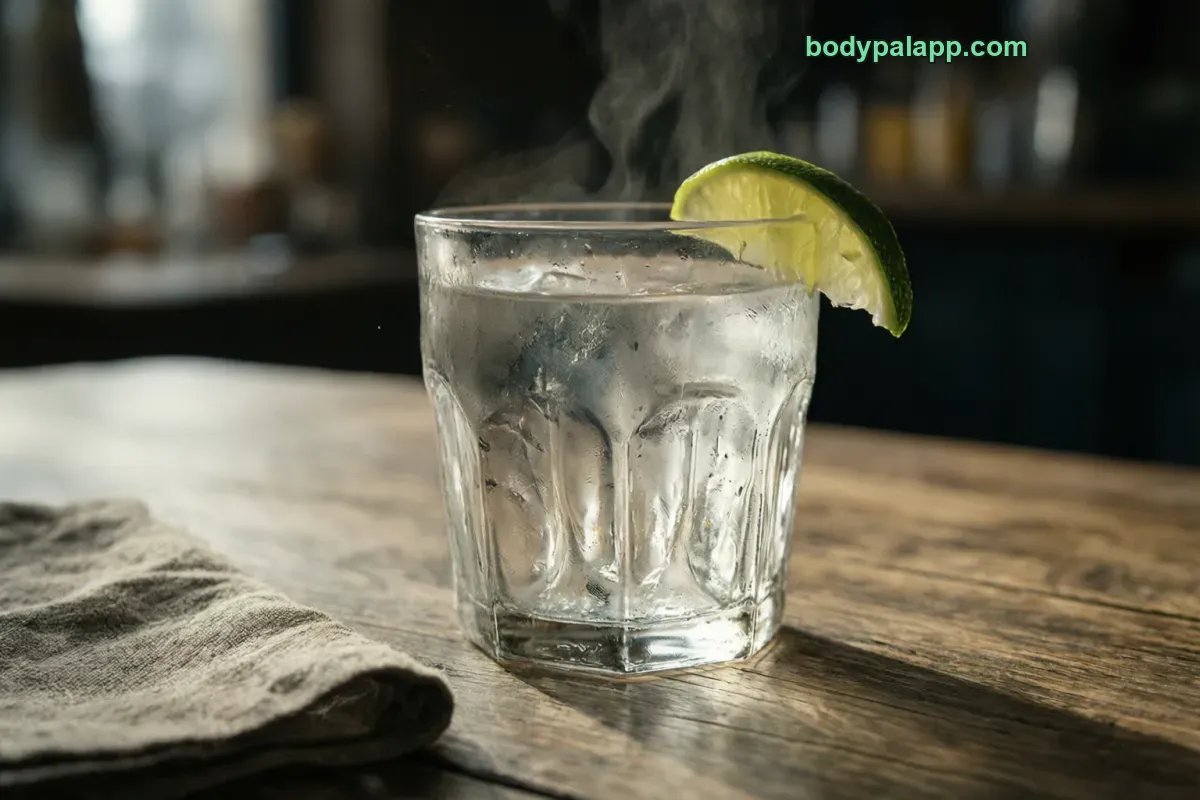
Gin calories come to 97 for 1 shot (42 g) and 231 per 100 g of 80 proof gin. Every one of those calories comes from the alcohol itself, since protein, carbs, fat and sugar all read 0. The total depends on two things only: how much you pour and how strong the bottle is.
97kcal
1 shot · 42 g, 80 proof, distilled
0%protein
0 gProtein
0 gCarbs
0 gFat
How to burn off 97 kcal
—Walking, brisk
—Jogging
—Cycling, moderate
—Swimming
Skip the math. BodyPal counts these calories from your steps and workouts automatically.
Nutrition facts
80 proof, distilled · per 42 g
Calories
97 kcal
Protein
0 g
Carbohydrate
0 g
Fat
0 g
Saturated fat
0 g
Cholesterol
0 mg
Sodium
0 mg
Potassium
1 mg
Iron
0 mg
Source: USDA FoodData Central
🛡️
Verified nutrition data
Numbers on this page come from USDA FoodData Central, the U.S. Department of Agriculture’s food composition database, and from manufacturer labels where a branded product is named. Last verified September 2026. How we verify our data →
Gin: calories, protein and sodium by serving
Percent of daily value uses the FDA reference of 2,000 kcal a day.
Serving
kcal
Protein
Carbs
Fat
Sodium
% DV kcal
1 shot (42 g)
97
0 g
0 g
0 g
0 mg
5%
1 fl oz (28 g)
65
0 g
0 g
0 g
0 mg
3%
90 proof shot (42 g)
110
0 g
0 g
0 g
0 mg
6%
100 g
231
0 g
0 g
0 g
1 mg
12%
3 × 1 shot (42 g)
291
0 g
1 mg
5 × 1 shot (42 g)
485
0 g
2 mg
The pour sets the total, not the gin
One shot (42 g) of 80 proof gin is 97 calories, or 5% of the daily value. A 1 fl oz (28 g) pour is 65 calories, or 3%. Those two sizes are the ones most bars and recipes use, and the gap between them is bigger than most people expect from a clear spirit.
Shots add up in a straight line. Two shots (84 g) come to 194 calories, three (126 g) reach 291, and five (210 g) land at 485. That last figure is a meal's worth of energy with no protein, fat or fiber behind it, which is why a long evening moves a daily total far more than a single drink does.
Home pours are rarely measured. A generous free pour drifts easily from the 28 g of a fluid ounce toward the 42 g of a full shot, and the drink climbs from 65 to 97 calories before any mixer goes in. If you log what you drink, a jigger or a kitchen scale beats guessing by eye every time.
Every calorie in gin comes from alcohol
Read the nutrition row for 100 g and almost everything says 0: protein, carbs, fat, saturated fat, fiber, sugars and cholesterol. The calorie split is 0% protein, 0% carbs and 0% fat. Yet the same 100 g still holds 231 calories. The difference is the alcohol, which the macro columns simply do not count.
That makes gin easy to log and easy to misread. A quick glance at the macros suggests an empty glass, but a shot still carries 97 calories. It also means gin brings nothing else to the table: 0 g protein per shot, 1 mg sodium and just 2 mg potassium per 100 g.
The USDA row behind these numbers covers distilled spirits as a group, listing gin, rum, vodka and whiskey together at 80 proof. At that strength they share the same 231 calories per 100 g. The juniper and botanicals that give gin its flavor do not change the count in any way the data shows.
Proof moves the number more than the brand
The biggest variable in a glass of gin is strength. An 80 proof shot of 42 g is 97 calories. A 90 proof shot of the same 42 g is 110 calories, or 6% of the daily value instead of 5%. Same glass, same pour, noticeably more energy.
Gins are bottled at different strengths, so the proof printed on the label tells you more than the name on the front. If yours reads 90 proof, log 110 calories per shot rather than 97. Over a few rounds that difference stops being a rounding error and starts showing up in your daily total.
Sodium, by contrast, is a non-issue. A shot holds 0 mg, and even 100 g carries only 1 mg, which works out to 0% of the 2300 mg daily value. If you watch salt, gin itself gives you nothing to worry about; any sodium in the glass comes from what you mix it with.
The mixer decides what your drink really costs
Gin is rarely drunk neat, so the glass total depends on what joins it. Soda water adds no calories. Sweetened tonic, juice, syrups and liqueurs bring sugar and calories of their own, so read the mixer's label as carefully as the bottle's. Gin itself has 0 g sugars; the sweetness in a cocktail always comes from somewhere else.
If you track a day of eating, log the gin and the mixer as two separate items. That way a swap from a sugary mixer to soda water shows up clearly, and the 97 calories from the shot stay visible instead of disappearing into one vague cocktail entry.
Pairing a drink with food that has protein and fiber gives the evening something gin cannot, since it offers 0 g of both. BodyPal can log the drink from a photo, but a measured pour is still the surest way to know whether you had 65 calories or 97.
How does gin compare?
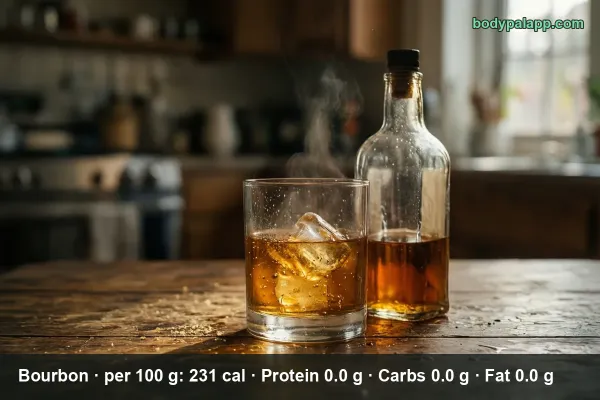
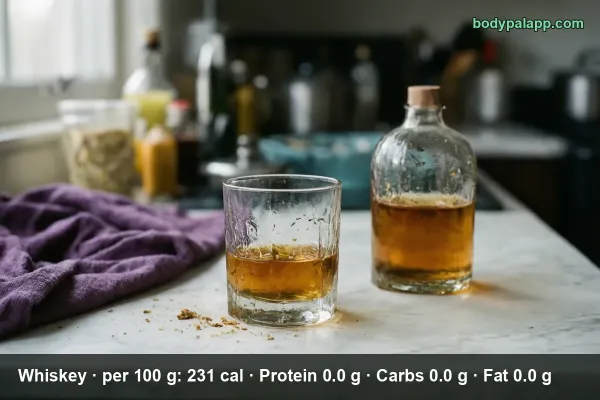
Here is gin next to a whiskey shot, bourbon and Crown Royal, compared per 100 g and per usual serving.
Verdict: For the lowest count per glass, gin at 97 calories a shot edges out a whiskey shot at 105, while bourbon and Crown Royal match gin exactly at 231 per 100 g. Pick the spirit you enjoy and control the pour, because at these numbers the size of the shot matters far more than the bottle.
Gin FAQs
How many calories are in a shot of gin?
A 1.5 fl oz shot (42 g) of 80 proof gin has 97 calories. A 1 fl oz pour has 65 calories.
Is gin good for weight loss?
A shot of gin is 97 calories with 0 g carbs, 0 g fat and 0 g protein, so every calorie comes from the alcohol. A gin and tonic is 84 calories per 100 g, about 189 in a 225 g drink, so the mixer adds most of the calories.
Gin vs whiskey: which has more calories?
At 80 proof both are 231 calories per 100 g, so a 42 g shot of either is 97 calories. Gin bottled at 90 proof is 263 per 100 g, or 110 per shot.
Does gin have sugar or carbs?
Plain 80 proof gin has 0 g sugar and 0 g carbs per 100 g. A gin and tonic has 6.6 g sugar per 100 g, about 15 g in a 225 g drink.
Does gin have calories?
Yes. Gin has 231 calories per 100 g and 97 in 1 shot (42 g), even though its protein, carbs, fat and sugar all read 0. Every one of those calories comes from the alcohol.
How many calories are in 1 oz of gin?
One fluid ounce (28 g) of 80 proof gin has 65 calories, which is 3% of the daily value. It has 0 g protein, carbs, fat and sugar, so the alcohol supplies all of it.
Does gin have a lot of calories?
Per pour, not many: 97 calories a shot, or 5% of the daily value. The count builds quickly with rounds, though. Three shots come to 291 calories and five reach 485, before any mixer is added.
What are the nutrition facts for gin?
100 g of gin has 231 calories, 0 g protein, 0 g carbs, 0 g fat, 0 g sugars, 1 mg sodium and 2 mg potassium. That is 12% of the daily calorie value with almost nothing else alongside it.
How much does a shot of gin weigh?
A standard shot of gin weighs 42 g and has 97 calories. A 1 fl oz pour weighs 28 g and has 65 calories, so weighing your pour is the most reliable way to log it.