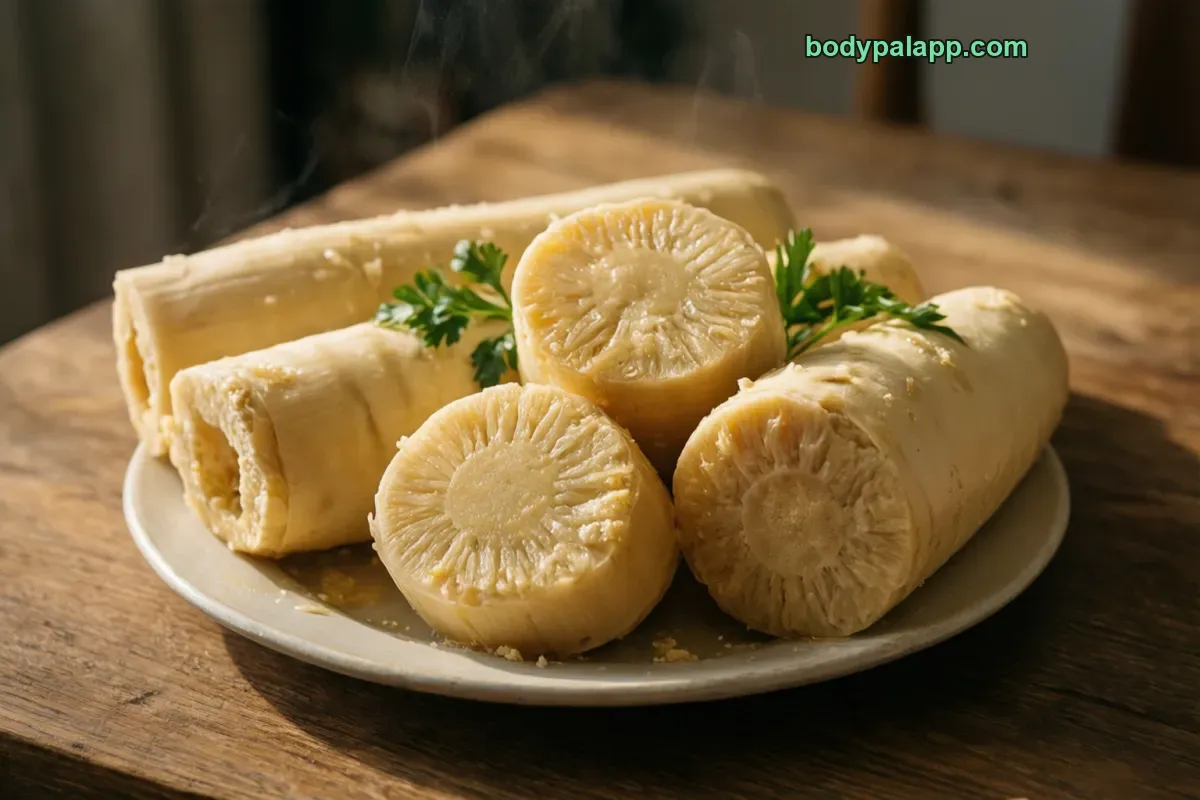
Hearts of palm calories come to 41 for 1 cup (146 g) of canned hearts of palm and 28 per 100 g. Calories are not the number to notice. Sodium is: that same cup carries 622 mg, 27% of the daily value, because the canning brine does most of the seasoning before you add anything.
41kcal
1 cup · 146 g, canned
30%protein
3.7 gProtein
7 gCarbs
0.9 gFat
How to burn off 41 kcal
—Walking, brisk
—Jogging
—Cycling, moderate
—Swimming
Skip the math. BodyPal counts these calories from your steps and workouts automatically.
Nutrition facts
Canned · per 146 g
Calories
41 kcal
Protein
3.7 g
Carbohydrate
6.7 g
Fat
0.9 g
Saturated fat
0.2 g
Cholesterol
0 mg
Sodium
622 mg
Potassium
258 mg
Iron
4.6 mg
Source: USDA FoodData Central
🛡️
Verified nutrition data
Numbers on this page come from USDA FoodData Central, the U.S. Department of Agriculture’s food composition database, and from manufacturer labels where a branded product is named. Last verified September 2026. How we verify our data →
Hearts of palm: calories, protein and sodium by serving
Percent of daily value uses the FDA reference of 2,000 kcal a day.
Serving
kcal
Protein
Carbs
Fat
Sodium
% DV kcal
1 cup (146 g)
41
3.7 g
6.7 g
0.9 g
622 mg
2%
1 piece (33 g)
9
0.8 g
1.5 g
0.2 g
141 mg
0%
100 g
28
2.5 g
4.6 g
0.6 g
426 mg
1%
3 × 1 cup (146 g)
123
11 g
1,866 mg
5 × 1 cup (146 g)
204
18.4 g
3,110 mg
A cup costs 41 calories, a piece just 9
A single piece of about 33 g has 9 calories, 0.8 g of protein and 0.8 g of fiber. Slice a few spears into a salad and the calorie count barely registers. The standard 1 cup (146 g) serving lands at 41 calories, only 2% of the daily calorie value.
Scaling up hardly moves the calorie line. Two cups (292 g) come to 82 calories, three cups (438 g) to 123, and five cups (730 g) to 204. That is a lot of food on the plate for very little energy, which is exactly why people reach for hearts of palm as a salad base or a pasta stand-in.
The catch is that sodium scales just as fast as the volume. Two cups bring 1,244 mg, three cups 1,866 mg and five cups 3,110 mg. With this food, portion size is a sodium question far more than a calorie one, so measure with the salt in mind.
Carbs bring over half the calories, protein almost a third
Per 100 g, canned hearts of palm have 4.6 g of carbohydrate, 2.5 g of protein and 0.6 g of fat. In calorie terms that is 54% from carbs, 30% from protein and 16% from fat. The protein share is high for a vegetable, but the absolute amount stays small.
A cup gives 3.7 g of protein, 7% of the daily value. Even five cups only reach 18.4 g, so hearts of palm will not carry a meal's protein on their own. Treat them as a low-calorie base, not the protein source.
Fiber is the better story. Per 100 g there are 2.4 g, and a cup holds 3.5 g, which means more than half of the carbohydrate grams are fiber. Fat is negligible, with 0.1 g saturated fat per 100 g and 0 mg cholesterol.
Sodium is the row to watch
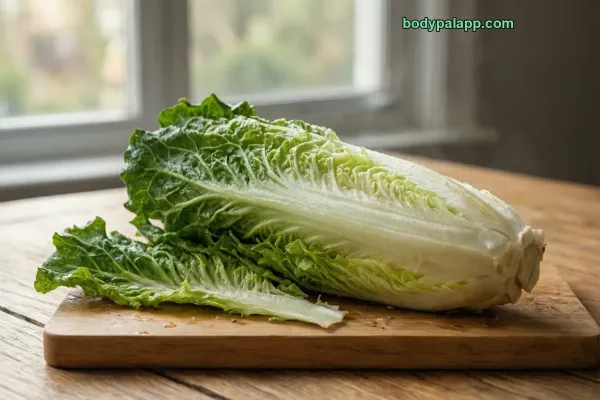
At 426 mg per 100 g, canned hearts of palm are salty for a vegetable. Asparagus has 14 mg, romaine lettuce 8 mg and radish 39 mg per 100 g. The difference is not the plant itself so much as the brine it is packed in.
A cup carries 622 mg, 27% of the daily value, and even a single 33 g piece has 141 mg, or 6%. A 100 g portion lands at 19%. On a light plate, the hearts of palm can easily be the saltiest thing on it.
If you watch sodium, rinse and drain them before use, and check the label, since brine varies between brands such as Roland, Badia or Native Forest. Potassium sits at 177 mg per 100 g, a modest amount next to the sodium.
Use them for volume, then add protein and fat
Hearts of palm have a mild, slightly artichoke-like taste and a tender bite. That makes them easy to slice into salads, toss with greens, shave into ribbons as a noodle swap or chop into a crab-style filling.
Because a cup is only 41 calories with 3.5 g of fiber, they add bulk to a plate without crowding out the rest of the meal. Pair them with a real protein such as chicken, beans or eggs, and a measured amount of olive oil or avocado, and the plate becomes far more filling than the hearts of palm alone.
If the rest of the meal is already salty, think cheese, cured meat or soy sauce, keep the hearts of palm to a piece or two and lean on fresh vegetables for volume. You can log them in BodyPal from a photo of your plate.
How does hearts of palm compare?
Here is how canned hearts of palm stack up against asparagus, romaine lettuce and radish, per 100 g and per usual serving.
Verdict: For the fewest calories and least sodium, pick romaine lettuce at 17 calories and 8 mg sodium per 100 g, with radish close behind at 16 calories. Pick hearts of palm when you want the most protein and substance of the four, 2.5 g per 100 g, but rinse them, because their 426 mg of sodium dwarfs all three.
Most popular hearts of palm brands in the United States
Ranked by popularity in the BodyPal database
# Productkcal / 100 g
1Roland Hearts of Palm1/2 cup · 129 g19 kcal
2Roland Pre-Cut Hearts of Palm1/2 cup · 129 g12 kcal
3Roland Cultivated Hearts of Palm1 can drained · 220 g36 kcal
4Roland Marinated Hearts of Palm1/2 cup · 105 g57 kcal
5Badia Hearts of Palm1 piece · 106 g19 kcal
6Native Forest Organic Hearts of Palm1 oz · 28 g36 kcal
7Sunpix Hearts of Palm1/4 cup · 60 g17 kcal
Label numbers follow the drained weight in the jar, and the marinated version is packed in oil, so it reads higher than plain canned hearts of palm. Source: manufacturer labels / USDA FoodData Central.
Hearts of palm FAQs
How many calories are in hearts of palm?
One cup of canned hearts of palm (146 g) has 41 calories, and a single piece (33 g) has 9. That works out to 28 calories per 100 g.
Are hearts of palm good for weight loss?
A full cup adds only 41 calories, with 3.5 g fiber and 0.9 g fat. The same cup carries 622 mg sodium, since the jars are packed in brine.
Canned or raw hearts of palm: which has more calories?
The canned hearts most US stores sell are 28 calories per 100 g, while the raw fresh palm heart is listed at 115 calories per 100 g with 25.6 g carbs.
How much protein is in hearts of palm?
One cup (146 g) has 3.7 g protein and 6.7 g carbs, of which 3.5 g is fiber. Per 100 g that is 2.5 g protein.
What are the macros in hearts of palm?
Per 100 g, hearts of palm have 2.5 g protein, 4.6 g carbs and 0.6 g fat for 28 calories. By calories that is 54% carbs, 30% protein and 16% fat, and 2.4 g of the carbs are fiber.
How much hearts of palm is 41 calories?
41 calories is 1 cup (146 g) of canned hearts of palm. That cup also gives 3.7 g of protein, 3.5 g of fiber and 622 mg of sodium, which is 27% of the daily value.
How many calories are in one piece of hearts of palm?
One piece of about 33 g has 9 calories. It also brings 0.8 g of protein, 0.8 g of fiber and 141 mg of sodium, which is 6% of the daily value.
What is the nutrition profile of hearts of palm?
Per 100 g: 28 calories, 2.5 g protein, 4.6 g carbs, 2.4 g fiber, 0.6 g fat, 0 mg cholesterol, 177 mg potassium and 426 mg sodium. Sodium stands out at 19% of the daily value.