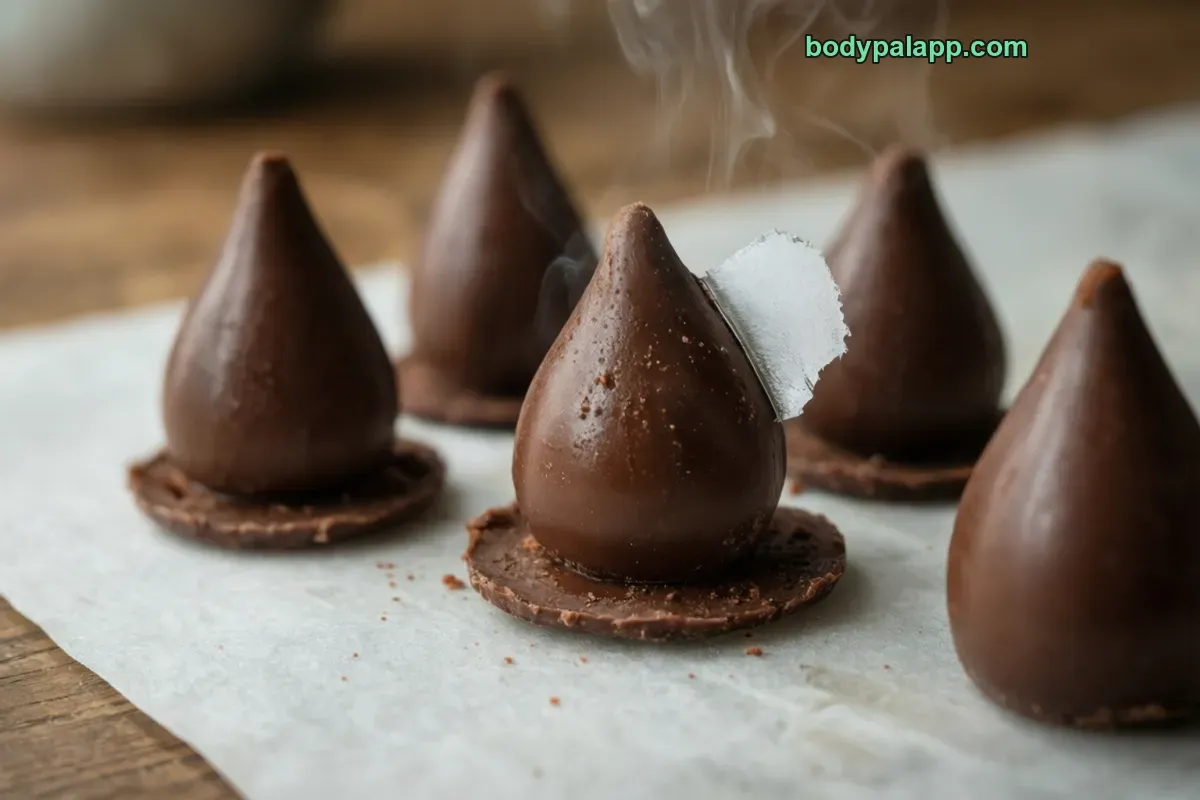
Hershey kiss calories come to 150 for 1 oz (28 g) and 535 per 100 g of milk chocolate. Notice where that energy comes from: fat supplies 50% of the calories, carbs 44% and protein just 6%. Most of those carbs are sugar, 14.4 g in every ounce, so the portion you pour decides almost everything.
150kcal
1 ounce · 28 g, milk chocolate
6%protein
2.1 gProtein
17 gCarbs
8.3 gFat
How to burn off 150 kcal
—Walking, brisk
—Jogging
—Cycling, moderate
—Swimming
Skip the math. BodyPal counts these calories from your steps and workouts automatically.
Nutrition facts
Milk chocolate · per 28 g
Calories
150 kcal
Protein
2.1 g
Carbohydrate
16.6 g
Fat
8.3 g
Saturated fat
5.2 g
Cholesterol
6 mg
Sodium
22 mg
Potassium
104 mg
Iron
0.7 mg
Source: USDA FoodData Central
🛡️
Verified nutrition data
Numbers on this page come from USDA FoodData Central, the U.S. Department of Agriculture’s food composition database, and from manufacturer labels where a branded product is named. Last verified September 2026. How we verify our data →
Hershey kiss: calories, protein and sodium by serving
Percent of daily value uses the FDA reference of 2,000 kcal a day.
Serving
kcal
Protein
Carbs
Fat
Sodium
% DV kcal
1 oz (28 g)
150
2.1 g
16.6 g
8.3 g
22 mg
7%
Miniature bar size (7 g)
37
0.5 g
4.2 g
2.1 g
6 mg
2%
100 g
535
7.7 g
59.4 g
29.7 g
79 mg
27%
3 × 1 oz (28 g)
449
6.4 g
66 mg
5 × 1 oz (28 g)
749
10.7 g
111 mg
A handful of Kisses adds up faster than it looks
The reference serving here is 1 oz (28 g), and it carries 150 calories, 8.3 g of fat and 14.4 g of sugar. That is 7% of the daily calorie value used on this page. The smallest listed portion, a miniature bar size of 7 g, comes to 37 calories with 2.1 g of fat and 3.6 g of sugar. On its own, a piece that size barely registers in a day.
The catch is that small foil-wrapped pieces rarely get eaten one at a time. Two ounces (56 g) reach 300 calories, three ounces (84 g) reach 449, and 140 g lands at 749 calories. That is the kind of amount that quietly disappears from an office candy dish over an afternoon, and it brings only 10.7 g of protein with it.
If you track, weigh the pile once rather than counting wrappers. Unwrapped Kisses in a small bowl make the portion visible before you start, and BodyPal can log them from a photo so the handful does not go unrecorded.
Half of every calorie comes from fat
Milk chocolate is mostly fat and sugar, and the calorie split shows it plainly. Fat supplies 50% of the calories, carbohydrate 44% and protein only 6%. Per 100 g that means 29.7 g of fat, 59.4 g of carbs and 7.7 g of protein, for 535 calories.
Look inside the carb line and nearly all of it is sugar: 51.5 g of the 59.4 g. Fiber adds 3.4 g per 100 g, or 1 g per ounce, which is more than many candies offer. What is left over in the carb total is too small to matter.
Protein is where the Kiss falls short as a snack. An ounce gives 2.1 g, 4% of the daily value, and even five ounces deliver only 10.7 g. If you want something that holds you until dinner, chocolate on its own is the wrong tool. It works better as the finish to a meal that already has protein in it.
Saturated fat is the row to watch
Per 100 g, Hershey Kisses carry 18.5 g of saturated fat, against a daily value of 20 g. That is close to a full day's daily value packed into 100 g, a bigger share than any other row on the label. Most of the fat in this milk chocolate is the saturated kind, so the ounce you eat follows the same pattern on a smaller scale.
Sodium, by contrast, is a non-issue. An ounce has 22 mg, 1% of the daily value, and 100 g has 79 mg, or 3%. Cholesterol sits at 23 mg per 100 g against a daily value of 300 mg, also modest. Potassium reaches 372 mg per 100 g, a small extra rather than a reason to eat it.
So the realistic way to read this label is simple. If you watch saturated fat, the ounce is the portion to stick to. If you watch sodium, Kisses are not your problem. Sugar is the other number to keep in view, at 14.4 g per ounce.
Plan it as dessert, not a grazing snack
Chocolate fits most eating patterns when it is planned. The trouble starts when a bag sits open on a desk and the count drifts upward without anyone noticing. Deciding on 1 oz ahead of time, 150 calories, turns an open-ended habit into a fixed line in your day.
Pairing helps too. Eaten after a meal with protein and vegetables, a few Kisses act as a finish rather than the main event. Next to fruit or a glass of milk they feel like more food without adding more chocolate. Eaten alone on an empty stomach, they are easy to keep reaching for, since there is so little protein to slow you down.
If you are weighing treats against each other, remember the miniature bar size of 7 g at 37 calories. Small, wrapped units are a real advantage: you can see exactly how many you have had, and stopping becomes a decision rather than a guess.
How does hershey kiss compare?
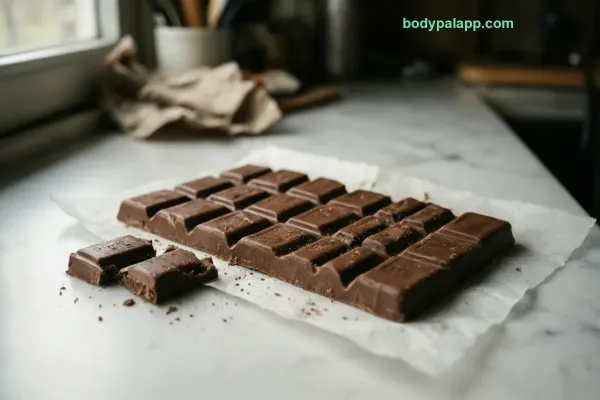
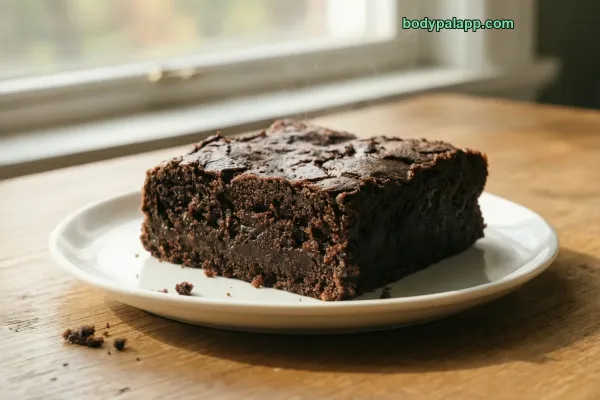
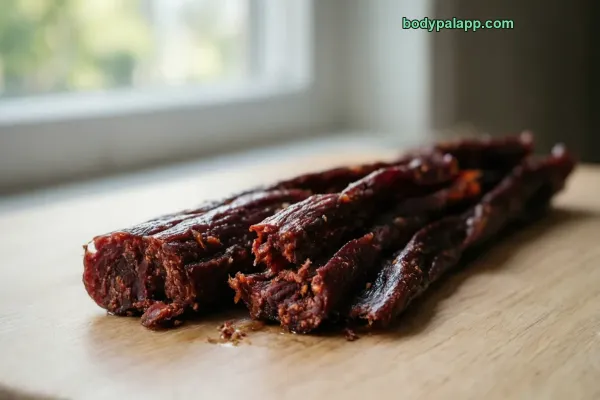
Here is how Hershey Kisses stack up against a Hershey bar, a chocolate brownie and Slim Jim sticks, per 100 g and per usual serving.
Verdict: The Kiss and the Hershey bar are the same milk chocolate at 535 calories per 100 g, so choose Kisses only because small pieces make it easier to stop at 1 oz instead of finishing a 235-calorie bar. For a lighter sweet the brownie is 405 per 100 g but brings 286 mg of sodium, while the Slim Jim, at 1,719 mg of sodium per 100 g, is a salty protein snack and not a dessert swap.
Hershey kiss FAQs
How many calories are in Hershey Kisses?
Hershey Kisses are milk chocolate with 535 calories per 100 g, or about 150 calories per ounce (28 g).
Are Hershey Kisses good for weight loss?
They are calorie-dense: 100 g has 535 calories, 51.5 g sugar and 29.7 g fat.
Hershey Kiss vs Hershey bar: what is the difference?
Both are milk chocolate, so per gram they are about the same, at 535 calories per 100 g.
How much sugar is in Hershey Kisses?
About 14.4 g sugar per ounce (28 g), which is 51.5 g per 100 g.
How many calories are in a miniature piece of Hershey milk chocolate?
A miniature bar size of 7 g has 37 calories, with 2.1 g of fat, 3.6 g of sugar and 0.5 g of protein. That is 2% of the daily calorie value.
How much fat is in an ounce of Hershey Kisses?
An ounce (28 g) has 8.3 g of fat. Per 100 g the total is 29.7 g, of which 18.5 g is saturated, and fat supplies 50% of the calories.
How much protein do Hershey Kisses have?
An ounce has 2.1 g of protein, 4% of the daily value. Per 100 g it is 7.7 g, and protein makes up only 6% of the calories, so Kisses are not a protein snack.
How many calories are in a handful of Hershey Kisses?
It depends on weight: 2 ounces (56 g) have 300 calories and 3 ounces (84 g) have 449. A large 140 g portion reaches 749 calories, so weighing your usual handful once is worth it.
Are Hershey Kisses high in sodium?
No. An ounce has 22 mg of sodium, 1% of the daily value, and 100 g has 79 mg, or 3%. Saturated fat and sugar are the rows that matter more here.