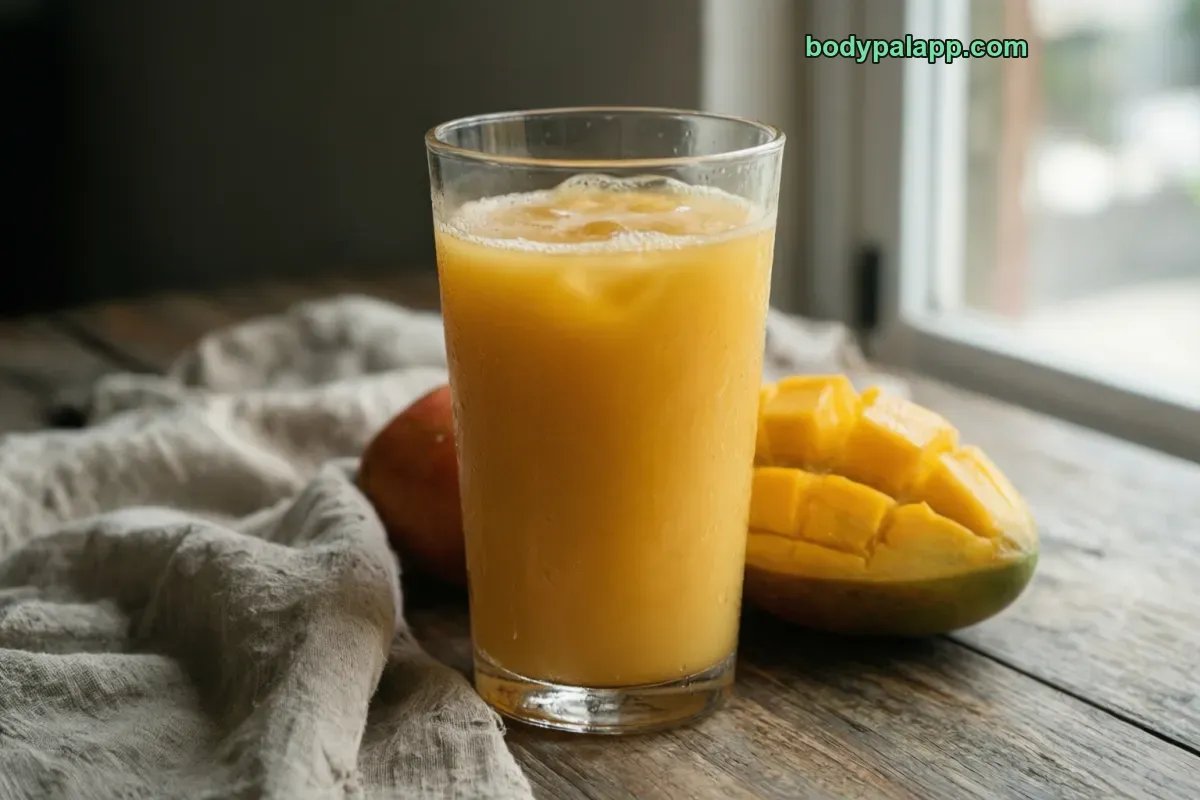
Mango juice calories come to 121 for one 246 g glass and 49 per 100 g, based on a bottled peach mango blend. The thing to notice is the sugar: 26 g of the 28 g of carbs in a glass are sugars, with no fat and no fiber in the mix.
121kcal
1 glass · 246 g, bottled, peach mango blend
3%protein
1 gProtein
28 gCarbs
0 gFat
How to burn off 121 kcal
—Walking, brisk
—Jogging
—Cycling, moderate
—Swimming
Skip the math. BodyPal counts these calories from your steps and workouts automatically.
Nutrition facts
Bottled, peach mango blend · per 246 g
Calories
121 kcal
Protein
1 g
Carbohydrate
28 g
Fat
0 g
Sodium
69 mg
Potassium
209 mg
Iron
0.4 mg
Source: USDA FoodData Central
🛡️
Verified nutrition data
Numbers on this page come from USDA FoodData Central, the U.S. Department of Agriculture’s food composition database, and from manufacturer labels where a branded product is named. Last verified September 2026. How we verify our data →
Mango juice: calories, protein and sodium by serving
Percent of daily value uses the FDA reference of 2,000 kcal a day.
Serving
kcal
Protein
Carbs
Fat
Sodium
% DV kcal
1 glass (246 g)
121
1 g
28 g
0 g
69 mg
6%
100 g
49
0.4 g
11.4 g
0 g
28 mg
2%
Juice drink (243 g)
80
0 g
20 g
0 g
39 mg
4%
3 × 1 glass (246 g)
362
3 g
207 mg
5 × 1 glass (246 g)
603
5 g
344 mg
One glass is 121 calories, three are 362
The standard pour on this page is a 246 g glass, and it lands at 121 calories. That is about 6% of the daily calorie value, which sounds modest until you remember a glass of juice goes down in under a minute and rarely replaces anything else you eat.
Refills are where the total moves. Two glasses (492 g) reach 241 calories, three glasses (738 g) hit 362, and five glasses, a realistic amount over a long brunch or a hot afternoon, add up to 1,230 g and 603 calories. Each glass adds roughly the same 121, so the math stays simple: count the glasses, not the sips.
If you want the mango taste for less, the juice drink row is worth a look. A 243 g serving of the diluted juice drink comes in at 80 calories with 20 g of sugars, about a third fewer calories than the full glass of juice. You trade some fruit flavor for a lighter number.
Nearly every calorie is carbohydrate
The calorie split is about as lopsided as food gets: 97% of the energy comes from carbs, 3% from protein and 0% from fat. Per 100 g that works out to 11.4 g of carbs, 0.4 g of protein and 0 g of fat.
Protein barely registers. A full glass carries 1 g, which is 2% of the daily value. Even five glasses only bring 5 g, so mango juice does nothing to cover protein needs, and it will not keep you full the way a meal with protein does.
This is not a flaw so much as a description. Juice is a fast source of carbohydrate in liquid form. That makes it useful when you actually want quick energy, and easy to overdo when you are just thirsty.
Sugar is the row to watch
Of the 11.4 g of carbs in 100 g of this juice, 10.6 g are sugars. Scale that to a glass and you get 26 g of sugars out of 28 g of carbs. Fiber is listed at 0, so there is nothing in the glass to slow how quickly that sugar arrives.
Sodium, by contrast, is a non-issue. A glass has 69 mg, about 3% of the daily value of 2300 mg, and even three glasses stay at 207 mg. Potassium sits at 85 mg per 100 g, a small contribution rather than a reason to drink it.
So if you track one number on this label, make it sugars. The calorie count and the sugar count rise together here, because almost every calorie in the glass is sugar.
Treat it as part of a meal, not a drink on the side
Mango juice works best when it sits next to food that brings what the juice lacks. Pair a glass with eggs, yogurt or a slice of whole grain toast with nut butter, and the protein, fat and fiber on the plate balance a drink that has almost none of them.
Portion is the easiest lever. A smaller glass, or juice cut with sparkling water, keeps the flavor while trimming the 121 calories of a full pour. Brands on this page range from straight blends like Tropicana Orange Peach Mango Juice to lighter options like Ocean Spray Diet Cran Mango Juice Drink, so check the label of the bottle you actually buy.
If you log what you drink, juice is one of the easiest things to forget. BodyPal can log a glass from a photo, which helps the refills show up in your day instead of disappearing.
How does mango juice compare?
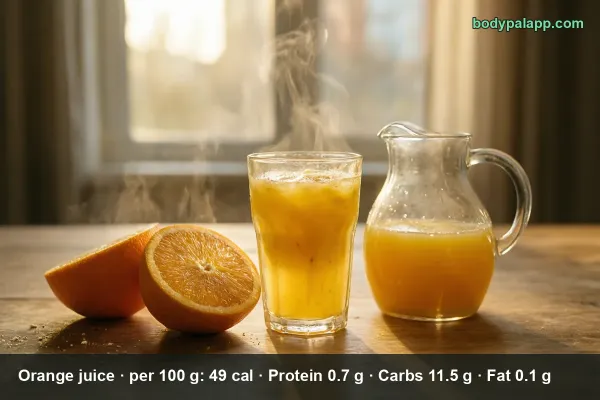
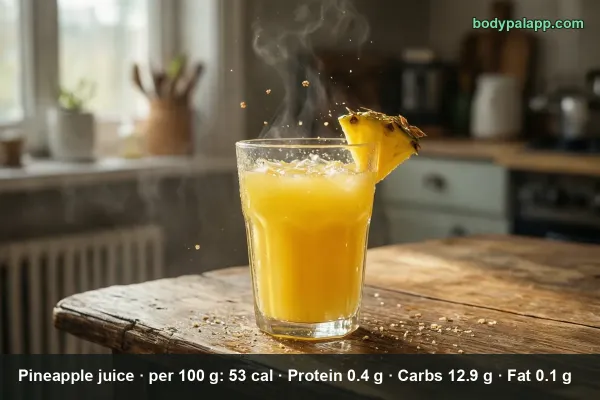
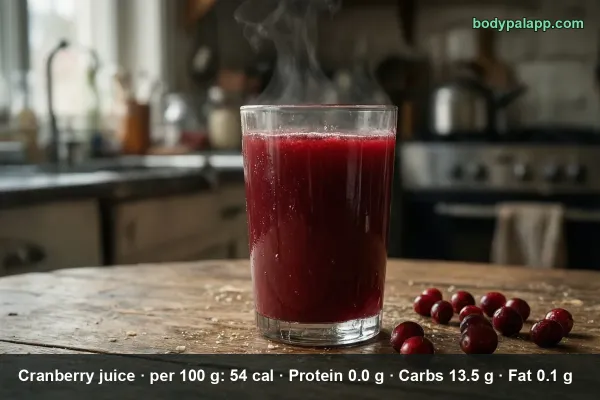
Here is how mango juice stacks up against orange, pineapple and cranberry juice per 100 g and per usual serving.
Verdict: For the fewest calories, mango and orange juice tie at 49 per 100 g, and orange juice wins the tiebreak with 0.7 g of protein and just 2 mg of sodium versus 28 mg here. Pineapple juice at 53 and cranberry juice at 54 run about 1.1 times this juice, so choose them for taste, not for a lighter glass.
Most popular mango juice brands in the United States
Ranked by popularity in the BodyPal database
# Productkcal / 100 g
1Tropicana Orange Mango Juice Beverage8 fl oz · 240 g21 kcal
Most bottles are mango blends or diluted juice drinks, so their label numbers spread from 2 calories per 100 g for the diet version up to 50 for a full-strength blend. Source: manufacturer labels / USDA FoodData Central.
Mango juice FAQs
How many calories are in a glass of mango juice?
An 8 fl oz glass (246 g) has 121 calories. Per 100 g the juice is 49 calories.
Is mango juice good for weight loss?
A 246 g glass is 121 calories with 26 g of sugar and no fat. A lighter mango juice drink is 33 calories per 100 g, so the same size glass is 80 calories.
Mango juice or orange juice: which has fewer calories?
Both sit at 49 calories per 100 g, so an 8 oz glass of either is about 121 calories.
How much sugar is in mango juice?
10.6 g per 100 g, which is about 26 g in a 246 g glass. Total carbs are 11.4 g per 100 g.
How many calories are in 100 g of mango juice?
There are 49 calories in 100 g of mango juice, along with 11.4 g of carbs, 10.6 g of sugars and 0.4 g of protein. Fat and fiber are both 0.
How many calories are in two glasses of mango juice?
Two glasses of mango juice (492 g) contain 241 calories. Three glasses (738 g) reach 362 calories, so every extra glass adds roughly another 121.
Does mango juice have any protein?
Barely. A 246 g glass has 1 g of protein, which is 2% of the daily value, and 100 g has 0.4 g. Protein makes up only 3% of its calories.
How much sodium is in mango juice?
A glass of mango juice has 69 mg of sodium, about 3% of the daily value. Per 100 g it is 28 mg, which is low, though higher than orange juice at 2 mg.
Is a mango juice drink lower in calories than mango juice?
Yes. A 243 g serving of mango juice drink has 80 calories and 20 g of sugars, compared with 121 calories and 26 g of sugars in a 246 g glass of juice.