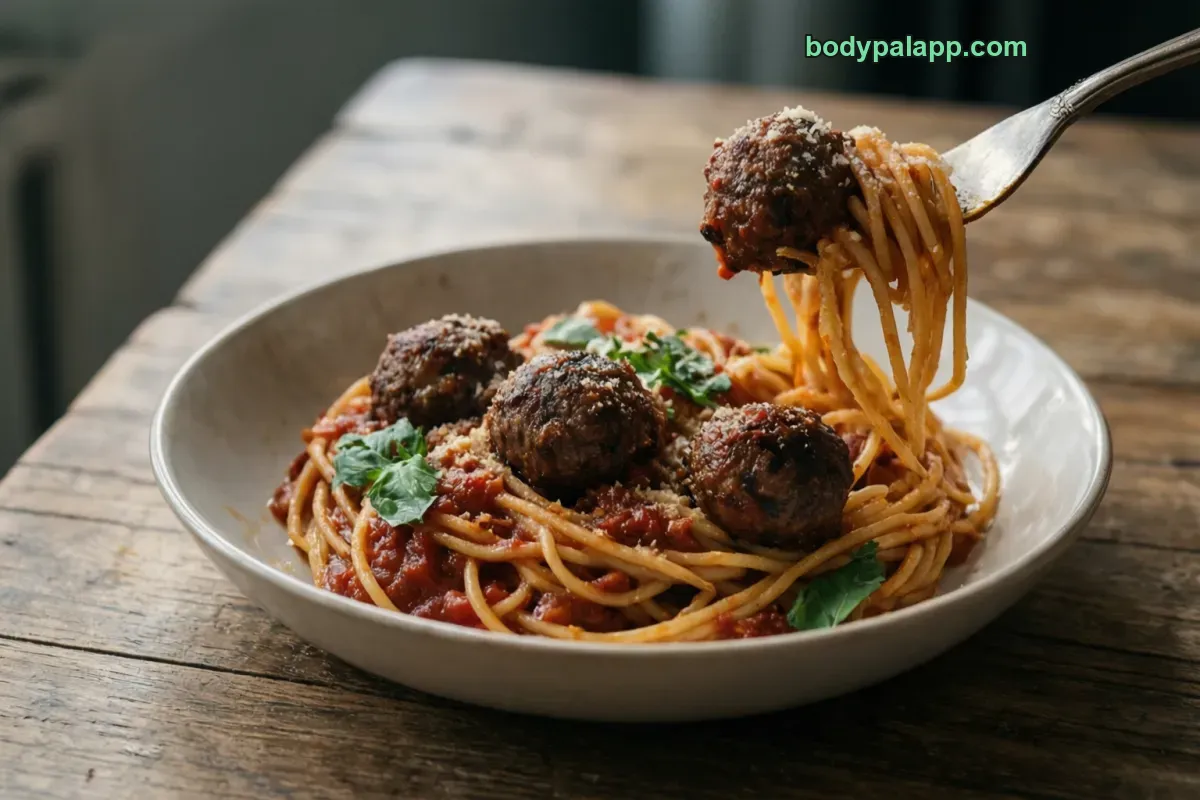
Meatballs and spaghetti calories come to 228 for one cup (134 g) and 170 per 100 g of restaurant-style pasta with tomato sauce. The number to watch is the plate. A full restaurant serving of 565 g carries 961 calories and 1,983 mg of sodium, close to half a day's energy in one sitting.
228kcal
1 cup · 134 g, restaurant style, with tomato sauce
18%protein
10.5 gProtein
21 gCarbs
11.4 gFat
How to burn off 228 kcal
—Walking, brisk
—Jogging
—Cycling, moderate
—Swimming
Skip the math. BodyPal counts these calories from your steps and workouts automatically.
Nutrition facts
Restaurant style, with tomato sauce · per 134 g
Calories
228 kcal
Protein
10.5 g
Carbohydrate
21 g
Fat
11.4 g
Saturated fat
4.2 g
Cholesterol
25 mg
Sodium
470 mg
Potassium
276 mg
Iron
1.7 mg
Source: USDA FoodData Central
🛡️
Verified nutrition data
Numbers on this page come from USDA FoodData Central, the U.S. Department of Agriculture’s food composition database, and from manufacturer labels where a branded product is named. Last verified September 2026. How we verify our data →
Meatballs and spaghetti: calories, protein and sodium by serving
Percent of daily value uses the FDA reference of 2,000 kcal a day.
Serving
kcal
Protein
Carbs
Fat
Sodium
% DV kcal
1 cup (134 g)
228
10.5 g
20.8 g
11.4 g
470 mg
11%
Restaurant plate (565 g)
961
44.3 g
87.6 g
48.1 g
1,983 mg
48%
Canned cup (246 g)
246
10.8 g
28.2 g
10.1 g
689 mg
12%
100 g
170
7.8 g
15.5 g
8.5 g
351 mg
9%
3 × 1 cup (134 g)
683
31.5 g
1,411 mg
5 × 1 cup (134 g)
1,139
52.5 g
2,352 mg
A restaurant plate is 961 calories, a cup is 228
One cup of 134 g gives you 228 calories, 10.5 g of protein and 11.4 g of fat. That is 11% of the daily value for calories, a reasonable dinner component if the rest of the plate is vegetables. The trouble is that almost nobody serves pasta by the cup.
Two cups (268 g) climb to 456 calories, and three cups (402 g) reach 683. A family-style restaurant plate of 565 g lands at 961 calories, or 48% of the daily value, with 44.3 g of protein. Pile on a fifth cup at home and you are at 1,139 calories for 670 g.
The food itself does not change between those rows. Only the scoop does. If you are counting, weigh or measure the pasta once at home so you know what your usual bowl looks like, then log that number every time instead of guessing.
Fat supplies nearly half the calories
Pasta gets the blame, but fat is the biggest source of energy here. In the calorie split, fat accounts for 45%, carbs for 36% and protein for 18%. The meatballs, the oil in the sauce and any cheese on top do most of that work.
Per 100 g the dish holds 7.8 g of protein, 15.5 g of carbs and 8.5 g of fat, of which 3.1 g is saturated. Sugar is modest at 2 g, mostly from the tomato sauce. Fiber is thin at 1.5 g per 100 g, so a cup gives only 2 g.
That profile explains why a bowl can feel lighter than it is. There is not much fiber to slow you down, and fat packs calories into a small volume. A side salad or a pile of roasted vegetables adds bulk and fiber without moving the total much.
Sodium is the row to watch
A single cup carries 470 mg of sodium, already 20% of the daily value. Restaurant sauce, seasoned meatballs and salted pasta water all add up, and the number scales fast with the portion.
Two cups bring 941 mg, three cups 1,411 mg. The restaurant plate reaches 1,983 mg, which is 86% of the daily value in one meal. Five cups at 2,352 mg would put you over the full day's value before breakfast tomorrow is even counted.
If you watch sodium, the portion is your main lever. Keep the rest of the day lower in salty foods, skip extra parmesan and garlic bread, and drink water with the meal. Making the sauce at home also lets you control how much salt goes in.
The canned cup brings more carbs and more fiber
A canned cup weighs 246 g and comes to 246 calories, only a little above the restaurant cup's 228. The mix is different, though. Canned has 28.2 g of carbs against 20.8 g, and 7.2 g of sugar against 2.7 g, because the sauce is sweeter and the cup is heavier.
Canned is not all downside. It brings 6.6 g of fiber per cup versus 2 g, and slightly less fat at 10.1 g. Sodium runs higher at 689 mg, or 30% of the daily value. Frozen and boxed versions such as Stouffer's Classics, Meijer and Save Mart sit in the same family, so check the label of the one you buy.
For logging, pick the row that matches what is actually on your plate rather than the closest name. BodyPal can log the dish from a photo, which helps when a restaurant plate does not match any neat cup measure.
How does meatballs and spaghetti compare?
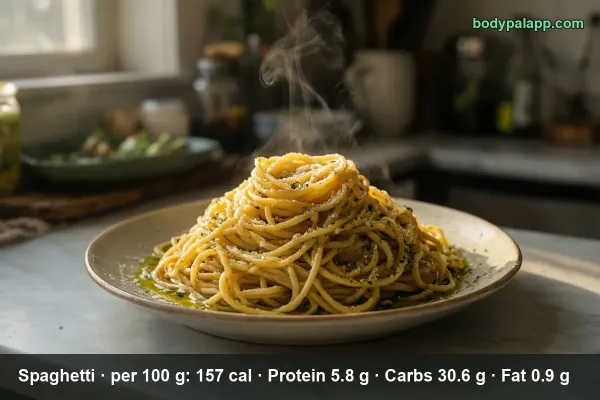
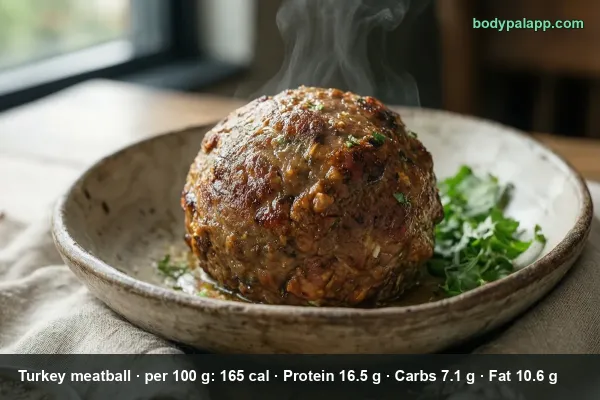
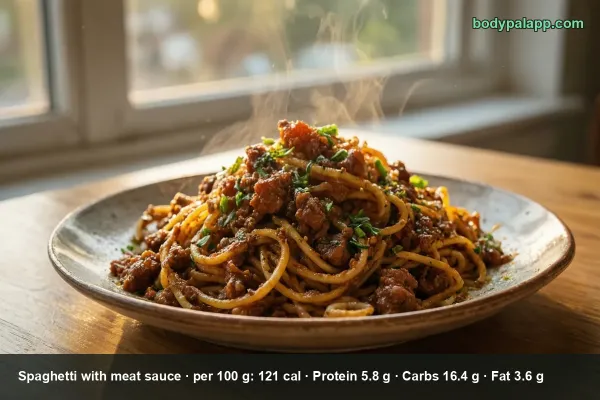
Here is how meatballs and spaghetti stacks up against plain spaghetti, a turkey meatball and spaghetti with meat sauce, per 100 g and per usual serving.
Verdict: For fewer calories pick spaghetti with meat sauce at 121 per 100 g with only 3.6 g of fat, or plain spaghetti at 157 if you add your own light sauce. For protein the turkey meatball wins at 16.5 g per 100 g, but its 694 mg of sodium is the highest in the table.
Most popular meatballs and spaghetti brands in the United States
Ranked by popularity in the BodyPal database
# Productkcal / 100 g
1Stouffer's Classics Spaghetti With Meatballs1 package · 357 g118 kcal
2Meijer Spaghetti And Meatballs1 cup · 142 g162 kcal
3Save Mart Spaghetti With Meatballs1 cup · 130 g138 kcal
Packaged meals carry more sauce and pasta per gram than a restaurant plate, so their label numbers per 100 g read lower than the 170 above. Source: manufacturer labels / USDA FoodData Central.
Meatballs and spaghetti FAQs
How many calories are in a cup of meatballs and spaghetti?
A 1 cup serving (134 g) is about 228 calories, since the dish has 170 calories per 100 g.
Is meatballs and spaghetti good for weight loss?
Portion size decides it: one cup is 228 calories with 10.5 g protein, while a 565 g restaurant plate holds more than four times that amount of food.
Meatballs and spaghetti vs plain spaghetti: which has more calories?
Plain spaghetti is 157 calories per 100 g and the meatball dish 170 calories per 100 g, so a 134 g cup of the dish comes to 228 calories.
How much protein is in meatballs and spaghetti?
About 7.8 g per 100 g, which is 10.5 g in a 1 cup serving (134 g) and 44.3 g in a 565 g restaurant plate.
How many calories are in a restaurant plate of spaghetti and meatballs?
A family-style restaurant plate of 565 g has 961 calories, 48% of the daily value. It also carries 44.3 g of protein, 48.1 g of fat and 1,983 mg of sodium.
How much sodium is in spaghetti and meatballs?
One cup has 470 mg of sodium, 20% of the daily value. A canned cup has 689 mg, and a full restaurant plate reaches 1,983 mg, which is 86% of the daily value.
Does canned spaghetti and meatballs have more calories than restaurant style?
Slightly. A canned cup of 246 g has 246 calories versus 228 for a restaurant cup of 134 g. Canned also has more carbs, sugar and fiber, and more sodium at 689 mg.
How many calories are in 100 grams of spaghetti and meatballs?
There are 170 calories in 100 g, with 7.8 g of protein, 15.5 g of carbs and 8.5 g of fat. Sodium comes to 351 mg, or 15% of the daily value.
How much fat is in a cup of spaghetti and meatballs?
A cup has 11.4 g of fat, and fat supplies 45% of the dish's calories. Saturated fat runs 3.1 g per 100 g, so most of the fat comes from the meatballs and sauce.