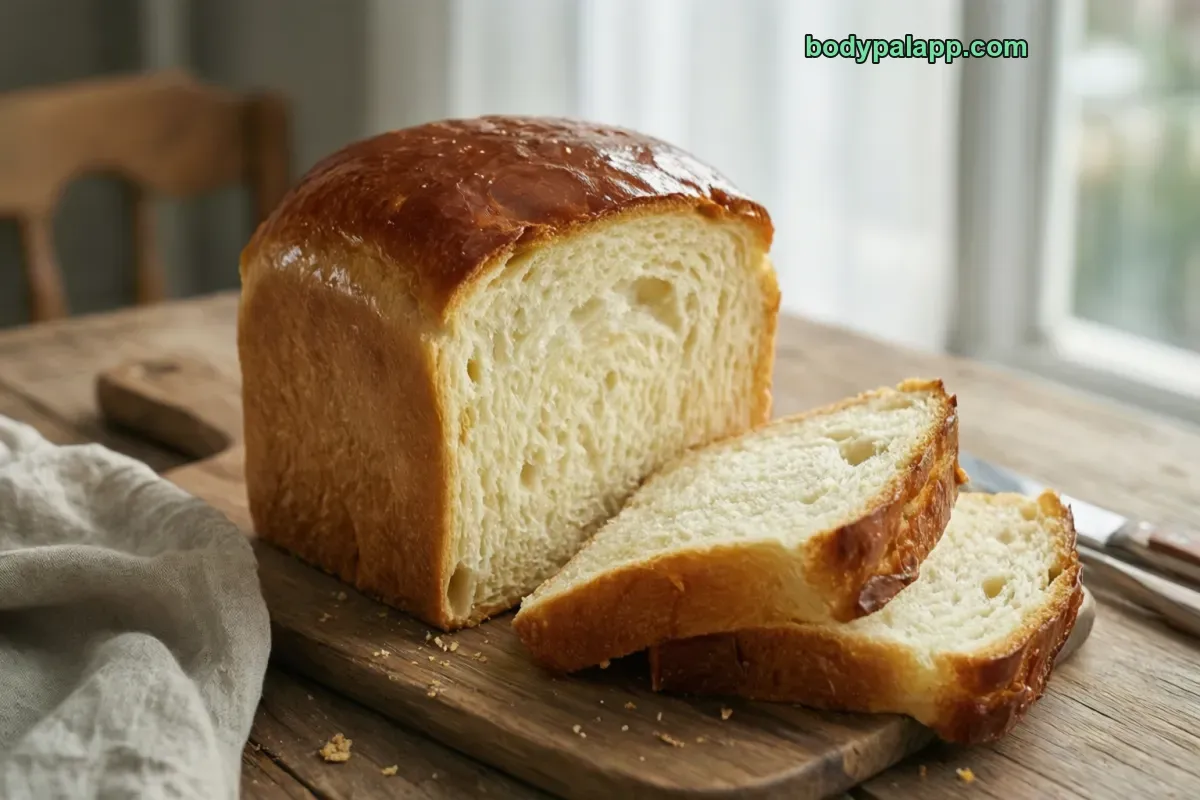
Milk bread calories come to 120 for one 42 g slice and 285 per 100 g, based on the USDA recipe made with 2% milk. Carbs supply 71% of those calories, so what you actually eat depends almost entirely on how many slices land on the plate and how thick they are cut.
120kcal
1 slice · 42 g, made with 2% milk
11%protein
3.3 gProtein
21 gCarbs
2.4 gFat
How to burn off 120 kcal
—Walking, brisk
—Jogging
—Cycling, moderate
—Swimming
Skip the math. BodyPal counts these calories from your steps and workouts automatically.
Nutrition facts
Made with 2% milk · per 42 g
Calories
120 kcal
Protein
3.3 g
Carbohydrate
21 g
Fat
2.4 g
Saturated fat
0.5 g
Cholesterol
1 mg
Sodium
151 mg
Potassium
61 mg
Iron
1.2 mg
Source: USDA FoodData Central
🛡️
Verified nutrition data
Numbers on this page come from USDA FoodData Central, the U.S. Department of Agriculture’s food composition database, and from manufacturer labels where a branded product is named. Last verified September 2026. How we verify our data →
Milk bread: calories, protein and sodium by serving
Percent of daily value uses the FDA reference of 2,000 kcal a day.
Serving
kcal
Protein
Carbs
Fat
Sodium
% DV kcal
1 slice (42 g)
120
3.3 g
20.8 g
2.4 g
151 mg
6%
Thin slice (33 g)
94
2.6 g
16.4 g
1.9 g
118 mg
5%
100 g
285
7.9 g
49.6 g
5.7 g
359 mg
14%
3 × 1 slice (42 g)
359
10 g
452 mg
5 × 1 slice (42 g)
599
16.6 g
754 mg
Two slices make a 239-calorie sandwich
One 42 g slice of milk bread holds 120 calories, which is 6% of the daily value. Cut it thin, at 33 g, and the slice drops to 94 calories. Same loaf, different knife. Soft loaves are often sliced or torn by hand at home, so the piece you actually eat may not match the label at all.
Stack the slices and the total climbs in a straight line. Two slices, the usual sandwich, come to 239 calories and 6.6 g of protein. Three slices reach 359 calories. Five slices, an easy number to hit with a pull-apart loaf on the table, reach 599 calories from bread alone, before any butter, jam or filling.
If you track closely, weigh a slice once and use that number from then on. Packaged loaves such as Arnold White With Whole Milk Bread or Meijer Butter Milk Bread are cut to their own thickness, so compare the slice weight on the bag with the 42 g used here. BodyPal can also log milk bread from a photo, which helps when the slices come torn rather than cut.
Carbs supply 71% of every slice
Per 100 g, milk bread carries 49.6 g of carbs, 5.7 g of fat and 7.9 g of protein. Turned into calories, that is 71% from carbs, 18% from fat and 11% from protein. It is a carb food first, enriched with milk rather than built for protein.
Fat is modest at 2.4 g per slice, and only 1.2 g per 100 g is saturated. Fiber is low: 0.8 g in a slice and 2 g per 100 g, a small share of the 28 g daily value. Cholesterol barely registers at 3 mg per 100 g, which fits a recipe made with 2% milk.
Protein is the weak spot. One slice gives 3.3 g, or 7% of the daily value, and even five slices only reach 16.6 g. If you want a slice of milk bread to keep you satisfied until the next meal, the protein has to come from what you put on it or next to it.
Sodium climbs with every slice
A single slice holds 151 mg of sodium, 7% of the daily value. That share sits slightly above the slice's 6% share of calories, so bread quietly adds salt to the day before anything salty goes on top. Per 100 g the figure is 359 mg, or 16% of the daily value.
Multiples make the point. Two slices bring 302 mg, three bring 452 mg and five bring 754 mg. Add cheese, cured meat, pickles or a salted spread and a sandwich can push the sodium column well past what the bread alone suggests. The bread is rarely the biggest source on the plate, but it is the one people forget to count.
The good news is relative. Next to the other everyday loaves on this page, milk bread sits on the lower end for sodium per 100 g. Potassium comes in at 146 mg per 100 g, a small amount. If you watch sodium, the easiest lever is the number of slices, and the second is the filling.
Pair it with protein to make a meal
Milk bread works best as the frame, not the whole meal. Two slices give you 239 calories but only 6.6 g of protein, so the filling decides how satisfying the plate turns out. Bread on its own tends to be a snack; bread with a real topping becomes lunch.
Eggs, sliced turkey or chicken, tuna, cottage cheese or a side of Greek yogurt all shift the balance toward protein. Vegetables such as tomato, cucumber and leafy greens add volume and some fiber for very few calories, which helps a bread that offers only 0.8 g of fiber per slice. A bowl of soup or a salad alongside one slice also stretches the meal without stacking more bread.
Sweet toppings are where the total runs away. Jam, honey, chocolate spread and thick layers of butter pile sugar and fat onto a slice that is already 71% carbs by calories. If milk bread is your treat, enjoy one slice with a good topping rather than three with a thin scrape. At 120 calories, a single slice is easy to plan around.
How does milk bread compare?
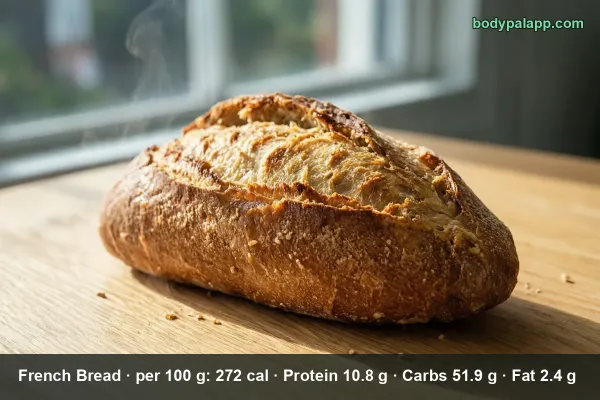
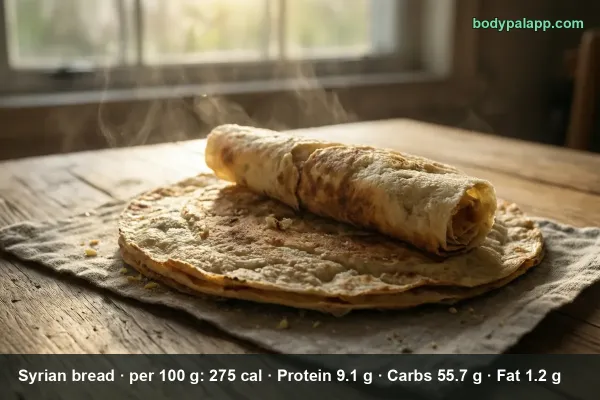
Here is milk bread next to white bread, French bread and Syrian bread, compared per 100 g and per usual serving.
Verdict: Per 100 g these loaves sit in a narrow band, from 270 for white bread up to 285 for milk bread, so calories alone barely separate them. For weight loss pick white bread for its smaller 74-calorie slice; for protein pick French bread at 10.8 g, and if you watch sodium, milk bread is the lowest of the four.
Most popular milk bread brands in the United States
Ranked by popularity in the BodyPal database
# Productkcal / 100 g
1Arnold White With Whole Milk Bread1 slice · 40 g275 kcal
2Meijer Butter Milk Bread2 slices · 62 g274 kcal
3Oroweat Simply Small White With Whole Milk Bread1 slice · 40 g275 kcal
Packaged loaves read a little lower, 274 to 275 calories per 100 g, because they carry less milk fat than the from-recipe row above. Source: manufacturer labels / USDA FoodData Central.
Milk bread FAQs
How many calories are in a slice of milk bread?
One regular slice (42 g) has about 120 calories. A thin slice of 33 g has 94 calories.
Is milk bread good for weight loss?
Two slices come to 239 calories, so it fits a calorie target only in small amounts. It carries 285 calories per 100 g against 270 for plain white bread.
Milk bread vs white bread: which has more calories?
Milk bread has 285 calories per 100 g and white bread 270, a difference of 15 calories per 100 g.
How much protein is in milk bread?
7.9 g of protein per 100 g, which is 3.3 g in one 42 g slice, alongside 5.7 g fat and 49.6 g carbs per 100 g.
How many calories are in 2 slices of milk bread?
Two 42 g slices of milk bread have 239 calories. They also bring 6.6 g of protein and 302 mg of sodium, before butter, jam or any sandwich filling is added.
How many calories are in 3 slices of milk bread?
Three standard slices, 126 g in total, come to 359 calories. That portion also carries 10 g of protein and 452 mg of sodium, so a triple-decker sandwich adds up quickly.
What are milk bread's nutrition facts per 100 g?
Per 100 g, milk bread has 285 calories, 49.6 g carbs, 7.9 g protein and 5.7 g fat, of which 1.2 g is saturated. It also has 2 g fiber and 359 mg sodium, 16% of the daily value.
What are the macros in milk bread?
By calories, milk bread is 71% carbs, 18% fat and 11% protein. One 42 g slice works out to 20.8 g carbs, 2.4 g fat and 3.3 g protein, which makes it a carb food first.