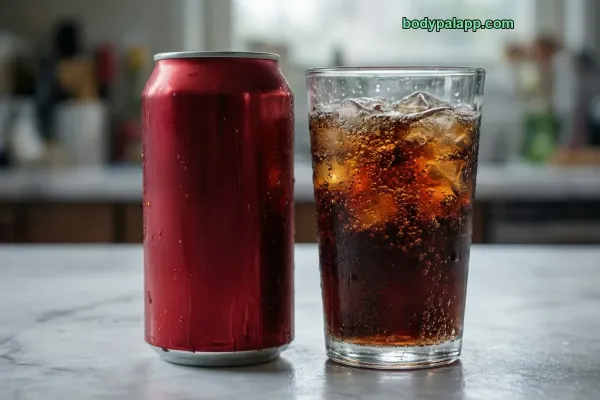
Monster energy drink calories come to 233 for one 16 fl oz can (496 g) and 47 per 100 g. Almost all of that is sugar: a can carries 54.2 g of it. The sugar-free can drops to 24 calories, so which can you grab matters far more than how fast you drink it.
233kcal
1 16 oz can · 496 g, original, ready to drink
4%protein
2.3 gProtein
56 gCarbs
0 gFat
How to burn off 233 kcal
—Walking, brisk
—Jogging
—Cycling, moderate
—Swimming
Skip the math. BodyPal counts these calories from your steps and workouts automatically.
Nutrition facts
Original, ready to drink · per 496 g
Calories
233 kcal
Protein
2.3 g
Carbohydrate
56 g
Fat
0 g
Saturated fat
0 g
Cholesterol
0 mg
Sodium
382 mg
Potassium
10 mg
Iron
0.2 mg
Source: USDA FoodData Central
🛡️
Verified nutrition data
Numbers on this page come from USDA FoodData Central, the U.S. Department of Agriculture’s food composition database, and from manufacturer labels where a branded product is named. Last verified September 2026. How we verify our data →
Monster energy drink: calories, protein and sodium by serving
Percent of daily value uses the FDA reference of 2,000 kcal a day.
Serving
kcal
Protein
Carbs
Fat
Sodium
% DV kcal
1 can, 16 fl oz (496 g)
233
2.3 g
55.9 g
0 g
382 mg
12%
8 fl oz (240 g)
113
1.1 g
27.1 g
0 g
185 mg
6%
Sugar free can, 16 fl oz (480 g)
24
0 g
6.6 g
0 g
360 mg
1%
100 g
47
0.5 g
11.3 g
0 g
77 mg
2%
3 × 1 can, 16 fl oz (496 g)
699
7 g
1,146 mg
5 × 1 can, 16 fl oz (496 g)
1,166
11.7 g
1,910 mg
One can is 233 calories, and the cans add up fast
The standard 16 fl oz can of original Monster weighs 496 g and delivers 233 calories, about 12% of a 2,000-calorie daily value. That is a full snack's worth of energy in something most people finish in a few minutes. If you pour half a can, roughly 8 fl oz (240 g), you land at 113 calories.
The trouble starts with the second can. Two cans come to 466 calories, three reach 699, and five hit 1,166, which is more than half a 2,000-calorie day from drinks alone. None of that comes with fat or fiber to slow you down, so it rarely replaces food you would otherwise eat. It simply stacks on top.
The practical move is to count cans, not sips. If Monster is a daily habit, logging each can as it happens keeps the total honest, and BodyPal can log it from a photo of the can. A single can fits into most days; a can every few hours is where the calories quietly pile up.
Nearly every calorie is sugar
Carbohydrates supply 96% of the calories in original Monster, protein supplies 4%, and fat supplies nothing. Per 100 g that works out to 11.3 g of carbs, of which 10.9 g are sugars, plus 0.5 g of protein and 0 g of fat. Fiber is also 0 g.
Scaled to a full can, those numbers become 55.9 g of carbs and 54.2 g of sugars. In other words, the carbohydrate in this drink is sugar, not starch or fiber. The 2.3 g of protein per can is too small to count as a protein source; it covers about 5% of the daily value.
That profile explains why Monster feels like quick fuel and why it does little for fullness. A drink that is almost pure sugar and water gives your body energy fast but nothing to chew, no fat and no fiber. If you are trying to stay full on fewer calories, the original can is about the weakest trade you can make for 233 calories.
Sodium is the quiet row to watch
Energy drinks are not salty to the taste, yet one can of original Monster carries 382 mg of sodium, 17% of the 2,300 mg daily value. Per 100 g that is 77 mg, several times what the sodas in the comparison table contain.
Like the calories, sodium scales with every can. Two cans bring 764 mg, three bring 1,146 mg, and five reach 1,910 mg, close to the full daily value before any food enters the picture. Switching to sugar free does not fix this: the sugar-free can still has 360 mg, or 16% of the daily value.
If you watch sodium, treat each Monster like a salty snack and budget for it. Pairing a can with already salty foods such as chips or deli sandwiches pushes the day's total up quickly.
Sugar free cuts the calories, not the sodium
The gap between the two main versions is huge. A sugar-free 16 fl oz can (480 g) has 24 calories, 6.6 g of carbs and 6.6 g of sugars, against 233 calories, 55.9 g of carbs and 54.2 g of sugars in the original. That is about 1% of the daily calorie value instead of 12%.
For anyone counting calories, the sugar-free can is the obvious pick if you drink Monster regularly. The difference over a week of one can a day is large, and the taste trade-off is the only real cost. What does not change much is sodium, at 360 mg versus 382 mg, so the salt math above still applies.
Flavored lines such as Juice Monster Energy Drink sit closer to the original in style, so check the label before assuming any can is low in sugar. The safest rule: if the can does not say sugar free, count it like the original until you know otherwise.
How does monster energy drink compare?
Here is how original Monster stacks up against orange Fanta, Dr Pepper and fruit punch, per 100 g and per usual serving.
Verdict: Per 100 g Monster matches orange Fanta and fruit punch at 47 calories and only Dr Pepper is lighter at 41, so the real difference is the size of the can: 233 calories for Monster against 160 for Fanta, 151 for Dr Pepper and 117 for a cup of fruit punch. If you want the fewest calories per drink pick the fruit punch cup or a Dr Pepper can, and if you watch sodium avoid Monster, which carries 77 mg per 100 g against 10 mg for Dr Pepper.
Most popular monster energy drink brands in the United States
Ranked by popularity in the BodyPal database
# Productkcal / 100 g
1Monster Energy Drink8 fl oz · 240 ml42 kcal
2Juice Monster Energy Drink16 fl oz · 473 ml40 kcal
Labels are counted per 100 ml of drink while the main number is per 100 g, so label values read slightly lower. Source: manufacturer labels / USDA FoodData Central.
Monster energy drink FAQs
How many calories are in a can of Monster Energy?
A 16 oz can (496 g) of original Monster has about 233 calories, and an 8 fl oz serving (240 g) has 113.
How much sugar is in a Monster Energy drink?
About 54.2 g of sugar per 16 oz can, or 10.93 g per 100 g.
Is sugar free Monster good for weight loss?
Sugar free Monster has 24 calories per 16 oz can (480 g), compared with 233 for the original.
Monster Energy vs Orange Fanta: which has more calories?
They are the same per 100 g: 47 calories each.
How many calories are in 8 oz of Monster Energy?
An 8 fl oz pour (240 g) of original Monster has 113 calories, with 27.1 g of carbs and 26.2 g of sugars. That is about 6% of a 2,000-calorie daily value.
How many calories are in two cans of Monster?
Two 16 fl oz cans of original Monster come to 466 calories and 764 mg of sodium. Three cans reach 699 calories, so the total climbs quickly with each extra can.
How much sodium is in a can of Monster?
One 16 fl oz can of original Monster contains 382 mg of sodium, 17% of the 2,300 mg daily value. The sugar-free can is similar at 360 mg, or 16%.
How many carbs are in a can of Monster Energy?
A 16 fl oz can of original Monster has 55.9 g of carbs, and 54.2 g of that is sugar. Carbs supply 96% of its calories, with no fiber at all.
Does Monster Energy have any protein or fat?
A can of original Monster has 2.3 g of protein and 0 g of fat. Protein covers only about 5% of the daily value, so it does not count as a protein source.