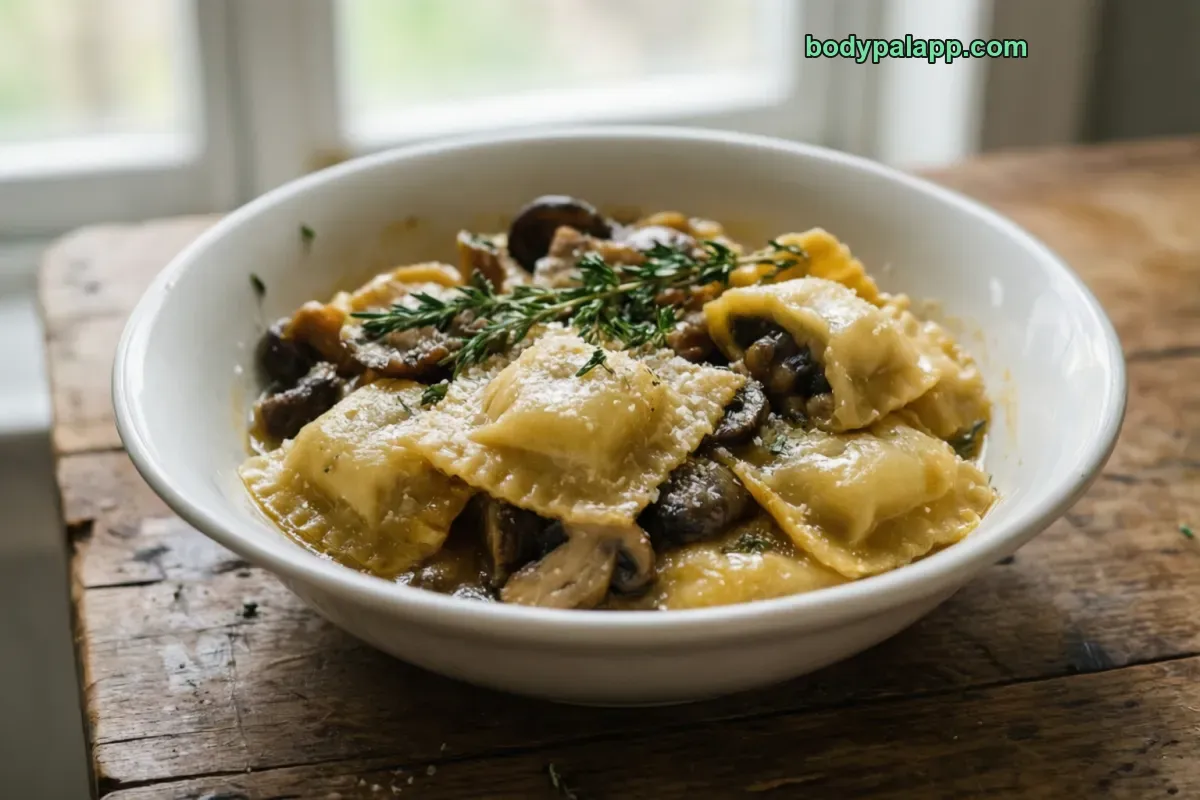
Mushroom ravioli calories come to 296 for 1 cup (160 g) of cooked ravioli without sauce, or 185 per 100 g. Notice how quickly the portion drives the total. One ravioli is only 28 calories, but a generous plate of 3 cups reaches 888 before any butter, cream or tomato sauce goes on top.
296kcal
1 cup · 160 g, cooked, no sauce
22%protein
16.5 gProtein
32 gCarbs
11.2 gFat
How to burn off 296 kcal
—Walking, brisk
—Jogging
—Cycling, moderate
—Swimming
Skip the math. BodyPal counts these calories from your steps and workouts automatically.
Nutrition facts
Cooked, no sauce · per 160 g
Calories
296 kcal
Protein
16.5 g
Carbohydrate
32 g
Fat
11.2 g
Saturated fat
4.7 g
Cholesterol
157 mg
Sodium
454 mg
Potassium
227 mg
Iron
3.3 mg
Source: USDA FoodData Central
🛡️
Verified nutrition data
Numbers on this page come from USDA FoodData Central, the U.S. Department of Agriculture’s food composition database, and from manufacturer labels where a branded product is named. Last verified September 2026. How we verify our data →
Mushroom ravioli: calories, protein and sodium by serving
Percent of daily value uses the FDA reference of 2,000 kcal a day.
Serving
kcal
Protein
Carbs
Fat
Sodium
% DV kcal
1 cup (160 g)
296
16.5 g
31.8 g
11.2 g
454 mg
15%
1 ravioli (15 g)
28
1.5 g
3 g
1 g
43 mg
1%
Cheese-filled (160 g)
277
11.8 g
34.8 g
10 g
1,034 mg
14%
100 g
185
10.3 g
19.9 g
7 g
284 mg
9%
3 × 1 cup (160 g)
888
49.4 g
1,363 mg
5 × 1 cup (160 g)
1,480
82.4 g
2,272 mg
One cup is 296 calories, a big plate is 888
The default serving is 1 cup (160 g), cooked and plain, at 296 calories. That is about 15% of a 2,000-calorie daily value. Counting pieces works too: each ravioli of about 15 g carries 28 calories, 1.5 g of protein and 3 g of carbs.
Pasta portions rarely stay at one cup. Two cups (320 g) come to 592 calories and 33 g of protein. Three cups (480 g), a realistic restaurant bowl, reach 888 calories. A family pan of 5 cups (800 g) holds 1,480 calories, so splitting a batch by eye can leave one plate far heavier than another.
The easiest fix is to plate before you sit down. Count the ravioli or weigh the cooked portion once, and you will know what a cup looks like in your own bowls. If you log meals, BodyPal can log the dish from a photo, but the sauce still deserves its own entry.
Carbs lead, but fat supplies a third of the calories
Per 100 g, mushroom ravioli has 19.9 g of carbs, 10.3 g of protein and 7 g of fat. In calorie terms that splits into 43% from carbs, 34% from fat and 22% from protein. The fat comes mostly from the egg pasta and the cheese that binds most fillings, and 2.9 g of it per 100 g is saturated.
Protein is the pleasant surprise. A cup delivers 16.5 g, which is 33% of the daily value, far more than plain pasta shapes usually give. That makes stuffed pasta a better anchor for a meal than its reputation suggests.
Fiber and sugar are both small. A cup has 1.1 g of fiber and 0.3 g of sugars, so the mushrooms add flavor more than bulk. If you want a plate that keeps you full longer, the fiber has to come from what you serve alongside it.
Cheese filling more than doubles the sodium
These numbers come from the USDA entry for ravioli with an unspecified filling and no sauce, which is the closest match for mushroom versions. A cup carries 454 mg of sodium, 20% of the 2,300 mg daily value. That is moderate for a filled pasta.
The cheese-filled row tells a different story. The same 160 g of cheese ravioli has 277 calories, slightly fewer, but 1,034 mg of sodium, or 45% of the daily value. Calories barely move between fillings; salt does. If you watch sodium, check the label on store brands such as Rana or La Pasta, since rich ricotta blends can push numbers toward the cheese row.
Portions multiply the salt as well. Three cups bring 1,363 mg and five cups 2,272 mg, before a salted sauce or grated cheese. Cholesterol is also notable at 98 mg per 100 g against a 300 mg daily value, mostly from the egg dough.
The sauce decides whether this stays a light meal
Every number on this page is for ravioli with no sauce. Brown butter, cream or a heavy pour of olive oil can add more than the pasta itself, while a spoon of tomato sauce or a splash of pasta water with herbs adds little. Choose the sauce first, then decide the portion.
Pair one cup with a large salad or roasted vegetables to bring in the fiber the ravioli lacks. A cup of mushroom soup on the side adds only 97 calories and repeats the earthy flavor. A light protein such as grilled chicken lets you keep the pasta at one cup without leaving hungry.
Dairy-free options like La Pasta Dairy-Free Mushroom Ravioli exist if cheese is the problem, but read their panels rather than assuming fewer calories.
How does mushroom ravioli compare?
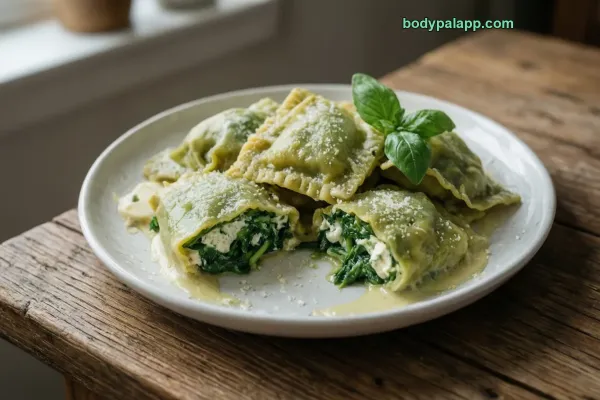
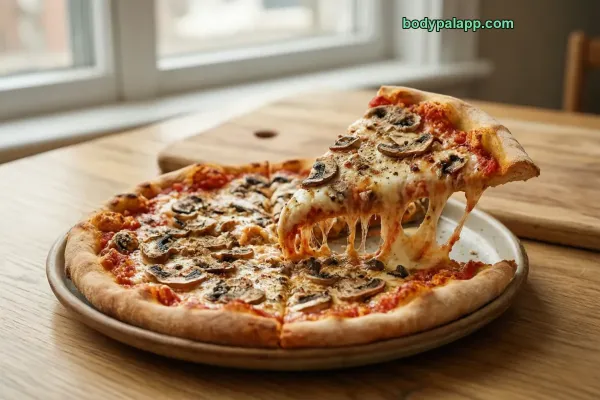
Here is how mushroom ravioli stacks up against spinach ravioli, mushroom pizza and mushroom soup, per 100 g and per usual serving.
Verdict: For the lightest pasta plate pick spinach ravioli at 240 calories per cup, though it carries 528 mg of sodium per 100 g against 284 mg here. For staying full, mushroom ravioli wins with 10.3 g of protein per 100 g and still undercuts mushroom pizza at 370 calories a serving.
Most popular mushroom ravioli brands in the United States
Ranked by popularity in the BodyPal database
# Productkcal / 100 g
1Rana Mushroom Ravioli1 cup · 107 g234 kcal
2La Pasta Mushroom Ravioli1 cup · 105 g210 kcal
3Penne Lane Pasta Company Porcini Mushroom Ravioli3 ravioli · 106 g151 kcal
4Nuovo Pasta Roasted Mushroom Ravioli1 cup · 100 g200 kcal
5Perfect Pasta Portobello Mushroom Ravioli4.4 oz · 124 g177 kcal
6La Pasta Dairy-Free Mushroom Ravioli95 g147 kcal
Refrigerated packs are labelled by the weight in the package rather than after boiling, and the fillings differ, so they range from 147 to 234 calories per 100 g. Source: manufacturer labels / USDA FoodData Central.
Mushroom ravioli FAQs
How many calories are in mushroom ravioli?
A cup of cooked ravioli without sauce is about 296 calories, and a single ravioli is about 28 calories. Per 100 g that is 185 calories.
Is mushroom ravioli good for weight loss?
A cup adds 296 calories, 16.5 g protein and 31.8 g carbs, while half that portion (80 g) is 148 calories.
Mushroom ravioli or spinach ravioli: which is lighter?
Cheese and spinach filled ravioli is 150 calories per 100 g against 185 here, so a cup works out at 240 calories versus 296.
How much protein is in mushroom ravioli?
A cup (160 g) has 16.5 g protein, 31.8 g carbs and 11.2 g fat. Per 100 g that is 10.3 g protein.
How many calories are in one mushroom ravioli?
One ravioli of about 15 g has 28 calories, with 1.5 g of protein, 3 g of carbs and 1 g of fat. That makes counting pieces an easy way to track a portion without a scale.
How many calories are in a large bowl of mushroom ravioli?
Three cups (480 g) of plain cooked mushroom ravioli come to 888 calories and 49.4 g of protein. Two cups are 592 calories. Sauce, butter and grated cheese come on top of those totals.
Is mushroom ravioli high in sodium?
A cup has 454 mg of sodium, 20% of the daily value, which is moderate. Cheese-filled ravioli is much saltier at 1,034 mg per 160 g, or 45% of the daily value.
Does mushroom ravioli have fiber?
Very little. A cup provides 1.1 g of fiber and 100 g provides 0.7 g, so pairing it with vegetables or a salad is the simplest way to make the meal more filling.
Is mushroom ravioli lower in calories than cheese ravioli?
Not really. A 160 g cup of mushroom ravioli has 296 calories versus 277 for cheese-filled, close enough to call even. The bigger gap is sodium: 454 mg against 1,034 mg.