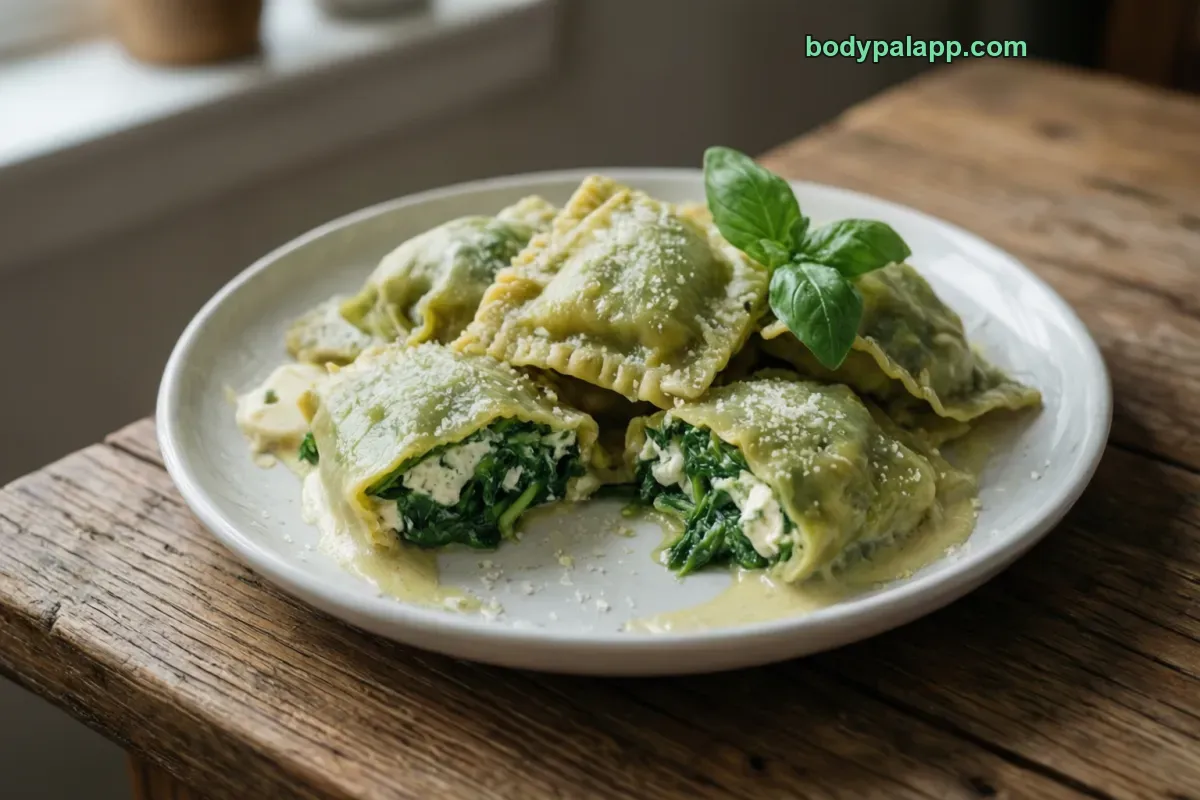
Spinach ravioli calories come to 240 for 1 cup (160 g) and 150 per 100 g, cheese and spinach-filled with no sauce. Calories are moderate. The number to notice is sodium: that plain cup already carries 845 mg, 37% of the daily value, before a spoonful of sauce or a dusting of cheese goes on top.
240kcal
1 cup · 160 g, cheese and spinach-filled, no sauce
18%protein
10.6 gProtein
33 gCarbs
7.2 gFat
How to burn off 240 kcal
—Walking, brisk
—Jogging
—Cycling, moderate
—Swimming
Skip the math. BodyPal counts these calories from your steps and workouts automatically.
Nutrition facts
Cheese and spinach-filled, no sauce · per 160 g
Calories
240 kcal
Protein
10.6 g
Carbohydrate
33 g
Fat
7.2 g
Saturated fat
3.2 g
Cholesterol
136 mg
Sodium
845 mg
Potassium
296 mg
Iron
3 mg
Source: USDA FoodData Central
🛡️
Verified nutrition data
Numbers on this page come from USDA FoodData Central, the U.S. Department of Agriculture’s food composition database, and from manufacturer labels where a branded product is named. Last verified September 2026. How we verify our data →
Spinach ravioli: calories, protein and sodium by serving
Percent of daily value uses the FDA reference of 2,000 kcal a day.
Serving
kcal
Protein
Carbs
Fat
Sodium
% DV kcal
1 cup (160 g)
240
10.6 g
33.3 g
7.2 g
845 mg
12%
1 piece (15 g)
23
1 g
3.1 g
0.7 g
79 mg
1%
With tomato sauce (250 g)
293
13 g
42.1 g
8.4 g
1,338 mg
15%
100 g
150
6.6 g
20.8 g
4.5 g
528 mg
8%
3 × 1 cup (160 g)
720
31.8 g
2,534 mg
5 × 1 cup (160 g)
1,200
53 g
4,224 mg
One cup is 240 calories, and bowls rarely stop at one
A cup of plain spinach ravioli, about 160 g, comes to 240 calories, or 12% of a 2000-calorie daily value. That is a reasonable main for a light lunch. Each piece weighs roughly 15 g and adds about 23 calories, so counting pieces is a simple way to keep track when you plate from a bag or a takeout box.
The trouble is that ravioli is easy to eat in volume. Two cups, about 320 g, reach 480 calories and 1,690 mg of sodium. Three cups, a size that matches many restaurant plates, climb to 720 calories with 2,534 mg of sodium. At five cups the total hits 1,200 calories, which is more than most people want from a single meal.
If you are cooking at home, measure the first serving once with a cup so you know what it looks like in your bowl. After that, the eye does the work. Fresh pasta from brands like Severino or Mama Rosie's and frozen packs like Wild Harvest all cook up into similar volumes, so the cup rule travels well across the shelf.
More than half the calories come from carbs
The calorie split is 55% carbs, 27% fat and 18% protein. That is a pasta profile with a bit more fat than plain noodles, because the ricotta and cheese filling brings its own. Per 100 g you get 20.8 g of carbs, 4.5 g of fat and 6.6 g of protein.
Protein is better than you might expect. A cup gives 10.6 g, which is 21% of the daily value, and two cups deliver 21.2 g. It is not a protein-first food, but the cheese filling does real work here compared with sauce-free noodles alone.
Fiber and sugar are both low. A cup holds 1.6 g of fiber and just 0.4 g of sugars, so the spinach is more flavor than bulk. Saturated fat sits at 2 g per 100 g and cholesterol at 85 mg per 100 g, against a daily value of 300 mg for cholesterol. Those numbers come mostly from egg pasta and cheese, and they scale straight up with the portion.
Sodium is the row to watch
At 528 mg per 100 g, plain spinach ravioli already supplies 23% of the daily sodium value in a modest portion. A full cup lands at 845 mg, or 37%. That is before sauce, before grated cheese and before any salt in the cooking water.
Add tomato sauce and the picture shifts fast. A 250 g plate of ravioli with tomato sauce comes to 293 calories but 1,338 mg of sodium, 58% of the daily value in one dish. The calories rose modestly; the salt rose a lot more.
If you watch sodium, the fix is in the extras rather than the pasta. Cook in lightly salted water, go easy on jarred sauce, and skip the extra parmesan or keep it to a pinch. Plain olive oil, lemon and black pepper let the filling carry the flavor without adding to this row.
Vegetables stretch the plate without stretching the total
Ravioli is dense, so the easiest way to make a satisfying meal is to add volume on the side rather than more pasta. A cup of spinach salad adds 62 calories, so a cup of ravioli plus a salad still sits near 300 calories. Roasted vegetables or a big handful of greens stirred in at the end do the same job.
Tomato sauce brings more fiber and a little sugar: the sauced 250 g plate holds 3 g of fiber and 3.3 g of sugars, compared with 1.6 g and 0.4 g in a plain cup. That is a real gain in fiber, as long as the sodium trade-off above suits your day.
For protein, a side of grilled chicken, beans or a soft egg turns this into a fuller dinner without doubling the pasta. If you want to track it quickly, BodyPal can log a plate of ravioli from a photo, which helps when the portion is a restaurant pile rather than a measured cup.
How does spinach ravioli compare?
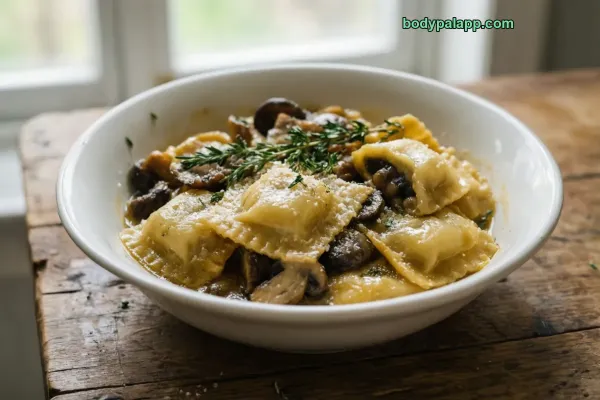
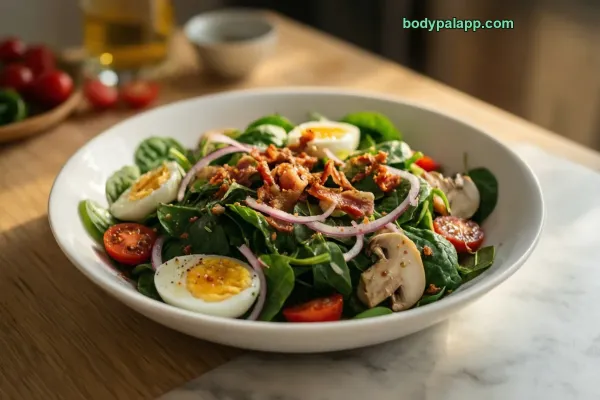
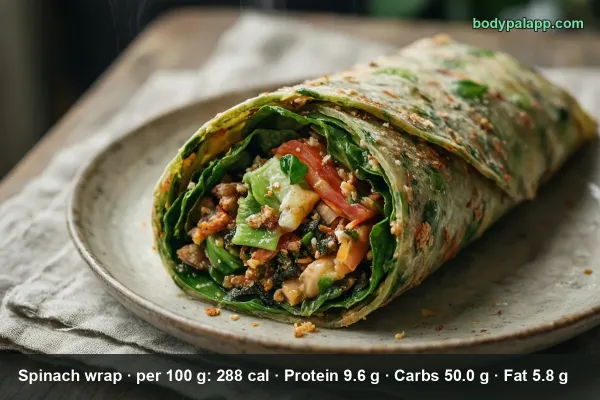
Here is how spinach ravioli stacks up against mushroom ravioli, spinach salad and a spinach wrap, per 100 g and per usual serving.
Verdict: For the lowest calories pick spinach salad at 84 per 100 g, and among ravioli spinach wins at 240 per cup against 296 for mushroom ravioli. Mushroom ravioli does carry more protein, 10.3 g per 100 g, and less sodium at 284 mg, so it is the better pick if salt matters more to you than calories.
Most popular spinach ravioli brands in the United States
8Wild Harvest Spinach Ravioli1 cup · 201 g124 kcal
Packaged spinach ravioli is labeled by raw weight and some products already include sauce, so their calories per 100 g run above or below the plain cooked ravioli above. Source: manufacturer labels / USDA FoodData Central.
Spinach ravioli FAQs
How many calories are in spinach ravioli?
A 1 cup serving (160 g) of spinach ravioli without sauce has about 240 calories. A single piece (15 g) is about 23 calories.
Is spinach ravioli good for weight loss?
Plain spinach ravioli has 150 calories per 100 g, and a 1 cup serving (240 calories) also provides about 10.6 g of protein and 1.6 g of fiber.
Spinach ravioli vs spinach salad: which has more calories?
Spinach ravioli is 150 calories per 100 g, well above the 84 calories per 100 g in a spinach salad, a difference of 66 calories.
How much protein is in spinach ravioli?
A 1 cup serving (160 g) has about 10.6 g of protein. Per 100 g, plain spinach ravioli has 6.62 g of protein and 20.83 g of carbs.
How many calories are in one spinach ravioli?
One piece of spinach ravioli, about 15 g, has around 23 calories. It also brings 1 g of protein and 79 mg of sodium, so a plate of a dozen or more adds up quickly.
How many calories are in spinach ravioli with tomato sauce?
A 250 g plate of spinach ravioli with tomato sauce has about 293 calories. It also carries 1,338 mg of sodium, 58% of the daily value, and 13 g of protein.
How much sodium is in spinach ravioli?
A cup of plain spinach ravioli holds about 845 mg of sodium, 37% of the daily value. Per 100 g it is 528 mg, and sauce or grated cheese pushes the total higher.
How many carbs are in a cup of spinach ravioli?
A cup (160 g) of spinach ravioli has about 33.3 g of carbs, with 1.6 g of fiber and 0.4 g of sugars. Carbs supply 55% of its calories.
How many calories are in two cups of spinach ravioli?
Two cups of spinach ravioli, about 320 g, come to roughly 480 calories. That portion also delivers 21.2 g of protein and 1,690 mg of sodium before any sauce.