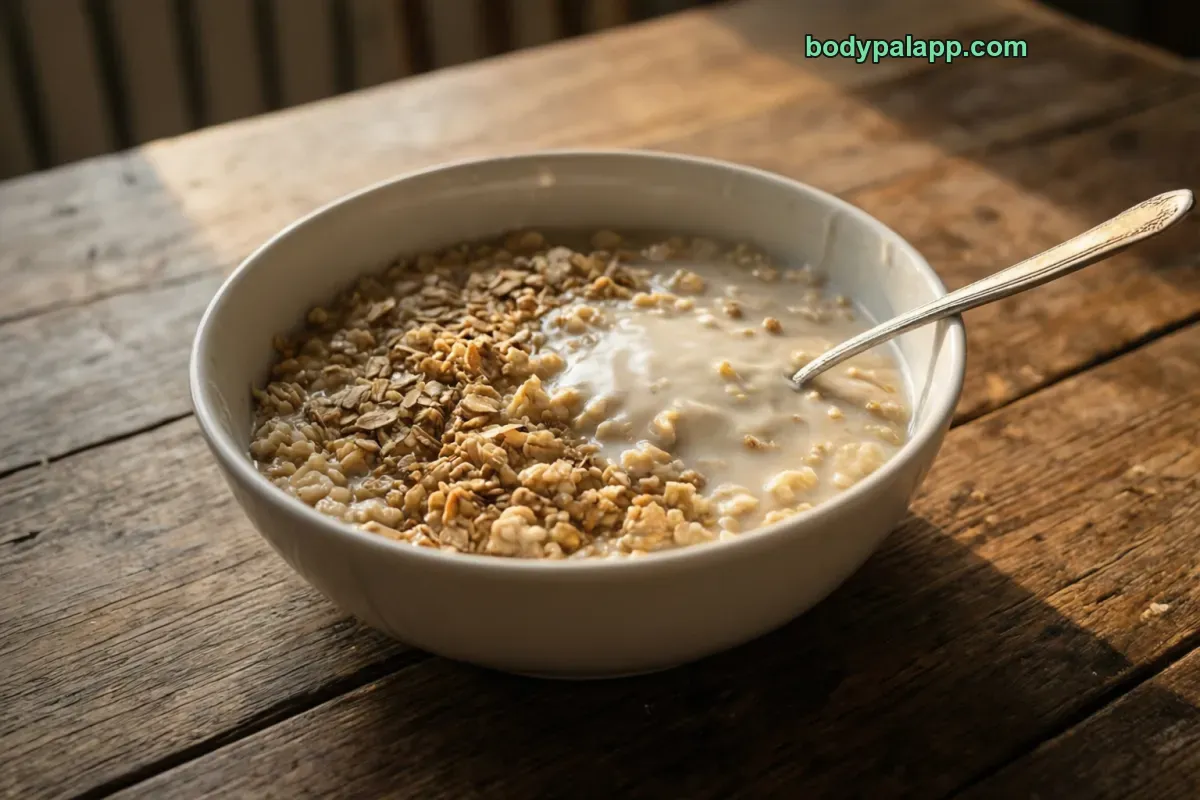
Oats with milk calories come to 278 for 1 cup (240 g) and 116 per 100 g, cooked with milk and no added fat. The number worth noticing is protein: 13.3 g in that cup, 27% of the daily value, which is a solid share for a bowl of porridge. Portion size moves the total far more than anything else.
278kcal
1 cup · 240 g, cooked with milk, no fat
19%protein
13.3 gProtein
39 gCarbs
7.8 gFat
How to burn off 278 kcal
—Walking, brisk
—Jogging
—Cycling, moderate
—Swimming
Skip the math. BodyPal counts these calories from your steps and workouts automatically.
Nutrition facts
Cooked with milk, no fat · per 240 g
Calories
278 kcal
Protein
13.3 g
Carbohydrate
39 g
Fat
7.8 g
Saturated fat
3.5 g
Cholesterol
22 mg
Sodium
252 mg
Potassium
516 mg
Iron
1.6 mg
Source: USDA FoodData Central
🛡️
Verified nutrition data
Numbers on this page come from USDA FoodData Central, the U.S. Department of Agriculture’s food composition database, and from manufacturer labels where a branded product is named. Last verified September 2026. How we verify our data →
Oats with milk: calories, protein and sodium by serving
Percent of daily value uses the FDA reference of 2,000 kcal a day.
Serving
kcal
Protein
Carbs
Fat
Sodium
% DV kcal
1 cup (240 g)
278
13.3 g
39 g
7.8 g
252 mg
14%
Instant packet (148 g)
164
7.3 g
25.3 g
4.5 g
108 mg
8%
Non-dairy milk, 1 cup (240 g)
228
8 g
34.6 g
6.5 g
281 mg
11%
100 g
116
5.6 g
16.2 g
3.3 g
105 mg
6%
3 × 1 cup (240 g)
835
40 g
756 mg
5 × 1 cup (240 g)
1,392
66.7 g
1,260 mg
One cup is 278 calories, two cups are 557
The standard serving here is 1 cup (240 g) of oatmeal cooked with milk and no added fat: 278 calories, 14% of the daily value, with 39 g of carbs and 7.8 g of fat. That is a reasonable breakfast. The trouble starts when the bowl is bigger than a cup, which happens easily with a soup bowl or a large mug.
Double it and the total reaches 557 calories with 26.7 g of protein. Three cups land at 835 calories and 756 mg of sodium. A pot of five cups, the kind you cook for a family or for meal prep, holds 1,392 calories, so splitting it into even containers matters more than the recipe itself.
If you weigh food, the math is simple: every 100 g of cooked oats with milk adds 116 calories. A kitchen scale beats eyeballing here. Porridge thickens as it sits, and a cup scooped from a dense pot can carry more oats than a cup from a loose one.
Carbs supply 56% of the calories, protein 19%
Per 100 g, oats with milk carry 16.2 g of carbs, 5.6 g of protein and 3.3 g of fat. Turned into calories, that is 56% carbs, 25% fat and 19% protein. For a grain dish, that protein share is respectable.
A cup gives 13.3 g of protein, 27% of the 50 g daily value. Both the oats and the milk contribute, which is why the milk version clearly beats the non-dairy version on protein. If breakfast usually leaves you hungry by mid-morning, this is the row that helps.
Fat stays modest at 7.8 g a cup, with 1.4 g of saturated fat per 100 g against a daily value of 20 g. Sugars run 5.1 g per 100 g, or 12.2 g in a cup, before you add any sweetener. That figure already counts what the milk brings, so a spoon of brown sugar or honey stacks on top of it.
Non-dairy milk saves calories but costs protein
Swap the milk for a non-dairy one and a cup drops to 228 calories, 11% of the daily value. Fat falls only slightly, to 6.5 g, and carbs to 34.6 g. Sugars drop more sharply, to 5.3 g from 12.2 g.
The trade-off is protein. The non-dairy cup holds 8 g, or 16% of the daily value, against 13.3 g with milk. Sodium edges up to 281 mg. If you choose non-dairy for taste or tolerance, the bowl is lighter, but you may want protein from somewhere else at the same meal.
An instant packet made with milk is the smallest option here at 148 g: 164 calories, 7.3 g of protein and 108 mg of sodium. Its real advantage is that the portion is fixed. Many people eat two, and then the packet stops being the light choice.
Sodium and fiber are both moderate
A cup of oats with milk has 252 mg of sodium, 11% of the daily value. That is moderate for a hot breakfast, but it scales: three cups reach 756 mg. If you watch sodium, the salt you add to the pot is the variable you control.
Fiber is 4.1 g a cup against a daily value of 28 g. Potassium is 215 mg per 100 g and cholesterol only 9 mg per 100 g. Nothing on the label is extreme, which makes this an easy base to build on.
Toppings decide the final total. Fruit adds volume for few calories, nuts and seeds add fat fast, and a heaping scoop of nut butter can rival the oats themselves. Log the bowl as you actually made it; BodyPal can log it from a photo, and then you adjust the toppings.
How does oats with milk compare?
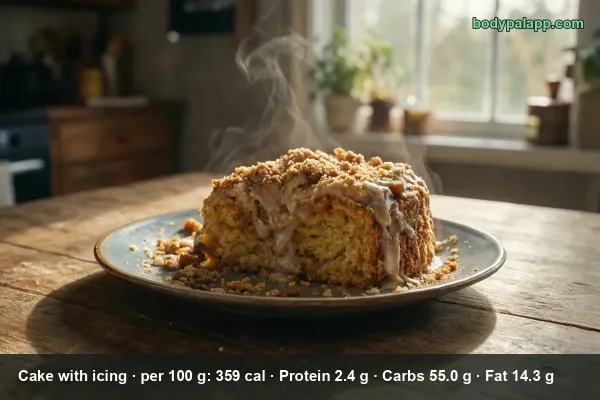
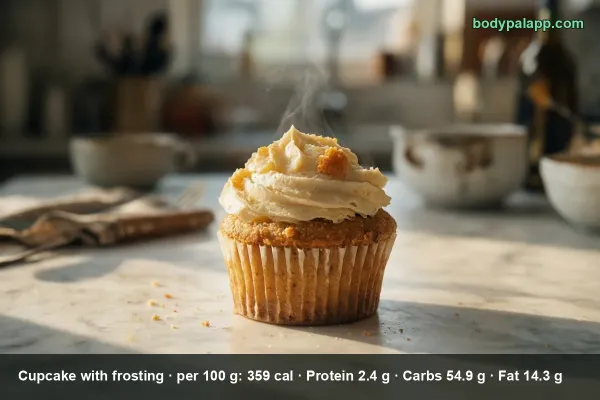
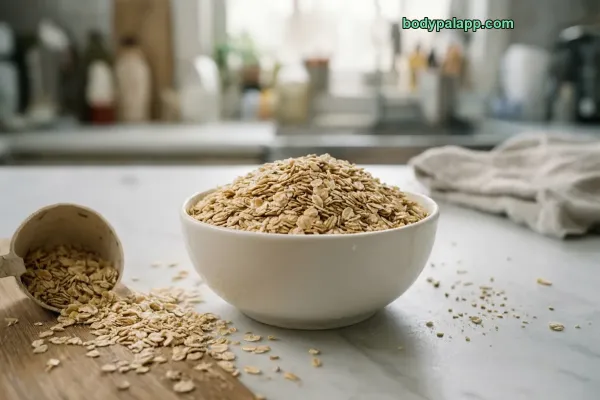
Here is how oats with milk stack up against dry oats, cake with icing and cupcakes with frosting, per 100 g and per usual serving.
Verdict: For calorie control the cooked bowl wins easily at 116 per 100 g, against 359 for cake with icing and 379 for dry oats. Dry oats are not a worse food, just denser: 1 cup (81 g) holds 307 calories before any milk goes in, so measure the oats, not the finished bowl.
Oats with milk FAQs
How many calories are in a cup of oats with milk?
About 278 calories in 1 cup (240 g) of oatmeal cooked with milk and no added fat. With fat added, the same cup is about 307 calories.
Is oats with milk good for weight loss?
It has 116 calories per 100 g. One cup (240 g) gives 278 calories with 13.3 g protein and 4.1 g fiber.
Oats with milk vs oats with non-dairy milk: which has fewer calories?
Oats made with non-dairy milk have 95 calories per 100 g, or 228 per cup, versus 116 per 100 g and 278 per cup with milk.
How much protein is in oats with milk?
One cup (240 g) has 13.3 g protein, or 5.6 g per 100 g. The same cup has 12.2 g sugars, mostly from the milk.
How many calories are in an instant oatmeal packet made with milk?
An instant packet made with milk (148 g) has 164 calories, 8% of the daily value. It also gives 7.3 g of protein and 108 mg of sodium, so it is the lightest serving on this page.
How many calories are in two cups of oats with milk?
Two cups (480 g) of oats with milk come to 557 calories. That bowl also carries 26.7 g of protein and 504 mg of sodium, before any sugar, fruit or nuts are added.
How much sugar is in a cup of oats with milk?
A cup of oats with milk has 12.2 g of sugars, or 5.1 g per 100 g, with nothing added. Made with non-dairy milk, the same cup drops to 5.3 g.
How much fiber is in oats with milk?
A cup of oats with milk gives 4.1 g of fiber, against a daily value of 28 g. Per 100 g the figure is 1.7 g, and the non-dairy cup has 4.3 g.