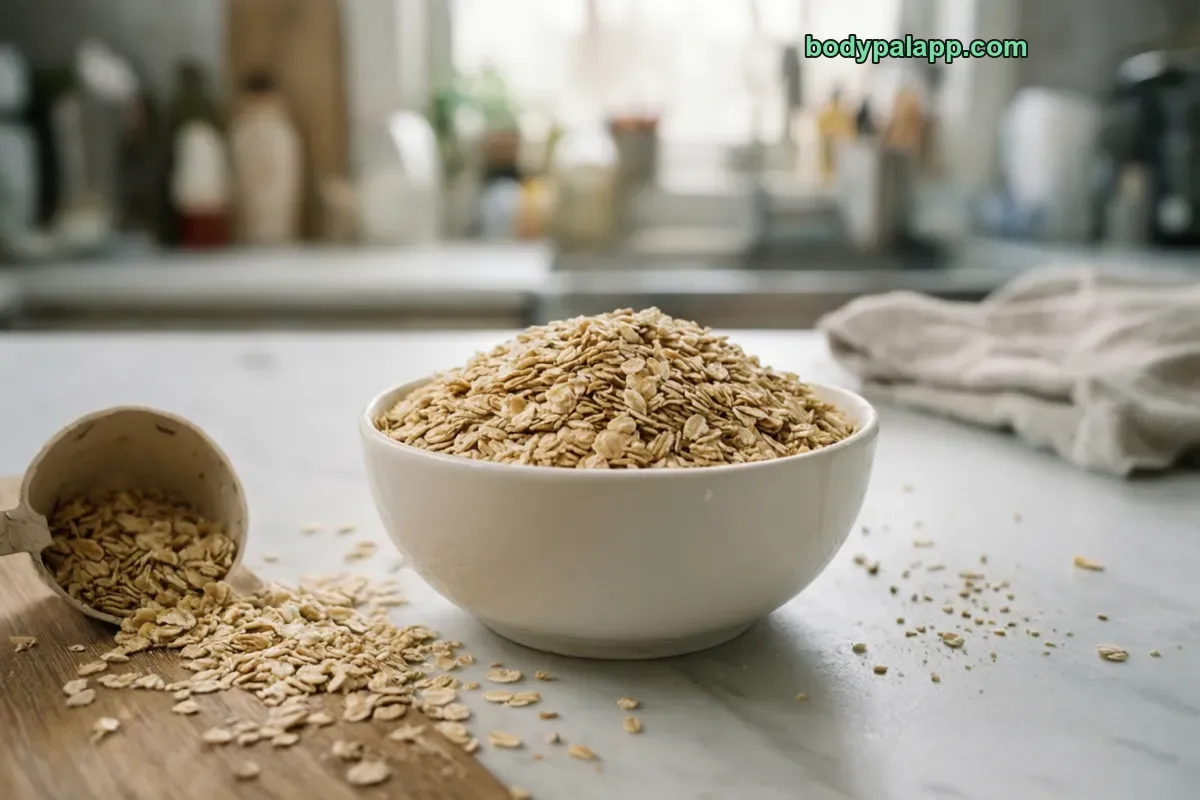
Dry oats calories come to 307 for 1 cup (81 g) and 379 per 100 g. The number to watch is portion size. Oats are dense and easy to over-pour, and the step from a 1/2 cup (40 g) at 148 calories to a full cup roughly doubles breakfast without looking like much more in the bowl.
307kcal
1 cup · 81 g, dry, not fortified
14%protein
10.7 gProtein
55 gCarbs
5.3 gFat
How to burn off 307 kcal
—Walking, brisk
—Jogging
—Cycling, moderate
—Swimming
Skip the math. BodyPal counts these calories from your steps and workouts automatically.
Nutrition facts
Dry, not fortified · per 81 g
Calories
307 kcal
Protein
10.7 g
Carbohydrate
55 g
Fat
5.3 g
Saturated fat
0.9 g
Cholesterol
0 mg
Sodium
5 mg
Potassium
293 mg
Iron
3.4 mg
Source: USDA FoodData Central
🛡️
Verified nutrition data
Numbers on this page come from USDA FoodData Central, the U.S. Department of Agriculture’s food composition database, and from manufacturer labels where a branded product is named. Last verified September 2026. How we verify our data →
Dry oats: calories, protein and sodium by serving
Percent of daily value uses the FDA reference of 2,000 kcal a day.
Serving
kcal
Protein
Carbs
Fat
Sodium
% DV kcal
1 cup (81 g)
307
10.7 g
54.8 g
5.3 g
5 mg
15%
1/2 cup (40 g)
148
5.5 g
27.3 g
2.7 g
1 mg
7%
1/3 cup (27 g)
102
3.6 g
18.3 g
1.8 g
2 mg
5%
100 g
379
13.2 g
67.7 g
6.5 g
6 mg
19%
3 × 1 cup (81 g)
921
32 g
15 mg
5 × 1 cup (81 g)
1,535
53.3 g
24 mg
A half cup is 148 calories, a full cup 307
The half cup (40 g) is the serving most oat labels use, and it lands at 148 calories with 5.5 g of protein. That is 7% of the daily calorie value. A 1/3 cup (27 g) scoop comes in at 102 calories, a light base if you plan to add fruit, nuts or milk on top.
A full 1 cup (81 g) is 307 calories, 15% of the daily value, and it carries 10.7 g of protein. Dry oats are compact, so a cup looks modest in the measuring scoop. Once water or milk goes in, the same 81 g swells into a large bowl. Measure the oats dry, not cooked, and the numbers on this page will match what you eat.
Bigger batches move fast. 2 cups dry come to 614 calories, 3 cups reach 921, and 5 cups, the kind of batch you might soak for a week of overnight oats, total 1,535. If you prep in bulk, split the dry oats between jars before the liquid goes in, so each portion is the one you meant to log.
Carbs supply 71% of the calories
Per 100 g, dry oats carry 67.7 g of carbs, 13.2 g of protein and 6.5 g of fat. Split by calories, that is 71% carbs, 14% protein and 15% fat. This is a starch food first, but not a pure one, and the carbs come with a lot of fiber attached.
Protein is the pleasant surprise. A cup gives 10.7 g, 21% of the daily value, and a 1/2 cup gives 5.5 g, or 11%. Per 100 g that is 13.2 g, a little more than Weetabix at 11.4 g. It will not carry a meal on its own, but it is a real contribution from a plain grain.
Fat stays low at 6.5 g per 100 g, with just 1.1 g of it saturated. Sugar barely registers: 1 g per 100 g and 0.8 g in a full cup. Any sweetness in the bowl comes from what you add, which keeps plain oats flexible enough to go sweet or savory.
Fiber is high and sodium is close to zero
Dry oats carry 10.1 g of fiber per 100 g. A cup brings 8.2 g and a 1/2 cup 3.8 g, set against a daily value of 28 g. For a plain grain with nothing added, that is a strong showing, and it is the row that sets oats apart from most of what shares the breakfast aisle.
Sodium is the opposite story. Plain dry oats have 6 mg per 100 g and 5 mg per cup, which shows up as 0% of the daily value. Weetabix, by comparison, carries 371 mg per 100 g. If you watch sodium, the salt in your oatmeal is whatever you shake in yourself.
Potassium sits at 362 mg per 100 g, and cholesterol is 0. These figures come from the USDA row for regular and quick oats, not fortified. Instant packets with added sugar, salt or vitamins are a different product and will read differently on the label.
Oats are a base, so the toppings decide the total
A 1/2 cup of dry oats is a 148-calorie starting point with very little fat or sugar. What you cook it in and pile on top usually matters more than the oats themselves. Water adds nothing, while milk, nut butter, honey and dried fruit each bring their own calories. Level the scoop, because a heaped measure slides well past the label serving.
If you want a more filling breakfast, pair the oats with a protein source such as yogurt, milk or eggs on the side, since the oats alone give 5.5 g per half cup. If you are trimming calories, a 1/3 cup at 102 with fruit is a lighter bowl than a heaped cup. BodyPal can log the bowl from a photo, toppings included.
Savory bowls work too. Cooked oats with an egg, greens or a little cheese turn the same base into lunch, and the sodium stays low until you season it.
How does dry oats compare?
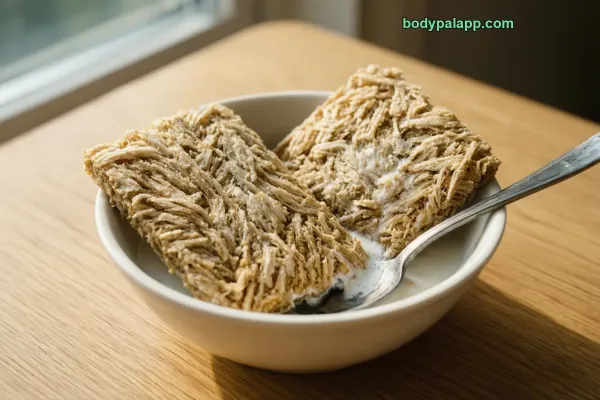
Here is how dry oats stack up against rolled oats, Weetabix and kolache, per 100 g and per usual serving.
Verdict: Dry oats and rolled oats are the same food on these numbers, 379 calories and 13.2 g of protein per 100 g, so pick by texture. Next to Weetabix at 371 mg of sodium or kolache at 18.5 g of fat per 100 g, plain oats are the better everyday breakfast if you watch salt or fat.
Dry oats FAQs
How many calories are in a cup of dry oats?
One cup of dry oats (81 g) is 307 calories. A 1/2 cup label serving (40 g) is 148 calories.
Are dry oats good for weight loss?
A 1/2 cup portion is 148 calories and carries 3.8 g of fiber, plus 5.5 g of protein, before any milk or toppings are added.
What is the difference between dry oats and rolled oats?
They are the same grain: rolled oats measure 379 calories per 100 g, exactly like this dry oats row, while quick oats are rolled thinner at 371 calories per 100 g.
How much protein is in dry oats?
100 g of dry oats has 13.2 g of protein, and one cup (81 g) has 10.7 g along with 54.8 g of carbs.
How many calories are in 1/2 cup of dry oats?
A 1/2 cup (40 g) of dry oats has 148 calories, which is 7% of the daily calorie value. It also brings 5.5 g of protein and 3.8 g of fiber with almost no sugar.
How much protein is in 1/2 cup of oats?
A 1/2 cup of dry oats has 5.5 g of protein, 11% of the daily value. A full cup doubles that to roughly 10.7 g, which covers 21% of the daily value.
What are the macros for 1/2 cup of oats?
A 1/2 cup (40 g) of dry oats has 27.3 g of carbs, 5.5 g of protein and 2.7 g of fat, for 148 calories. Fiber is 3.8 g and sugar just 0.6 g.
How many calories are in 2 cups of dry oats?
Two cups of dry oats (162 g) come to 614 calories with 21.3 g of protein and 10 mg of sodium. That is a large batch, closer to several bowls than one.
Do 1/2 cup uncooked oats gain calories when cooked?
No. A 1/2 cup of uncooked oats is 148 calories, and cooking in water adds none. The bowl gets bigger, but the calories stay with the dry oats. Milk and toppings are what raise the total.