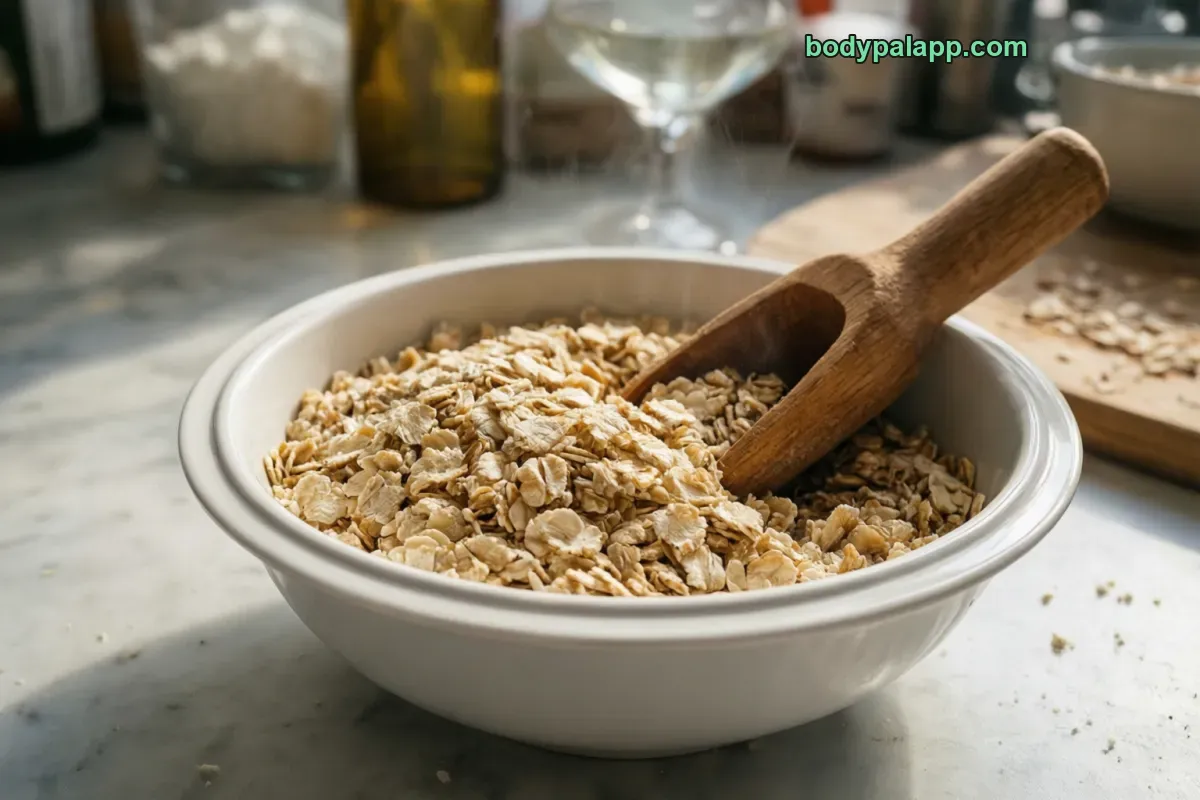
Rolled oats calories come to 307 for 1 cup dry (81 g) and 379 per 100 g, measured uncooked. Notice which state you are measuring. A cooked cup (234 g) holds only 166 calories because the extra weight is water. Fiber is the quiet strength here, at 10.1 g per 100 g.
307kcal
1 cup of dry oats · 81 g, dry, uncooked
14%protein
10.7 gProtein
55 gCarbs
5.3 gFat
How to burn off 307 kcal
—Walking, brisk
—Jogging
—Cycling, moderate
—Swimming
Skip the math. BodyPal counts these calories from your steps and workouts automatically.
Nutrition facts
Dry, uncooked · per 81 g
Calories
307 kcal
Protein
10.7 g
Carbohydrate
55 g
Fat
5.3 g
Saturated fat
0.9 g
Cholesterol
0 mg
Sodium
5 mg
Potassium
293 mg
Iron
3.4 mg
Source: USDA FoodData Central
🛡️
Verified nutrition data
Numbers on this page come from USDA FoodData Central, the U.S. Department of Agriculture’s food composition database, and from manufacturer labels where a branded product is named. Last verified September 2026. How we verify our data →
Rolled oats: calories, protein and sodium by serving
Percent of daily value uses the FDA reference of 2,000 kcal a day.
Serving
kcal
Protein
Carbs
Fat
Sodium
% DV kcal
1 cup dry (81 g)
307
10.7 g
54.8 g
5.3 g
5 mg
15%
1/3 cup (27 g)
102
3.6 g
18.3 g
1.8 g
2 mg
5%
100 g
379
13.2 g
67.7 g
6.5 g
6 mg
19%
Cooked cup (234 g)
166
5.9 g
28.1 g
3.6 g
9 mg
8%
3 × 1 cup dry (81 g)
921
32 g
15 mg
5 × 1 cup dry (81 g)
1,535
53.3 g
24 mg
A dry cup is 307 calories, a third of a cup is 102
The default serving on this page is 1 cup dry (81 g) at 307 calories, about 15% of the daily value for calories. Many people scoop less than that. The 1/3 cup (27 g) serving lands at 102 calories, or 5% of the daily value, with 3.6 g protein and 2.7 g fiber.
Totals climb fast because dry oats are dense. Two dry cups (162 g) reach 614 calories and 21.3 g protein. Three cups (243 g) hit 921. Five cups (405 g), a typical batch for a week of overnight jars or baked oatmeal, add up to 1,535 calories. If you prep in bulk, divide the batch total by the number of portions instead of guessing per bowl.
Measure dry when you can, and weigh rather than scoop. A loose, heaping cup can drift well past 81 g, and the calorie count drifts with it. A kitchen scale settles the question in seconds.
Cooking adds water, not calories
The USDA cooked row puts a cup of cooked oats (234 g) at 166 calories, with 5.9 g protein, 28.1 g carbs, 3.6 g fat and 4 g fiber. That cup weighs nearly three times as much as a dry cup yet carries roughly half the calories. The oats simply soak up water as they cook.
This is where food logs go wrong. Weigh oats after cooking and enter the dry figure, and you overcount by a wide margin. Weigh them dry and enter the cooked figure, and you undercount. Pick one state, dry or cooked, and match it to the right entry every time.
Sodium stays negligible either way. Plain cooked oats show 9 mg per cup, still 0% of the daily value. Salt in the pot or a flavored instant packet changes that, but the oats themselves are not the source.
Carbs supply 71% of the calories, and fiber is the standout
The calorie split is 71% carbs, 15% fat and 14% protein. Per 100 g that works out to 67.7 g carbs, 13.2 g protein and 6.5 g fat, of which only 1.1 g is saturated. Sugar is just 1 g per 100 g, so almost none of that carbohydrate is sugar.
Fiber is the row worth celebrating. A dry cup delivers 8.2 g against a daily value of 28 g, and even the 1/3 cup serving brings 2.7 g. Protein is respectable for a grain: 10.7 g per dry cup, which is 21% of the 50 g daily value.
The rest of the label is quiet. Sodium is 6 mg per 100 g, cholesterol is 0 and potassium shows 362 mg. Rolled oats are a clean base, which means the numbers on your bowl depend mostly on what goes on top.
Toppings decide the final count
With 14% of calories from protein, oats on their own make a carb-led breakfast. If you want a more balanced bowl, the usual moves are cooking them in milk, stirring in yogurt or protein powder, or serving eggs on the side.
Add-ons can quickly rival the oat base. Nut butter, dried fruit, brown sugar, honey and granola all carry real calories, and a generous hand with two or three of them can double what the bowl started at. Log each topping separately rather than folding everything into one vague oatmeal entry.
Brands differ mostly in cut and texture. Bob's Red Mill sells old fashioned, quick cooking, extra thick and instant rolled oats, and One Degree Organic Foods makes a sprouted version. Check the label for serving weight, since a brand's suggested scoop may not match the 81 g cup used here. BodyPal can log the whole bowl from a photo, toppings included.
How does rolled oats compare?
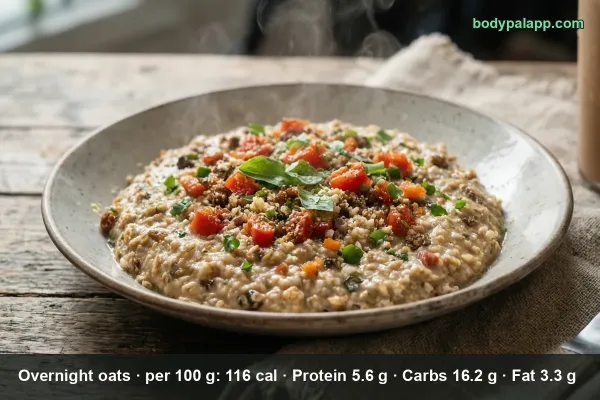
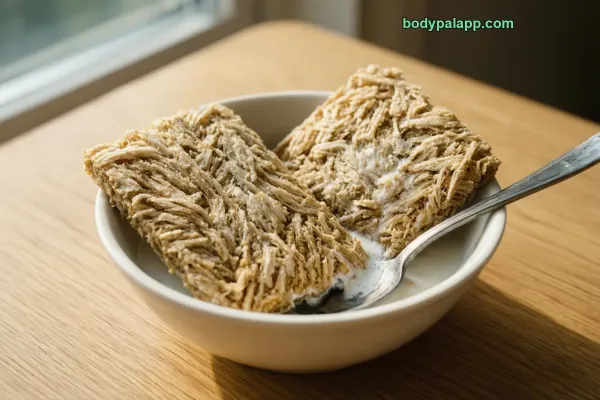
Here is how rolled oats stack up against overnight oats, Cheerios and Weetabix, per 100 g and per usual serving.
Verdict: For the lowest number per bowl, overnight oats win at 116 calories per 100 g because soaked oats carry water, while Cheerios at 372 and Weetabix at 371 match dry rolled oats almost calorie for calorie. If you watch sodium, plain rolled oats are the clear pick, since Cheerios carry 497 mg per 100 g and Weetabix 371 mg.
Most popular rolled oats brands in the United States
2Bob's Red Mill Rolled Oats Whole Grain1/2 cup · 45 g400 kcal
3Bob's Red Mill Instant Rolled Oats1/3 cup · 32 g406 kcal
4Bob's Red Mill Extra Thick Rolled Oats1/2 cup · 48 g396 kcal
5Bob's Red Mill Quick Cooking Rolled Oats1/2 cup · 45 g400 kcal
6Bob's Red Mill Old Fashioned Rolled Oats1/2 cup · 54 g389 kcal
These labels are for dry oats like the main number, so they sit close to it, with small gaps coming from each brand's own rounding. Source: manufacturer labels / USDA FoodData Central.
Rolled oats FAQs
How many calories are in rolled oats?
One cup of dry rolled oats (81 g) has 307 calories, and a 1/3 cup serving (27 g) has 102. Per 100 g dry oats have 379 calories.
Are rolled oats good for weight loss?
A 1/3 cup serving (27 g) is 102 calories with 2.7 g of fiber and 3.6 g of protein. Cooked with water, a full cup comes to 166 calories.
Rolled oats vs overnight oats: which has more calories?
Dry rolled oats have 379 calories per 100 g, while overnight oats, already soaked in liquid, have 116 per 100 g. A cup of oats cooked with water is 166 calories.
How much protein is in rolled oats?
Dry rolled oats have 13.2 g of protein per 100 g, so a 1 cup serving (81 g) gives 10.7 g and a 1/3 cup serving (27 g) gives 3.6 g.
How many calories are in 1/3 cup of rolled oats?
A 1/3 cup (27 g) of uncooked rolled oats has 102 calories. That serving also brings 3.6 g protein, 18.3 g carbs, 1.8 g fat and 2.7 g fiber, about 5% of the daily value for calories.
How many calories are in 100 g of rolled oats?
100 g of dry rolled oats has 379 calories, about 19% of the daily value. It also delivers 13.2 g protein, 67.7 g carbs, 6.5 g fat and 10.1 g fiber, with just 1 g of sugar.
How many calories are in one cup of rolled oats, dry or cooked?
One cup of dry rolled oats (81 g) has 307 calories. A cup of cooked oats (234 g) has 166, because cooking adds water weight, not calories. Match your log entry to how you measured.
What does the rolled oats nutrition label look like?
Per 100 g, dry rolled oats have 379 calories, 13.2 g protein, 67.7 g carbs, 6.5 g fat, 10.1 g fiber, 1 g sugar, 6 mg sodium, 0 cholesterol and 362 mg potassium.