Parmesan calories come to 21 for one tablespoon (5 g) of grated cheese and 420 per 100 g. Sodium matters more than calories here. Grated parmesan carries 1,804 mg per 100 g, so a single ounce delivers 505 mg, or 22% of the daily value, in a portion that barely covers a plate of pasta.
21kcal
1 tablespoon · 5 g, grated
27%protein
1.4 gProtein
1 gCarbs
1.4 gFat
How to burn off 21 kcal
—Walking, brisk
—Jogging
—Cycling, moderate
—Swimming
Skip the math. BodyPal counts these calories from your steps and workouts automatically.
Nutrition facts
Grated · per 5 g
Calories
21 kcal
Protein
1.4 g
Carbohydrate
0.7 g
Fat
1.4 g
Saturated fat
0.8 g
Cholesterol
4 mg
Sodium
90 mg
Potassium
9 mg
Iron
0 mg
Source: USDA FoodData Central
🛡️
Verified nutrition data
Numbers on this page come from USDA FoodData Central, the U.S. Department of Agriculture’s food composition database, and from manufacturer labels where a branded product is named. Last verified September 2026. How we verify our data →
Parmesan: calories, protein and sodium by serving
Percent of daily value uses the FDA reference of 2,000 kcal a day.
Serving
kcal
Protein
Carbs
Fat
Sodium
% DV kcal
1 tbsp (5 g)
21
1.4 g
0.7 g
1.4 g
90 mg
1%
1 oz grated (28 g)
118
8 g
3.9 g
7.8 g
505 mg
6%
1 cup (100 g)
420
28.4 g
13.9 g
27.8 g
1,804 mg
21%
Hard block, 1 oz (28 g)
110
10 g
0.9 g
7 g
329 mg
5%
3 × 1 tbsp (5 g)
63
4.3 g
271 mg
5 × 1 tbsp (5 g)
105
7.1 g
451 mg
A tablespoon is 21 calories, a heavy hand is 105
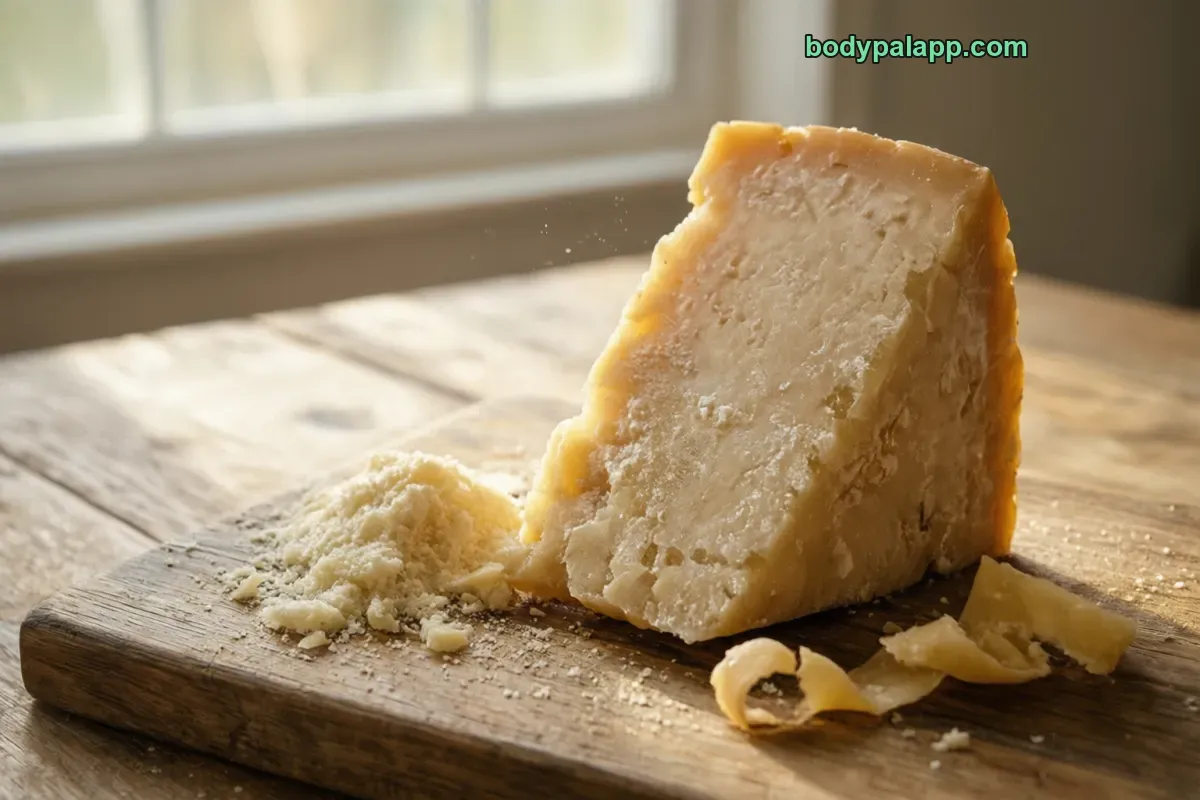
Grated parmesan is a topping, so people usually measure it in spoonfuls, not ounces. One tablespoon weighs 5 g and adds 21 calories, which is 1% of a 2000-calorie day. It also brings 1.4 g of protein and 1.4 g of fat, so on its own it barely registers.
The total climbs when the spoon keeps moving. Two tablespoons come to 42 calories, three reach 63 and five land at 105. Five tablespoons is 25 g, close to a 28 g ounce, which is 118 calories with 8 g of protein. A full cup of grated cheese, 100 g, is 420 calories and 21% of the daily calorie value.
Because the weights are so small, eyeballing is where the error creeps in. A shaker held over hot pasta can drop three or five tablespoons before you notice. If you track closely, weigh your usual sprinkle once or snap a photo. BodyPal can log the food from a photo, and doing that a few times shows you what your normal portion really is.
Fat supplies 60% of the calories
Parmesan's calorie split is 60% fat, 27% protein and 13% carbohydrate. Per 100 g that means 27.8 g of fat, 28.4 g of protein and 13.9 g of carbs, with 0 g of fiber and only 0.1 g of sugars. It is a fat-and-protein food with a small carb share.
Protein and fat sit at almost the same weight. Each gram of fat carries more calories, though, which is why fat dominates the split. Saturated fat is 15.4 g per 100 g against a daily value of 20 g, so a large serving eats into that row quickly. Cholesterol is 86 mg per 100 g, against a daily value of 300 mg.
The protein still counts. One ounce of grated parmesan gives 8 g of protein, 16% of the daily value, for 118 calories. A single tablespoon adds 1.4 g. That makes parmesan a sensible way to bring savory flavor and a little protein to vegetables, eggs or beans, as long as the portion stays spoon-sized.
Sodium is the row to watch
Grated parmesan holds 1,804 mg of sodium per 100 g, far more than the other cheeses compared on this page. That full 100 g cup would cover 78% of the daily sodium value while supplying only 21% of daily calories.
At normal portions the numbers are gentler, but they add up fast. One tablespoon brings 90 mg, or 4% of the daily value. Two tablespoons reach 180 mg, three hit 271 mg and five come to 451 mg. A grated ounce carries 505 mg, which is 22% of the day.
The sodium share outruns the calorie share at every serving. An ounce is 6% of daily calories but 22% of daily sodium. If you watch sodium, treat parmesan as the salt in the dish and go easy on added salt in the sauce or the pasta water. The hard block form, covered below, carries noticeably less sodium per ounce.
Block parmesan beats grated on protein and salt
The main figures on this page use the USDA row for grated parmesan. USDA lists a hard block separately, and the two differ more than you might expect. One ounce of hard block parmesan, 28 g, is 110 calories with 10 g of protein, 7 g of fat, 0.9 g of carbs and 329 mg of sodium.
The same 28 g of grated cheese is 118 calories with 8 g of protein, 7.8 g of fat, 3.9 g of carbs and 505 mg of sodium. So the block wins on protein, comes in slightly lower on calories and carries much less sodium: 14% of the daily value instead of 22%. It also supplies 20% of the daily protein value against 16% for grated.
Shredded tubs and shakers vary by product, including Bella Rosa, Arthur's and Cello, so read the label on the one you buy. If you want the most protein for the calories and less salt, grate your own from a block. Grating it fresh also lets you see exactly how much lands on the plate.
How does parmesan compare?
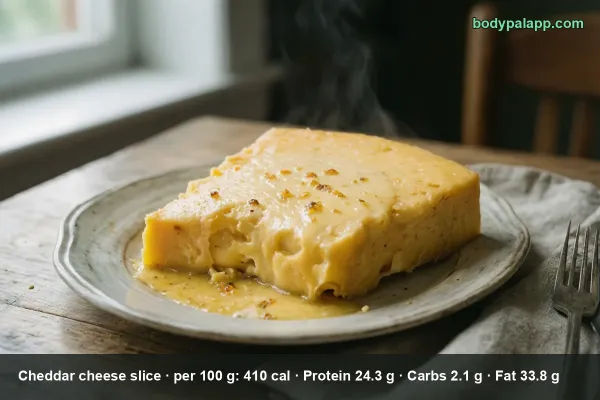
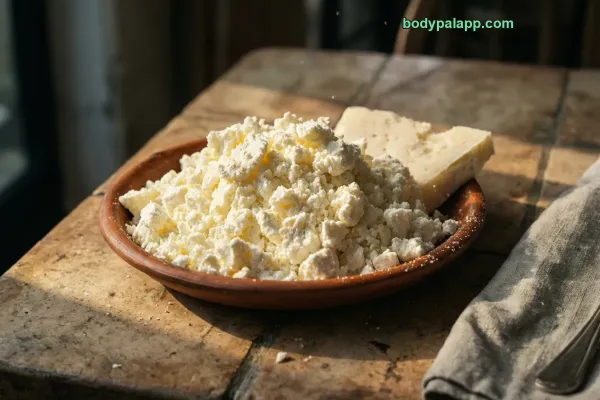
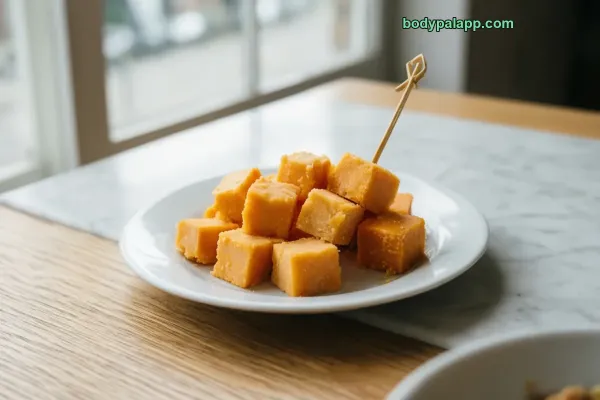
Here is how grated parmesan stacks up against cheddar, cotija and a plain cheese cube, per 100 g and per usual serving.
Verdict: For the fewest calories pick cotija at 366 per 100 g, while cheddar at 410 and the cheese cube at 408 run about level with parmesan. If sodium is your limit, cheddar at 644 mg and the cheese cube at 654 mg per 100 g are the safer picks, and parmesan earns its place as a spoonful-sized topping rather than a snack.
Most popular parmesan brands in the United States
Ranked by popularity in the BodyPal database
# Productkcal / 100 g
1Bella Rosa Parmesan Shredded Cheese1 tbsp · 5 g400 kcal
Shaker and bag brands are shredded rather than finely grated, so their labels read about 400 calories per 100 g against 420 for the grated cheese above. Source: manufacturer labels / USDA FoodData Central.
Parmesan FAQs
How many calories are in parmesan cheese?
One tablespoon of grated parmesan (5 g) is 21 calories. A 1 oz serving is 118 calories and 100 g is 420 calories.
Is parmesan good for weight loss?
Parmesan is calorie-dense at 420 calories per 100 g, but the usual sprinkle is small: one tablespoon adds 21 calories, 1.4 g protein and 1.4 g fat.
Parmesan vs cheddar: which has more calories?
Grated parmesan is 420 calories per 100 g and cheddar is 410, so they are within 10 calories of each other. Parmesan carries more protein at 28.4 g per 100 g.
How much protein is in parmesan?
Grated parmesan has 28.4 g protein per 100 g, which works out to 1.4 g in a tablespoon and 8 g in a 1 oz serving.
How many calories are in a tablespoon of grated parmesan?
One tablespoon of grated parmesan, 5 g, has 21 calories. It also brings 1.4 g of protein, 1.4 g of fat, 0.7 g of carbs and 90 mg of sodium, which is 4% of the daily value.
How many calories are in a sprinkle of parmesan cheese?
A light sprinkle of about one tablespoon is 21 calories. Many people pour more than that: two tablespoons come to 42 calories, three to 63 and five to 105, with sodium rising to 451 mg.
How many calories are in an ounce of parmesan?
One ounce of grated parmesan, 28 g, has 118 calories, 8 g of protein and 505 mg of sodium. The same ounce cut from a hard block is 110 calories with 10 g of protein and 329 mg of sodium.
What does USDA FoodData Central list for grated parmesan per 100 g?
The USDA FoodData Central row 'Cheese, parmesan, grated' (FDC 171247) lists 420 calories per 100 g. That same 100 g holds 28.4 g of protein, 27.8 g of fat, 13.9 g of carbs and 1,804 mg of sodium.
Does parmesan have any sugar or fiber?
Grated parmesan has just 0.1 g of sugars and 0 g of fiber per 100 g, and a tablespoon counts as 0 g of sugars. Its carbs, 13.9 g per 100 g, add only 0.7 g per tablespoon.