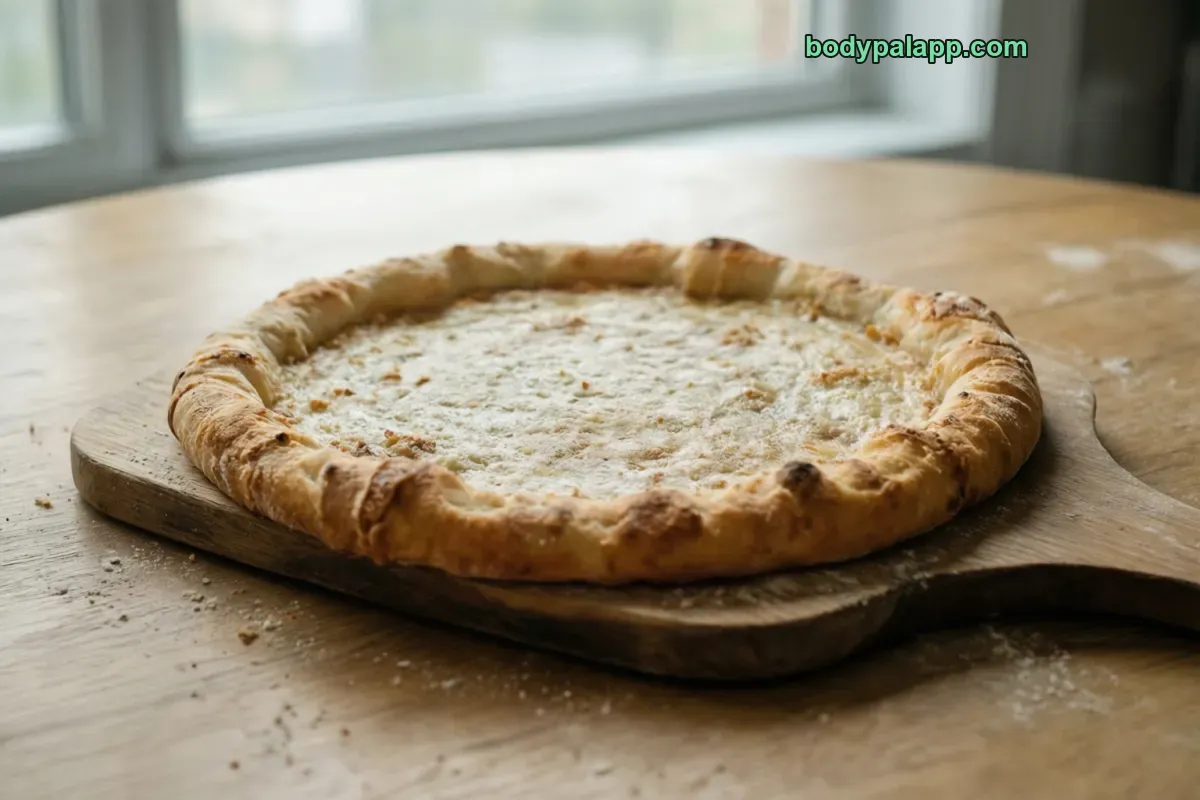
Pizza crust calories come to 363 for one large slice (124 g) and 293 per 100 g, and that is before any cheese goes on. Slice size moves the total the most: a medium slice is 246. Fat supplies 38% of the calories, and a large slice already carries 637 mg of sodium.
293kcal
1 100 g · 100 g, thick crust, no cheese
10%protein
7.6 gProtein
38 gCarbs
12.3 gFat
How to burn off 293 kcal
—Walking, brisk
—Jogging
—Cycling, moderate
—Swimming
Skip the math. BodyPal counts these calories from your steps and workouts automatically.
Nutrition facts
Thick crust, no cheese · per 100 g
Calories
293 kcal
Protein
7.6 g
Carbohydrate
38 g
Fat
12.3 g
Saturated fat
2.8 g
Cholesterol
12 mg
Sodium
514 mg
Potassium
171 mg
Iron
3 mg
Source: USDA FoodData Central
🛡️
Verified nutrition data
Numbers on this page come from USDA FoodData Central, the U.S. Department of Agriculture’s food composition database, and from manufacturer labels where a branded product is named. Last verified September 2026. How we verify our data →
Pizza crust: calories, protein and sodium by serving
Percent of daily value uses the FDA reference of 2,000 kcal a day.
Serving
kcal
Protein
Carbs
Fat
Sodium
% DV kcal
100 g
293
7.6 g
38.3 g
12.3 g
514 mg
15%
1 large slice (124 g)
363
9.4 g
47.5 g
15.2 g
637 mg
18%
1 medium slice (84 g)
246
6.4 g
32.2 g
10.3 g
432 mg
12%
3 × 100 g
879
22.7 g
1,542 mg
5 × 100 g
1,465
37.9 g
2,570 mg
A large slice of bare crust is 363 calories
The USDA row behind this page is "Pizza, no cheese, thick crust", so every number here describes the bread base alone. A medium slice of 84 g comes to 246 calories, or 12% of a 2000-calorie daily value. A large 124 g slice reaches 363 calories, 18% of the day. The gap between the two is roughly a third more food for roughly a third more calories.
Thick crust adds up quickly once you stop counting slices. Weighed out, 200 g of crust is 586 calories, 300 g is 879, and 500 g reaches 1,465. Sodium climbs alongside: 1,028 mg, then 1,542 mg, then 2,570 mg, which is past the full daily value on crust alone.
If you eat pizza by the slice, the slice size is the number to pin down. Weighing one slice the first time is the fastest way to know whether you are in medium or large territory.
Carbs bring half the calories, fat more than a third
The calorie split is 52% carbs, 38% fat and 10% protein. Per 100 g that works out to 38.3 g of carbohydrate, 12.3 g of fat and 7.6 g of protein. For a bread product, that fat share is high; thick crusts are usually made with oil worked into the dough, and the numbers show it.
Saturated fat is modest at 2.8 g per 100 g, so most of the fat is the unsaturated kind. Sugars sit at 5.5 g per 100 g, or 6.8 g in a large slice, enough to note but not a dessert-level load. Fiber is low at 1.9 g per 100 g and 2.4 g per large slice, against a daily value of 28 g.
In practice, the crust behaves like dense, slightly oily bread. It fills the plate and supplies energy, but it brings little protein or fiber to keep you full on its own.
Sodium is the row to watch
Plain crust carries 514 mg of sodium per 100 g, 22% of the daily value. A medium slice holds 432 mg (19%), and a large slice holds 637 mg (28%). That is a lot of salt for something that has not yet met sauce, cheese or cured meat.
Every typical topping pushes this row higher, so the crust figure is the floor, not the ceiling. If you watch sodium, the slice count matters more than which toppings you pick: two large slices of crust already land well past half the day's sodium.
The other minor rows are quiet. Cholesterol is 12 mg per 100 g and potassium is 171 mg per 100 g, a small share of the 4700 mg daily value. Sodium is the only micronutrient row on this page that stands out.
Toppings decide what the slice becomes
With 9.4 g of protein in a large slice, 19% of the daily value, the crust needs help to make a filling meal. Lean protein toppings such as chicken or a side of beans or eggs balance the 52% carb share. Vegetables add volume and fiber without adding much to the calorie count.
A salad on the side is the simplest way to eat one slice and feel done. Pairing a medium slice at 246 calories with a protein-heavy side tends to hold you longer than a second slice would.
If you track your intake, log the crust and the toppings separately so the numbers stay honest. BodyPal can log pizza from a photo, which helps when the slice size is hard to guess.
How does pizza crust compare?
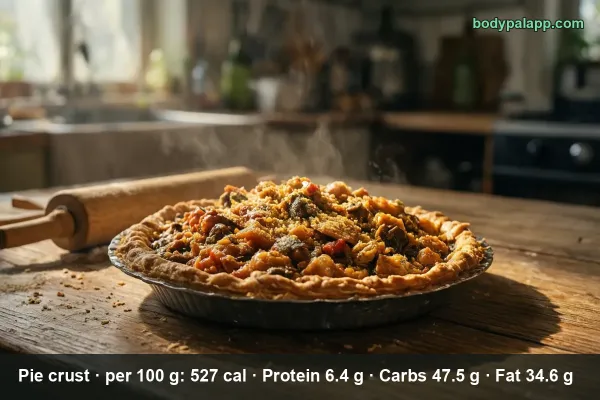
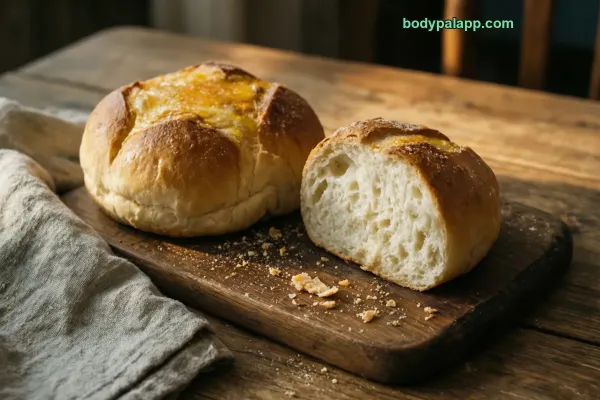
Here is how pizza crust stacks up against pie crust, a bread bun and pizza rolls, per 100 g and per usual serving.
Verdict: For the fewest calories per 100 g pick the bread bun at 259, with only 2.7 g of fat against 12.3 g in pizza crust, while pie crust at 527 calories and 34.6 g of fat per 100 g is the one to limit. Pizza rolls run higher per 100 g at 345, but six rolls (85 g) at 293 still come in under a large slice of crust at 363.
Most popular pizza crust brands in the United States
Store-bought crusts are sold plain, without the sauce and oil in the USDA row above, so their label numbers read lower. Source: manufacturer labels / USDA FoodData Central.
Pizza crust FAQs
How many calories are in pizza crust?
About 293 calories per 100 g of thick crust with sauce and no cheese. A large slice works out at 363 calories (124 g) and a medium slice at 246 calories (84 g).
Is pizza crust good for weight loss?
A 100 g portion has 293 calories, 38.3 g of carbs and 12.3 g of fat. Cauliflower crusts in the brand list run as low as 151 calories per 100 g.
Pizza crust vs pie crust: which has more calories?
Pie crust is higher at 527 calories per 100 g, against 293 for pizza crust, a gap of 234 calories per 100 g.
How much protein is in pizza crust?
7.6 g per 100 g, or 9.4 g in a large 124 g slice. The Thin Slim Foods crust is much higher at 24.7 g per 100 g.
How many calories are in a slice of pizza crust?
A large slice of thick pizza crust (124 g) has 363 calories, and a medium slice (84 g) has 246. Those numbers cover the crust alone, with no cheese, sauce or toppings.
How many calories are in pizza crust only, without toppings?
Plain thick pizza crust with no cheese has 293 calories per 100 g. The values come from the USDA row "Pizza, no cheese, thick crust", so they describe the base by itself.
What does USDA FoodData Central list for pizza crust per 100 g?
USDA lists 293 calories per 100 g for thick pizza crust without cheese, with 38.3 g carbs, 12.3 g fat, 7.6 g protein and 514 mg sodium.
How much sodium is in pizza crust?
Pizza crust has 514 mg of sodium per 100 g, 22% of the daily value. A large slice carries 637 mg, or 28%, before any cheese or toppings are added.
How many carbs are in pizza crust?
Pizza crust has 38.3 g of carbs per 100 g and 47.5 g in a large slice. Carbs supply 52% of its calories, with 1.9 g of fiber and 5.5 g of sugars per 100 g.