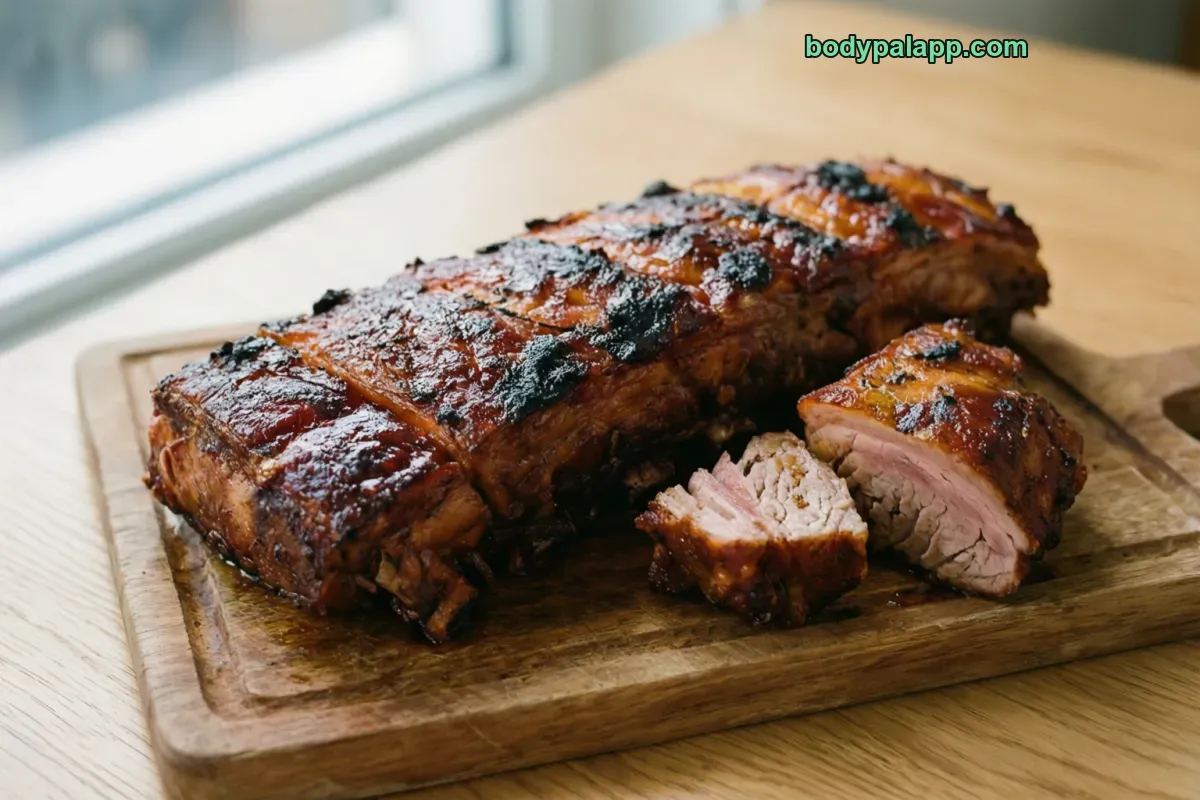
Pork spare ribs calories come to 337 for a 3 oz portion (85 g) and 397 per 100 g, braised and eaten with lean and fat together. Fat supplies 70% of those calories. The protein is generous, but the energy is dense, and a rib plate climbs faster than most people expect because the bones hide how much meat you ate.
337kcal
1 3 oz portion · 85 g, braised, lean and fat
30%protein
25 gProtein
0 gCarbs
26 gFat
How to burn off 337 kcal
—Walking, brisk
—Jogging
—Cycling, moderate
—Swimming
Skip the math. BodyPal counts these calories from your steps and workouts automatically.
Nutrition facts
Braised, lean and fat · per 85 g
Calories
337 kcal
Protein
25 g
Carbohydrate
0 g
Fat
26 g
Saturated fat
9.5 g
Cholesterol
103 mg
Sodium
79 mg
Potassium
272 mg
Iron
1.6 mg
Source: USDA FoodData Central
🛡️
Verified nutrition data
Numbers on this page come from USDA FoodData Central, the U.S. Department of Agriculture’s food composition database, and from manufacturer labels where a branded product is named. Last verified September 2026. How we verify our data →
Pork spare ribs: calories, protein and sodium by serving
Percent of daily value uses the FDA reference of 2,000 kcal a day.
Serving
kcal
Protein
Carbs
Fat
Sodium
% DV kcal
3 oz portion (85 g)
337
24.7 g
0 g
25.8 g
79 mg
17%
1 piece, bone removed (177 g)
703
51.4 g
0 g
53.6 g
165 mg
35%
Raw, 4 oz (113 g)
313
17.5 g
0 g
26.4 g
92 mg
16%
100 g
397
29.1 g
0 g
30.3 g
93 mg
20%
3 × 3 oz portion (85 g)
1,012
74.1 g
237 mg
5 × 3 oz portion (85 g)
1,687
123.5 g
395 mg
One deboned piece is a 703-calorie plate
The 3 oz portion (85 g) is the reference serving: 337 calories, 24.7 g protein and 25.8 g fat, or 17% of the daily calorie value. That sounds manageable. The trouble is that few people stop at 85 g of ribs.
A single piece with the bone removed weighs 177 g and lands at 703 calories, which is 35% of the daily value in one go. It also brings 51.4 g protein, 103% of the protein daily value. Stack portions and the total moves fast: two 3 oz portions (170 g) come to 675 calories, three (255 g) reach 1,012, and five portions, or 425 g, hit 1,687 calories. At a barbecue where ribs are the main event, five portions is not an unusual plate.
Raw weight tells a different story. 4 oz raw (113 g) lists 313 calories and 17.5 g protein, because the meat still holds water that braising cooks out. If you weigh before cooking, log the raw row. If you weigh the cooked meat off the bone, use the 85 g or 100 g rows, and never mix the two.
Fat supplies 70% of the calories
Per 100 g, braised spare ribs carry 30.3 g fat and 29.1 g protein, with 0 g carbs, sugar and fiber. By weight the fat and protein are nearly even. By calories they are not: fat makes up 70% of the energy and protein covers the other 30%, because each gram of fat carries far more energy than a gram of protein.
This is why the protein number looks great and the calorie number looks heavy at the same time. A 3 oz portion gives 49% of the protein daily value, a strong return for a small serving. You pay for it with 25.8 g of fat in the same bite. Leaner pork cuts deliver similar protein with less fat, and that is exactly where spare ribs lose ground.
The values here count lean and fat eaten together, which is how most people actually eat ribs. If you leave the fatty edges on the plate, your real intake sits below these rows, though the card gives no separate lean-only figure to log.
Saturated fat matters more than sodium here
Plain braised ribs are low in sodium: 79 mg per 3 oz portion, only 3% of the daily value, and 93 mg per 100 g. Even a full deboned piece stays at 165 mg, or 7%. The salt in a typical rib dinner comes from rubs, brines and sauce, not from the pork itself.
The row to watch is saturated fat. 100 g holds 11.1 g, set against a daily value of 20 g, so a large rib plate can approach or pass that allowance before any sides arrive. Cholesterol reads 121 mg per 100 g against a 300 mg daily value. If you track either number, portion size is the only lever that really moves it.
Potassium sits at 320 mg per 100 g, a modest share of the daily value. Ribs are a protein and fat food first; they contribute little else to the rest of the label, with no fiber and no carbs at all.
Sauce and sides decide the final count
The 397 calories per 100 g cover the meat only. Packaged products such as Hannaford Pork Spare Ribs With Sweet BBQ Sauce or Greenfield Smoked St. Louis Style Pork Spare Ribs in BBQ Sauce add sugar and sodium that plain braised ribs do not have. With sauced or pre-seasoned ribs, read the package label rather than this row.
On the plate, ribs pair best with foods that add volume without much fat: a big green salad, slaw with a vinegar dressing, grilled vegetables or corn on the cob. These fill the space that would otherwise go to a second or third portion of meat, and they bring the fiber the ribs lack entirely.
If you are tracking, estimate the meat after you strip the bones, or snap a photo and let BodyPal log the plate. Counting portions honestly matters more here than any choice of rub or sauce.
How does pork spare ribs compare?
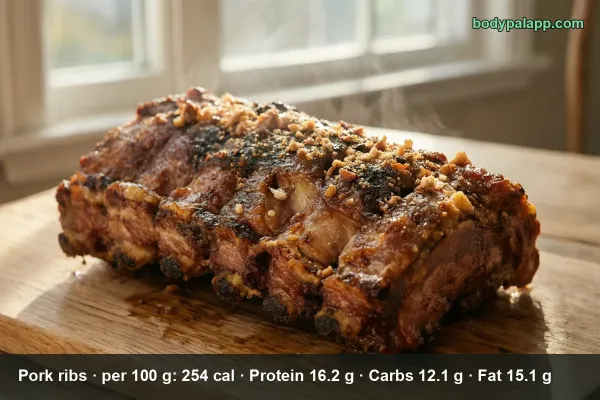
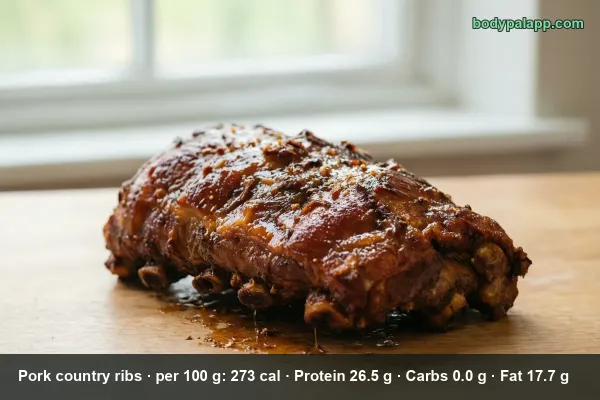
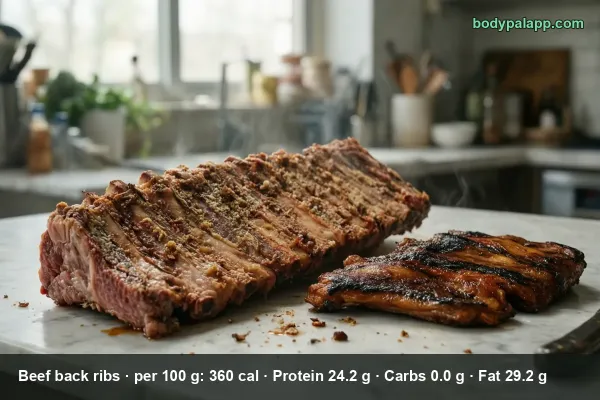
Here is how braised pork spare ribs stack up against pork rib, pork country rib and beef back rib, per 100 g and per usual serving.
Verdict: For weight loss pick pork country rib: 273 calories per 100 g with 26.5 g protein and only 17.7 g fat, against 397 for spare ribs. Beef back rib at 360 is no real saving, and the pork rib entry is lower at 254 but carries 678 mg sodium per 100 g.
Most popular pork spare ribs brands in the United States
Ranked by popularity in the BodyPal database
# Productkcal / 100 g
1Hatfield Pork Spare Ribs100 g295 kcal
2Hannaford Pork Spare Ribs With Sweet BBQ Sauce5 oz · 140 g229 kcal
3Hormel St. Louis Style Chipotle Pork Spare Ribs4 oz · 112 g250 kcal
4Greenfield Smoked St. Louis Style Pork Spare Ribs in BBQ Sauce5 oz · 140 g293 kcal
Raw ribs are labeled per raw weight and sauced ribs per weight with sauce, so they read lower than the braised number above. Source: manufacturer labels / USDA FoodData Central.
Pork spare ribs FAQs
How many calories are in pork spare ribs?
A 3 oz portion of braised spare ribs is 337 calories, and a 177 g cooked piece without the bone is 703 calories.
Are pork spare ribs good for weight loss?
They are calorie-dense at 397 calories and 30.3 g fat per 100 g. A 3 oz portion gives 24.7 g protein for 337 calories.
Pork spare ribs vs country-style ribs: which has fewer calories?
Braised spare ribs have 397 calories per 100 g versus 273 for braised country-style ribs, so 3 oz is 337 vs 232 calories.
How much protein and fat is in pork spare ribs?
A 3 oz portion has 24.7 g protein, 25.8 g fat and 0 g carbs.
How many calories are in one pork spare rib piece?
One spare rib piece with the bone removed (177 g) has 703 calories, 51.4 g protein and 53.6 g fat. That is 35% of the daily calorie value in a single piece, so several pieces add up quickly.
Do raw pork spare ribs have fewer calories than cooked ones?
By weight, yes: 4 oz raw (113 g) has 313 calories, while braised ribs carry 397 per 100 g. Cooking drives off water and concentrates calories, so log raw and cooked weights with their own rows.
Are pork spare ribs high in sodium?
Not on their own. A 3 oz portion has 79 mg sodium, 3% of the daily value, and 100 g has 93 mg. Rubs, brines and barbecue sauce are what push the sodium up.
How much saturated fat is in pork spare ribs?
100 g of braised spare ribs has 11.1 g saturated fat, against a daily value of 20 g. Total fat is 30.3 g per 100 g, and fat supplies 70% of the calories.
How many calories are in a big plate of spare ribs?
Three 3 oz portions (255 g) come to 1,012 calories, and five portions (425 g) reach 1,687. Even two portions, at 170 g, total 675 calories before sauce or sides.