
How many calories are in beef back ribs?
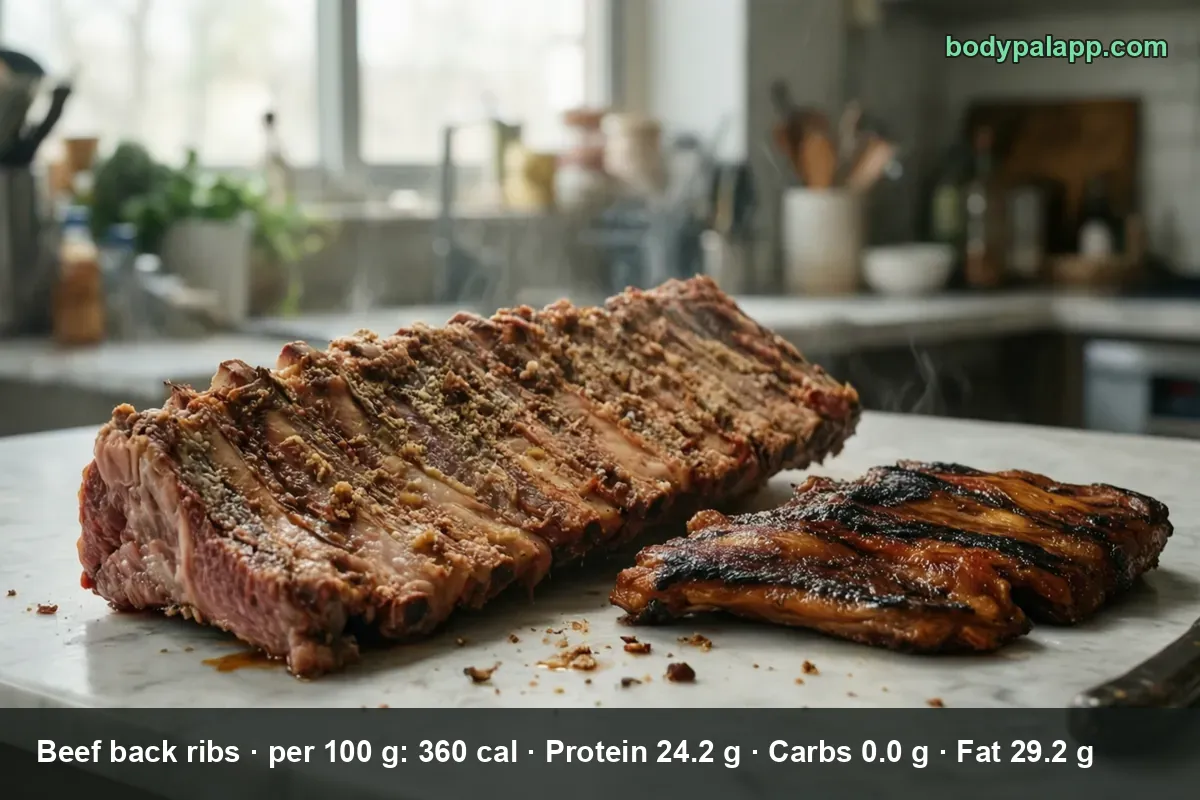
A 3 oz (85 g) cooked serving of beef back ribs carries 306 calories. Per 100 g the braised meat runs 360 calories, a number that beats every cut in the comparison table further down, because the fat between the bones stays where it is. Trim it off and the same weight drops to 299.
On this page
- Beef back ribs quick facts
- US servings, from one ounce to a whole rack
- Lean, choice and select: the grade moves the number
- Raw versus cooked back ribs
- Saturated fat is the row to watch
- How do beef back ribs compare?
- Most popular beef back ribs brands
- FAQ
Beef back ribs quick facts
The record behind this page is SR Legacy 172166, "Beef, rib, back ribs, bone-in, separable lean and fat, trimmed to 0-inch fat, all grades, cooked, braised". It is the version people actually eat: cooked, with the fat still on the bone, and averaged across grades rather than pinned to choice or select. Nobody weighs back ribs raw and then eats them raw, so the cooked row is the honest starting point.
"All grades" matters more than it sounds. It sits between the fattier choice cut and the leaner select cut, which is roughly what you get when you buy whatever the case has that week.
| Nutrient | Per 100 g | Per 3 oz cooked (85 g) | % Daily Value |
|---|---|---|---|
| Calories | 360 | 306 | — |
| Total fat | 29.21 g | 24.8 g | 32% |
| Saturated fat | 12.99 g | 11.0 g | 55% |
| Carbohydrate | 0 g | 0 g | 0% |
| Dietary fiber | 0 g | 0 g | 0% |
| Total sugars | 0 g | 0 g | — |
| Protein | 24.23 g | 20.6 g | 41% |
| Sodium | 63 mg | 54 mg | 2% |
| Cholesterol | 87 mg | 74 mg | 25% |
| Potassium | 255 mg | 217 mg | 5% |
% Daily Value is based on a 2,000-calorie diet.
Verified nutrition data
Numbers on this page come from USDA FoodData Central, the U.S. Department of Agriculture’s food composition database, and from manufacturer labels where a branded product is named. Last verified September 2026. How we verify our data →
Two rows you would see on a packaged label are missing here. USDA does not publish added sugars or trans fat for the braised back rib records, and plain beef has no sugar of its own to add. The 54 mg of sodium in a 3 oz serving is the meat alone, which is worth remembering: a barbecue rub or a sauce brings its own sodium and its own sugar, and neither is counted in this record.
The Daily Values used above come from the FDA and are the same ones printed on every US Nutrition Facts panel.
US servings, from one ounce to a whole rack
| Serving | Weight | Calories |
|---|---|---|
| 1 oz cooked | 28 g | 101 kcal |
| 3 oz cooked, USDA serving | 85 g | 306 kcal |
| 4 oz cooked | 113 g | 407 kcal |
| 6 oz cooked | 170 g | 612 kcal |
| One rack, cooked, bone-in | 1159 g | 4172 kcal |
| Per 100 g cooked | 100 g | 360 kcal |
Only two of those are USDA household measures: the 3 oz serving and the full rack at 1,159 g. The 1 oz, 4 oz and 6 oz lines are our own arithmetic scaled from the USDA 100 g figure, not USDA servings, which is why they land on clean ounce weights instead of odd ones.
The rack line is the one that surprises people. A cooked rack at 1,159 g comes to 4,172 calories, which is more than thirteen 3 oz servings stacked on one platter. That weight includes the bones you leave behind, so nobody eats all of it in one sitting, but it does explain why a shared rack plus sides can outrun a whole day of eating. If you are logging your share, weigh the meat on your plate rather than dividing the rack by the number of people at the table.
There is no packaged label to fall back on either. Back ribs are sold fresh by weight at the butcher counter, so the USDA record is the label. The vacuum-packed "back ribs" you see on the shelf are almost always pork baby back ribs, a different animal and a different set of numbers.
Lean, choice and select: the grade moves the number
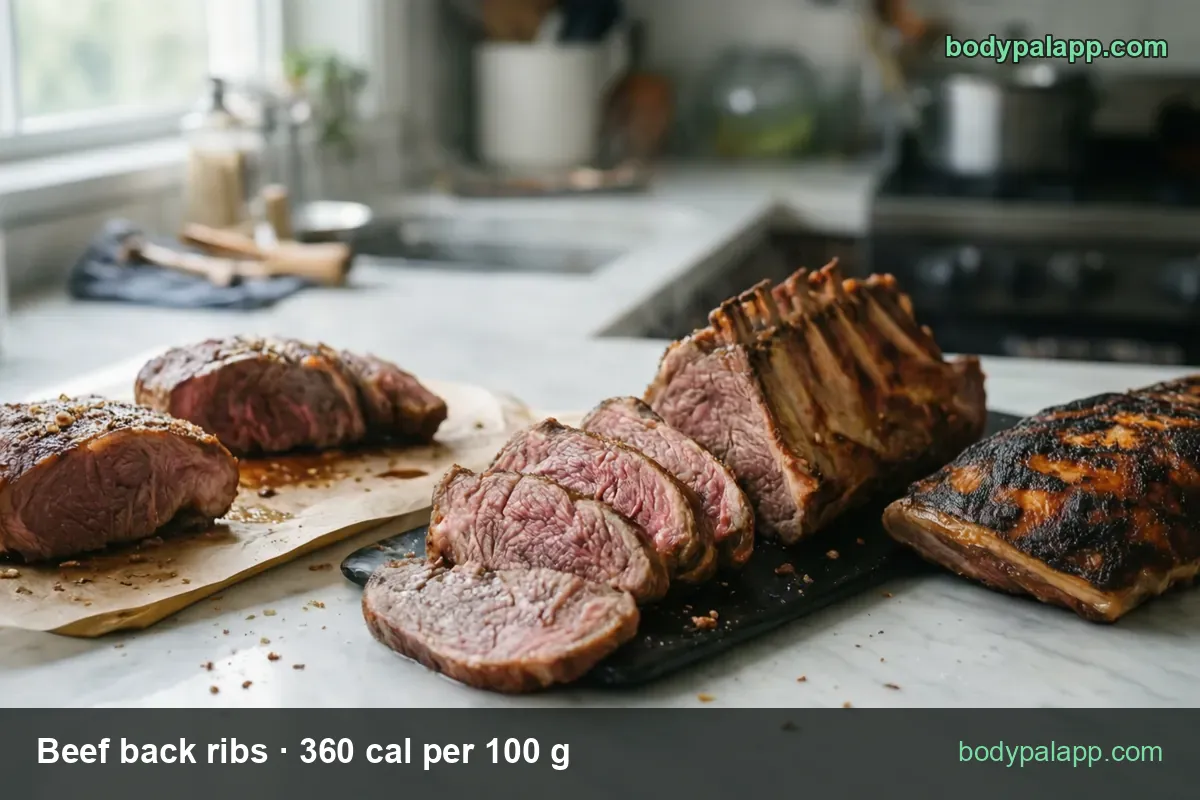
Back ribs are one of the few cuts where trimming genuinely changes the math. USDA publishes separate records for the meat with its fat and the meat picked clean after cooking, and for each grade on top of that.
| Version | Per 100 g | Typical serving | Calories |
|---|---|---|---|
| Lean and fat, all grades, braised (main record) | 360 kcal | 3 oz (85 g) | 306 kcal |
| Lean only, all grades, braised | 299 kcal | 3 oz (85 g) | 254 kcal |
| Choice grade, lean and fat, braised | 372 kcal | 3 oz (85 g) | 316 kcal |
| Select grade, lean and fat, braised | 341 kcal | 3 oz (85 g) | 290 kcal |
| Choice grade, lean only, braised | 306 kcal | 3 oz (85 g) | 260 kcal |
Picking the meat off and leaving the soft fat on the bone takes 100 g from 360 down to 299 calories, a drop of 61 calories or 17 percent, and it pushes protein up from 24.23 g to 28.36 g per 100 g. That is the single biggest lever on this page, and it costs nothing but a little patience with a fork.
Grade is the smaller lever, but it is not nothing. Choice ribs run 372 calories per 100 g against 341 for select, a 31-calorie gap that comes entirely from marbling. Combine both levers and the spread is wide: choice with the fat on is 316 calories per 3 oz, select with the fat on is 290, and the leanest cooked record of all — select, picked lean — sits at 287 calories per 100 g.
USDA only publishes braised figures for this cut. Smoking or grilling changes the crust and the flavor, not the underlying beef, so log smoked or grilled back ribs against the same record, then add the sauce separately if you used one.
Raw versus cooked back ribs
This is where most food diaries go wrong. Weigh 100 g of raw back ribs and you are logging 324 calories; weigh 100 g of the same ribs after braising and you are logging 360. Cooking drives off water, so the calories concentrate into a smaller weight.
| Version | Per 100 g | Typical serving | Calories |
|---|---|---|---|
| Raw, lean and fat, all grades | 324 kcal | 4 oz (113 g) | 366 kcal |
| Raw, lean only, all grades | 239 kcal | 4 oz (113 g) | 270 kcal |
The gap is 11 percent at the same weight, and it runs in the direction people do not expect. Raw meat also reads leaner on protein, at 16.15 g per 100 g against 24.23 g cooked, for the same water reason.
The practical rule: weigh raw, log the raw record; weigh cooked, log the cooked record. Mixing them is how a 4 oz package at 366 calories quietly becomes a plate you record as 306.
Saturated fat is the row to watch
Calories are not the interesting number on beef back ribs. Saturated fat is. A 3 oz serving holds 11.0 g of it, which is 55 percent of the FDA Daily Value in a portion the size of a deck of cards. A second serving clears 100 percent on its own, before any butter, cheese or dressing on the rest of the plate.
The Dietary Guidelines for Americans suggest keeping saturated fat under 10 percent of daily calories, which works out to about 22 g on a 2,000-calorie day. One 3 oz serving of back ribs is half of that.
Cholesterol follows the same shape at 74 mg per serving, 25 percent of the Daily Value. Sodium, on the other hand, is a non-issue in the meat itself: 54 mg per serving is 2 percent, and everything above that comes from what you rub or pour on it.
The upside is real protein. At 20.6 g per 3 oz, back ribs cover 41 percent of the Daily Value and fit the MyPlate protein foods group comfortably. They are simply an expensive way to buy that protein in calorie terms, which is the trade-off worth naming rather than hiding.
How do beef back ribs compare?
| Cut | Per 100 g | US serving | Calories |
|---|---|---|---|
| Beef back ribs, braised, lean and fat | 360 kcal | 3 oz (85 g) | 306 kcal |
| Rib large end, roasted, lean only, choice | 253 kcal | 3 oz (85 g) | 215 kcal |
| Chuck blade roast, braised, lean only | 253 kcal | 3 oz (85 g) | 215 kcal |
| Corned beef brisket, cooked | 251 kcal | 3 oz (85 g) | 213 kcal |
Our take: back ribs are the heaviest of the four by a wide margin, running 42 percent more calories per 100 g than the roasted rib large end, while the other three land within 2 calories of each other. If you want beef and you are counting, a trimmed chuck blade roast gives you 31.06 g of protein per 100 g at 253 calories, which is more protein for fewer calories than back ribs manage in any version. Back ribs earn their place on flavor and on the fact that they are worth slowing down for, not on efficiency. Pick them as the plate you plan around, put a lean vegetable side next to them, and keep the second helping for another day.
Most popular beef back ribs brands in the United States
Ranked by how widely each product appears among foods sold in the United States, from the BodyPal food database of over 3.3 million products. Calories are the figures printed on each Nutrition Facts label, checked against USDA FoodData Central.
| Product | Calories (per 100 g) |
|---|---|
| Beaver Street Fisheries Beef, Back Ribs (raw, frozen) | 241 cal |
Brand popularity: BodyPal food database. Nutrition: manufacturer labels / USDA FoodData Central.
Beef back ribs FAQs
How many calories are in 3 oz of beef back ribs?
A 3 oz (85 g) cooked serving carries 306 calories, from the USDA record for braised back ribs with the fat left on. That plate holds 24.8 g of fat and 20.6 g of protein, so most of the energy comes from fat rather than the meat's protein.
How many calories in a full rack of beef back ribs?
A whole cooked rack weighs about 1,159 g bone-in and totals 4,172 calories, more than thirteen times a 3 oz serving. It also carries roughly 151 g of saturated fat, about 753 percent of the Daily Value. A rack is a platter for a table, not one person's portion.
How many calories in one beef back rib bone?
A single bone has no USDA number: the smallest cooked figure published is 3 oz (85 g) at 306 calories, with a whole rack at 1,159 g and 4,172 calories. Bones vary in size and weight, so weigh the meat on your plate rather than counting ribs.
Are beef back ribs high in protein?
A 3 oz cooked serving delivers 20.6 g of protein, 41 percent of the Daily Value. Trimmed lean-only ribs reach 28.36 g per 100 g against 24.23 g with the fat left on. The protein is real, but it arrives with 24.8 g of fat in the same serving.
How much saturated fat is in beef back ribs?
A 3 oz serving holds 11.0 g of saturated fat, 55 percent of the Daily Value, and two servings pass 100 percent on their own. The Dietary Guidelines suggest keeping saturated fat under 10 percent of daily calories, which is about 22 g on a 2,000-calorie day.
Do beef back ribs have carbs or sugar?
Zero on both counts: the USDA record shows 0 g of carbohydrate and 0 g of total sugars per 100 g, cooked. Plain braised beef has no starch or sugar of its own. A sweet barbecue sauce or a sugar-based rub adds both, and those calories sit outside this record.
Raw vs cooked beef back ribs: which weight do I log?
Log the cooked weight against the cooked record: 100 g cooked is 360 calories against 324 calories raw, because braising drives off water. If you only weighed the package, 4 oz raw (113 g) works out to 366 calories, and the same meat comes off the heat lighter.
Are beef back ribs healthy?
One 3 oz serving is 306 calories with 55 percent of the Daily Value for saturated fat and 25 percent for cholesterol, alongside 20.6 g of protein and only 54 mg of sodium. If you are watching saturated fat, the lean-only version at 254 calories is the better pick.
Similar foods
- Summer Sausage — 203 cal for 4 slices
- Turkey Bacon — 81 cal for 2 slices, cooked
- Beer Brat — 240 cal per brat
- Pork Chorizo — 278 cal per link, medium
- Salami — 102 cal for 3 slices
- Chorizo — 256 cal per link
Count it without the math
Point the camera at the plate and BodyPal counts the ribs for you, fat and all.


How long does it take to burn off beef back ribs?
A 3 oz (85 g) cooked serving is 306 kcal. Enter your weight and the amount you ate to see how long it takes you to burn that off:
lb
| Activity | Time to burn 306 kcal |
|---|---|
| Walking, brisk | 1 hr 1 min |
| Cycling, moderate | 38 min |
| Swimming, moderate | 44 min |
| Jogging | 36 min |
| Weight training, moderate | 1 hr 8 min |
Times are for a 155 lb adult at a steady pace; change the weight to see yours. The amount is set to the portion in the text (85 g); change it to what you actually ate. BodyPal works this out from your steps automatically.
Want the bigger picture? Calculate your daily calorie needs — your maintenance figure, a target for losing or gaining, and the date you get there.