Glass of prosecco calories come to 135 for a 180 g glass, or 75 per 100 g. Almost none of that is protein or fat: the label shows 0 g fat and just 0.1 g protein per 100 g. What really moves your total is the size of the pour and how many refills follow the first one.
135kcal
1 glass of prosecco · 180 g, sparkling wine
3%protein
0.1 gProtein
4 gCarbs
0 gFat
How to burn off 135 kcal
—Walking, brisk
—Jogging
—Cycling, moderate
—Swimming
Skip the math. BodyPal counts these calories from your steps and workouts automatically.
Nutrition facts
Sparkling wine · per 180 g
Calories
135 kcal
Protein
0.1 g
Carbohydrate
4.2 g
Fat
0 g
Saturated fat
0 g
Cholesterol
0 mg
Sodium
9 mg
Potassium
133 mg
Iron
0.5 mg
Source: USDA FoodData Central
🛡️
Verified nutrition data
Numbers on this page come from USDA FoodData Central, the U.S. Department of Agriculture’s food composition database, and from manufacturer labels where a branded product is named. Last verified September 2026. How we verify our data →
Glass of prosecco: calories, protein and sodium by serving
Percent of daily value uses the FDA reference of 2,000 kcal a day.
Serving
kcal
Protein
Carbs
Fat
Sodium
% DV kcal
1 Glass (180 g)
135
0.1 g
4.2 g
0 g
9 mg
7%
Half Bottle (375 g)
281
0.3 g
8.7 g
0 g
19 mg
14%
1 Fl Oz (30 g)
23
0 g
0.7 g
0 g
2 mg
1%
100 g
75
0.1 g
2.3 g
0 g
5 mg
4%
3 × 1 Glass (180 g)
405
0.4 g
27 mg
5 × 1 Glass (180 g)
675
0.6 g
45 mg
A second glass takes you to 270 calories
One 180 g glass of prosecco has 135 calories, about 7% of the daily value. That sounds modest, and on its own it is. The trouble with sparkling wine is that it rarely stays at one glass, because it is poured at celebrations, brunches and toasts where the bottle keeps circling the table.
Two glasses add up to 270 calories, three reach 405, and five glasses (900 g of wine) land at 675. A half bottle, 375 g, carries 281 calories and covers 14% of the daily value by itself. Count the refills, not the glass, and the number on this page becomes far more useful.
Pour size matters too. Flutes vary a lot, and a generous hand can turn a standard serving into something much bigger without anyone noticing. Each fluid ounce, roughly 30 g, adds about 23 calories. If you track closely, a measured pour once or twice will show you what your usual glass actually holds.
The macro table misses where most calories come from
Per 100 g, prosecco lists 2.3 g of carbs, 0.1 g of protein and 0 g of fat. The calorie split on this page credits 97% of the energy to carbs and 3% to protein, simply because those are the only macros with a row. Look closer and the grams do not add up to 75 calories.
The missing piece is alcohol. It supplies most of the energy in any wine, yet standard nutrition tables have no line for it, so it shows up only in the calorie total. That is why prosecco can be low in sugar and still deliver 135 calories a glass.
The practical takeaway is simple. Prosecco gives you energy with almost no protein, no fiber and no fat to slow it down or keep you full. Treat those calories as a pure extra in your day rather than as part of a meal, and log them the same way you would log dessert.
Sugar and sodium barely register
A 180 g glass holds 1.8 g of sugars and 4.2 g of carbs in total. Even a half bottle stays under 4 g of sugars, at 3.8 g, with 8.7 g of carbs. If you count carbs, prosecco is one of the lighter drinks you can pick, though the alcohol calories still count against your total.
Sodium is close to nothing: 9 mg per glass, which rounds to 0% of the 2300 mg daily value. Three glasses come to 27 mg and five glasses to 45 mg. Cholesterol and saturated fat are both 0. There is a little potassium, 74 mg per 100 g, but not enough to matter.
So there is no single row to watch here except calories. The label is clean in every other column, which is exactly why prosecco can feel lighter than it is. The risk is not salt or sugar but volume, and the multiples above show how fast a few glasses stack up.
Plan the glass, then plan the food around it
Because prosecco adds energy without protein or fiber, the food next to it does the work of keeping you satisfied. Salty, fried party snacks pair naturally with bubbles but pile on calories quickly. Fresh fruit, vegetables with a dip, shrimp or a cheese plate with a modest portion give you something to eat that is easier to budget.
If you are counting, decide the number of glasses before the bottle opens. One glass at 135 calories is easy to fit into most days; three glasses at 405 is closer to a small meal. Alternating each glass with sparkling water slows the pace and keeps a toast from turning into a half bottle.
Logging is easier when the drink goes in as it happens rather than the next morning. BodyPal can log a glass of prosecco from a photo, which helps on nights when you would otherwise lose count.
How does glass of prosecco compare?
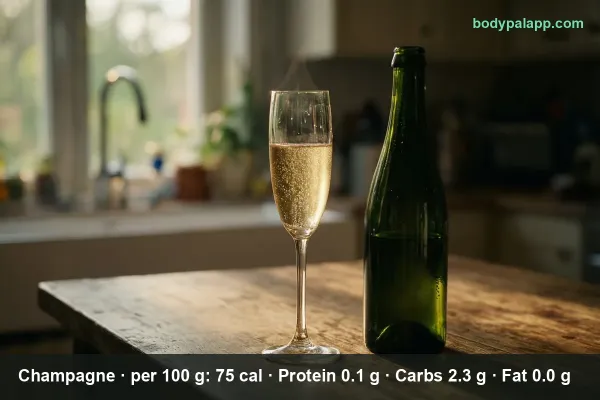
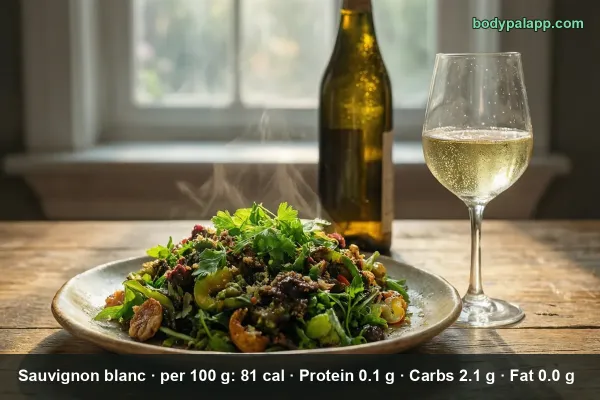
Here is how a glass of prosecco compares with champagne, a standard glass of wine and sauvignon blanc, per 100 g and per usual serving.
Verdict: Prosecco and champagne are identical at 75 calories per 100 g, so choose either on taste and pick prosecco over still wine at 83 or sauvignon blanc at 81 if calories are the deciding factor. The bigger difference is pour size: a 148 g glass of wine has 123 calories against 135 for a 180 g glass of prosecco, so a smaller pour beats a lighter wine.
Glass of prosecco FAQs
How many calories are in a glass of prosecco?
A standard 180 g glass of prosecco is about 135 calories, based on 75 calories per 100 g.
Is prosecco good for weight loss?
A 180 g glass of prosecco is 135 calories with 4.2 g of carbs and 1.8 g of sugar, one of the lighter wine pours by calories.
Prosecco vs champagne: are the calories different?
No. Both are 75 calories per 100 g, so a 180 g glass of either works out to about 135 calories.
How many carbs are in a glass of prosecco?
A 180 g glass of prosecco has about 4.2 g of carbs, including 1.8 g of sugar. Per 100 g that is 2.3 g of carbs.
How many calories are in a half bottle of prosecco?
A half bottle of prosecco, 375 g, has 281 calories, about 14% of the daily value. It also carries 8.7 g of carbs, 3.8 g of sugars and 19 mg of sodium, so nearly all its weight in your day is calories.
How many calories are in an ounce of prosecco?
One fluid ounce of prosecco, about 30 g, has 23 calories. That makes it easy to estimate your own pour: a standard 180 g glass comes to 135 calories, and bigger flutes climb from there.
How much sugar is in a glass of prosecco?
A 180 g glass of prosecco has 1.8 g of sugars and 4.2 g of total carbs. Per 100 g that is 1 g of sugars, so most of its 135 calories come from alcohol rather than sugar.
How many calories are in three glasses of prosecco?
Three 180 g glasses of prosecco add up to 405 calories. Two glasses come to 270, and five glasses reach 675, so the refill count matters far more than any difference between bottles.