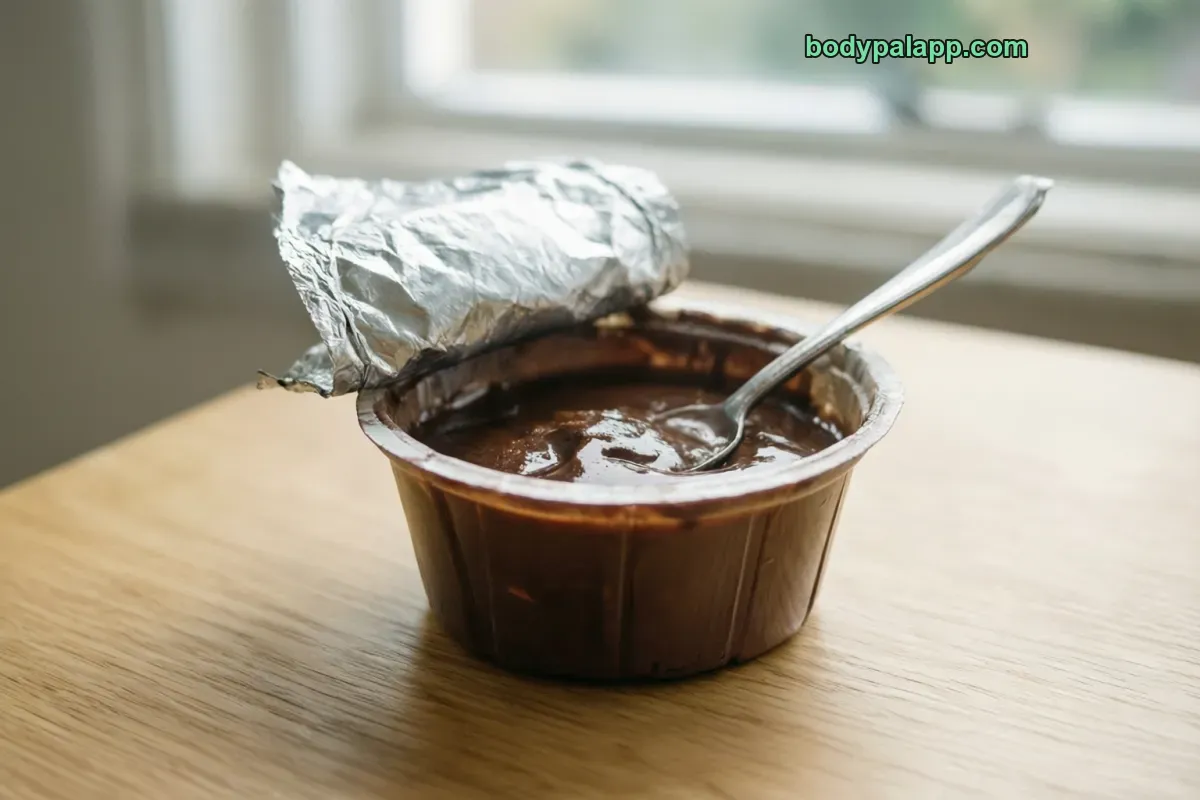
Pudding cup calories come to 100 for one 92 g snack cup, or 109 per 100 g. The number to notice is where those calories come from: 79% is carbohydrate, most of it sugar, with 17 g of sugar in a single cup and only about 1 g of protein.
100kcal
1 cup · 92 g, packaged, per label
4%protein
1 gProtein
21 gCarbs
2 gFat
How to burn off 100 kcal
—Walking, brisk
—Jogging
—Cycling, moderate
—Swimming
Skip the math. BodyPal counts these calories from your steps and workouts automatically.
Nutrition facts
Packaged, per label · per 92 g
Calories
100 kcal
Protein
1 g
Carbohydrate
21 g
Fat
2 g
Saturated fat
0 g
Cholesterol
0 mg
Sodium
110 mg
Potassium
56 mg
Source: USDA FoodData Central
🛡️
Verified nutrition data
Numbers on this page come from USDA FoodData Central, the U.S. Department of Agriculture’s food composition database, and from manufacturer labels where a branded product is named. Last verified September 2026. How we verify our data →
Pudding cup: calories, protein and sodium by serving
Percent of daily value uses the FDA reference of 2,000 kcal a day.
Serving
kcal
Protein
Carbs
Fat
Sodium
% DV kcal
1 snack cup (92 g)
100
1 g
21 g
2 g
110 mg
5%
1/2 cup (102 g)
150
1 g
23 g
6 g
135 mg
7%
100 g
109
1.1 g
22.8 g
2.2 g
120 mg
5%
3 × 1 snack cup (92 g)
301
3 g
331 mg
5 × 1 snack cup (92 g)
501
5 g
552 mg
One snack cup is a 100-calorie dessert
The packaged snack cup is the portion most people actually eat, and it lands at 100 calories for 92 g. That is about 5% of a 2000-calorie daily value, with 110 mg of sodium and 21 g of carbs. The fixed portion is the best thing about it: the cup ends when the cup ends.
Trouble starts when one cup becomes several. Two snack cups weigh 184 g and bring 201 calories. Three come to 301 calories, and five, which is easy to reach with a multipack over an afternoon, add up to 501 calories and 552 mg of sodium. Protein barely moves along the way: 5 g across all five cups.
A homemade or scooped serving changes the picture too. A 1/2 cup portion (102 g) in the USDA data lists 150 calories and 6 g of fat, compared with 2 g of fat in the snack cup. If you serve pudding from a bowl rather than a sealed cup, count it as the larger number.
Carbs supply four fifths of the calories
Per 100 g, a vanilla pudding cup holds 22.8 g of carbohydrate, 2.2 g of fat and 1.1 g of protein. Turned into a calorie split, that is 79% carbs, 17% fat and 4% protein. This is a sweet, starch-thickened snack, and the label reads like one.
Of those 22.8 g of carbs, 18.5 g are sugars. Fiber sits at 0, so nothing slows the sugar down or adds bulk. In a single snack cup that means 17 g of sugar out of 21 g of carbs. Nearly every carb gram is sugar.
Fat is modest. The cup carries 2 g, and the label lists 0 g of saturated fat and 0 mg of cholesterol, which is lower than many people expect from a creamy dessert. The tradeoff is that with so little fat or protein, a cup is unlikely to keep you full for long.
Sugar is the row to watch, not sodium
Sodium looks reassuring at first glance. One snack cup has 110 mg, about 5% of the 2300 mg daily value. Even a 1/2 cup serving at 135 mg stays at 6%. If you track sodium, a single pudding cup is a small entry on the day.
Sugar is the number that matters here. At 17 g per cup and 18.5 g per 100 g, it accounts for most of the calories. A second cup doubles that, so the multipack habit pushes this row faster than any other.
Protein is the other weak row: 1 g per cup, just 2% of the 50 g daily value. Potassium is listed at 61 mg per 100 g. If you want a dessert that also contributes protein or fiber, a pudding cup on its own will not do that job.
Best treated as a portioned dessert
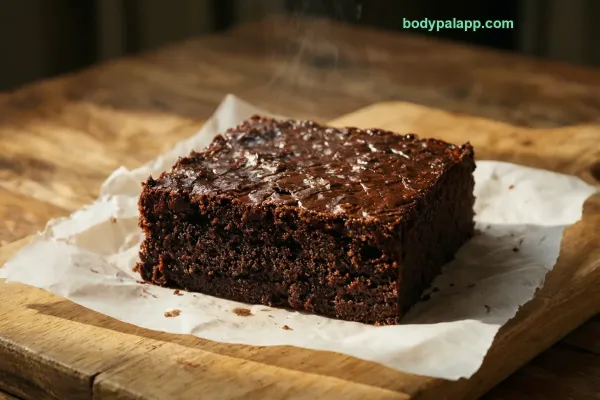
The sealed cup makes pudding one of the easier sweets to plan around. At 100 calories it sits well below a brownie square at 203 calories, and the portion is fixed. If you want something sweet after dinner, one cup is a predictable choice.
Because it brings almost no protein or fiber, pairing helps. Eating it after a meal that already has protein, or alongside fruit, makes it part of a fuller plate rather than a standalone snack. Brands like Snack Pack and Great Value sell vanilla, chocolate and tapioca cups, so check the flavor you actually buy.
If you log what you eat, BodyPal can record a pudding cup from a photo, which makes the second and third cups harder to forget.
How does pudding cup compare?
Here is how a vanilla pudding cup stacks up against chocolate pudding, dry pudding mix and a brownie square, per 100 g and per usual serving.
Verdict: For the fewest calories pick the vanilla pudding cup: 100 per cup and 109 per 100 g, against 153 for a chocolate pudding cup and 203 for a brownie square. Pudding mix looks light at 94 calories per 1/4 package, but at 377 calories and 1,400 mg sodium per 100 g it only stays that way if you measure it.
Most popular pudding cup brands in the United States
A standard 92 g vanilla pudding cup is about 100 calories, which is 109 calories per 100 g.
Is a pudding cup good for weight loss?
One 92 g cup is 100 calories with 2 g of fat, so it fits a small snack slot. It brings only 1 g of protein per cup.
Pudding cup vs chocolate pudding: which has fewer calories?
Per 100 g the vanilla pudding cup has 109 calories and chocolate pudding has 142, a difference of 33 calories.
How much sugar is in a pudding cup?
About 17 g of sugar in a 92 g cup, or 18.5 g per 100 g, with 21 g of total carbs per cup.
What are the nutrition facts for a pudding cup?
One 92 g snack cup has 100 calories, 21 g of carbs, 17 g of sugars, 2 g of fat, 1 g of protein and 110 mg of sodium. Saturated fat, fiber and cholesterol are listed at 0.
How much sodium is in a pudding cup?
A snack cup has 110 mg of sodium, about 5% of the daily value. Per 100 g it is 120 mg. Sodium only adds up if you eat several: five cups reach 552 mg.
How many calories are in a half cup of pudding?
A 1/2 cup serving (102 g) has 150 calories, more than the 100 in a 92 g snack cup. It also carries 6 g of fat versus 2 g in the cup.
How many calories are in two pudding cups?
Two snack cups come to 201 calories and 221 mg of sodium for 184 g of pudding. Three cups reach 301 calories, so a multipack adds up quickly.
How much protein does a pudding cup have?
A pudding cup has about 1 g of protein, only 2% of the daily value. Protein supplies just 4% of its calories, while carbs supply 79%.