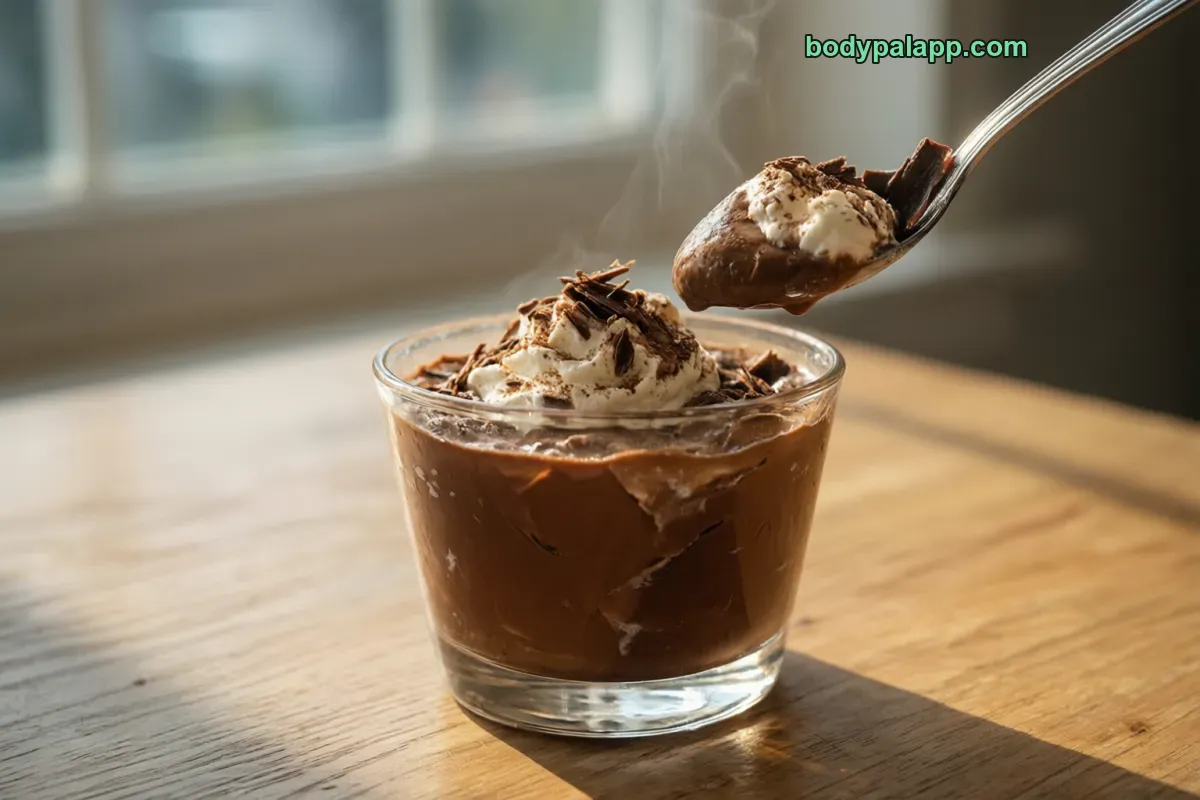
Pudding calories come to 143 for a 4 oz cup (110 g) of vanilla ready-to-eat pudding and 130 per 100 g. The number to notice is sugar: 18.7 g in that one cup. Carbs supply 69% of the calories and protein just 4%, so this is a sweet snack, not a filling one.
143kcal
1 4 oz pudding cup · 110 g, vanilla, ready-to-eat
4%protein
1.6 gProtein
25 gCarbs
4.2 gFat
How to burn off 143 kcal
—Walking, brisk
—Jogging
—Cycling, moderate
—Swimming
Skip the math. BodyPal counts these calories from your steps and workouts automatically.
Nutrition facts
Vanilla, ready-to-eat · per 110 g
Calories
143 kcal
Protein
1.6 g
Carbohydrate
25 g
Fat
4.2 g
Saturated fat
1.1 g
Cholesterol
1 mg
Sodium
189 mg
Potassium
72 mg
Iron
0.1 mg
Source: USDA FoodData Central
🛡️
Verified nutrition data
Numbers on this page come from USDA FoodData Central, the U.S. Department of Agriculture’s food composition database, and from manufacturer labels where a branded product is named. Last verified September 2026. How we verify our data →
Pudding: calories, protein and sodium by serving
Percent of daily value uses the FDA reference of 2,000 kcal a day.
Serving
kcal
Protein
Carbs
Fat
Sodium
% DV kcal
4 oz cup (110 g)
143
1.6 g
24.9 g
4.2 g
189 mg
7%
3.5 oz cup (97 g)
126
1.4 g
21.9 g
3.7 g
167 mg
6%
100 g
130
1.5 g
22.6 g
3.8 g
172 mg
7%
3 × 4 oz cup (110 g)
429
4.8 g
568 mg
5 × 4 oz cup (110 g)
715
8 g
946 mg
One cup is a snack, three cups are a meal
A standard 4 oz cup (110 g) of vanilla pudding has 143 calories, about 7% of a 2000-calorie day. The smaller 3.5 oz cup (97 g) drops that to 126 calories, or 6%. On paper the gap is small, but if you buy the smaller size out of habit, it saves a few calories every time without any effort.
The trouble with pudding is how easily one cup becomes several. The cups are small, the texture goes down fast, and nothing in them slows you down. Two 4 oz cups add up to 286 calories. Three reach 429, which is the size of a light lunch. Five cups, a whole multipack eaten over an evening, come to 715 calories.
Protein barely moves as the cups stack up. Five cups deliver only 8 g of protein alongside those 715 calories. If pudding is your nightly dessert, decide on one cup before you open the pack and put the rest back in the fridge.
Carbs supply 69% of every spoonful
Per 100 g, vanilla pudding has 22.6 g of carbohydrates, and 17 g of that is sugar. Fiber is 0. That puts carbs at 69% of the calories, with fat at 26% and protein at 4%. Nearly all of the energy is sugar plus a modest amount of fat.
Fat sits at 3.8 g per 100 g, with 1 g saturated. That is moderate for a dessert, lighter than most ice creams or baked sweets. Protein is the weak spot: 1.5 g per 100 g, or 1.6 g in a 4 oz cup, which covers only 3% of the daily value.
With little protein and no fiber, pudding does not keep hunger away for long. It works as a sweet finish after a meal that already held you over. On its own as an afternoon snack, it tends to leave you looking for the next thing to eat.
Sodium is higher than a sweet cup suggests
Most people check pudding for sugar and skip the sodium row. A 4 oz cup has 189 mg of sodium, 8% of the daily value, and 100 g has 172 mg. That is more than you might expect from something that tastes only sweet, and it comes from the salt and thickeners used to set the pudding.
One cup will not wreck your sodium budget. It adds up the same way the calories do, though: two cups carry 378 mg, three carry 568 mg, and five carry 946 mg. If you watch sodium, count pudding with your snacks instead of treating it as a freebie.
Sugar is the more obvious row. The 4 oz cup has 18.7 g and the 3.5 oz cup has 16.5 g. Cholesterol is negligible at 1 mg per 100 g, and potassium is low at 65 mg, so there is little else to weigh on the label.
Pair it with protein to make it count
At 143 calories, a single cup fits easily into most days as a dessert. Where it fits best is after a meal with protein and fiber, so the pudding is a finish and not the main event. Eaten that way, the sugar is a small part of a larger plate.
If you want pudding as a snack, add something with staying power. A handful of berries brings fiber, and a spoonful of Greek yogurt stirred in adds protein and makes the cup more filling without changing the flavor much. Both change how long the snack holds you more than they change the total.
Packaged cups, such as Snack Pack, make portions easy to track because every cup is the same size. If you log what you eat, BodyPal can record a pudding cup from a photo, which helps catch the second and third cups that are easy to forget.
How does pudding compare?
Here is how vanilla pudding compares with chocolate pudding, rice pudding and bread pudding per 100 g and per usual serving.
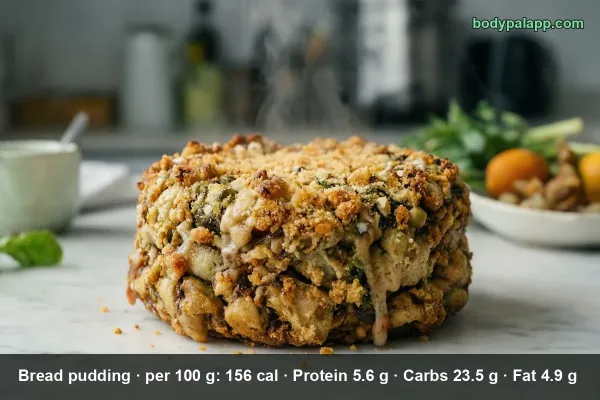
Verdict: For the fewest calories by weight, pick rice pudding at 108 per 100 g, though its 1 cup serving reaches 186 calories; for a small packaged treat, vanilla's 143-calorie cup beats chocolate's 153. Bread pudding is the heaviest at 156 per 100 g but also has the most protein at 5.6 g, so it is the one most likely to keep you full.
Most popular pudding brands in the United States
Ranked by popularity in the BodyPal database
# Productkcal / 100 g
1Snack Pack Chocolate Pudding1 pudding cup · 92 g109 kcal
2Snack Pack Extra Creamy Chocolate Pudding1 pudding cup · 106 g142 kcal
6Snack Pack Chocolate With Cinnamon Spice Pudding1 pudding cup · 92 g120 kcal
The labels are for chocolate varieties, while the main number is for vanilla pudding. Source: manufacturer labels / USDA FoodData Central.
Pudding FAQs
How many calories are in a pudding cup?
A 4 oz (110 g) vanilla pudding cup has about 143 calories, and a 3.5 oz (97 g) shelf-stable cup has about 126.
Is pudding good for weight loss?
A 4 oz vanilla pudding cup has 143 calories, 18.7 g of sugar and 1.6 g of protein. It is mostly sugar with little protein.
Pudding vs chocolate pudding: which has fewer calories?
Vanilla pudding has 130 calories per 100 g and chocolate pudding has 142, so vanilla is slightly lower.
How much sugar is in pudding?
Vanilla pudding has 16.97 g of sugar per 100 g, or about 18.7 g in a 4 oz cup. That cup also has 24.9 g of carbs.
How many calories are in a 3.5 oz pudding cup?
A 3.5 oz cup (97 g) of vanilla ready-to-eat pudding has 126 calories, about 6% of the daily value. It also has 16.5 g of sugar and 167 mg of sodium.
How many calories are in two pudding cups?
Two 4 oz cups of vanilla pudding have 286 calories. Together they carry 378 mg of sodium and only 3.2 g of protein, so the calories climb much faster than anything filling.
How much protein is in vanilla pudding?
A 4 oz cup of vanilla pudding has 1.6 g of protein, just 3% of the daily value. Protein makes up only 4% of its calories, with carbs supplying 69%.
How much sodium is in a pudding cup?
A 4 oz cup of vanilla pudding has 189 mg of sodium, 8% of the daily value. Per 100 g it is 172 mg, more than most people expect from a sweet snack.
Does pudding have any fiber?
No. Vanilla ready-to-eat pudding has 0 g of fiber per 100 g. Its 22.6 g of carbs are mostly sugar, 17 g, which is why a cup does not keep you full for long.