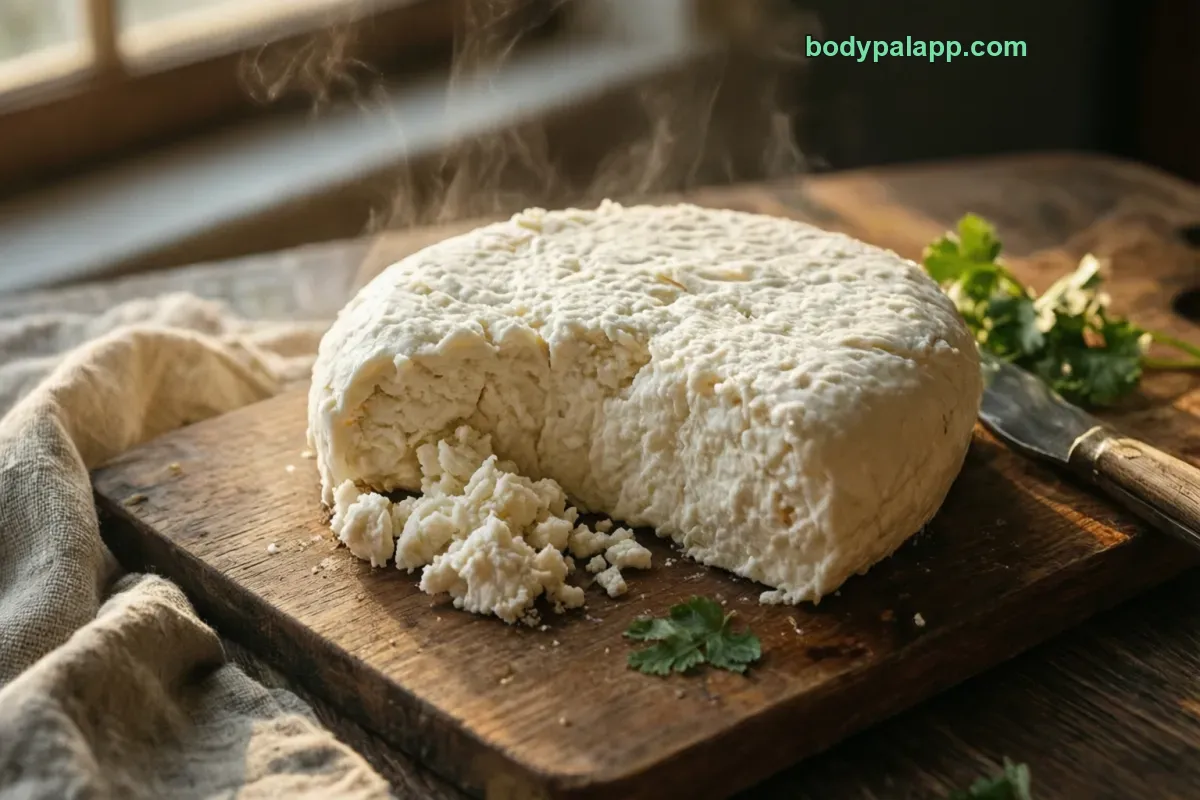
Queso fresco calories come to 84 for a 1 oz (28 g) serving and 299 per 100 g. Fat supplies 72% of those calories, and each ounce brings 210 mg of sodium. The cheese tastes mild and light, but a loose handful of crumbles can quietly double or triple the total.
84kcal
1 ounce · 28 g, fresh, unripened cheese
24%protein
5.1 gProtein
1 gCarbs
6.7 gFat
How to burn off 84 kcal
—Walking, brisk
—Jogging
—Cycling, moderate
—Swimming
Skip the math. BodyPal counts these calories from your steps and workouts automatically.
Nutrition facts
Fresh, unripened cheese · per 28 g
Calories
84 kcal
Protein
5.1 g
Carbohydrate
0.8 g
Fat
6.7 g
Saturated fat
3.6 g
Cholesterol
19 mg
Sodium
210 mg
Potassium
36 mg
Iron
0.1 mg
Source: USDA FoodData Central
🛡️
Verified nutrition data
Numbers on this page come from USDA FoodData Central, the U.S. Department of Agriculture’s food composition database, and from manufacturer labels where a branded product is named. Last verified September 2026. How we verify our data →
Queso fresco: calories, protein and sodium by serving
Percent of daily value uses the FDA reference of 2,000 kcal a day.
Serving
kcal
Protein
Carbs
Fat
Sodium
% DV kcal
1 oz (28 g)
84
5.1 g
0.8 g
6.7 g
210 mg
4%
1 cup crumbled (122 g)
365
22.1 g
3.6 g
29.1 g
916 mg
18%
100 g
299
18.1 g
3 g
23.8 g
751 mg
15%
3 × 1 oz (28 g)
251
15.2 g
631 mg
5 × 1 oz (28 g)
419
25.3 g
1,051 mg
A cup of crumbles is 365 calories, not a garnish
Queso fresco is sold by the block but eaten by the crumble, and that is where the totals drift. One ounce (28 g) holds 84 calories, 5.1 g of protein and 6.7 g of fat. That is only 4% of the daily calorie value, which makes it look like a free topping. Few people stop at one ounce.
Two ounces bring 167 calories and 10.1 g of protein. Three ounces, a generous layer over enchiladas or a bowl of black beans, land at 251 calories and 15.2 g of protein. Five ounces reach 419 calories, which is more than many people budget for an entire side dish. The cheese is soft and crumbles unevenly, so eyeballing the amount tends to run high.
A full cup crumbled weighs 122 g and carries 365 calories, 18% of the daily value, along with 29.1 g of fat and 22.1 g of protein. If you track one ingredient on a taco night, make it the cheese. A kitchen scale settles the question in seconds, and BodyPal can also log the food from a photo of your plate.
Fat is nearly three quarters of every calorie
The calorie split for queso fresco is 72% fat, 24% protein and 4% carbs. Per 100 g that works out to 23.8 g of fat, 18.1 g of protein and just 3 g of carbohydrate. Sugar is a trace at 2.3 g, and fiber is 0. This is a fat-led food that happens to carry useful protein, not a protein food with a little fat.
Saturated fat is the bigger share of that fat: 12.9 g per 100 g, measured against a daily value of 20 g. Cholesterol sits at 69 mg per 100 g against a daily value of 300 mg. Neither number is extreme for cheese, but both climb with the portion the same way calories do.
The protein is still worth counting. One ounce covers 10% of the protein daily value, and a cup crumbled covers 44%. For a low-carb plan the profile fits easily, since even a full cup adds only 3.6 g of carbs. For a plan built around lean protein, a fresher cheese with a higher protein share will stretch your calories further.
Sodium is the row to watch
Queso fresco tastes mild, almost milky, so its salt is easy to underestimate. Per 100 g it carries 751 mg of sodium, 33% of the 2300 mg daily value. One ounce delivers 210 mg, or 9%. That single ounce is reasonable on its own.
The problem is what it usually sits on. Tacos, refried beans, salsa and tortilla chips all carry their own salt, and the cheese stacks on top. Three ounces bring 631 mg of sodium. Five ounces bring 1,051 mg, close to half the daily value from the cheese alone. A cup crumbled sits at 916 mg, or 40%.
If you watch sodium, treat queso fresco as a finishing crumble rather than a filling. A measured ounce gives you the creamy, tangy contrast without pushing the plate over the edge. Pair it with low-salt partners such as fresh tomatoes, cucumber, plain beans you season yourself, or fruit, and let the cheese provide most of the salt in the dish instead of adding more.
Use it as a flavor accent, then build the plate around it
Queso fresco works best as the salty, creamy note on a plate that is otherwise heavy on vegetables, beans or lean protein. Crumbled over a salad, roasted squash, grilled corn or a bowl of black beans, a single ounce at 84 calories changes the whole dish. It does not melt into a sauce the way aged cheese does, so a little stays visible and goes further.
Because the cheese carries almost no carbs and no fiber, pairing it with fiber-rich foods makes the meal more filling. Beans, greens and whole vegetables round out what the cheese lacks. On the protein side, combining queso fresco with eggs, chicken or beans lets the cheese add flavor while the main protein does the heavy lifting.
Brands such as La Vaquita, El Mexicano, La Morenita and El Viajero all sell queso fresco in the US, in both block and crumbling styles. Label values can differ from the USDA figures used here, so if you buy one brand regularly, check its panel against your usual portion and log that amount.
How does queso fresco compare?
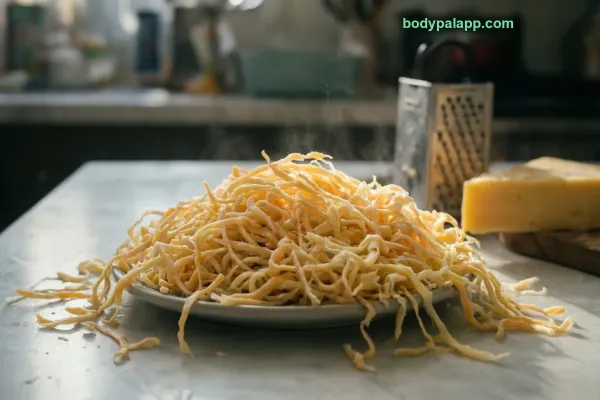
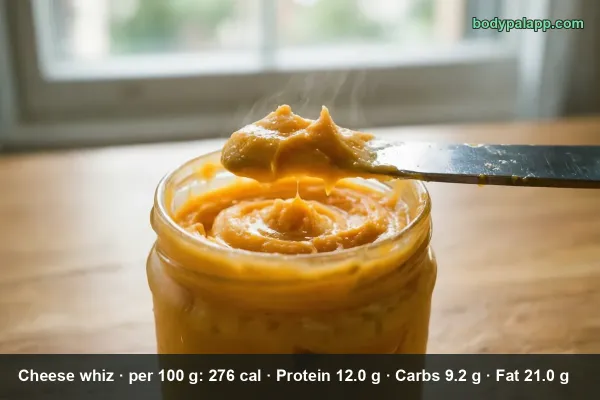
Here is how queso fresco stacks up against shredded cheese, a mozzarella cheese stick and cheese whiz, per 100 g and per usual serving.
Verdict: For protein per calorie, pick the mozzarella cheese stick: 83 calories per stick and 23.8 g of protein per 100 g, against 18.1 g in queso fresco. If sodium is your concern, skip cheese whiz at 1,638 mg per 100 g, while queso fresco at 751 mg sits much closer to shredded cheese at 682 mg.
Most popular queso fresco brands in the United States
Ranked by popularity in the BodyPal database
# Productkcal / 100 g
1La Vaquita Queso Fresco Salvadoreño1 oz · 28 g321 kcal
One ounce (28 g) is about 84 calories, and a cup of crumbled queso fresco is 365 calories. Per 100 g it is 299 calories.
Is queso fresco good for weight loss?
An ounce is 84 calories with 5.1 g protein and 6.7 g fat, so a sprinkle stays small in a daily total, while a full cup crumbled is 365 calories.
Queso fresco vs shredded cheese: which has fewer calories?
They are close: queso fresco is 299 calories per 100 g and shredded cheese 304, which works out to 84 versus 85 calories per ounce.
How much protein is in queso fresco?
Queso fresco has 18.1 g protein per 100 g, so one ounce gives 5.1 g and a cup crumbled 22.1 g.
How many calories are in 1 ounce of queso fresco?
One ounce (28 g) of queso fresco has 84 calories. It also brings 5.1 g of protein, 6.7 g of fat, 0.8 g of carbs and 210 mg of sodium, about 4% of the daily calorie value.
What are the macros of queso fresco?
Queso fresco gets 72% of its calories from fat, 24% from protein and 4% from carbs. Per 100 g that means 23.8 g fat, 18.1 g protein and 3 g carbohydrate, with 0 g fiber.
How much fat is in queso fresco?
Queso fresco has 23.8 g of fat per 100 g, of which 12.9 g is saturated. One ounce carries 6.7 g of fat, and a cup crumbled carries 29.1 g.
What does USDA list for 100 g of queso fresco?
USDA lists 299 calories and 18.1 g of protein per 100 g of queso fresco. The same 100 g holds 23.8 g of fat, 3 g of carbs, 2.3 g of sugars and 751 mg of sodium.
How much sodium is in queso fresco?
Queso fresco has 751 mg of sodium per 100 g, 33% of the daily value. One ounce carries 210 mg, or 9%, and a cup crumbled carries 916 mg, or 40%.