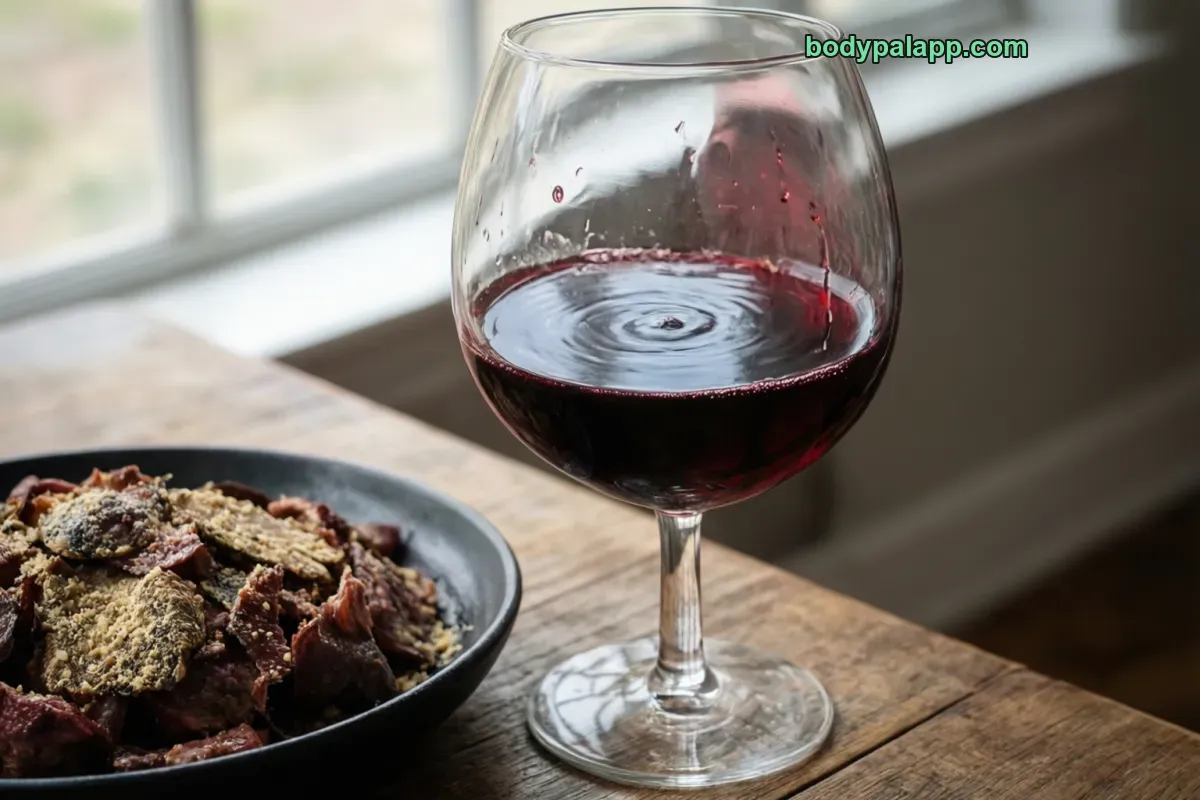
Red wine calories come to 125 for a 5 fl oz glass (147 g) and 85 per 100 g of dry table red. The pour matters more than the bottle. A generous 180 g glass reaches 153, and the label shows almost no fat, protein or sugar, so the calories that count are easy to miss.
125kcal
1 5 fl oz glass · 147 g, table wine
3%protein
0.1 gProtein
4 gCarbs
0 gFat
How to burn off 125 kcal
—Walking, brisk
—Jogging
—Cycling, moderate
—Swimming
Skip the math. BodyPal counts these calories from your steps and workouts automatically.
Nutrition facts
Table wine · per 147 g
Calories
125 kcal
Protein
0.1 g
Carbohydrate
3.8 g
Fat
0 g
Saturated fat
0 g
Cholesterol
0 mg
Sodium
6 mg
Potassium
187 mg
Iron
0.7 mg
Source: USDA FoodData Central
🛡️
Verified nutrition data
Numbers on this page come from USDA FoodData Central, the U.S. Department of Agriculture’s food composition database, and from manufacturer labels where a branded product is named. Last verified September 2026. How we verify our data →
Red wine: calories, protein and sodium by serving
Percent of daily value uses the FDA reference of 2,000 kcal a day.
Serving
kcal
Protein
Carbs
Fat
Sodium
% DV kcal
5 fl oz glass (147 g)
125
0.1 g
3.8 g
0 g
6 mg
6%
Large pour (180 g)
153
0.1 g
4.7 g
0 g
7 mg
8%
Half bottle (375 g)
319
0.3 g
9.8 g
0 g
15 mg
16%
100 g
85
0.1 g
2.6 g
0 g
4 mg
4%
3 × 5 fl oz glass (147 g)
375
0.3 g
18 mg
5 × 5 fl oz glass (147 g)
625
0.5 g
29 mg
A heavy pour turns 125 calories into 153
The standard 5 fl oz glass weighs 147 g and carries 125 calories, about 6% of a 2,000-calorie day. Restaurant glasses and big home pours often land nearer 180 g, and that glass comes to 153 calories, or 8% of the daily value. Nobody reaches for a measuring cup at dinner, so the second number is often closer to reality.
Glasses add up faster than food does. Two standard glasses (294 g) total 250 calories. Three glasses (441 g) reach 375, the same as a small meal. A half bottle of 375 g lands at 319 calories, which is 16% of the daily value from one drink order.
If you track intake, log the pour you actually drank, not the one you meant to drink. Five standard glasses over a long evening come to 625 calories in 735 g of wine. That is the number that quietly shifts a week's totals, and BodyPal can log the glass from a photo so the pour size does not get rounded down.
The carb row does not explain the calories
Per 100 g, red wine lists 2.6 g of carbs, 0.1 g of protein and 0 g of fat. On the macro split, carbs take 97% and protein 3%, with fat at zero. That looks like a carb drink, yet 2.6 g of carbs covers only a small slice of 85 calories.
The rest of the energy comes from the alcohol itself, which the standard nutrition panel does not list as a macro. That is why a dry red with only 0.6 g of sugars per 100 g still lands at 85 calories. Reading the carb line alone will make wine look lighter than it is.
In practice, a glass delivers 3.8 g of carbs and 0.1 g of protein. It brings energy without the protein or fiber that would make you feel fed. Count it as a drink that adds calories on top of a meal, not as part of the meal.
Sugar and sodium barely register
Dry table red is low in sugar. A 5 fl oz glass holds 0.9 g of sugars and a large 180 g pour holds 1.1 g. Even the half bottle stays at 2.3 g. If you watch added sugar, the wine row is not where your day goes off track; sweet mixers and dessert wines are a different story.
Sodium is just as quiet. There are 4 mg per 100 g and 6 mg in a glass, which rounds to 0% of the 2,300 mg daily value. Three glasses come to 18 mg and five come to 29 mg, still a rounding error next to bread or cheese.
Potassium shows up at 127 mg per 100 g, a modest amount against the 4,700 mg daily value. Cholesterol and saturated fat both read 0. The only row on this label that deserves attention is calories.
Plan the glass, not the bottle
Since red wine brings calories without protein or fiber, it fits best next to a meal that does the filling. Pair a glass with lean protein, vegetables or beans rather than a cheese board and bread, and the 125 calories sit on a plate that keeps you satisfied.
Decide on the number of glasses before the bottle opens. One standard glass is a known 125. Topping it up without counting is how three glasses and 375 calories happen without anyone noticing. Water between glasses slows the pace without adding anything to the total.
If you are cutting calories, a single 147 g glass is easy to budget for. A half bottle at 319 calories is closer to a full snack or a light lunch. Neither is off limits, but only one of them disappears into the day without a trace.
How does red wine compare?
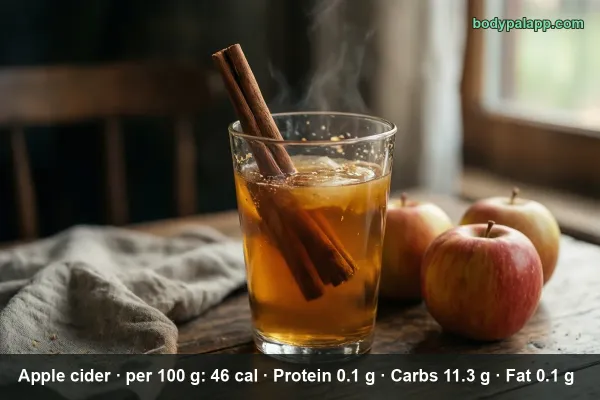
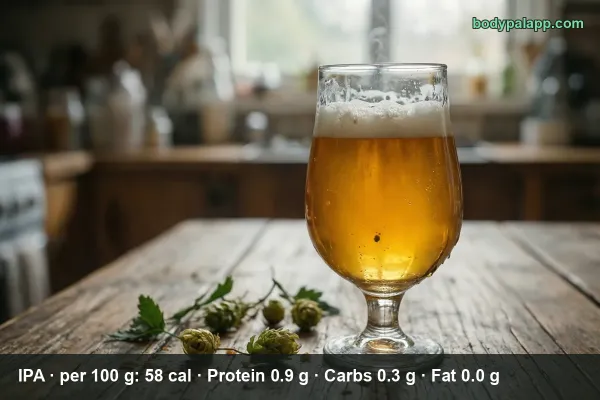
Here is how red wine stacks up against aperol spritz, apple cider and IPA, per 100 g and per usual serving.
Verdict: For the fewest calories per sip, apple cider at 46 per 100 g or aperol spritz at 49 beat red wine at 85, with IPA in between at 58. If sugar is your concern, red wine is the better pick, with 2.6 g of carbs per 100 g against 11.3 g in apple cider.
Red wine FAQs
How many calories are in a glass of red wine?
A standard 5 fl oz glass (147 g) is about 125 calories, based on 85 calories per 100 g. A larger 180 g pour comes to 153 calories.
Is red wine good for weight loss?
A 5 fl oz glass adds 125 calories with 3.8 g of carbs and no fat, and a second glass adds another 125 calories to the day.
Does red wine have more calories than beer?
Red wine has 85 calories per 100 g against 58 for IPA, so a 147 g glass of wine is 125 calories while the same pour of IPA is 85.
How much sugar is in red wine?
Red wine has 0.62 g of sugar per 100 g, so a 5 fl oz glass has about 0.9 g of sugar and 3.8 g of total carbs.
How many calories are in 3 glasses of red wine?
Three standard 5 fl oz glasses (441 g) of red wine contain 375 calories. That carries only 0.3 g of protein and 18 mg of sodium, so nearly all of it is energy with little else attached.
How many calories are in a bottle of red wine?
A half bottle (375 g) of red wine has 319 calories, 16% of a 2,000-calorie day. A full bottle pours about five standard glasses, and five 5 fl oz glasses come to 625 calories.
What are the red wine nutrition facts per 100 g?
Per 100 g, red table wine has 85 calories, 2.6 g of carbs, 0.6 g of sugars, 0.1 g of protein and 0 g of fat. Sodium is 4 mg and potassium is 127 mg.
What does USDA FoodData Central list for a 5 fl oz glass of red wine?
USDA FoodData Central lists 125 calories for a 5 fl oz glass (147 g) of red table wine, from the row "Alcoholic beverage, wine, table, red". That glass holds 3.8 g of carbs and 0.9 g of sugars.
How many calories are in a large glass of red wine?
A large pour of 180 g of red wine has 153 calories, 8% of the daily value. That is noticeably more than the 125 in a standard 5 fl oz glass, so pour size matters.