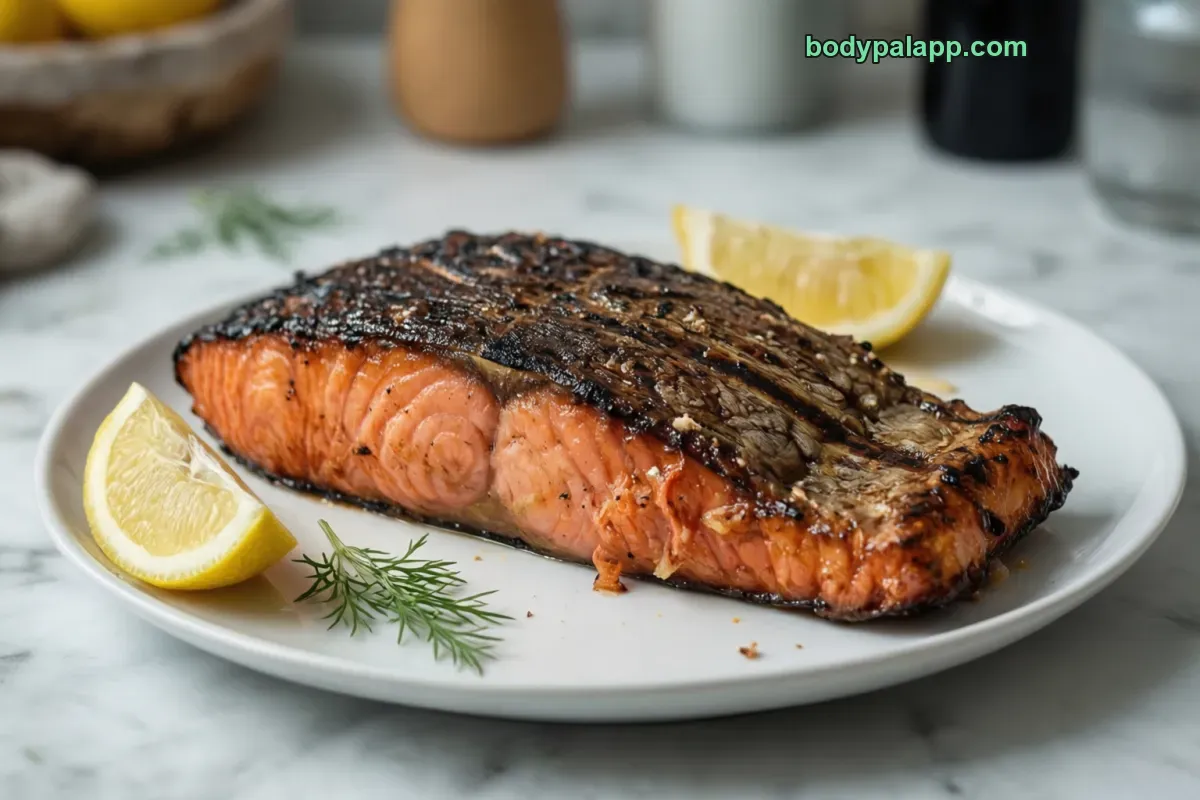
Grilled salmon fillet calories come to 367 for one 178 g fillet and 206 per 100 g, based on USDA values for farmed Atlantic salmon cooked with dry heat. Look at the split: fat supplies 56% of the calories and protein 44%, with zero carbs. Portion size, not the cooking method, decides most of your total.
367kcal
1 fillet · 178 g, Atlantic, farmed, grilled
44%protein
39 gProtein
0 gCarbs
22 gFat
How to burn off 367 kcal
—Walking, brisk
—Jogging
—Cycling, moderate
—Swimming
Skip the math. BodyPal counts these calories from your steps and workouts automatically.
Nutrition facts
Atlantic, farmed, grilled · per 178 g
Calories
367 kcal
Protein
39 g
Carbohydrate
0 g
Fat
22 g
Saturated fat
4.3 g
Cholesterol
112 mg
Sodium
109 mg
Potassium
684 mg
Iron
0.6 mg
Source: USDA FoodData Central
🛡️
Verified nutrition data
Numbers on this page come from USDA FoodData Central, the U.S. Department of Agriculture’s food composition database, and from manufacturer labels where a branded product is named. Last verified September 2026. How we verify our data →
Grilled salmon fillet: calories, protein and sodium by serving
Percent of daily value uses the FDA reference of 2,000 kcal a day.
Serving
kcal
Protein
Carbs
Fat
Sodium
% DV kcal
1 fillet (178 g)
367
39.3 g
0 g
22 g
109 mg
18%
3 oz portion (85 g)
175
18.8 g
0 g
10.5 g
52 mg
9%
100 g
206
22.1 g
0 g
12.4 g
61 mg
10%
3 × 1 fillet (178 g)
1,100
118 g
326 mg
5 × 1 fillet (178 g)
1,833
196.7 g
543 mg
A whole fillet is 367 calories, a 3 oz portion is 175
The default on this page is a whole farmed Atlantic fillet, 178 g after grilling, at 367 calories. That one plate covers 18% of the daily value for calories and brings 39.3 g of protein, 79% of the daily value. A restaurant salmon entree usually looks like this full piece, not like the smaller label portion.
The 3 oz portion (85 g) is the standard you see on nutrition labels and in recipe cards. It lands at 175 calories with 18.8 g of protein and 10.5 g of fat. That is roughly half a fillet, so if you split a piece with someone, this is the number to log.
Totals climb quickly when you cook for a family or batch-prep lunches. Two fillets (356 g) reach 733 calories, three (534 g) hit 1,100, and five (890 g) come to 1,833. If you track closely, weigh the cooked piece once. Fillets vary a lot in size, and a kitchen scale settles the question faster than guessing from the package.
Fat supplies 56% of the calories, protein the rest
Salmon is not a lean fish, and that is the point of it. Per 100 g you get 22.1 g of protein and 12.4 g of fat, with no carbs, no fiber and no sugar. Because fat carries more calories per gram, it ends up supplying 56% of the energy while protein supplies 44%.
That fat is why grilled salmon sits at 206 calories per 100 g while leaner fish land far lower. It is also why a salmon dinner tends to feel more satisfying than a white fish fillet of the same weight. You pay for that richness in calories, but you get a meal that holds you longer.
Saturated fat stays modest: 2.4 g per 100 g against a daily value of 20 g. The row to keep an eye on is total calories, not saturated fat. If you want the protein with fewer calories, shrink the portion to 3 oz rather than switching the cooking method.
Sodium is low until the seasoning goes on
Plain grilled salmon carries 61 mg of sodium per 100 g and 109 mg in a whole fillet, just 5% of the daily value. The 3 oz portion has 52 mg, or 2%. On its own, this is one of the lower-sodium proteins you can put on a plate.
The numbers change in the kitchen, not in the fish. Soy glazes, teriyaki, salty rubs and bottled marinades can add far more sodium than the salmon itself contains. If you watch sodium, season with lemon, herbs, garlic and pepper, and add salt yourself so you know how much went in.
Two other rows are worth a glance. Cholesterol is 63 mg per 100 g against a daily value of 300 mg, and potassium is 384 mg per 100 g. Neither is extreme, and both scale with portion size just like the calories do.
Zero carbs means the sides set the balance
With 0 g of carbs and 0 g of fiber, a salmon fillet brings protein and fat but nothing else to the meal. The sides decide whether the plate is balanced. Roasted vegetables, a big salad or steamed greens add fiber and volume for few calories, while rice, potatoes or bread add the carbs that fuel a longer day.
Because the fish already carries plenty of fat, go easy on butter sauces, creamy dressings and oil-heavy sides. A lemon wedge and a spoon of salsa or yogurt sauce keep the plate lighter than a beurre blanc. Store-bought options such as Gorton's Grilled Salmon Fillets Lemon Butter are convenient, but check the label since sauces change the totals.
If you are logging meals, BodyPal can log grilled salmon from a photo of your plate. Then adjust the portion to the weight you actually ate, since a full fillet at 367 calories and a 3 oz portion at 175 are very different entries.
How does grilled salmon fillet compare?
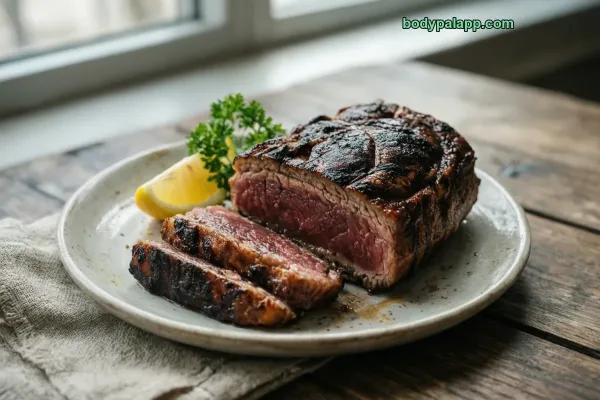
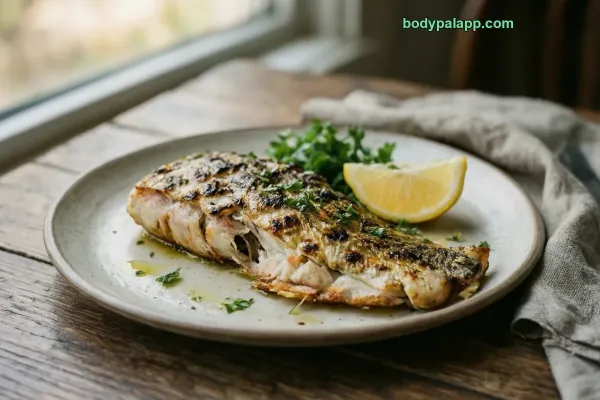
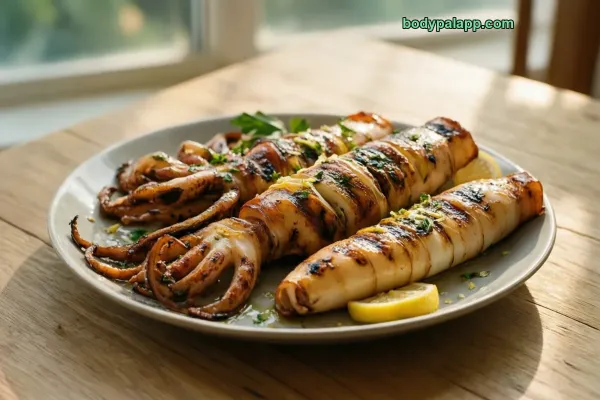
Here is how grilled salmon stacks up against other grilled seafood, per 100 g and per usual serving.
Verdict: For the fewest calories pick grilled tuna steak: 130 per 100 g with 29.2 g of protein and only 0.6 g of fat, so a 6 oz steak is 221 calories. Pick salmon when you want a richer plate that keeps you full, and choose it over generic grilled fish (346 mg sodium per 100 g) or calamari (270 mg) if you watch salt.
Most popular grilled salmon fillet brands in the United States
Frozen packaged fillets are labeled as sold, before cooking, so they read lower than the grilled number above. Source: manufacturer labels / USDA FoodData Central.
Grilled salmon fillet FAQs
How many calories are in one grilled salmon fillet?
About 367 calories for a 178 g fillet of farmed Atlantic salmon, or 175 calories for a 3 oz (85 g) portion.
Is grilled salmon good for weight loss?
Grilled salmon has 206 calories, 22.1 g protein and 0 g carbs per 100 g. A 3 oz portion comes to 175 calories.
Grilled salmon vs grilled white fish: which has fewer calories?
Grilled white fish has fewer, about 108 calories per 100 g against 206 for farmed salmon. Salmon carries more fat, 12.35 g per 100 g.
How much protein is in a grilled salmon fillet?
A 178 g fillet has 39.3 g protein and 22.0 g fat. Per 100 g that is 22.1 g protein.
How many calories are in 3 oz of grilled salmon?
A 3 oz portion (85 g) of grilled salmon has 175 calories. That is 9% of the daily value for calories, with 18.8 g of protein and 10.5 g of fat, roughly half of a whole fillet.
What are the nutrition facts for 3 oz of grilled salmon?
Grilled salmon, 3 oz (85 g): 175 calories, 18.8 g protein, 10.5 g fat, 0 g carbs, 0 g sugar and 52 mg sodium. The protein covers 38% of the daily value.
How many calories does grilled salmon have per 100 g?
Grilled salmon has 206 calories per 100 g, with 22.1 g of protein and 12.4 g of fat. Fat supplies 56% of those calories and protein 44%, since there are no carbs.
How many calories are in grilled fish?
Generic grilled fish has 108 calories per 100 g and 151 in a 140 g fillet, about half the calories of salmon. It is leaner but carries 346 mg of sodium per 100 g.